All unprofitable robotics companies have gone public on the Hong Kong Stock Exchange.
UBTech and others are heading to Hong Kong for listings, while Unitree and peers are targeting the A-share market, a trend that signals growing differentiation within the robotics industry.
The Hong Kong stock market has become a haven for robotics companies.
Recently, news about robotics firms seeking Hong Kong IPOs has been making headlines frequently. Reports indicate that leading robot supplier Xinxiao Qiaoshou, whose valuation is close to that of Unitree, is planning a Hong Kong IPO. Not long ago, the Hong Kong Stock Exchange saw seven new listings in a single day — the highest number this year — with Luoshi Robotics and Agile Robotics for Industrial Automation (ARIS) both ringing the listing bell on the same day.
Adding already listed players like UBTech, Dobot, Geekplus, CloudMinds, and Pudu Robotics, plus queuing candidates such as Youai Intelligent and Benmo Technology, nearly the entire robotics industry chain — from complete machines to components, and from industrial to consumer sectors — has flocked to the Hong Kong Stock Exchange.
While these companies focus on different business areas, they share one common trait in their financial statements: they are not yet profitable.
01 A Two-and-a-Half-Year Land Grab
This wave of robotics companies listing in Hong Kong began at the end of 2023.
The first to take the plunge was UBTech. On December 29, 2023, UBTech debuted on the Hong Kong Stock Exchange at an issue price of HK$90 per share, earning the title of "the first humanoid robotics stock."

UBTech CEO Zhou Jian rang the listing bell alongside the company's industrial humanoid robot Walker S; Source: UBTech official WeChat public account
At that time, UBTech had been established for nearly 14 years. According to its prospectus, the company accumulated losses of over 3.15 billion yuan from 2020 to the first half of 2023.
After listing, UBTech still failed to turn a profit, posting losses of 1.265 billion yuan, 1.16 billion yuan, and 790 million yuan respectively from 2023 to 2025.
After UBTech sounded the bugle for listing, other players did not rush to follow suit immediately.
Throughout 2024, among robotics companies, only Dobot (focused on collaborative robots and embodied intelligent robots) submitted its listing application to the Hong Kong Stock Exchange, and officially went public on December 23 that year.
Similarly, Dobot was not profitable when it listed in Hong Kong. Its prospectus shows that the company recorded a cumulative net loss of over 190 million yuan between 2024 and 2025.
Notably, Dobot is currently preparing for a "return to the A-share market." In May this year, the company submitted its prospectus to the Shenzhen Stock Exchange, planning to list on the ChiNext board.
Recently, in its response to the Shenzhen Stock Exchange's inquiry letter, Dobot stated that it expects to achieve an operating revenue of 1.723 billion yuan and reach profitability by 2028.
It was not until 2025 that robotics companies began their concentrated sprint to the Hong Kong Stock Exchange. That year, a total of nine companies across the robotics industry chain submitted listing applications to the Hong Kong bourse, with Geekplus and CloudMinds successfully completing their listings within the year.
These two companies were also unprofitable at the time of listing. Geekplus even noted in its prospectus that short-term losses were necessary strategic investments, expected to generate considerable long-term returns and lay a solid foundation for future profitability.
Entering 2026, the pace of robotics companies rushing to list accelerated further.
In the first half of the year, five robotics companies submitted listing applications to the Hong Kong Stock Exchange, with two — Luoshi Robotics and Jafari Technology — successfully going public.
Meanwhile, ARIS and Pudu Robotics, which submitted their applications last year, also completed their listing processes and successfully debuted on the Hong Kong Stock Exchange this year.
Unsurprisingly, none of these four companies are profitable. Luoshi Robotics posted the largest loss, with a cumulative net loss of over 520 million yuan from 2023 to 2025.
02 Right Timing, Favorable Conditions, and Strong Support
The "obsession" of loss-making robotics companies with the Hong Kong stock market is not without reason.
In November 2022, ChatGPT-3.5 shocked the world without any prior promotion. Before that, robots relied heavily on hard-coded scripts, limited scenario presets, and fixed instruction sets, and could only perform pre-written tasks. They had poor natural language understanding, could not independently break down complex tasks, and had extremely clunky human-robot interactions.
The "ChatGPT moment" made the industry realize that large language models can upgrade humanoid robots into intelligent carriers by enhancing their general reasoning capabilities.
Five months after ChatGPT-3.5's debut, the Hong Kong Stock Exchange appropriately relaxed its listing thresholds.
In March 2023, the Hong Kong Stock Exchange officially introduced Chapter 18C of its listing rules — the "Specialist Technology Companies" listing mechanism. It provides a dedicated listing channel for companies in five key specialist technology sectors (next-generation information technology, advanced hardware and software, advanced materials, new energy and energy conservation, and new food and agricultural technology) that do not meet the traditional profit or revenue tests for the main board.
Before this rule, only one loss-making robotics company had successfully listed in Hong Kong.
In November 2021, MicroPort Robotics went public in Hong Kong. However, the company, whose core business covers laparoscopic surgical robots and orthopedic robots, used the Chapter 18A (biotechnology rules) listing channel. In other words, at the time of its listing, the market regarded MicroPort Robotics as a medical device company, not a pure-play robotics company like the ones we see today.
The introduction of Chapter 18C expanded the listing space for robotics companies. The aforementioned UBTech, Geekplus, Dobot, ARIS, and Pudu Robotics all completed their listings through this channel.
In September 2024, Chapter 18C further lowered its thresholds: the minimum initial market capitalization requirement was reduced from HK$6 billion (for commercialized companies) and HK$10 billion (for pre-commercialized companies) to HK$4 billion and HK$8 billion respectively, with the adjustment valid for three years. This largely drove the flood of robotics companies into the Hong Kong stock market starting in 2025.
Beyond technological progress and relaxed listing rules, the Hong Kong stock market, as an international capital market, also provides a highly convenient refinancing environment for robotics companies — a critical advantage for these firms that are still in the heavy investment phase.
Take UBTech as an example. In 2025, the company's R&D expenditure reached 507 million yuan, with R&D investment accounting for 25.36% of its revenue — far higher than the 7.73% ratio of its peer Unitree.
However, UBTech is not short of cash at the moment. According to its financial reports, as of the end of 2025, UBTech held 4.92 billion yuan in monetary funds. In comparison, as of the end of September 2025, Unitree's monetary funds on its books amounted to 1.795 billion yuan.
This is largely thanks to UBTech having completed a total of six H-share placements after listing. These six placements raised a net amount of over HK$7.6 billion in total — more than seven times the funds raised from its initial public offering.
03 Unitree Took a Different Path, and Industry Differentiation Has Only Just Begun
While a multitude of loss-making robotics companies are queuing up to ring the listing bell in Hong Kong, industry leader Unitree has chosen a completely different path.
In early July, the China Securities Regulatory Commission (CSRC) approved Unitree's application for its initial public offering and listing on the Sci-Tech Innovation Board. From the acceptance of its application to the registration approval, the entire process took only 104 days, setting the fastest review record since the implementation of the Sci-Tech Innovation Board's "pre-review" mechanism. For this IPO, Unitree plans to raise 4.202 billion yuan.
The difference between Unitree and the UBTech cohort is that Unitree is already profitable. According to its prospectus, in 2025, Unitree recorded a net profit of 591 million yuan, with a gross margin of 60.44%.
As a robotics company, Unitree is able to pursue an A-share listing because it has successfully followed the traditional "profit first, then list" path. Similarly, Deep Robotics, which achieved profitability last year, has also filed for a Sci-Tech Innovation Board IPO.
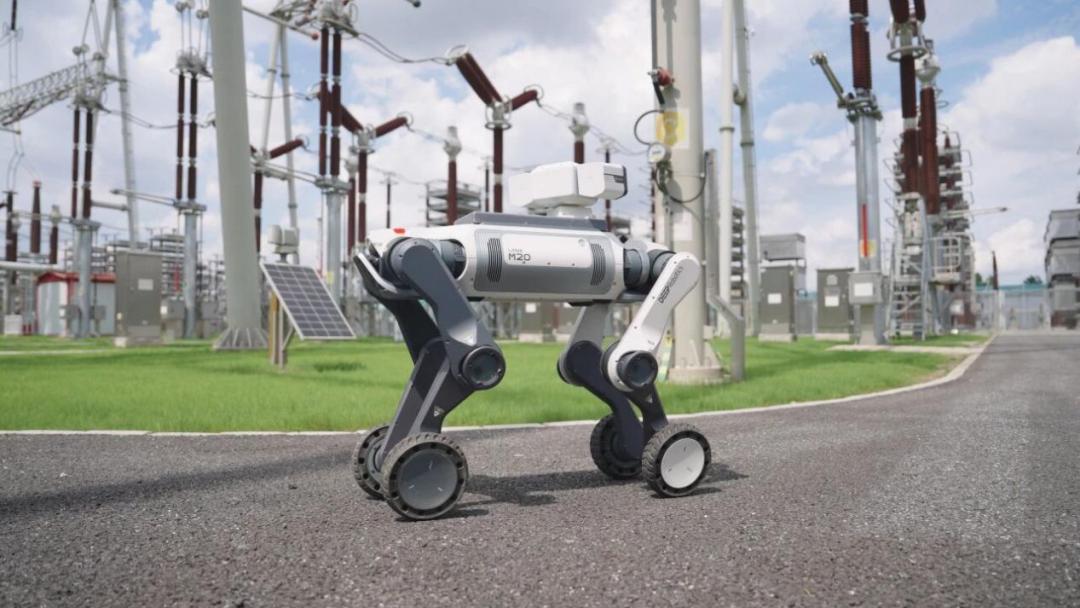
Unlike Unitree, Deep Robotics currently focuses most of its business attention on the B2B sector, ranking first globally in revenue from the industrial application of its quadruped robots; Source: Deep Robotics official WeChat public account
Meanwhile, those robotics companies that are still unprofitable can only take a detour through Hong Kong's Chapter 18C channel, trading their "growth stories" for financing opportunities.
The difference between these two paths largely reflects the emerging differentiation within the robotics industry. Companies with scalable profitability are turning to the A-share market to pursue higher valuation anchors, while those that have not yet crossed the break-even line are using the Hong Kong stock market as a critical window to extend their capital runway.
But capital's patience is ultimately limited.
UBTech is a typical case in point. As "the first humanoid robotics stock," UBTech's share price experienced a rollercoaster ride after listing. It peaked at HK$328 in March 2024, with a total market capitalization once exceeding HK$130 billion. However, by early 2025, its share price dropped to a low of HK$40.8, wiping out over 100 billion yuan in market value. The aura of "the first humanoid robotics stock" failed to shield it from the capital market's eroding patience.
As the industry transitions from the "storytelling" phase to the "performance delivery" phase, valuation logic will inevitably shift from expectations to real-world results. Companies that were still loss-making at the time of listing need to prove as soon as possible that their revenue growth is not just a stack of numbers, and that turning profitable is not just a distant promise written in their prospectuses.
From this perspective, listing only grants a pass to enter the competitive arena. Whether a company can win the fight depends on how strong its core competitiveness truly is.
This article is from the WeChat public account "Alpha Workshop Research Institute", written by Si Che, and published with authorization from 36Kr.