Earning 850,000 yuan a day, the post-1975 Fudan alumnus made a fortune by selling storage products and is sprinting for a Hong Kong stock IPO.
75.89 million yuan — that's the net profit XTX Technology earned in the first quarter of 2026, equivalent to making 850,000 yuan per day.
For the entire year of 2025, the company only made 27.23 million yuan. The revenue generated in a single quarter is 2.8 times its full-year profit last year. Its gross profit margin skyrocketed from 14% to 55.6% in less than two years.
This company specializes in flash memory chip design, with its headquarters in Longgang, Shenzhen. Over the past four years, it has made three attempts to enter the capital market, shifting its focus from the A-share market to the Hong Kong stock market, and finally rode the wave of its industry cycle.
However, when a company knocks on the door of the capital market at its most dazzling moment, it often faces the harshest scrutiny from investors.
Why did XTX Technology make a staggering 75.89 million yuan in a single quarter? Click the mini-program below to access Pencil News' opportunity intelligence and uncover the profit opportunities behind the news.

- 01 - Stockpiling Amid Plunging Profits
Long Dongqing, the founder of XTX Technology, was born in 1976 and graduated from Fudan University with a bachelor's degree in Electronic Information Engineering in 1999.
After graduation, he worked at Renesas, STMicroelectronics, and Freescale successively — climbing the career ladder from a chip design engineer to the head of regional distribution channels in China, gaining full insight into the R&D, sales, and supply chain operations of leading overseas semiconductor enterprises.
In 2014, Long Dongqing founded XTX Technology in Longgang, Shenzhen.
He chose a highly niche track: code-storage flash memory. NOR Flash and SLC NAND fall into this category — these chips do not store photos or videos, but are dedicated to holding the "boot code" that runs when a device starts up. Whether it's a router powering on, a smart home device connecting to the internet, or a car ignition activating, all these processes rely on this code to initiate first.
At that time, this market was almost entirely dominated by overseas manufacturers, with barely any local design capabilities present. Long Dongqing adopted a lightweight business model that focused solely on design and sales, outsourcing all wafer manufacturing processes.
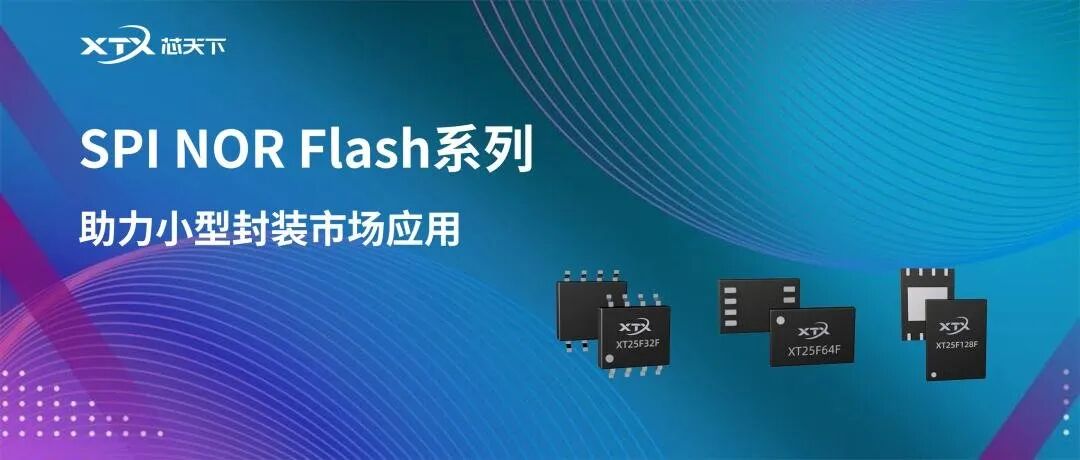
XTX Technology's NOR Flash Chip. Source: XTX Technology
The first four years passed quietly: the brand had little recognition, customers were unresponsive, and the team could only slowly build its business by securing small-batch orders from industrial equipment and smart home clients. It was not until 2018, after receiving financing led by Sequoia Capital, that the team began to expand on a meaningful scale.
Today, XTX Technology holds more than 200 patents, making it the second domestic manufacturer in China capable of producing high-capacity code-storage flash memory. It has also participated in drafting national standards for flash memory chips.
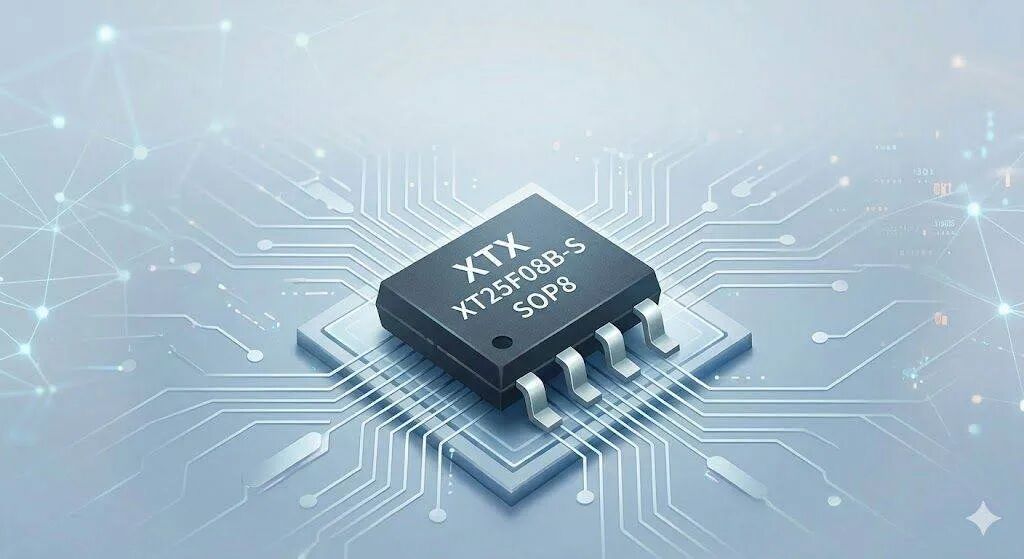
XTX Technology's XTX Flash Memory Chip. Source: XTX Technology
Yet the semiconductor industry has never lacked technical expertise — what is truly scarce is the patience to survive industry cycles.
In 2023, flash memory prices continued to decline, resulting in total annual revenue of 663 million yuan and a net loss of 14.03 million yuan for the company. The market conditions worsened in 2024, with revenue dropping to 442 million yuan, a year-on-year decrease of over 30%, and the gross profit margin hitting a low of 15.5%.
Long Dongqing's strategy was: stock up more aggressively when the market cools down.
He judged that the industry was approaching its trough, and began to acquire large quantities of low-cost wafer quotas from upstream original manufacturers to build up substantial inventory. This judgment paid off in the second half of 2025 — demand for AI terminals exploded unexpectedly, leading to a structural shortage of SLC NAND (a type of single-level cell code-storage flash memory with faster speed and longer lifespan, specifically designed for industrial equipment and edge hardware), where chips became extremely difficult to source across the market.
The low-cost wafers stockpiled earlier began to generate concentrated profits, directly driving the exceptional performance of the first quarter of 2026: revenue reached 224 million yuan, net profit hit 75.89 million yuan, and the gross profit margin stood at 55.6% — all three metrics hit all-time record highs.
However, a key detail deserves attention: XTX Technology is not a fully self-developed chip company. Its business is divided into two segments: one involves selling flash memory chips of its own design, while the other focuses on purchasing wafers from third-party manufacturers for white-label distribution — the latter accounts for nearly 40% of its total revenue. In essence, this 40% of the business operates as an intermediary, earning profits from information gaps and channel price differences, with relatively low technical content.
According to 2025 data from CIC Consulting, XTX Technology ranks fifth globally among code-storage flash memory design firms (measured by 2025 revenue), taking the fourth spot in the SLC NAND segment and fifth in NOR Flash. While it has secured a solid position in this niche track, it still lags far behind being an industry leader.
Prospectus filings show that XTX Technology's revenue in 2023, 2024, and 2025 reached 663 million yuan, 442 million yuan, and 519 million yuan respectively; gross profit was 103 million yuan, 61.86 million yuan, and 118 million yuan; gross profit margin stood at 15.5%, 14%, and 22.8%.
In the first quarter of 2026, XTX Technology recorded revenue of 224 million yuan, gross profit of 125 million yuan, and net profit of 75.89 million yuan.
- 02 - Three Major Profit Opportunities
XTX Technology's explosive growth is not entirely a matter of luck. The entire code-storage flash memory industry is undergoing three layers of structural transformation.
Transformation 1: AI shifts from the cloud to edge devices, doubling the consumption of code-storage flash memory.
Previously, the largest customers for NOR Flash and SLC NAND were routers, set-top boxes, and home appliances, where demand was stable but growth was slow. Today, AI gateways, smart cameras, vehicle-mounted computing boxes, and edge inference devices are being deployed in large volumes — these devices not only need to store boot code, but also run local small-scale AI models. The flash memory capacity required for a single AI edge device is 3 to 5 times that of ordinary smart devices. With global shipments of AI terminals surging sharply in 2026, demand for medium and small-capacity flash memory has skyrocketed.
Transformation 2: Leading overseas manufacturers prioritize high-margin products, leaving low-margin segments underserved.
Samsung, Micron, and SK Hynix are now fully focused on high-end memory products — which offer higher gross margins, larger order volumes, and enterprise-level clients. The production capacity for standard industrial-grade and consumer-grade flash memory is being cut and scaled back wherever possible. This has created a supply gap in general code-storage flash memory, providing domestic design enterprises with room to raise product prices. TrendForce predicts that annual NAND flash memory contract prices will continue to rise in 2026, with the supply gap set to last at least until 2028.
Transformation 3: Domestic substitution evolves from "optional trial" to "mandatory adoption".
In the first quarter of 2026, YMTC's global market share in flash memory reached 6.8%, while CXMT took a 7.5% share in the memory segment. Such figures would have been unimaginable five years ago. Today, requirements for supply chain autonomy and controllability in government, enterprise, industrial, and automotive sectors are becoming increasingly stringent, leading end customers to proactively reduce overseas procurement and integrate domestic flash memory brands into their supply chains. XTX Technology's products have already entered the supply chains of more than 2,000 end-user brands — domestic substitution is no longer just a policy slogan, but a source of tangible, revenue-generating orders.
IDC estimates that by 2029, the scale of China's domestic enterprise-level storage supporting market will exceed 9 billion US dollars — and there remains enormous room for growth in flash memory supporting edge AI applications.
- 03 - Four Hidden Risks
The timing of XTX Technology's Hong Kong IPO is remarkably subtle.
It has landed exactly at the peak of its industry cycle, presenting an exceptionally strong financial performance report. But it is precisely at such moments that the capital market will subject the company to unprecedentedly strict scrutiny — to distinguish what comes from the company's inherent core competitiveness, and what is driven by temporary industry tailwinds.
Risk 1: Inability to survive full industry cycles.
The storage industry follows a natural cycle of price fluctuations every 3 to 4 years, an inherent law of the sector. XTX Technology's 55.6% gross profit margin is almost entirely derived from the low-cost wafers it stockpiled during the 2023-2024 market trough. While this inventory acts as a profit engine during a booming market, it will turn into a trigger for losses once market prices reverse downward.
Historical data shows that XTX Technology's profit curve is highly synchronized with flash memory price trends: during the 2023-2024 industry downturn, the company recorded two consecutive years of losses, with no effective hedging strategies against cyclical risks. Once new production capacity from overseas manufacturers is fully released around 2028, pushing flash memory prices into a downward cycle, the company's performance will quickly turn to losses as it did before — potentially even more severely, as the scale of its current inventory is far larger than previous levels.
Risk 2: Overly concentrated product portfolio.
SLC NAND is the absolute core revenue driver for XTX Technology, accounting for over 60% of total revenue in the first quarter of 2026, while the revenue proportion from NOR Flash has shrunk noticeably. The company's revenue is heavily tied to the market conditions of this single flash memory category — any drop in SLC NAND prices will drag down the entire business performance.
More critically, a significant portion of its revenue comes from white-label distribution of externally purchased wafers. During its 2022 attempt to list on the ChiNext board, this type of business once accounted for 40% of total revenue, and it still remains a major revenue source today. This trading segment has very low technical content, and its profit margins are the first to be eroded once the industry enters a downturn.
Risk 3: Dependence on both clients and suppliers creates dual vulnerabilities.
In the first quarter of 2026, the top five customers contributed 52.8% of total revenue, with the single largest customer alone accounting for 21.3%. Supplier concentration is also extremely high — in 2023, 2024, and the first 9 months of 2025, the procurement proportion from the top five suppliers reached 75.4%, 82.1%, and 83.2% respectively, with concentration levels rising year by year. If upstream suppliers cut off supplies or raise prices, or downstream clients reduce orders or suppress prices, XTX Technology will have very limited bargaining leverage to mitigate the impact.
Risk 4: Uncertainty over whether R&D investment can keep pace with industry requirements.
In the first quarter of 2026, R&D investment stood at 16 million yuan, representing 7.1% of total revenue. For domestic peer flash memory design enterprises, the average R&D expense ratio typically ranges from 10% to 15%. While this gap may seem small in the short term, the semiconductor industry is a long-term endurance race. Leading overseas manufacturers are updating product architectures, while domestic competitors are expanding their high-capacity product portfolios. Without sufficient R&D investment, the company's competitiveness in high-end products will gradually decline, and its market share in the niche track will be steadily eroded.
The content of this article is for reference only and does not constitute investment advice.
This article is published from the WeChat Official Account "Pencil News" (ID: pencilnews). Author: Songge, Editor: Huang Xiaogui. 36Kr publishes this content with authorization.