Spending less than $150, with 27,000 lines of code "written entirely without manual input", a 9-year veteran iOS engineer made his first game: completed it in two weeks using AI and won a 170,000-yuan prize
Some people are still debating "whether Vibe Coding is just a toy", while others have already started using it to win championships in competitions.
Recently, an iOS engineer with 9 years of experience shared his experience on Reddit: he spent only two weeks using Claude Code to complete a small game called "Capybara Food Delivery" and won the championship in the contest, taking home a prize of $25,000 (about 170,000 RMB).
According to him, over 27,000 lines of code in the entire game were written entirely by AI, and even the logos, illustrations, textures, 3D models, background music, sound effects, and even the editor tools used in the game development process were almost all created by AI.
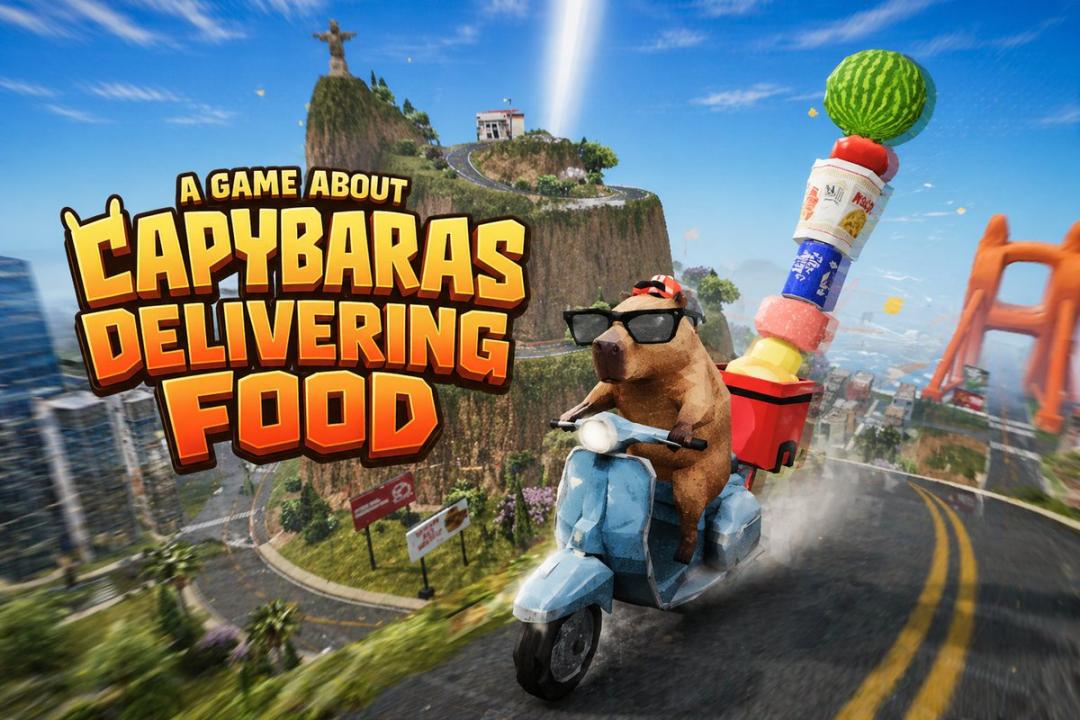
However, this iOS engineer also emphasized that this is not a story where a single Prompt can generate a complete game.
First time making a game with AI, won the championship for less than $150
The developer, whose Reddit username is Ieocoout, is an iOS software engineer with nearly 9 years of experience.
Although he has been working in mobile development all along, this is his first attempt at making a game.
The finished "Capybara Food Delivery" is a casual game that supports single-player and online multiplayer modes: players will play as a capybara riding a small motorcycle, collecting orders in the city, looking for ingredients, and delivering piles of food to customers on time; if you drive too fast or drift too sharply, the food stacked on the back of the bike will fall off.
The whole project took only two weeks, but it eventually beat many other works and became the champion of Cursor Vibejam 2026.
Many people are curious how much such a game cost to make. Ieocoout gave the answer: less than $150. He said the development process of the entire game mainly used the following AI tools:
Claude Code (Opus 4.7): He originally subscribed to the Max 5x plan, and during the development process he recharged an extra $100 to upgrade to Max 20x.
GPT Images 2 and Grok: Responsible for generating textures and illustrations. GPT Images 2 was used under a free trial, while Grok came with X Premium, which costs about $8 per month.
Tripo3D Pro: Responsible for converting images to 3D models, $19.9 per month.
Suno and ElevenLabs: Used to generate background music and sound effects, the free version is sufficient.
The game engine chosen was Three.js.
Ieocoout admitted, during the development of this game, the one who was actually responsible for writing code was Claude, and he himself was only responsible for "thinking". Throughout the entire development period, he barely wrote any code himself, and spent a lot of time thinking about gameplay, designing features, writing Prompts, continuously playtesting, and adjusting the game experience.
Usually, he would open 2-3 Claude Code sessions at the same time, assigning each session to a different module, such as one for the map, one for the UI, and one for the physics system, to prevent multiple AIs from modifying the same code at the same time. For each new feature he developed, he would also start a new session without any existing context. And when fixing bugs, he kept a long-running Claude session, because it already understood the entire project structure, making it easier to locate problems.
In the end, Ieocoout's game development accumulated: more than 188 Commits, with over 27,000 lines of code. In addition, logos, illustrations, texture maps, 3D models, music, sound effects, and various development tools that will be introduced later were all completed by AI.
When AI couldn't meet a certain requirement, he would ask AI to develop new tools to solve the problem.
Week 1 of development: Get the game "up and running" first
In the first week of game development, Ieocoout didn't rush to pursue visual effects, but prioritized completing the core gameplay of the entire game.
First of all, the entire project initially only had a simple concept: a capybara riding a small motorcycle to deliver food.
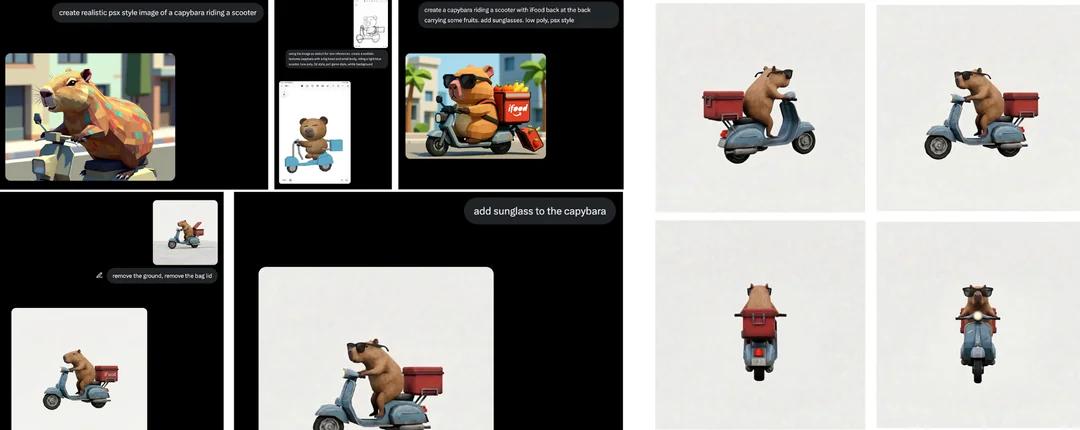
So he started brainstorming with GPT and Grok, constantly discussing gameplay, art style, and character design. The AI would generate a large number of character designs with different shapes and styles at once, and he kept selecting, modifying, and iterating until he was satisfied. During this period, he even tried to draw a sketch of a capybara riding a motorcycle himself, but in the end he still handed it over to AI to complete the official design.
In order to improve the quality of 3D model generation, he also summed up an experience: don't just give AI a single character image, but provide at least multiple perspectives including front, back, left, and right sides, so that Tripo3D doesn't need to "guess" what the character looks like when generating the model, and the final result will be much better.
After confirming the design, he directly imported these images into Tripo3D, generating almost all 3D models in the game.
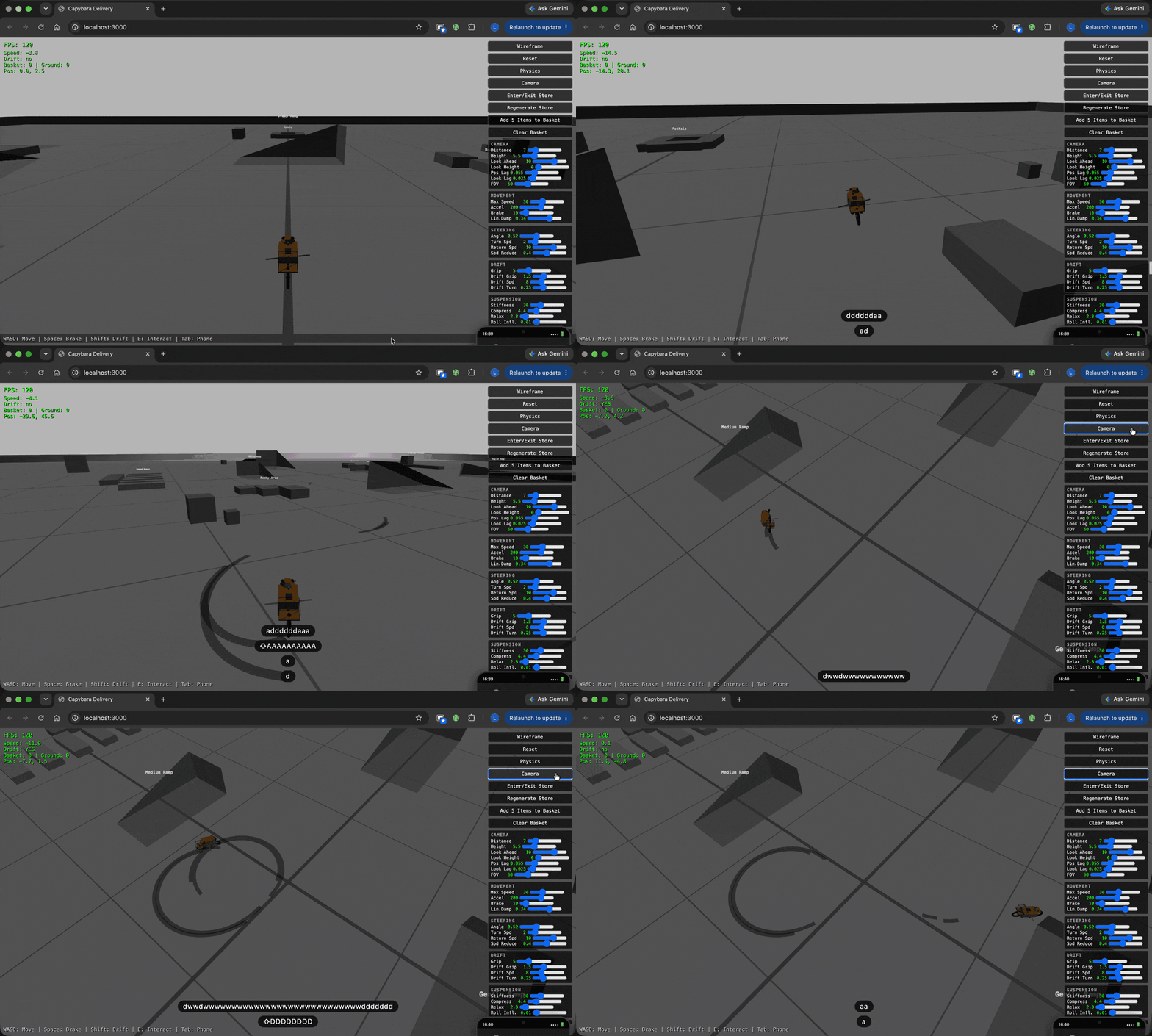
Then, the player driving system needed to be completed. According to the game design, the character needed to have motorcycle driving, drifting, collision detection, camera following, and Boost acceleration effects. In order to continuously adjust the handling feel, Ieocoout specially built a Sandbox test map, kept driving, colliding, and drifting, and then fine-tuned various parameters through the debug panel.
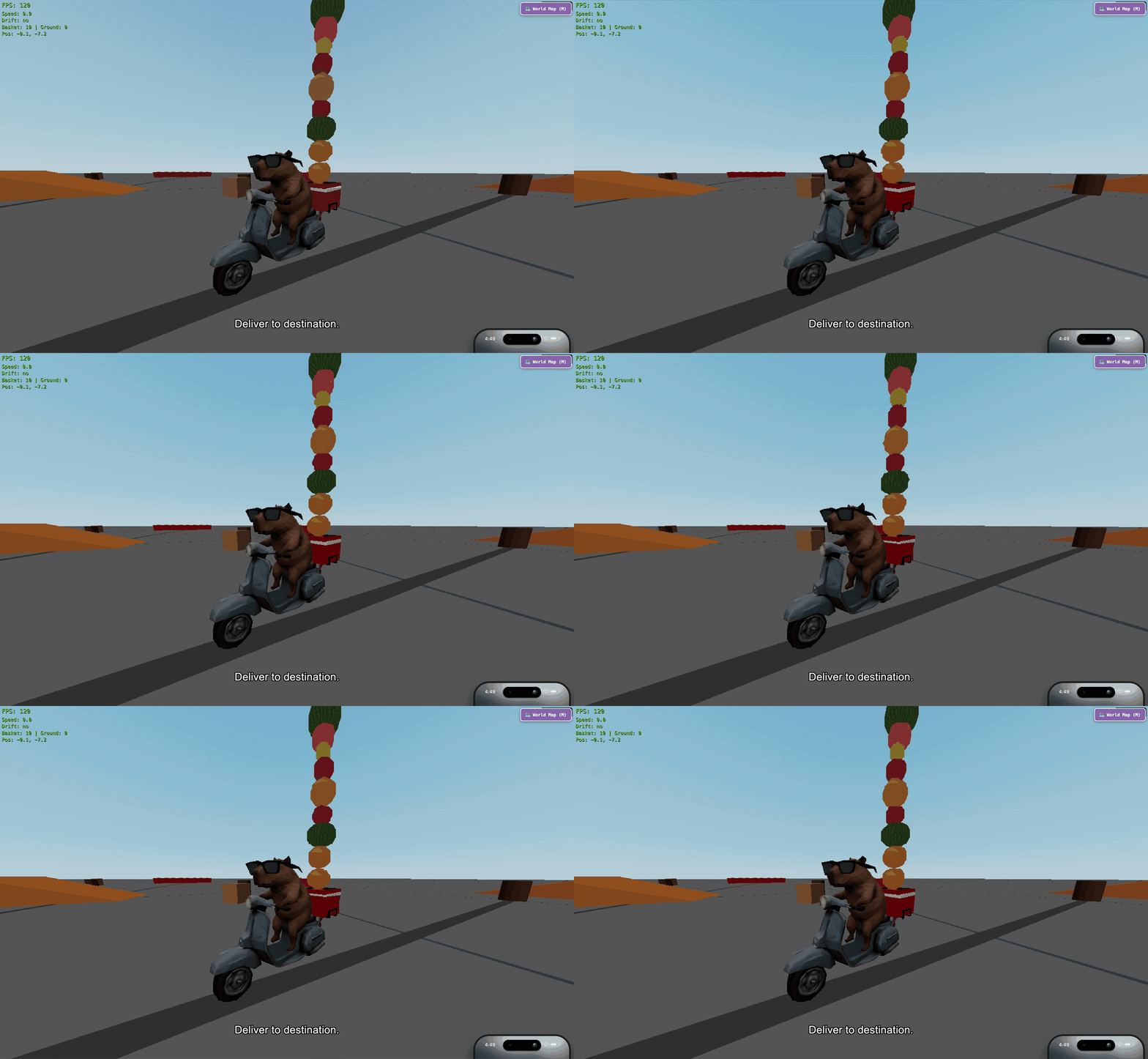
The biggest feature of this game is the pile of food stacked like a hill behind the car when delivering food.
At first, Ieocoout just made the food slide left and right, but later thought it wasn't interesting enough, so he changed it to a stacking mechanism: when the vehicle turns, the whole pile of food will gradually tilt, and when it exceeds a certain angle, it may fall off. Ieocoout emphasized that he adjusted the parameters so that the falling angle is not so "realistic" — because "realism" is not necessarily fun, and he wanted the game to be more entertaining.
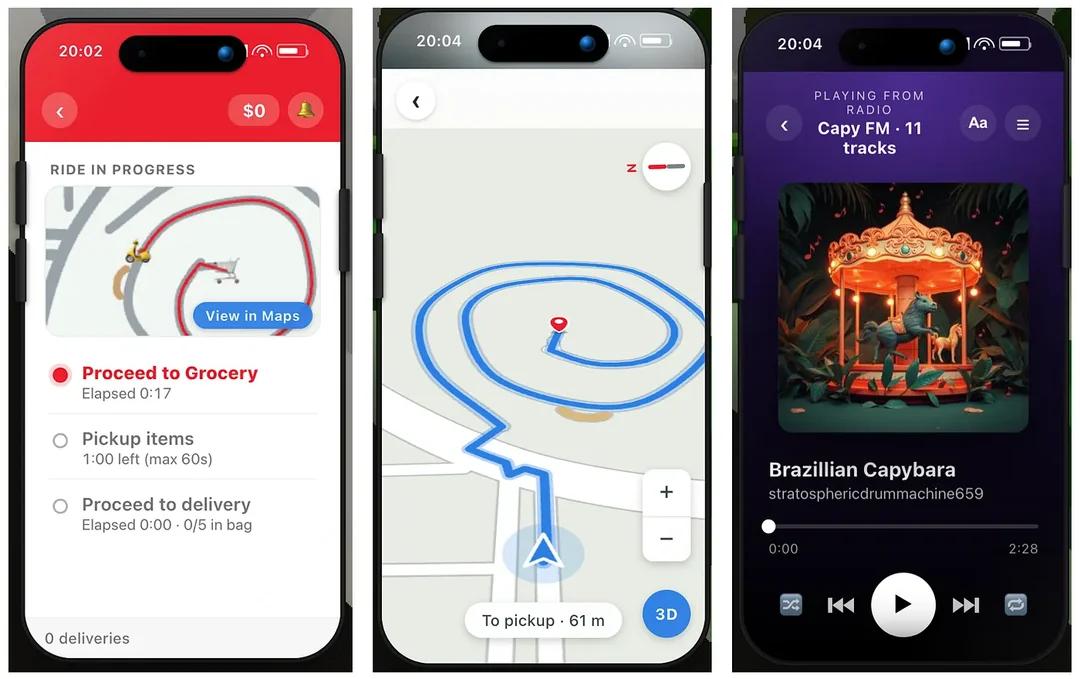
The order-taking system in the game was also almost entirely completed by Claude. Ieocoout asked Claude to design an iPhone-style mobile phone interface, and as a result, Claude implemented the entire interface using CSS in one go, and the animation effects were quite natural.
After that, he kept adding various interesting small details, including slide-to-unlock, a lock screen wallpaper with a capybara selfie, iOS-style notification badges, clickable volume buttons, parody Apps, and more. For example: CapyMaps corresponds to Apple Maps; Capify corresponds to a music player that can actually play the game's music.
And the thing that really stumped him was the map.
At the beginning, he tried to get GPT and Tripo3D to generate the entire city directly, but found there were many problems: although AI could generate a complete map, it was difficult to precisely control the position of each building, the model quality dropped significantly when zoomed in, and the entire map was a single integrated piece, which was almost impossible to optimize later.
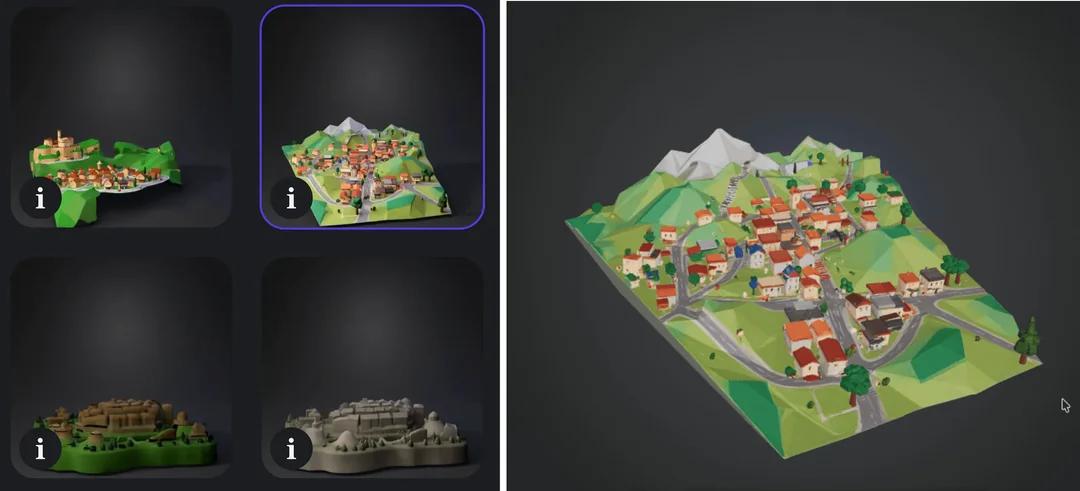
So, Ieocoout changed his mindset: since AI can't make a good map, let AI make a map editor first.
Subsequently, Claude began to develop a full set of in-game editors, supporting: terrain editing; surface material painting; placing, rotating, and scaling models; automatically generating roads, etc. The second week also added a cutscene animation editing feature.
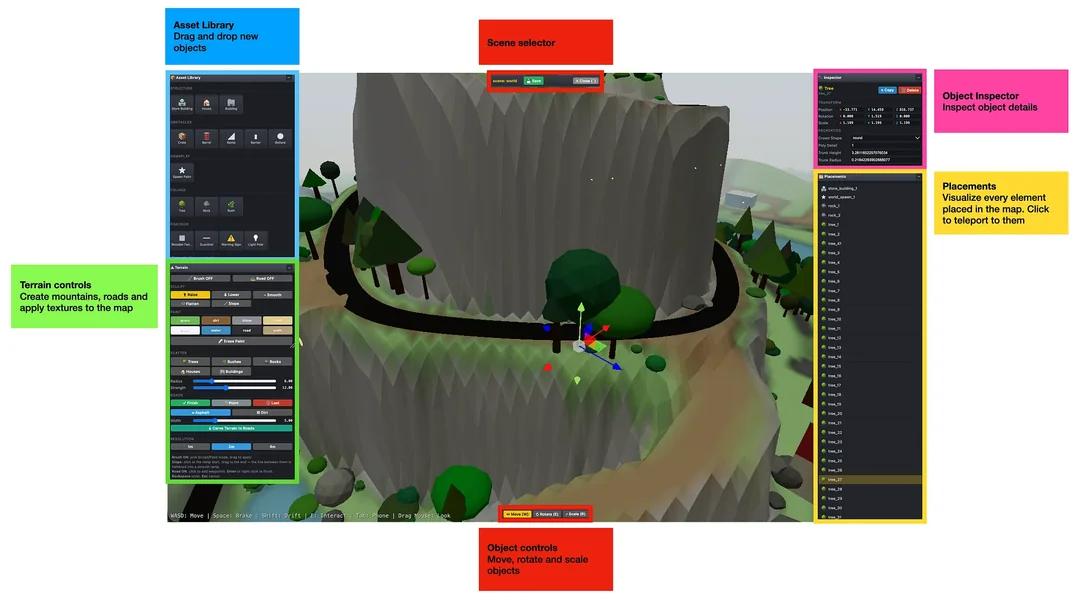
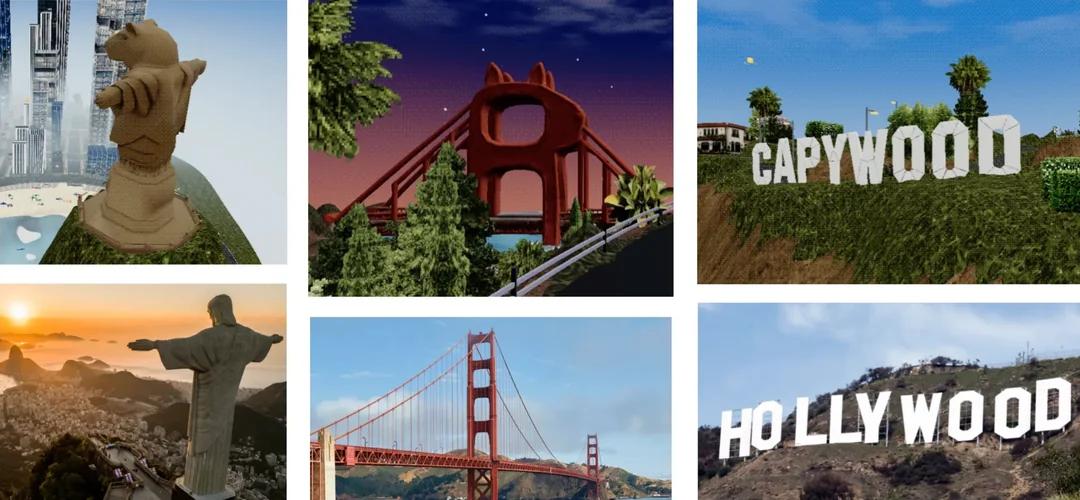
With the editor, he was finally able to manually build the entire map, which was also the part of the project where he put in the most manual effort. Originally, Ieocoout wanted to create a European-style city, but in the end he added a large number of real landmarks, including Christ the Redeemer, the Golden Gate Bridge, and the Hollywood Sign, turning the entire map into an imaginative "hodgepodge".
Compared to the map, online multiplayer was much simpler.
All players connect to the same room through the WebSocket service provided by Cloudflare. After players enter, their position, the food they are carrying, chat content, and horn honking actions are synchronized in real time, and they can even hear music played by nearby players.
However, Ieocoout also stated frankly that this solution is not suitable for large-scale games, because as the number of players increases, the amount of data broadcast by the server will grow rapidly: a 5-player room works completely fine, but if it scales to dozens of players, the server pressure will rise significantly.
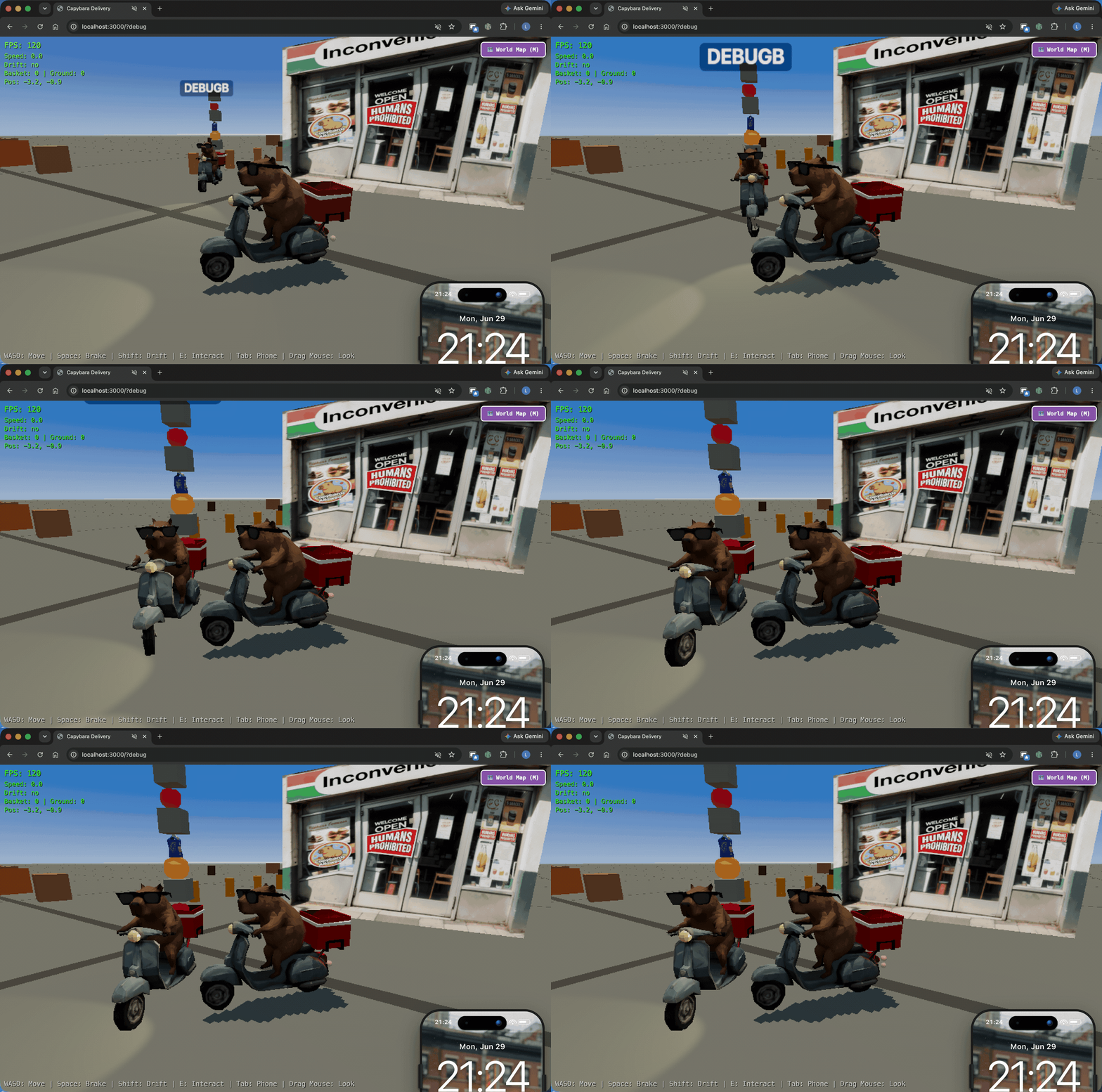
Week 2 of development: AI started helping him "build tools"
After the first week, the core gameplay of the game was completed, and the main work that followed became polishing the experience.
In terms of visual effects, Ieocoout chose the PS1 style: low-resolution textures, limited color palettes, and reduced resolution. The PS1 was a console with very limited performance, so proper textures, color depth, mapping, and filters are needed to achieve that authentic look.
At that time, ChatGPT Images-2 had just been released, so he used it to generate realistic textures, resized them on free websites, and then applied them to the game.
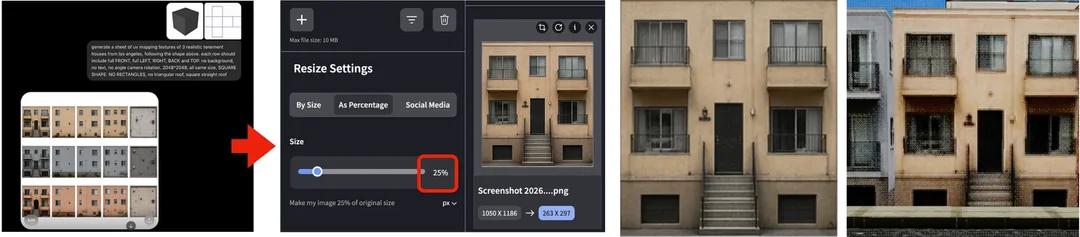
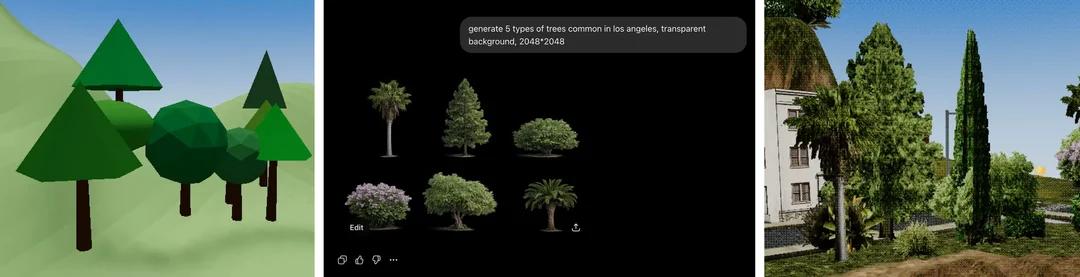
Using the same workflow, he also replaced the original "placeholder trees" with 2D billboard trees. Then, he used AI to generate textures for all materials (asphalt, grass, dirt, wood, sand, water surface, farmland), and had Claude automatically replace the originally monotonous solid-color areas in the map.
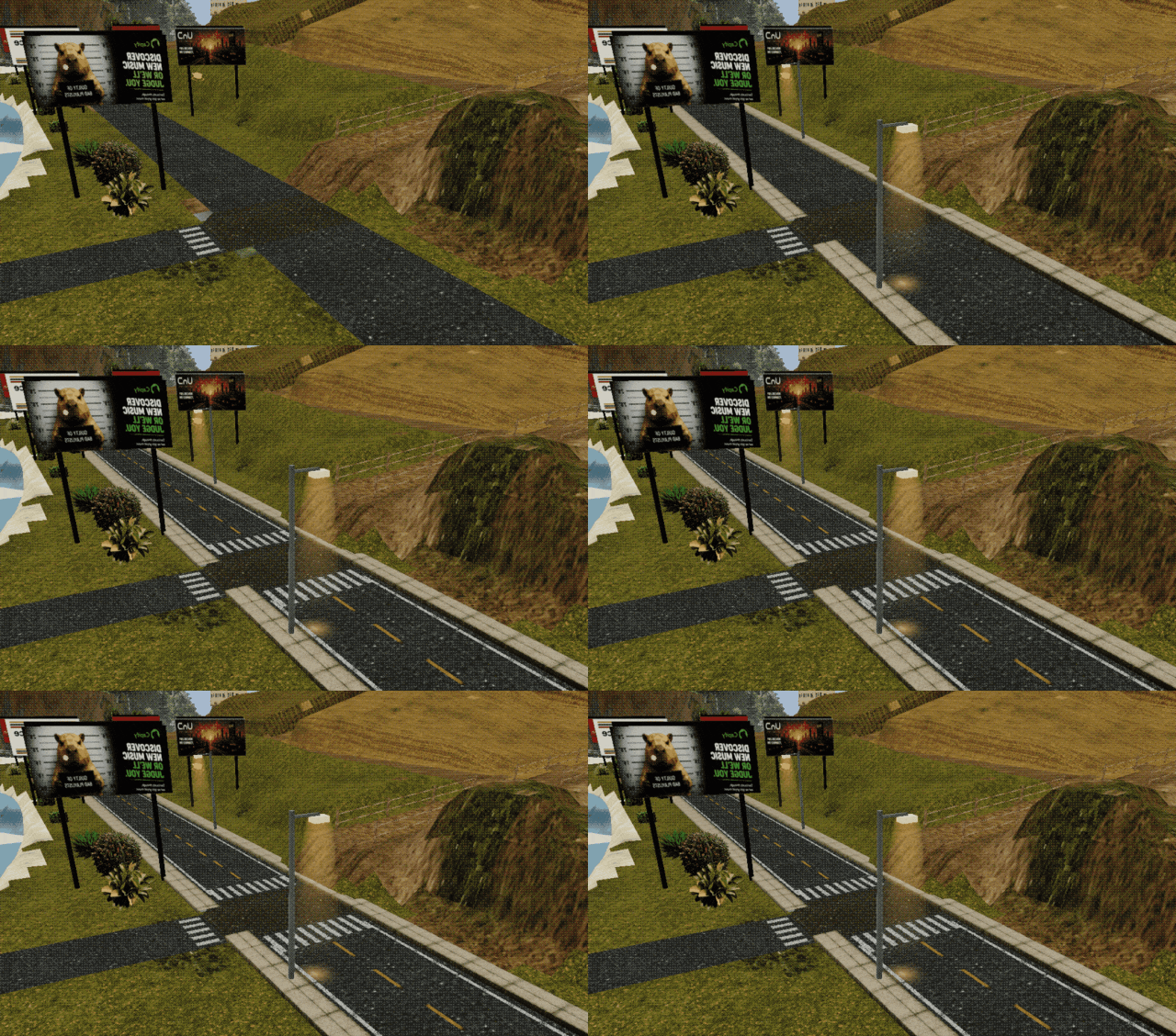
Not only that, he also continued to let Claude develop more tools, such as a road editor.
By just clicking a few control points, it can automatically generate asphalt roads, dirt roads, sidewalks, street lamps, guardrails, and road markings. Even these roads can appear synchronously in the navigation App on the phone — CapyMaps.
After that, he developed a cutscene animation editor — this tool is almost a simplified version of a video editing software.
Ieocoout can freely drag the camera through the timeline, add music, set transitions, and insert overlays. All animations are recorded in real time directly in the game, so if other players are online during recording, they will even appear in the opening animation together.
