They sell ice like Pop Mart, tapping into a 630-billion market
If you're just buying ice, few people would spend over three yuan on a tiny cup of it. But when a full shelf of dazzling mixers — cocktails, fruit juices, sparkling drinks and more — sits next to the freezer, free for you to pair with your ice cup, that simple cup of ice becomes far more than frozen water: it has essentially created an entirely new market segment.
In Chengdu, July temperatures soar to 38°C, with high-temperature warnings already issued. Outside a 24-hour convenience store, staff are unloading boxes of ice cups and sparkling water: "Every store has been restocking lately. I made three trips last night just to replenish supplies."
This is no isolated case. The 2025 White Paper on Chinese Urban Consumer Behavior shows that sales of the ice cup category have maintained a year-over-year growth rate of over 300% for two consecutive years, with urban consumers in first-tier cities consuming an average of 48 ice cups per person annually. A joint forecast from Oliver Wyman and Meituan Flash Purchase projects that China's instant retail market for ice products and iced drinks will exceed 63 billion yuan by 2026.
On one hand, netizens joke that "paying 3.5 yuan for a cup of ice is a scam", while on the other hand, real-world spending data shows sales doubling year after year. Why?
From Japanese Convenience Stores to China's "Universal Formula"
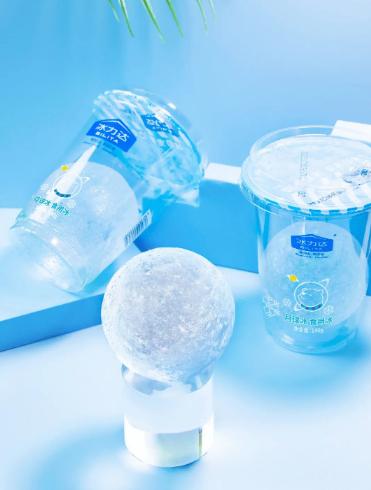
Ice Cup
The ice cup first originated in the Japanese convenience store system, designed to work with coffee machines to standardize iced Americano production. After being introduced to South Korea, it evolved into a trend of pairing ice with bagged beverages. But in China, the ice cup was given new life — the DIY culture.
On Xiaohongshu, there are over 40,000 notes related to "ice cups", and the hashtag #conveniencestoremix on Douyin has accumulated 4.28 billion views. A "universal formula" has taken deep root: one small bottle of liquor + one bottle of beverage + one ice cup = a homemade cocktail. In cities like Beijing, Shanghai, and Chengdu, young strangers meet at convenience store entrances, each holding their own mixed drink to chat while sipping, then disperse after finishing. In just three minutes, they complete a moment of mental release.
It's Not Ice They're Selling, But the "30-Second Bartender Experience"
Anyone calculating costs will wonder: a 160g ice cup costs less than 1 yuan at the factory, yet sells for 3.5 yuan — is that profit margin reasonable?
It makes sense once you switch your frame of reference. A Pop Mart blind box sells for 59 yuan with a factory cost of less than 10 yuan. Consumers aren't buying the plastic figure, but the emotional rush of opening the box. The ice cup follows the exact same logic: 3.5 yuan doesn't buy frozen water, but the instant gratification of "being a bartender for 30 seconds".
This is the overlooked commercial logic behind the explosive sales of ice cups: emotional premium pricing. When a product's selling price far exceeds its functional cost yet consumers keep buying repeatedly, the driving force is never the function itself, but the emotional experience it provides. Blind boxes sell the surprise of unboxing; ice cups sell the ritual of creation — peeling off the lid, pouring in the drink, watching ice cubes crack slowly in the liquid. This process itself generates dopamine.
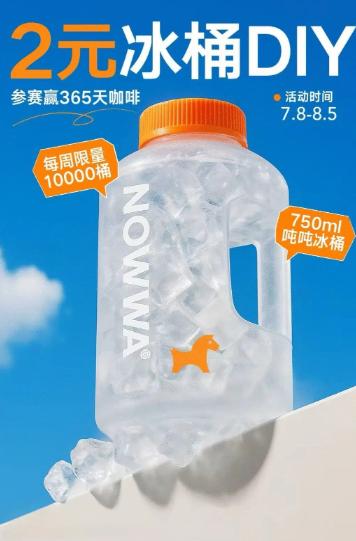
NOWWA Ice Bucket
More crucially, ice cups lower the barrier to being a "bartender" or "barista" to zero. No shakers, no jiggers, not even a recipe required — just pour by feel. Every drink is an original creation, and every one is worth posting on social media. When "creative control" is handed over to ordinary people, repeat purchases are no longer a matter of rational consumption, but emotional addiction. Young people clearly understand that spending 3.5 yuan to buy the sense of achievement that "I can make a signature drink too" is a worthwhile deal.
Of course, ice cups do have real hard costs. Ice made in home freezers is white and frothy, while professional ice cups hold crystal-clear ice — slow-freezing technology extends the ice-forming process to over 16 hours, allowing water molecules to crystallize in an orderly way, producing transparent, hard ice that lasts more than 2 hours at room temperature. Packaging also has high standards: stored at -18°C in cold warehouses, yet must withstand 80-90°C hot coffee when in use — a "fire and ice" test ordinary plastic cannot survive. But ultimately, craftsmanship is the foundation, while emotion is the real premium engine.
Giants Aren't Competing for Ice, But the Market Entry Point
Nongfu Spring invested 28.42 million yuan to expand its edible ice base, Hema launched "slow-melting ice" tailored for cocktail mixing, and Mixue Bingcheng's 1-yuan ice cup sparked franchisee protests while pushing public discussion to new heights. Ice leader Binglida saw its sales surge from 1 million to 50 million cups in three years — a 25-fold increase.
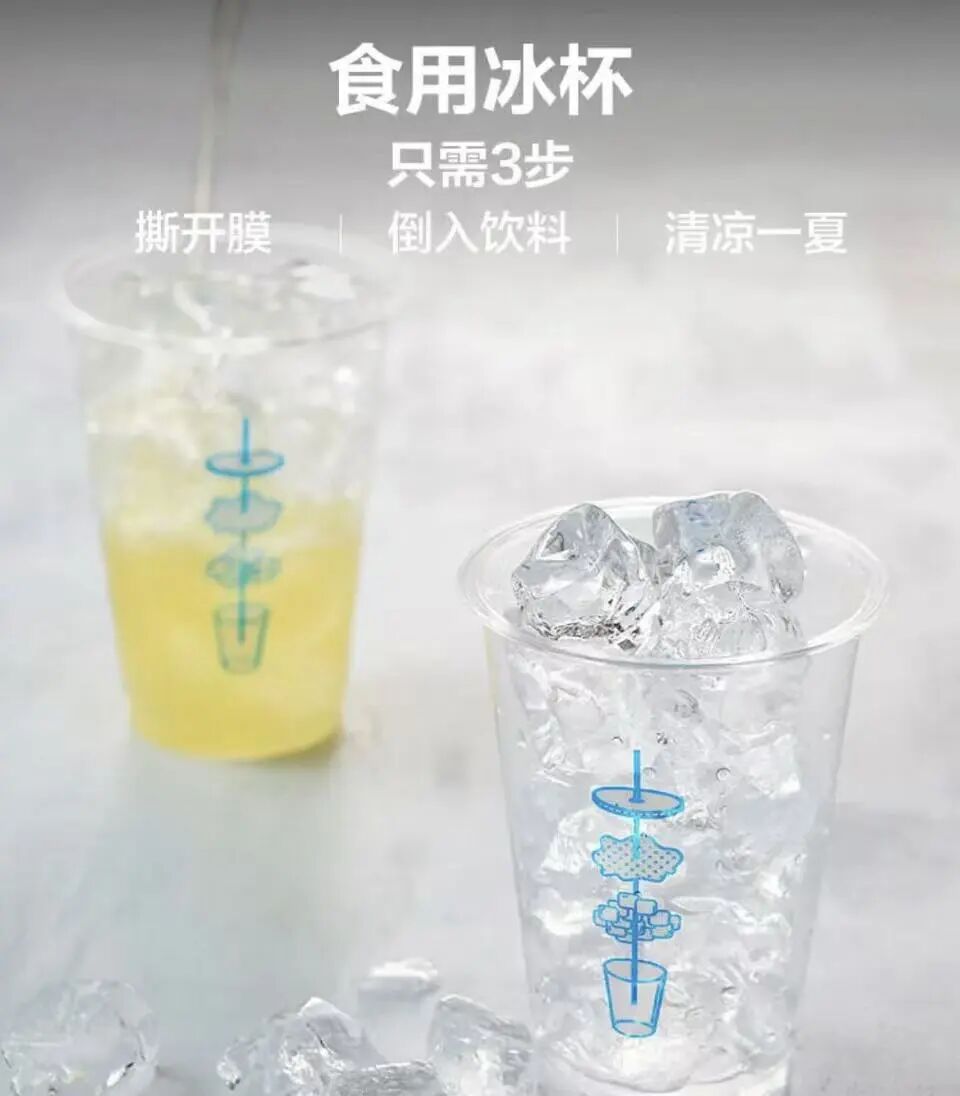
Hema Ice Cup
What giants are scrambling for is the entry point. Ice cups pair well with almost anything, and every customer buying an ice cup is likely to grab an extra bottle of drink or a can of base spirit. It drives far more than its own 3.5 yuan in revenue — it boosts associated sales across the entire shelf. Ice cream distributors share highly overlapping channels with ice cup retailers, allowing near-zero-cost market entry, while combined purchases raise average order values.
Currently, there isn't even a national standard for edible ice in China. But once upon a time, people thought "why pay for bottled water when tap water comes from home?" — now bottled water is a daily necessity. Ice cups are likely to follow the same path: shifting from an optional extra to a must-have. Young people have voted with their feet: they are not buying a cup of ice, but the instant pleasure of "wanting refreshment right now", the sense of control that "I decide what goes in my drink", and the little joy of snapping a photo to share on their social moments.
This article is from the WeChat public account "China Beverage Express", written by Wang Jian, and published with authorization from 36Kr.