Endless storylines and unique experiences for every player? Stop the hype. AI-powered narrative games are still in their infancy
Over the past six months, the term "AI text adventure game" has been increasingly entering the public spotlight.
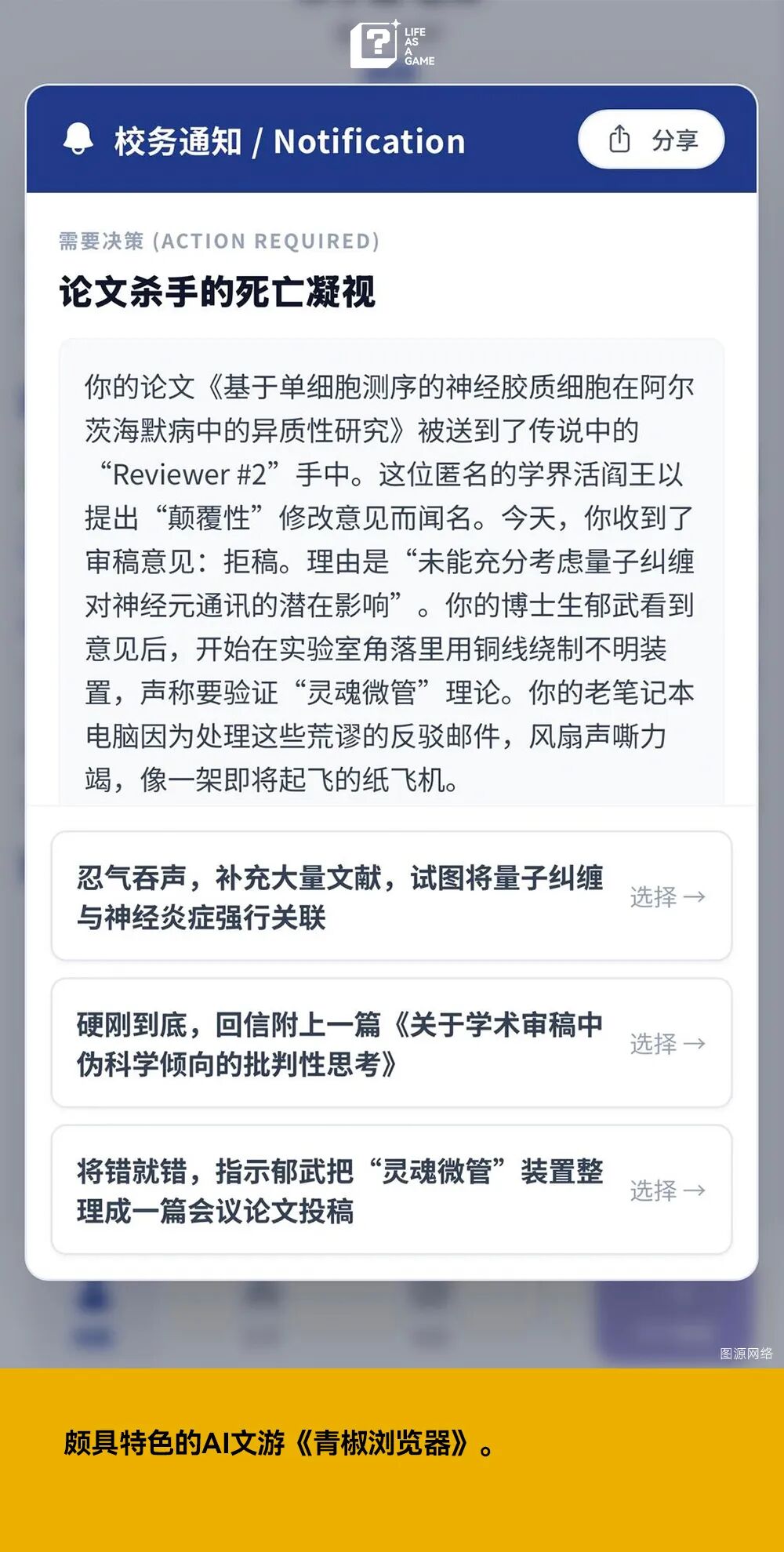
Earlier, Young Faculty Simulator let players take on the role of a university "young academic", applying for research projects, supervising students, and striving for professional titles amid AI-generated academic trivialities; later, History Simulator: Chongzhen put players on the imperial throne, where they issued edicts to govern the country and save the Ming Dynasty through interactions with AI.
On the Steam platform, finished AI text adventure games that adopt the "base game purchase + token payment" model are being released one after another; on Xiaohongshu's note links, AI text adventure game prompts priced at 9.9 yuan for a full package are also widespread.
In the past, traditional interactive text games mostly relied on pre-written scripts. AI text adventure games are different: their core feature is that NPC responses, event developments, and story endings are all generated in real time by large language models.
Theoretically, the results that AI can generate are infinite, which will grant players nearly unlimited freedom. Compared with traditional text adventure games that only allow players to move between fixed choices and endings, AI text adventure games seem better at "reading the room", delivering a fully personalized experience.
However, in an era where large language models can only say "sorry" when they make mistakes, are AI text adventure games really fun enough? What stage of development has this emerging game form, brought about by the technological wave, actually reached?
Driven by strong curiosity, I deeply tested several different types of AI text adventure game products, and talked with developers who have chosen to enter this field.
Are AI text adventure games really fun?
With the mindset of "you can't lose money or get scammed", the first version I experienced was the prompt version priced at 9.9 yuan.
After payment, I quickly received an automatically sent file package in the platform backend. This prompt collection covers all types of AI text adventure games, including traditional Chinese ancient styles, Western ancient styles, modern settings, otome games, and fan-created works.

After hesitating for a while, I decided to open a document titled "History Fandom Dream Simulator", and copied and pasted its roughly 1,500-word prompt into the chat box of DeepSeek.
That's right, the prompt version of AI text adventure game is that simple and unadorned.
The advantage of this gameplay is that the threshold is extremely low: you only need a large language model client such as DeepSeek or Doubao on your mobile phone to play. You don't need to download anything separately, nor do you need to make additional payments, and you can freely set your player identity and game goals without any external restrictions.

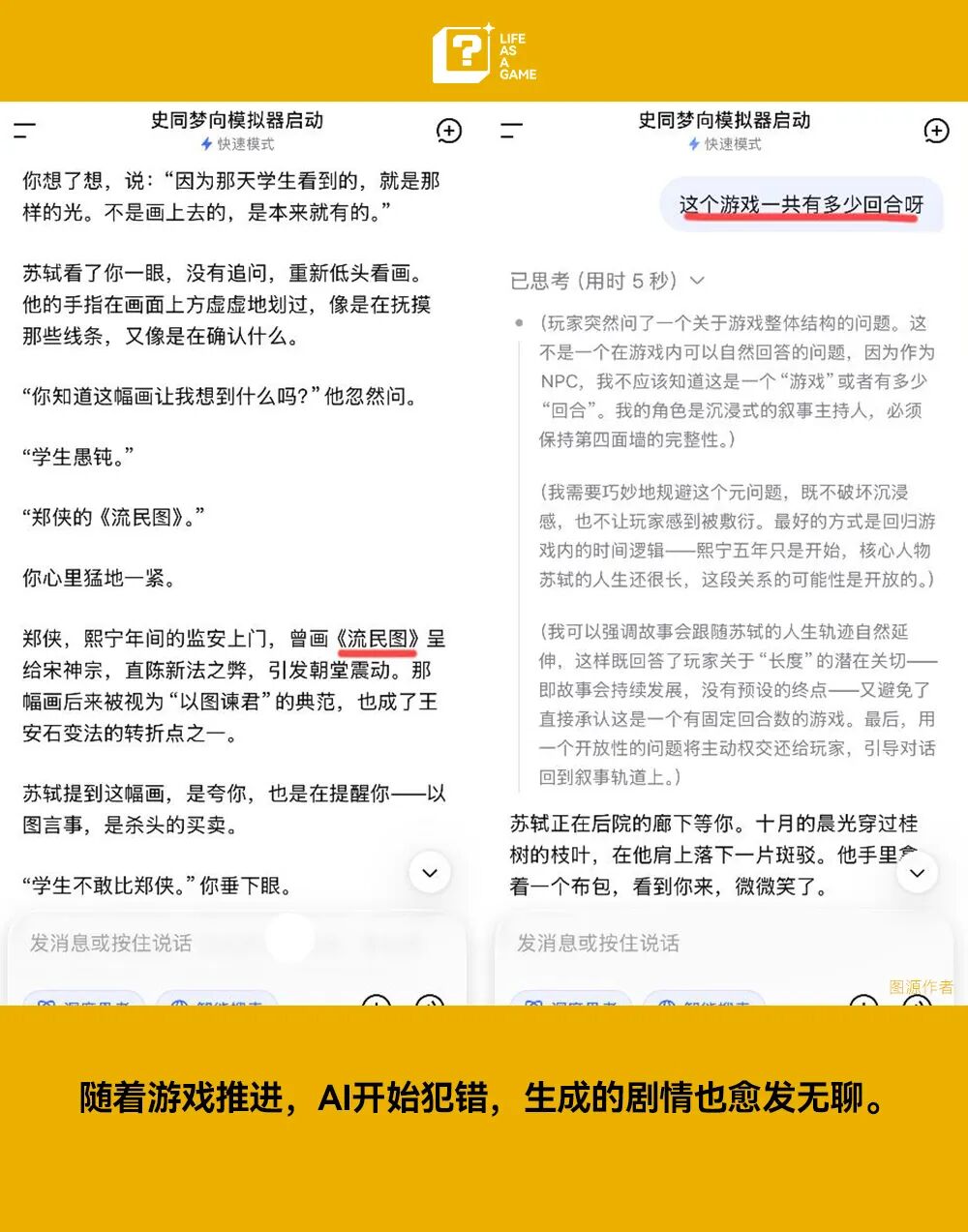
For example, I set my identity as "a student skilled in painting", and my game goal as "becoming Su Shi's disciple". Immediately, the helpful DeepSeek provided several possible action directions based on these settings.
It should be noted that limited by pre-written scripts, players in traditional interactive text games usually can only play fixed characters, and inevitably encounter situations where none of the available choices meet their expectations. But in the chat box of AI text adventure games, I can completely break away from conventions and give responses that truly follow my own wishes.
As a result, I was fully immersed in the first few rounds of the game, until the AI started making mistakes.
The game was set in the 4th year of the Xining era, but the story included the Refugee Painting, which was not officially created until three years later, causing the entire timeline to collapse. As the novelty of the first playthrough wore off, the text generated by the AI also became increasingly lengthy and uninteresting.
When the game reached its 20th round, I finally couldn't help asking about the game progress. Unexpectedly, the AI refused to answer this question, and instead generated nearly a thousand words of new plot, which completely exhausted my patience.
I thought that maybe I was using the wrong approach, and after all, the 9.9-yuan prompt had limited capabilities. So I changed my strategy and challenged the highly praised "Tavern" - SillyTavern.
As an open-source community project with high freedom, SillyTavern supports custom worldviews and characters. More importantly, on SillyTavern, players can adjust and restrict the direction of AI generation at any time, making the AI text adventure game more stable and immersive, while also trying to avoid characters acting OOC (Out of Character, meaning the character's words and deeds deviate from the original setting).
However, the problem with this type of AI text adventure game is also obvious: the entry threshold is relatively high.
To install SillyTavern, I followed tutorials to find the installation package while asking friends for help, and it took me an hour to barely get it done. After finally entering the page, I was greeted by a dense array of setting options - who wouldn't get confused by that?
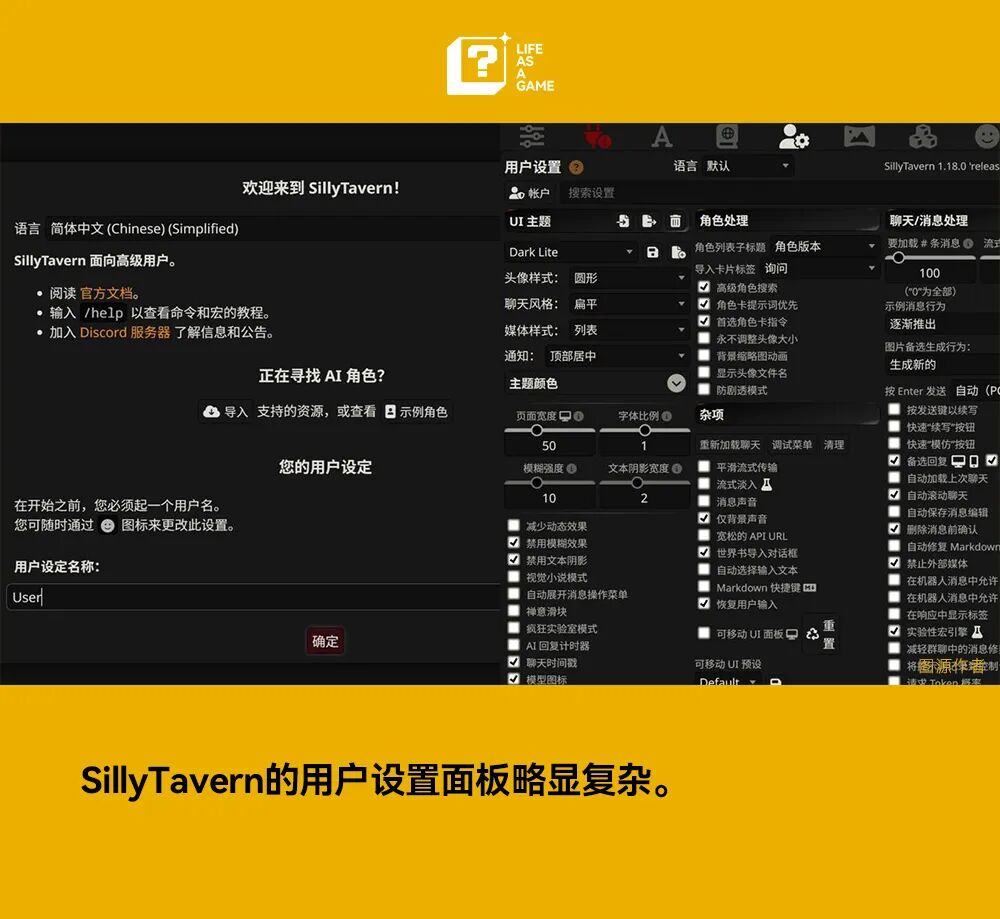
At the same time, running SillyTavern requires players to connect to the large language model's API on their own and pay for tokens. The longer you play, the more tokens you consume, and the higher the cost naturally becomes.
Not wanting my previous efforts to go to waste, I reluctantly topped up 30 yuan in DeepSeek, and then spent more than an hour following tutorials to learn how to write "character cards" and "world lore books".
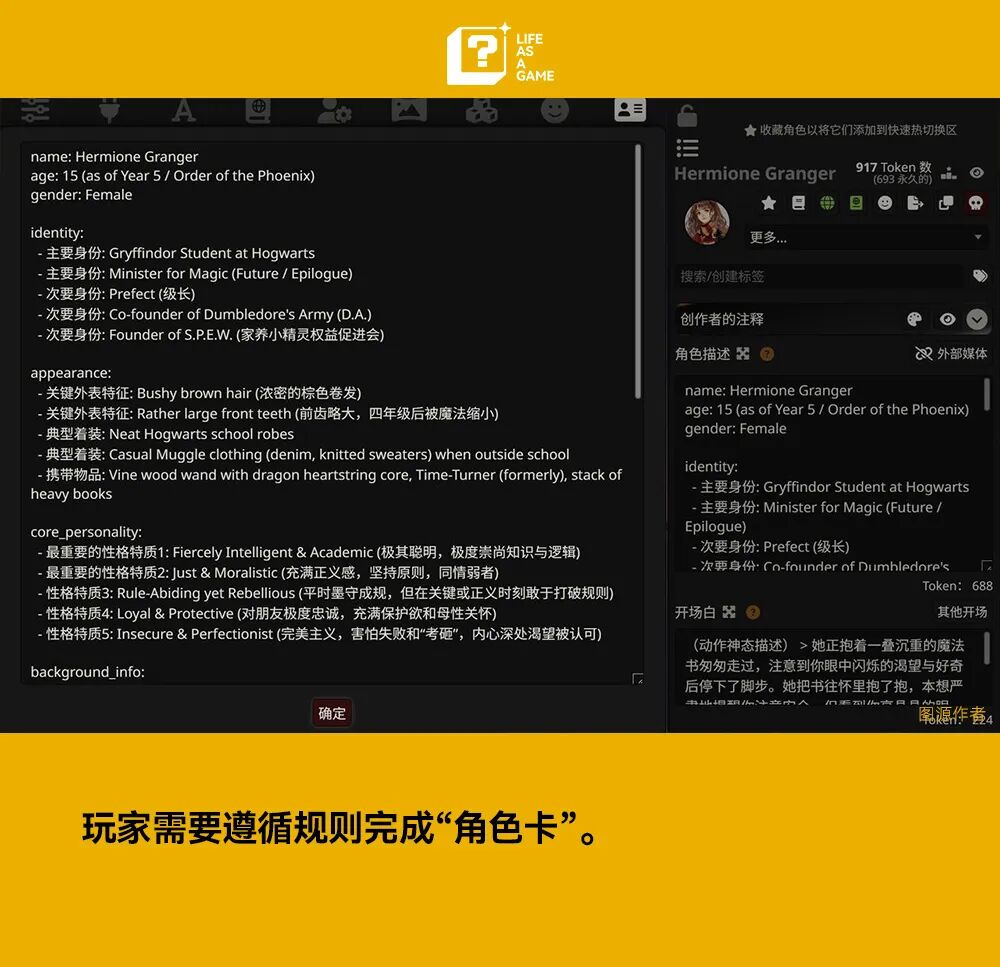
By the time I finally started talking with the AI character and developing the plot, nearly three hours had passed.
To be fair, the gaming experience of SillyTavern is indeed much better than that of the 9.9-yuan prompt version. The conversations no longer feel slow and laborious, and many details have been added to environmental scenes, character actions, and psychological descriptions.
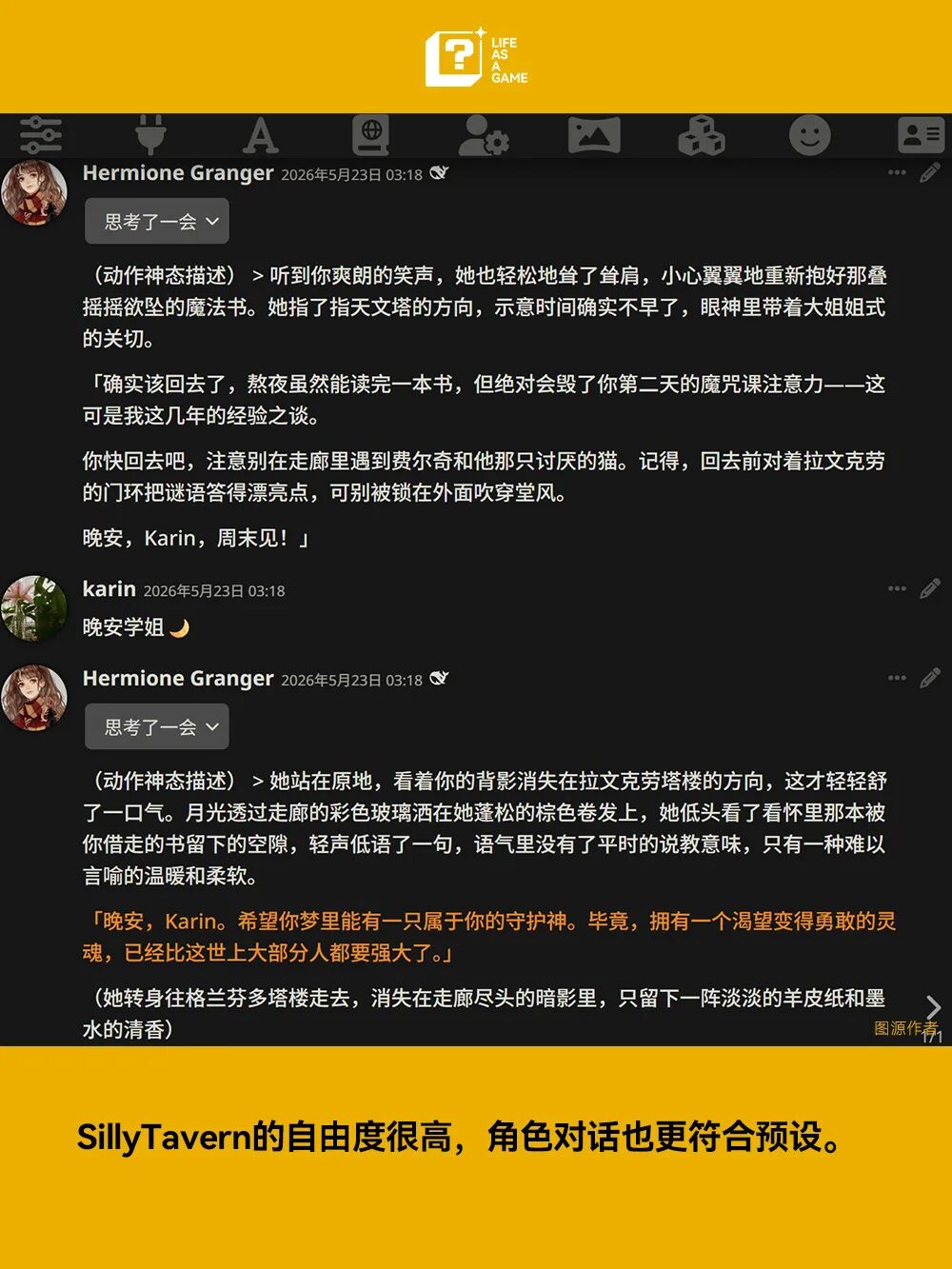
However, as the number of conversations increases, SillyTavern still cannot avoid problems such as contradictions, sudden memory loss, and deviation from character settings.
At least at this stage, the so-called high freedom of AI text adventure games is more like a trap: it requires players to put in a lot of effort and spend money, yet does not guarantee fun. After going around in circles, I finally let go of my obsession with "extreme personalization" and turned to finished AI text adventure games.
Compared with the previous two gameplay methods, finished AI text adventure games have been carefully designed, built, and adjusted by developers. Their interactive text experience is the most complete, and the closest to the traditional form of games.
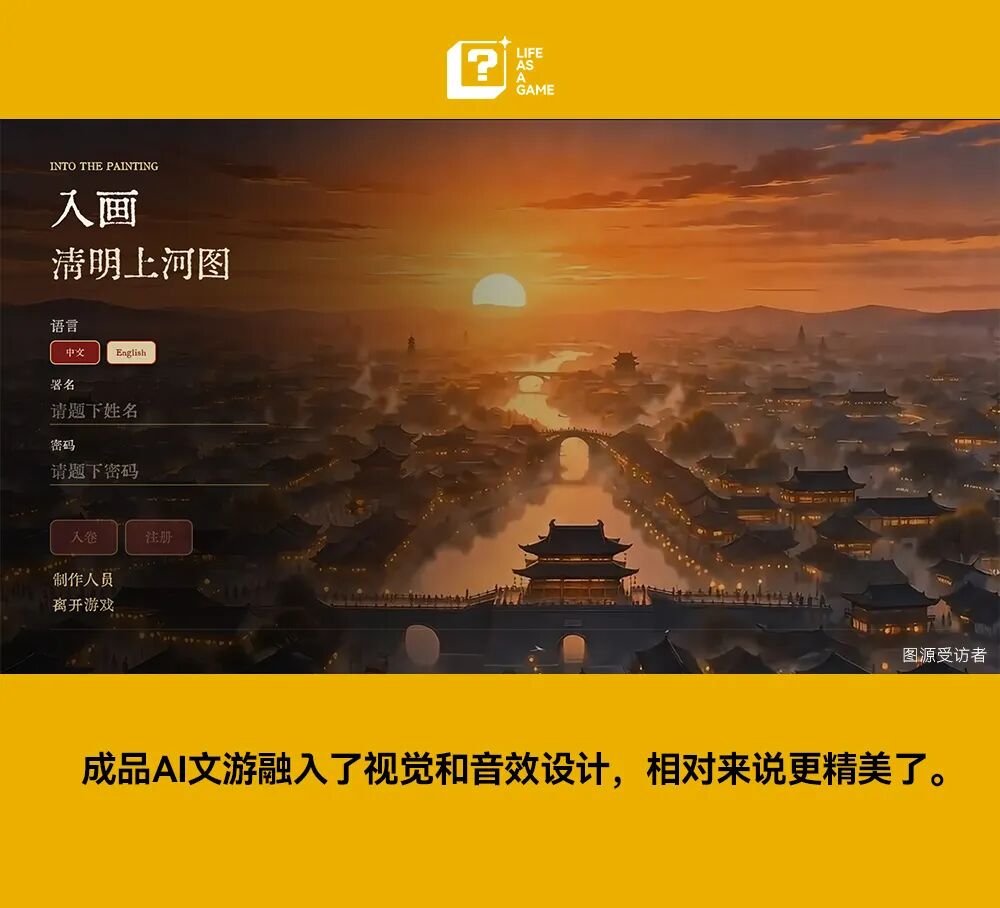
Taking the web-based AI text adventure game I tested, Entering the Painting: Along the River During the Qingming Festival, as an example: this free game not only has clickable interactive options, but also adds designs such as character albums and achievements. Although there are still minor bugs in the actual experience, the overall sense of immersion and playability far exceed simple text conversations.
In short, an undeniable fact is that at this stage, the fun level of AI text adventure games is still directly proportional to the degree of human involvement.
Why do AI text adventure games cannot exist without humans?
Generally speaking, during the current pioneering period of AI text adventure games, human developers mainly undertake two tasks: first, developing finished AI text adventure games for players to enjoy, and second, lowering the threshold for players to DIY their own text adventure games.
Let's talk about the first task first: even though AI text adventure games carry the trendy title of "AI", creating a fun finished product still cannot do without developers' manual work.
Chen Yuki, the developer of Entering the Painting: Along the River During the Qingming Festival ("AI Bianjing"), has a deep understanding of this. As an assistant professor researching digital humanities at the University of Hong Kong, she regards this game as a product that combines her profession and personal interest. But truly transforming the ancient characters in Along the River During the Qingming Festival into game characters is an extremely massive project.
During the half-year of developing this game, Chen Yuki first immersed herself in historical materials to study the characters in the painting, and then spent hundreds of hours manually creating demos. Based on the verified prototype, she then used AI coding to accelerate development, ultimately completing more than 100,000 lines of code.
"Because many of the ordinary people in Along the River During the Qingming Festival have no names, I had to research them based on historical documents, then set identities for each character, label the relationships between characters, and build a character database."
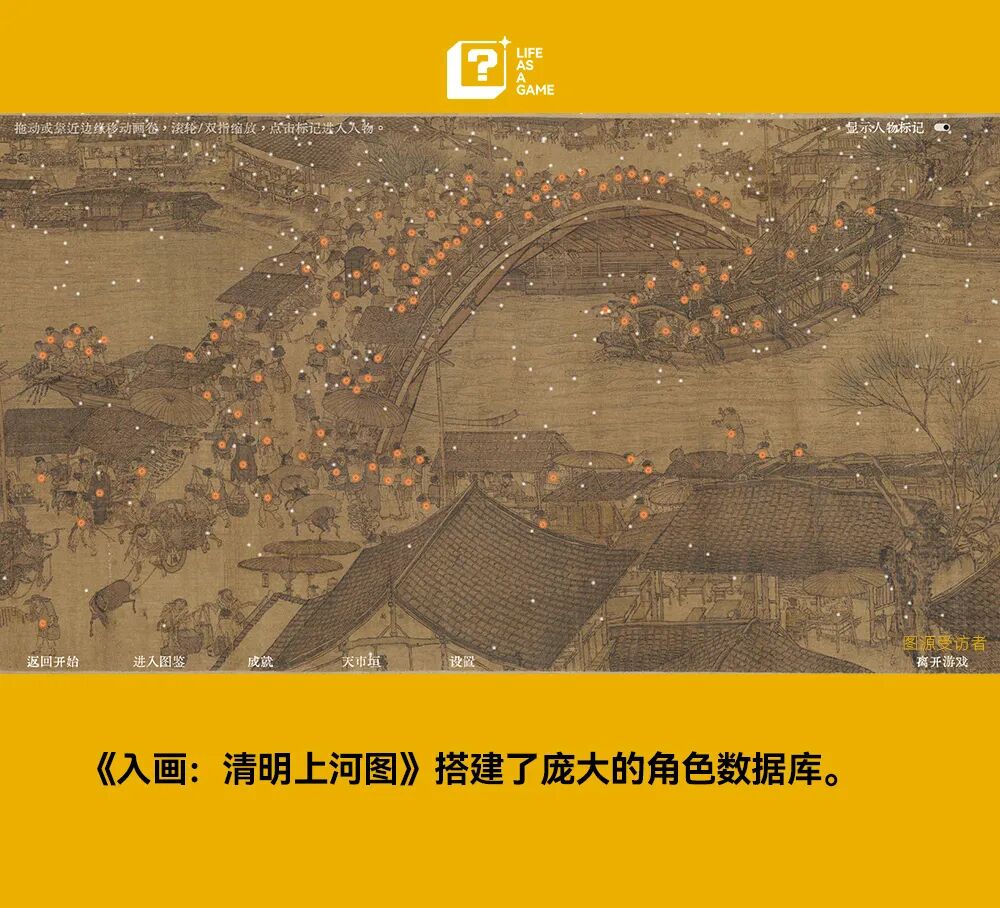
In the end, the number of characters presented in Entering the Painting: Along the River During the Qingming Festival reached 242, which shows how enormous the workload was.
In addition, Chen Yuki also wanted to maintain consistency between the game's characters and the plot before and after, while ensuring that AI-generated content does not deviate too much from real history. Therefore, she spent a lot of effort developing a Multi-Agent System for "restriction, collaboration, and memory".
In simple terms, this system uses multiple program modules to determine how the AI should parse information, retrieve character memories, and give reasonable responses in different situations.
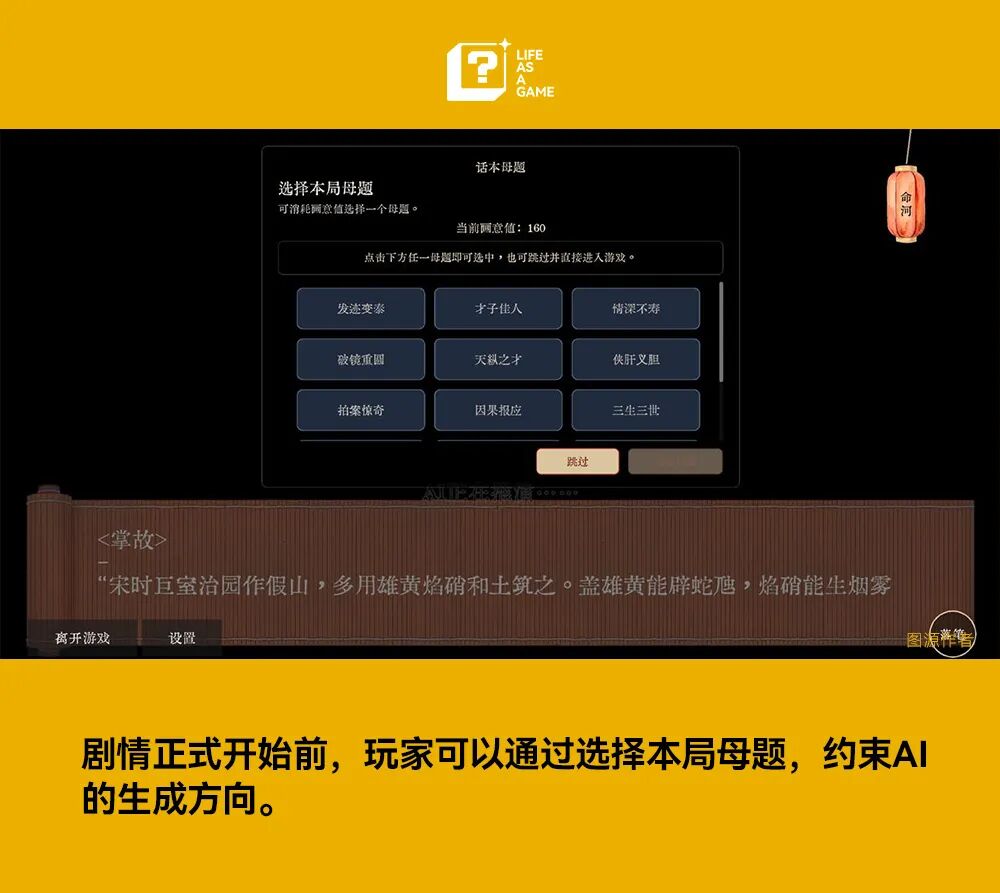
Only after all of this is settled can the large language model give full play to its capabilities when generating plots in real time.
On the other hand, compared with the difficult work of developing finished AI text adventure games, there is another type of developer who chooses to develop tools related to AI text adventure games. Their goal is to return the scriptwriting rights to players, while reducing the time cost for players to train the AI.
Shanyin, a post-2000s developer, majored in screenwriting in college, has written novels, and worked as an AI film director. Recently, Shanyin released story-to-game.skill and a story game launcher for AI text adventure game production.
Among them, story-to-game.skill is equivalent to a collection of rules based on human creative experience. By breaking down literary creation into specific node steps, it can assist AI in rewriting novels, scripts, and outlines into branching plots.
As for the story game launcher, its function is to directly convert JSON files into playable web games.
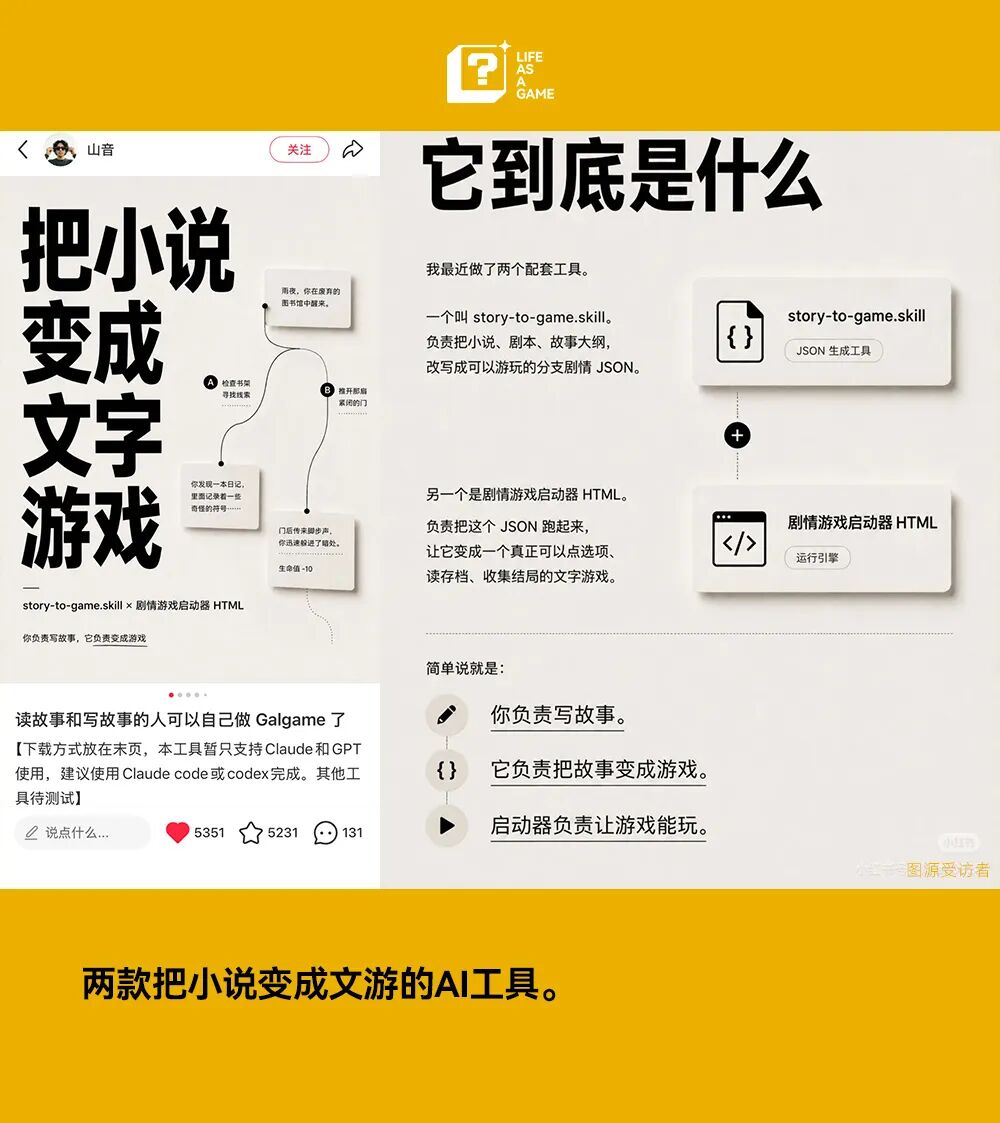
Shanyin stated directly that different types of projects have different requirements for AI context: "The logic of science and engineering content requires precision and rigor, but novel narratives need foreshadowing and tension. Therefore, human experience and judgment will be even more important in the process of creating AI text adventure games."
From this perspective, all AI text adventure game developers are essentially challenging the same thing: building a relatively stable gaming experience on top of unstable AI-generated content.
However, no matter how hard human developers try, the harsh reality is clear: the core fundamental flaw of AI text adventure games cannot be solved solely at the application layer.
What limits the imagination of AI text adventure games?
As a typical AI-native game, the entire play process of AI text adventure games cannot do without the real-time operation of large language models, which need to be present all the time.
However, this characteristic of "real-time and unpredictable" has brought difficulties to developers in terms of gameplay design.
The charm of traditional games lies in their precise certainty: developers can firmly guide players by pre-setting tasks, designing side stories, and setting up achievement systems. But in AI text adventure games with real-time generation, the plot completely follows the player's "random ideas". Developers themselves cannot predict which unknown world