The more you sell, the less you earn? The dilemma of "diminishing marginal returns" for floor washers
"I spent over 4,000 yuan on this robot vacuum back then, but now it's just gathering dust in a corner," Xiao Lin complained while pushing his newly bought floor washer across the floor.
Three years ago when moving into a new home, Xiao Lin ignored others' advice and bought the most popular all-in-one sweeping and mopping robot at the time, believing he could finally achieve "zero-effort housework".
His friends told him at that time that a simple floor washer would be enough, but he thought they had no idea how liberating it was to free your hands completely.
However, after using it for more than half a year once the novelty wore off, various problems emerged one after another: the robot used to clean the entire house on a full charge, but now it dies after just one living room; sometimes Xiao Lin would set it to clean before going out, only to find it stuck somewhere when he got home, leaving the floor half-mopped and forcing him to bend over to "rescue" it; what's more, frequent water changes and base station cleaning were just as troublesome as mopping the floor manually.
This year during the 618 shopping festival, Xiao Lin didn't look at those seemingly magical "intelligent cleaning robots" anymore. Instead, he bought an all-in-one washing, mopping and suction floor washer for over 1,000 yuan. After using it for half a month, he only had one feeling: it's incredibly practical.
In the past few years, cleaning appliances have been a star track in the home appliance industry. According to monitoring data from AVC, during this year's 618, domestic cleaning appliances exceeded 8 billion yuan in online retail sales alone, with shipments of over 4.5 million units. The two core categories of robot vacuums and floor washers accounted for more than 64% of total shipments, both maintaining a stable growth rate of 7-8%.
As national subsidy policies gradually fade away, the entire category is starting to diverge with continuous price declines. For leading brands, should they actively expand overseas to maintain market share, or revitalize the existing domestic market? Should they shift towards embodied intelligence, or stick to expanding into multi-scenario applications such as lawn mowing and pool cleaning? A new round of commercial games is unfolding.
The more they sell, the less they earn?
The "anxiety" of robot vacuums and floor washers is also the anxiety of the entire cleaning appliance industry, which essentially constitutes a business narrative about "diminishing marginal returns".
After more than a year of subsidy incentives, a large number of demand-driven and upgrade-oriented users completed product replacements in advance during the policy window, which overdraws market demand. The high base from the same period in 2025 naturally puts pressure on the year-on-year data for 2026.
However, the final 618 data turned out to be far more "satisfying" than expected, yet the credibility of this performance report is questionable.
According to a research report from Guojin Securities, during the 618 period, both total sales volume and revenue of home appliances across all channels declined, with traditional large home appliances such as color TVs, air conditioners and refrigerators seeing a drop of 6% to 14%. Cleaning appliances became one of the few growing categories. Monitoring data from AVC shows that while the offline cleaning appliance market remains weak, the online market saw a slight counter-trend growth: robot vacuum sales increased by 11.4% with revenue up 7.1% to 4.35 billion yuan; floor washer sales rose by 26.8% with revenue up 8.2% to 2.71 billion yuan. Meanwhile, niche categories such as mite removers and fabric cleaners also delivered impressive growth.
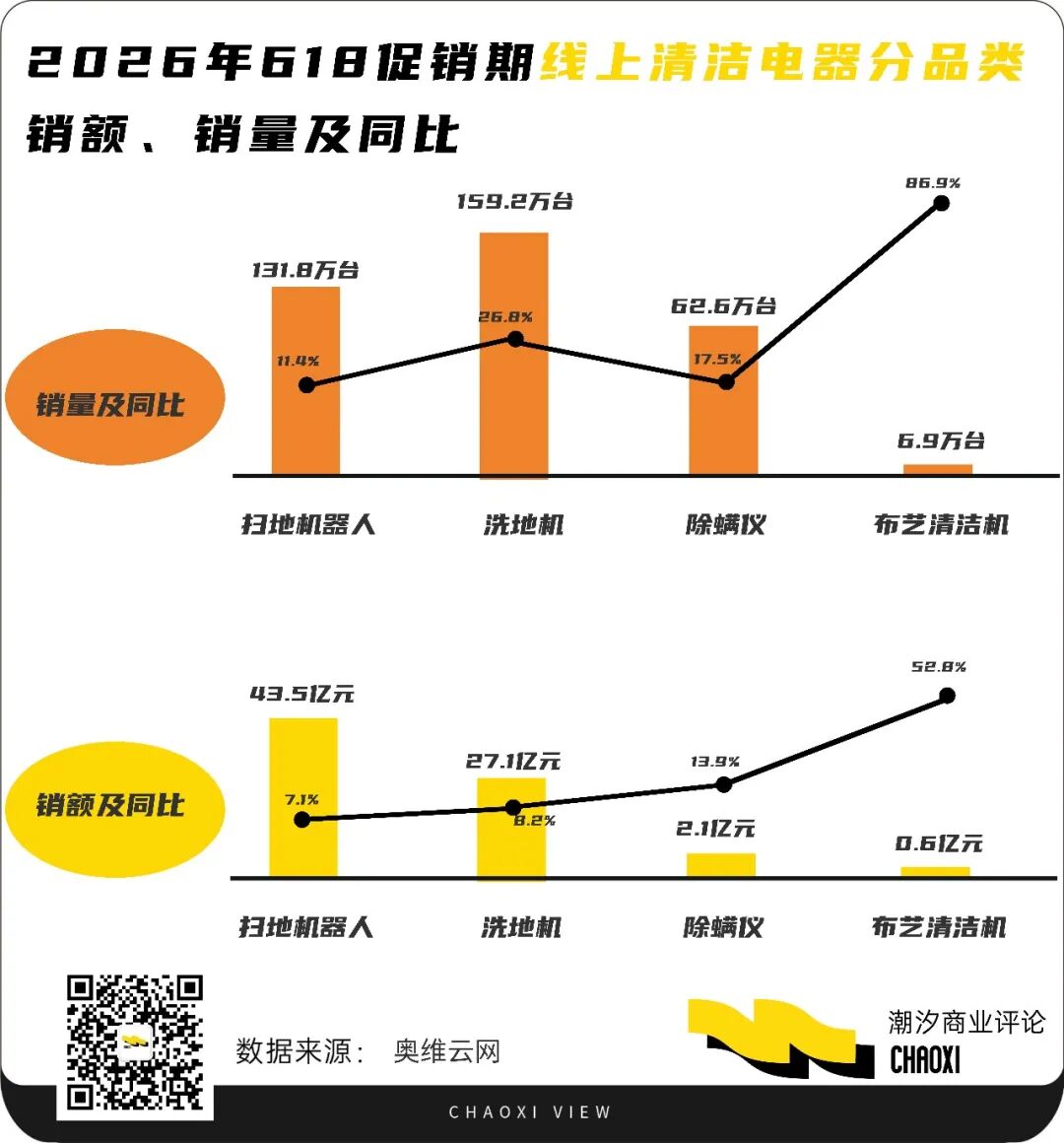
Nevertheless, a signal cannot be ignored: the revenue growth rates of both robot vacuums and floor washers are lower than their sales volume growth rates. This means that while more units are being sold, the average selling price per unit is declining.
The online resilience of cleaning appliances like robot vacuums and floor washers mainly comes from two aspects: on one hand, it is supported by local subsidies in regions such as Jiangsu, Shanghai, Hubei and Chongqing (instead of driven by national subsidies); on the other hand, it is the combined result of direct price cuts on e-commerce platforms like JD.com, and brands adopting a strategy of trading lower margins for higher volume.
When it comes to individual brands, the overall industry concentration is approaching its ceiling. Data from Luo Tu Technology shows that in May 2026, the top 4 robot vacuum brands accounted for a combined 86.6% of total sales volume, a 5 percentage point increase year-on-year. Ecovacs, Roborock and Dreame take the top three spots, with Midea's Mijia ranking fourth, leaving only a handful of players at the table.
In terms of performance announcements, Ecovacs disclosed data showing that during the 618 period, the total GMV of its dual brands Ecovacs and Tineco across all channels reached 4.02 billion yuan, a 23% year-on-year increase. Meanwhile, Roborock cited AVC data announcing that its full-cycle 618 revenue grew by 23% year-on-year, with its robot vacuum category capturing 35.73% of the domestic market share, ranking first in the industry.
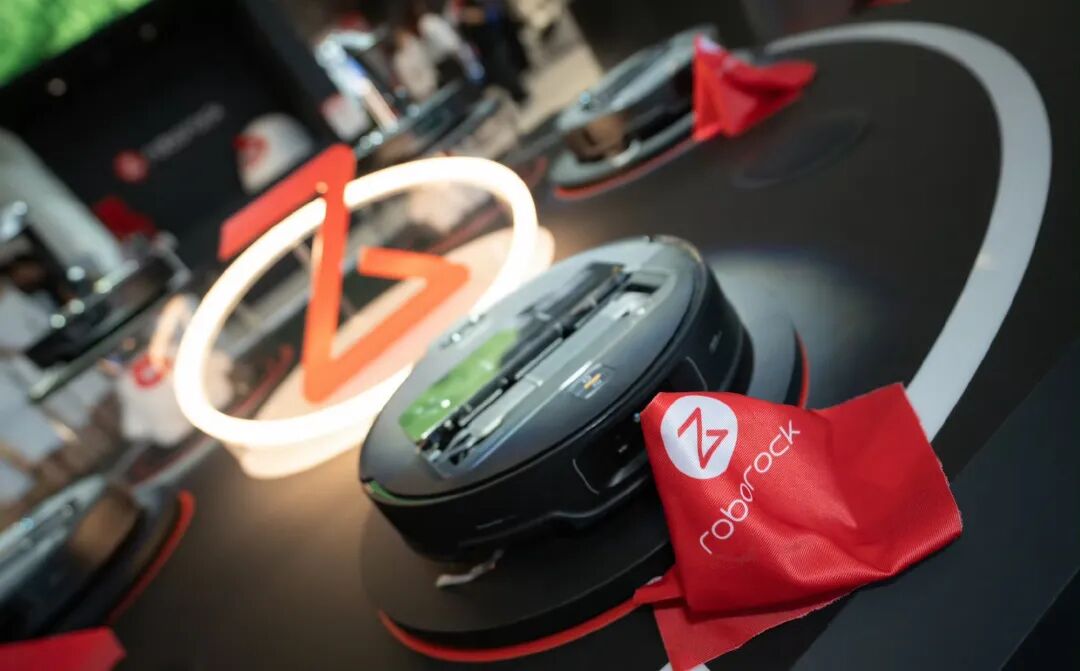
Both companies claim to be the number one, but with different statistical calibers: Ecovacs includes Tineco's performance in its group metrics and emphasizes full-channel coverage across online and offline markets; Roborock focuses on its leading market share specifically in the defined categories of cleaning appliances and robot vacuums. The difference in statistical standards reflects the subtle competition between the two sides over "how to define industry leadership".
However, what deserves more attention than "who is number one" is the incremental growth itself. Against the backdrop of continuous price declines, revenue growth is mostly driven by short-term demand stimulation from promotions rather than a real improvement in purchasing power. The market has become a gaming table for giants, and on this table, the fewer players there are, the higher the marginal cost of acquiring new customers will be — which is a true reflection of diminishing marginal returns at the industry level.
In the robot vacuum sector, the fierce head-to-head competition between Ecovacs and Roborock is exciting, but the market landscape is already quite clear. In contrast, the floor washer track seems to have a transparent competitive situation, but under the surface, undercurrents are far more turbulent than they appear.
How intense has the price war become? How wide is the moat left for the category champion? For a market defined by its pioneer, why is the pioneer itself the first to face pressure? The answers to these questions are far more complicated than simply figuring out "who sells the most".
The struggles and efforts of the floor washer industry
Zooming in on the details, this chill of "growing volume without growing profits" is most acutely felt in the floor washer track, which used to be the most profitable segment, and its category champion.
If the robot vacuum track is still a seesaw battle between two dominant players, the price war in the floor washer track has already reached a stage of intense close combat.
Data from AVC shows that in the first quarter of 2026, the proportion of online floor washer models priced below 2,000 yuan has risen to 60% from 45% in the same period of 2025, with the average selling price down 11% year-on-year. More than 60% of products are crowded in the low-price range, breaking the once widespread industry consensus that "you should buy premium floor washers".
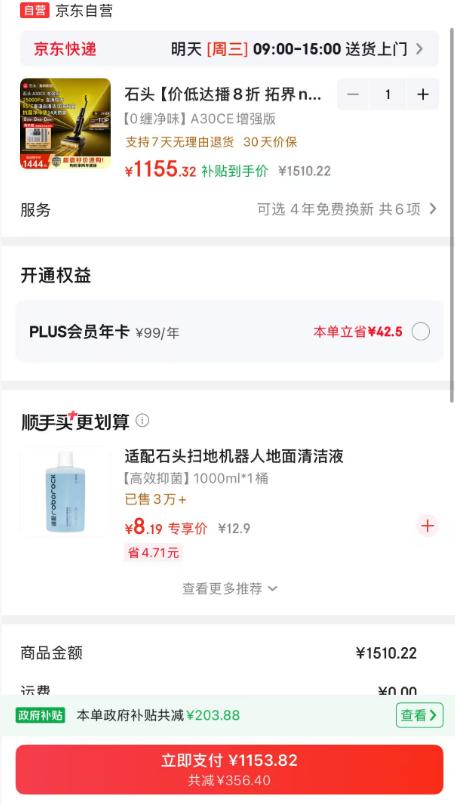
The severity of the price war can be seen from Roborock's aggressive product strategy. Its A30 CE enhanced floor washer, which features 25,000Pa suction power and 95°C high-temperature self-cleaning, is priced at less than 1,200 yuan after subsidies.
As the pioneer of the floor washer category, Tineco is also facing a tough situation. According to financial reports, Tineco's full-year revenue in 2025 only increased by 0.7% year-on-year, nearly stagnating. In the first quarter of 2026, its online revenue was approximately 670 million yuan, down 14% year-on-year. Multiple broker research reports revealed more details: in the first two months of 2026, Tineco's online revenue decline far exceeded the industry's 4.19% drop, and its online market share fell back from over 36% in the same period last year to 32%. While its offline channels remain solid with a market share of 63.94%, the loss of its main online battlefield undoubtedly creates opportunities for competitors.
Tineco's dilemma is not just the dilemma of a single brand, but the inevitable squeeze that a category champion will encounter when the industry reaches an inflection point. Upstream, it faces price encirclement from Roborock and Dreame; downstream, unbranded products using generic public molds (non-patented manufacturing molds) are dragging down profit margins; ahead, floor washing robots are trying to redefine what "cleaning" means. Tineco, surrounded by enemies from all sides, is a typical example of brands that once dominated the market with a hit product, but failed to find a second growth curve after industry dividends faded.
Signals from the second-hand market are equally striking. On Xianyu, high-end floor washers originally priced at nearly 2,000 yuan have a residual value of only 300 yuan after being used for less than two years, with a depreciation rate of over 80%.
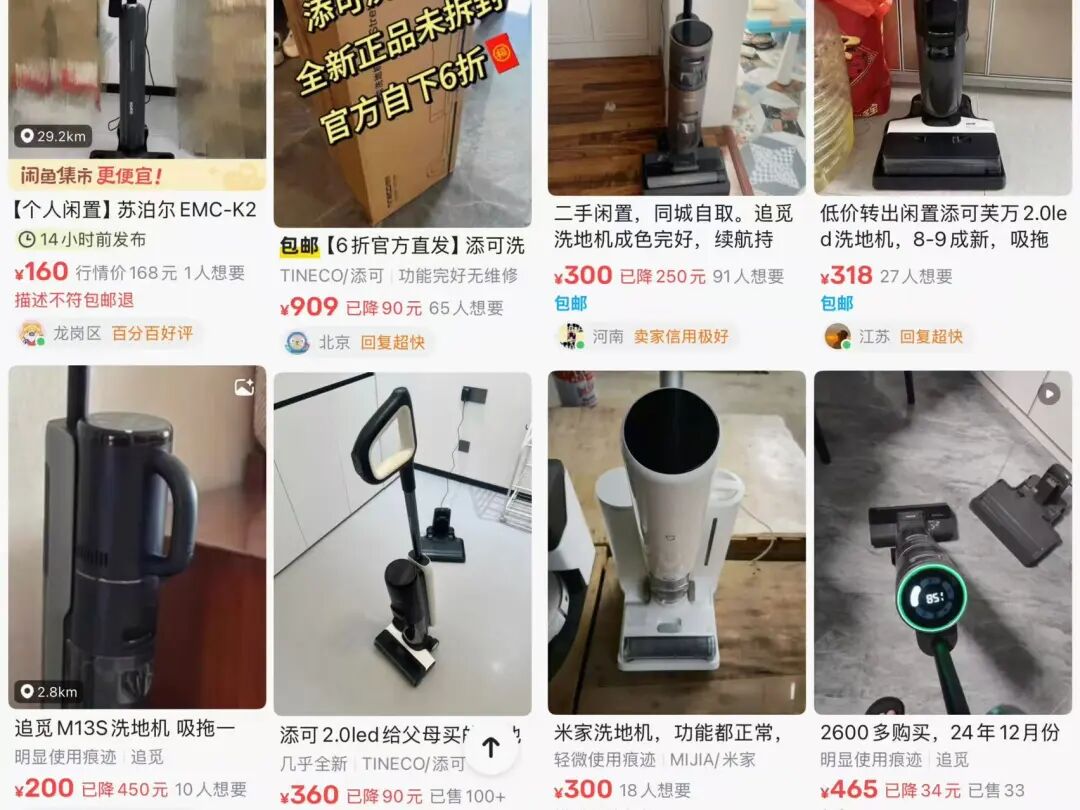
The rapid depreciation of second-hand residual value not only undermines consumers' willingness to upgrade their products, but also exposes the weaknesses of these products in terms of durability and long-term value. When consumers realize that their machines will depreciate faster, their willingness to pay a premium for new products naturally drops sharply.
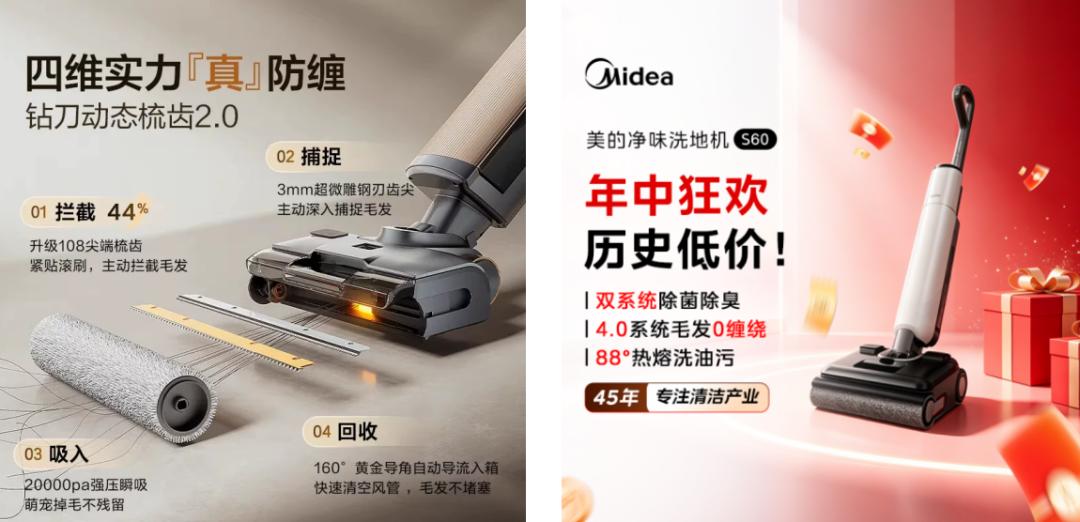
Tineco is not the only competitor either. Brands like Uwant, Midea and Haier are leveraging their channel and supply chain advantages to penetrate the market. Their products may lack innovation, but stable quality and competitive prices are enough to capture a share of the market. Not to mention the hidden erosion from unbranded and small manufacturers, who sell hundreds of little-known brands with similar features at extremely low prices on non-traditional e-commerce platforms. Without brand premiums and with minimal marketing costs, they are dragging down the market bottom line using mature public molds.
Although AVC points out that dozens or even hundreds of long-tail brands in the cleaning appliance track are dividing up the remaining less than 10% of the market share, and the number of tail brands is continuously decreasing, this "long-tail" competition is still dragging down the profit level of the entire category.
Tineco has not failed to try to break through the predicament. To get rid of its reliance on a single category, Tineco started diversified exploration very early. In the kitchen scenario, Tineco launched the "Foodie" series of smart cooking machines; in the health field, it deployed the "Drinkie" series of smart water dispensers.
The problem is that these explorations have never broken free from the physical constraints of "handheld operation". No matter how smart the Foodie cooking machine is, it still requires users to prepare ingredients and stir-fry manually; no matter how convenient the Drinkie water dispenser is, it is essentially just a smaller and more refined version of a water purifier. When the industry direction shifts from "handheld tools" to "autonomous robots", Tineco's diversification is more like moving around within the same quadrant rather than competing from a completely new dimension. According to financial reports and public information, these new categories have not yet formed a large-scale second growth curve.
Tineco's struggles mirror the struggles of the entire floor washer category. When a pioneer is pushed to the corner by its followers, and new technological species are emerging on the horizon, a question arises: has the floor washer, this "disruptor", reached the end of its journey?
The floor washer's predicament is essentially a problem of "positioning"?
In the past, the idea that "handheld devices will eventually be replaced by robots" was almost a universally accepted final conclusion in the cleaning industry. After all, from the linear logic of technological evolution, the outcome seemed to be predetermined from the very beginning.
However, this logic has a flaw: it assumes that the ultimate goal of home cleaning is "zero human intervention", but the real demand scenarios are not like that at all.
The choices made by people like Xiao Lin perfectly illustrate this point.
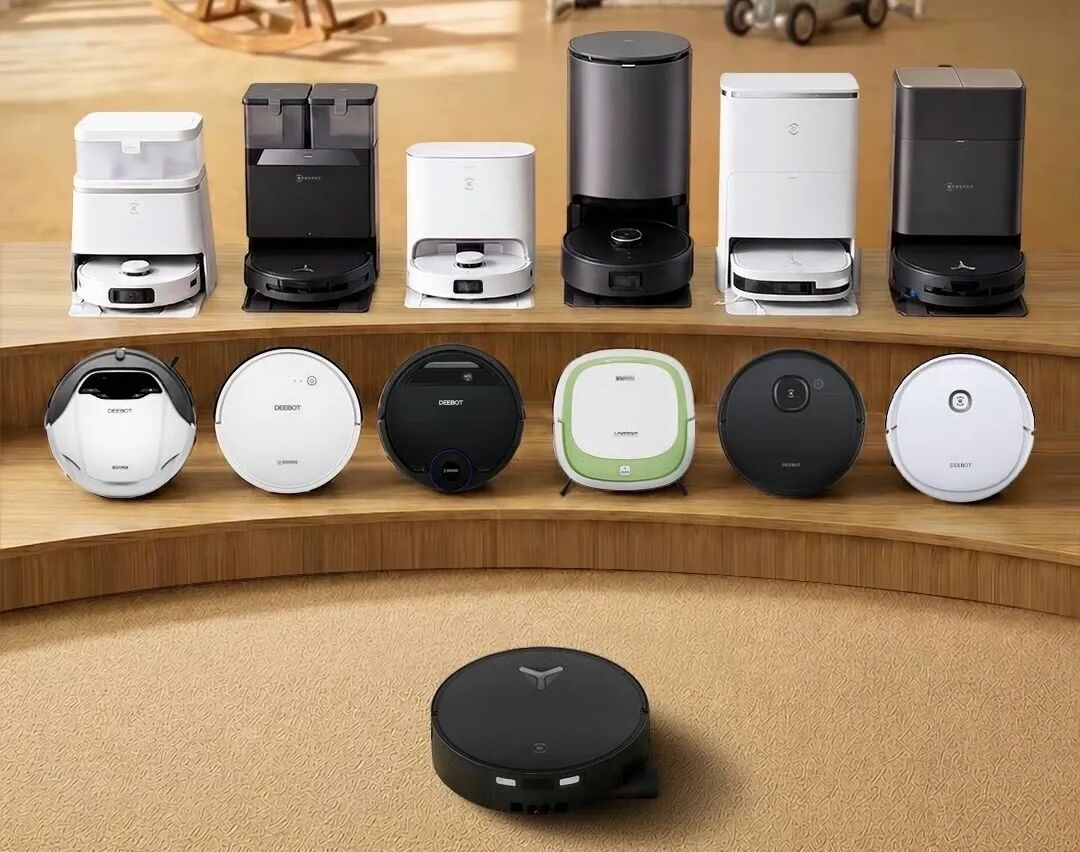
In 2025, Ecovacs popularized the "running water cleaning" technology, and sweeping and mopping robots started a new round of iteration. The market size of roller-type running water cleaning robots quickly exceeded 1 million units, accounting for 76% of the total robot vacuum revenue. The replacement of human labor by machines seemed unstoppable. According to the logic of the "final conclusion theory", handheld floor washers should have been squeezed out of the market, but during the 2026 618 shopping festival, their sales not only did not decline, but increased by 11%. While robots were capturing market share in the high-end segment, floor washers found their solid user base in the mass market.
In other words, the assertion that "handheld devices will eventually be replaced by robots" is fundamentally wrong.
Although sweeping and mopping robots solve the problem of "no need for manual operation", real home cleaning is not that simple. Spilled soup next to the dining table, greasy floors after cooking in the kitchen, water stains in the bathroom — these scenarios do not require a robot that needs to plan its path, but a tool that you can pick up casually and finish cleaning within a minute.
The core value of floor washers has never been "replacing humans", but "enabling people to complete cleaning in less time and with less effort". They are just another upgraded version of the traditional manual sweeping and mopping tools that families used before.
The booming sales of 1,000-yuan floor washers also prove another point: good products will speak for themselves in sales, but consumers are no longer willing to pay a premium. When product features and cleaning effects are largely the same, "high cost-effectiveness" will naturally replace "high premium".