Who will save the convenience stores?
The innovative transformation of China's retail industry is advancing in tandem with policy support and mounting industry pressure.
Nine government bodies including the Ministry of Commerce jointly issued the "Opinions on Accelerating the Innovative Development of the Retail Industry" on July 2, 2026. The document explicitly sets expanding domestic demand as its foundation, guided by the positive interaction between supply and demand, to accelerate retail innovation through rational layout planning, improved product and service quality, coordinated optimization of existing and new operational assets, and fair competition between online and offline channels.
The introduction of this policy responds to the real-world challenges facing offline retail. Data released by the National Bureau of Statistics on June 16, 2026, covering total retail sales of consumer goods from January to May 2026, shows that by retail format, among qualified retail enterprises, convenience stores and supermarkets saw year-on-year sales growth of 6.8% and 3.6% respectively, while specialty stores, department stores, and brand specialty stores experienced year-on-year sales declines of 1.2%, 1.8%, and 7.6%. In other words, the overall downward pressure on offline retail continues unabated.
Judging solely from macroeconomic data, convenience stores appear to be the most resilient format amid the retail downturn, yet the actual landscape within the industry is far more complex than these growth figures suggest.
Survey data on China's convenience store industry in 2025, released by the China Chain Store & Franchise Association (CCFA) in April 2026, shows that as of December 31, 2025, the top 100 convenience store operators in China operated a total of 208,000 outlets, a net increase of approximately 11,000 from the previous year, representing a 5.6% growth rate that marked a decline from the prior year's pace.
Counterbalancing this scale expansion is declining per-store profitability. According to the "2026 China Convenience Store Development Report" jointly published by international accounting firm KPMG and CCFA in May 2026, affected by continuous drops in foot traffic and average transaction value, the downward trend in daily revenue for Chinese convenience stores widened further in 2025, with daily sales falling to 4,453 yuan, down 3.9% year-on-year. Among sampled enterprises including Meiyijia, Tianfu, Lawson, FamilyMart, and 7-ELEVEn, daily customer visits (per store per day) decreased by 8.7% year-on-year, while average transaction value (yuan per customer per order) dropped by 0.2% year-on-year.
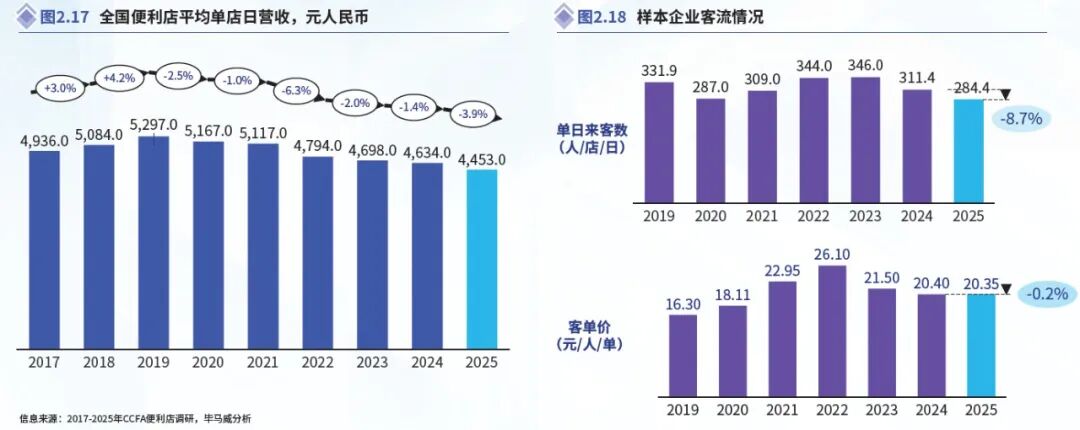
The reality of increasingly dense store networks paired with dwindling customer flow has become an unavoidable challenge for China's convenience store sector. This dilemma has little to do with the format itself, but largely stems from shifts in the external competitive environment. From daily meals to everyday necessities, when on-demand retail delivery proves more convenient than visiting a convenience store, and when snack discount stores and hard discount stores attract more consumers with their cost-effective offerings, convenience stores — once the primary format serving immediate needs — are now forced to embark on a complex, drastic restructuring journey, with their future trajectory remaining uncertain.
In the era of traditional e-commerce, convenience stores were relatively less affected by online disruption due to their proximity to consumers, outstanding instant response capabilities, and public service attributes. Regrettably, convenience stores could not remain an exception to industry-wide pressures.
Confronting Customer Diversion Pressures
Domestic chain convenience stores are facing mounting pressure of customer diversion from multiple retail formats.
Over the past year, fierce competition among internet giants has extended from food delivery to full-category retail. Leveraging traffic advantages and mature fulfillment networks, these platforms have partially replaced the convenience advantage of physical stores, continuously diverting in-store customer demand away from convenience stores.
In the food delivery scenario, core convenience store categories such as breakfast items and beverages have borne the brunt of this shift. At the height of the delivery platform price wars, subsidized coffee on platforms was even cheaper than bottled drinks. Even when a convenience store was located just downstairs, the combination of doorstep delivery convenience and price advantages drew massive customer traffic online.
In the broader retail scenario, Meituan, Alibaba, and JD have built half-hour fulfillment networks covering food, beverages, daily necessities, and emergency supplies, relying on hundreds of millions of users on their core platforms. These networks can meet almost all immediate, high-frequency daily needs that once belonged to convenience stores. Among these players, JD launched the JD Convenience Store initiative back in 2017, digitally transforming offline outlets to equip them with front warehouse capabilities. Meituan and Alibaba have launched on-demand retail brands directly targeting the convenience store format — Songshu Convenience and Taobao Convenience Store — both of which are rapidly expanding their footprints.
In the current chaotic on-demand retail landscape, Songshu Convenience and Taobao Convenience Store stand out as particularly notable players. These lightning convenience stores operate 24/7 exclusively online, carrying 5,000 to 10,000 SKUs (compared to 2,000 to 3,000 SKUs in traditional convenience stores) spanning food, beverages, daily necessities, beauty and personal care, 3C electronics, and maternal and child products. They surpass traditional convenience stores in operating hours, product variety, and cost-effectiveness.
Songshu Convenience was launched by Meituan based on its open-model lightning warehouse framework, emphasizing official self-operation while also offering franchise opportunities with headquarters-provided operations support. According to the Songshu Convenience official website, as of March 31, 2026, the brand operated over 700 online stores across 76 cities, including more than 100 self-operated outlets.
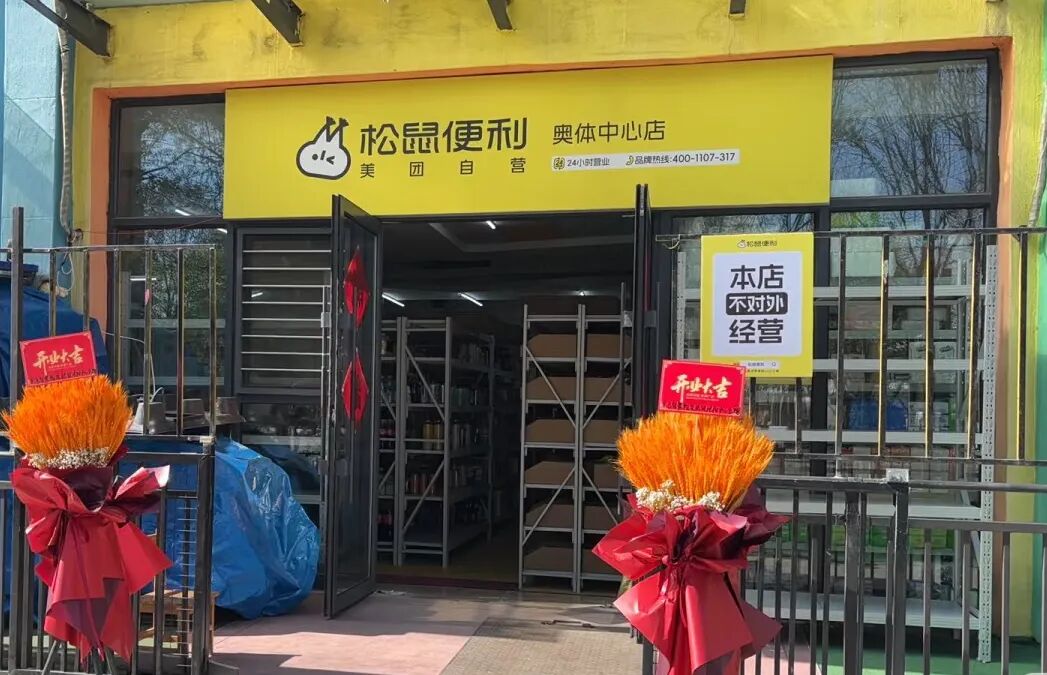
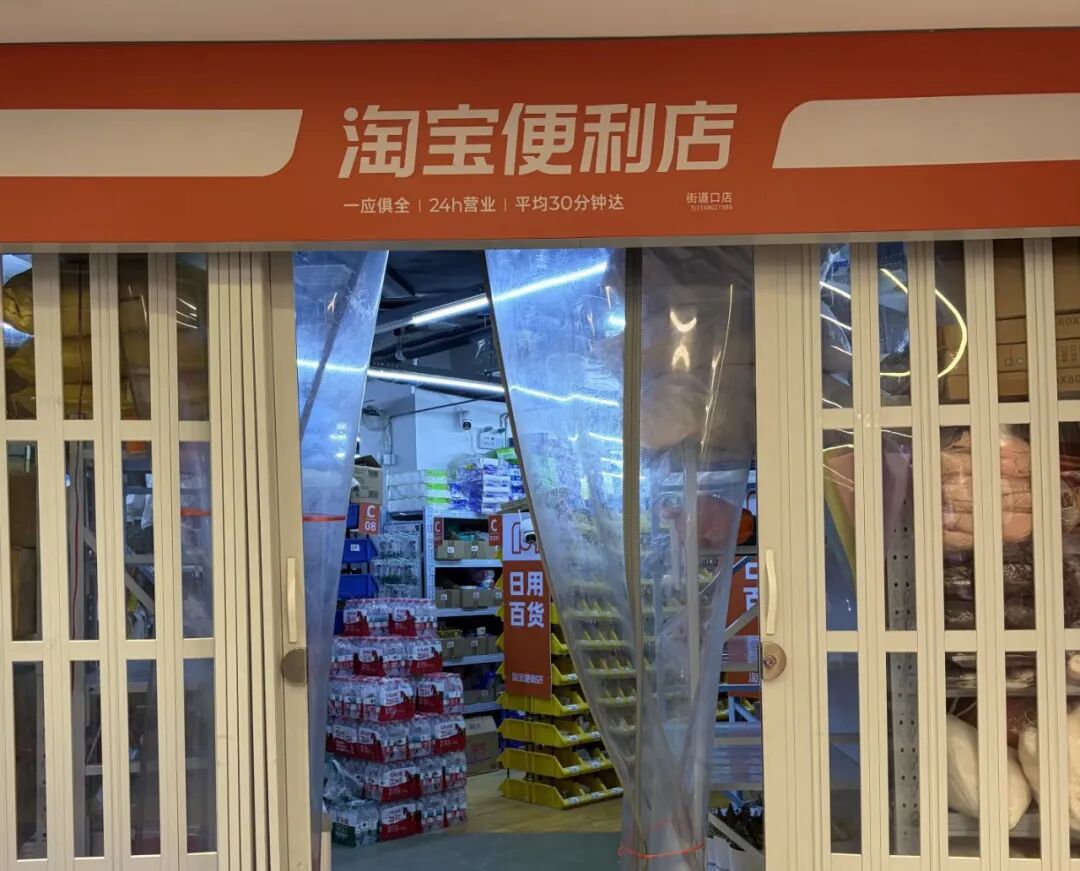
Taobao Convenience Store was launched by Taobao Flash Purchase at the end of October 2025, with a business model largely mirroring Songshu Convenience. Focused primarily on franchising, it includes both digital transformation of existing offline convenience stores and brand upgrades for independent community lightning warehouses. According to reports from media outlets including 36Kr, on the eve of the 2026 May Day holiday, Taobao Convenience Store raised its 2026 store opening target from the initial 1,000 units to 3,000 units.
Snack discount stores, leveraging extreme cost-effectiveness, have exerted a certain impact on convenience store sales for overlapping product categories. According to insights from Hike Finance, snack discount stores focus on food and beverages, leveraging supply chain advantages of direct sourcing from origins and large-scale centralized procurement, paired with small-margin high-volume strategies, to divert stockpiling-focused and price-sensitive consumers with terminal prices significantly lower than those of convenience stores.
The current snack discount track has formed a duopolistic expansion pattern, with store density still increasing rapidly. According to the financial report of Mingming Henmang Group, as of December 31, 2025, the total number of stores under its two brands — Snacks Busy and Zhaoyi Snacks — reached 21,948, with over 7,500 net new stores added in 2025. According to Wanchen Group's Hong Kong Stock Exchange prospectus, as of February 28, 2026, the total number of stores under its brands including Haoxianglai and Laopo Daren had exceeded 19,500. Currently, the two groups operate over 40,000 combined stores, continuously penetrating communities, campuses, and other scenarios, with operating hours gradually extending, blurring the competitive boundaries with convenience stores.
The fast-expanding hard discount sector is also impacting convenience stores. Hard discount stores typically streamline product SKUs to around 2,000, mostly relying on private label offerings, focusing on high cost-performance, and similarly emphasizing meeting consumers' immediate needs — especially in high-frequency essential categories such as baked goods, prepared foods, snacks, and beverages, which heavily overlap with convenience store offerings.
Since the start of 2026, the overall store opening pace in the hard discount sector has accelerated noticeably. Traditional retail players represented by hard discount pioneer ALDI continue to densify their outlet networks, while internet-backed operators including Freshippo's Super Cost-Effective NB, Meituan's Happy Monkey Supermarket, and JD Discount Supermarket are also accelerating their expansion. Going forward, as store density continues to rise and coverage networks expand, hard discount formats may pose more direct competition to convenience stores.
The Difficult Path to Stand Out in a Saturated Market
Facing the new competitive landscape, convenience store operators must find ways to break through.
Responding to the disruption from on-demand retail, an increasing number of enterprises are adopting the "if you can't beat them, join them" strategy. According to a CCFA survey of sampled convenience store enterprises in 2025, by the end of 2025, nearly 40% of sampled enterprises had launched on-demand retail operations. On average, on-demand retail sales accounted for close to 40% of total sales for these sampled enterprises, representing an 11% year-on-year increase. Additionally, as cloud unattended operation technology becomes more widespread, more enterprises are applying it to their stores, breaking the boundaries of traditional operating hours.
However, for convenience stores, on-demand retail is a double-edged sword. While it expands service coverage and brings incremental online revenue, it also gradually erodes traditional in-store consumption habits, reduces the likelihood of impulse secondary purchases, and dilutes service premiums and brand perception. A more practical issue is that after layering costs such as platform commissions, delivery fees, and traffic promotion expenses, convenience store operators may see expanded revenue scales, yet their profits do not grow synchronously. This explains why the survey data shows 60% of enterprises remain cautious and wait-and-see about on-demand retail deployment.
Enhancing product strengths, particularly strengthening fresh food categories, has become a key strategy for convenience store operators to differentiate themselves. Fresh food, as a high-margin category that helps convenience stores build competitive barriers, is seeing an industry-wide trend of upgrading from standardized packaged fresh products to on-site prepared meals, gradually transforming convenience stores into "small canteens" for nearby consumers.
Leading brands have made significant progress along this path. Japanese-backed convenience store giants including Lawson, 7-ELEVEn, and FamilyMart continuously iterate their product offerings and enrich dining scenarios, leveraging mature fresh food R&D systems and supply chain capabilities. For example, 7-ELEVEn opened a "Small Canteen FoodBar" store in Guangdong, emphasizing on-site prepared meals and dine-in scenarios, while offering regionally distinctive fresh food products tailored to local Cantonese dietary preferences. Leading Korean convenience store brand CU launched its Tmall Global overseas flagship store in June 2026, with official disclosures noting that offline physical stores are also in preparation. CU pursues a differentiated positioning from Japanese-style convenience stores, renowned for its diverse Korean-style fresh food offerings. Domestic leading operator Meiyijia, with over 40,000 stores, has also begun planning new food-focused stores to increase the proportion of fresh food and meal offerings, after navigating public relations incidents involving expired food and counterfeit cigarette sales.
Zhejiang local chain convenience store brand Shizu Convenience Store's partnership with JD's 7Fresh Mini Kitchen has pushed fresh food innovation to a new stage of on-site stir-frying. In early July 2026, Shizu Convenience Store collaborated with 7Fresh Mini Kitchen to set up a small on-site stir-fry stall inside its Tianhi Tech Park store in Yuhang District, Hangzhou. Using intelligent cooking robots to achieve open-flame-free stir-frying, consumers can collect freshly prepared meals within minutes, with prices ranging from 9.9 to 18.8 yuan.
Cross-category integration and format fusion also represent common breakthrough directions across the industry. By adding complementary high-foot-traffic formats such as coffee, fresh produce, and micro-bars, convenience stores can increase customer visit frequency and diversify their revenue structures.
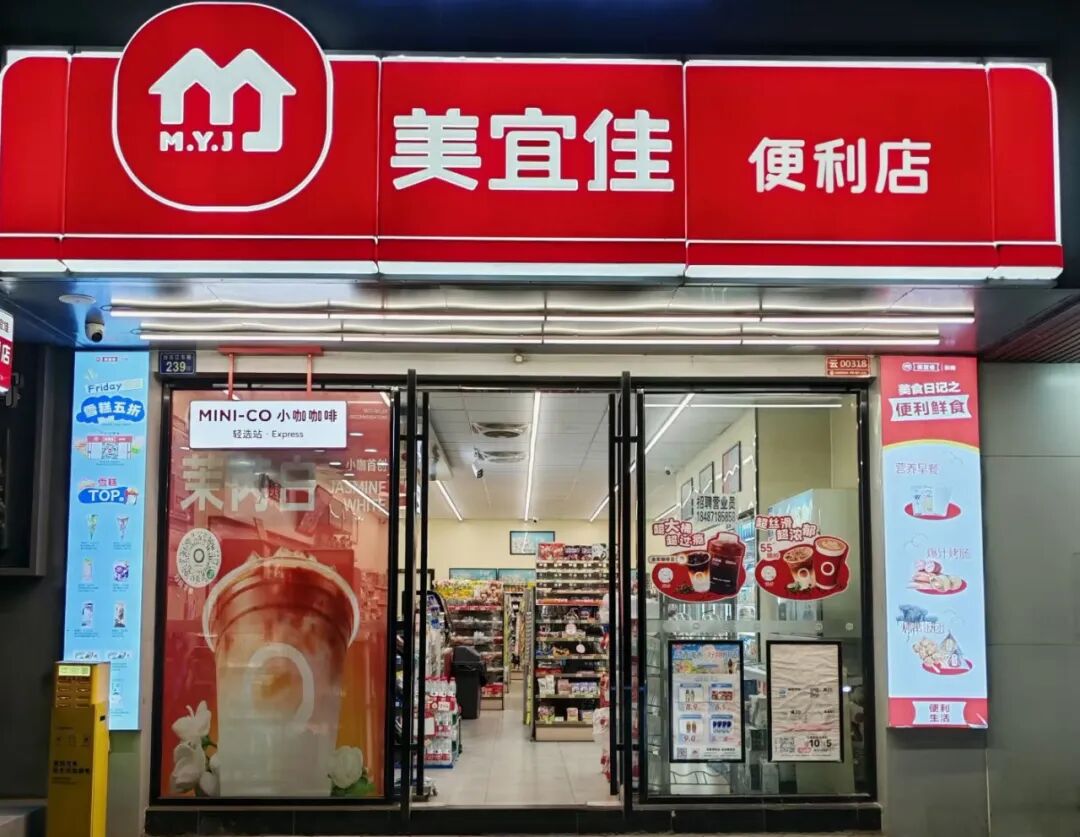
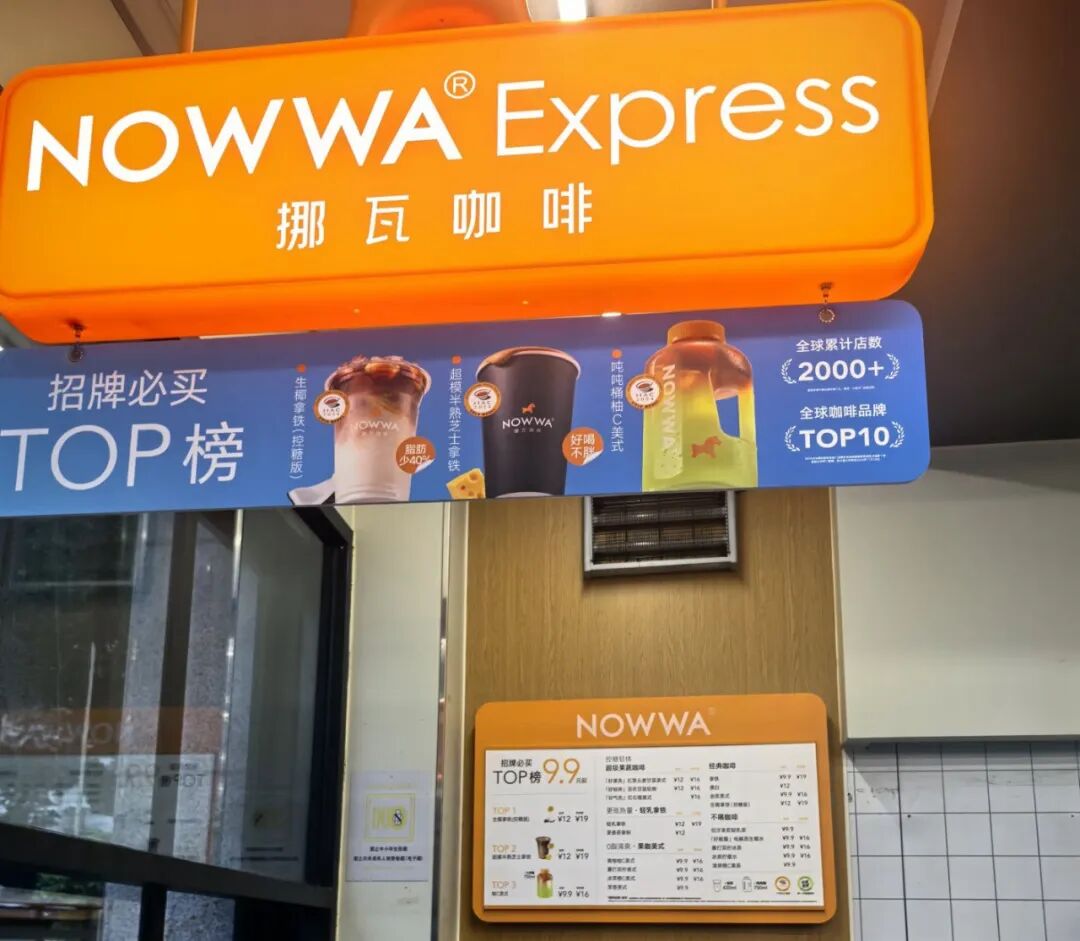
Coffee offerings are a typical example of deep integration and large-scale implementation in convenience stores. Leading chain convenience stores generally adopt a capital-heavy self-operated coffee model, which allows for relatively controllable quality and higher profit margins, albeit with high upfront investment — examples include 7-ELEVEn's 7CAFE, Lawson's LC Coffee, and Bianlifeng's Bumianhai. Regional convenience stores tend to prefer the asset-light in-store joint venture model, introducing external coffee brands to drive foot traffic and upgrade product structures with lower investment. For instance, NOWWA Coffee, which claims over 10,000 global stores on its official website, mostly operates as in-store outlets embedded within convenience stores, with major partners including Meiyijia.
It is worth noting that the path to breaking through in a saturated market is long and challenging. When almost all brands are offering fresh food and adding coffee services, the convenience store industry may once again fall into new homogenized competition.
Anchoring Long-Term Value
Current innovation in China's convenience store industry is largely concentrated on the product side, while value mining in services and experiences still has room for improvement.
Wang Ling, Head of Retailer Customer Success at NielsenIQ China, mentioned at the NACS Convenience Store Summit in March 2026 that consumers' understanding of "convenience" is no longer limited to geographic and temporal accessibility, but increasingly pursues instant satisfaction of both practical needs and emotional experiences. Convenience stores are transforming from simple "supply stations" into lifestyle spaces that offer a sense of companionship.
For young people in large cities, one of the irreplaceable values of convenience stores lies in their emotional significance. Long before the rise of social media, convenience stores as tiny urban living units frequently appeared in Japanese and Korean dramas. Their warm, glowing storefronts at midnight and readily available hot meals embodied various imaginations of urban youth regarding loneliness, romance, and emotional comfort.
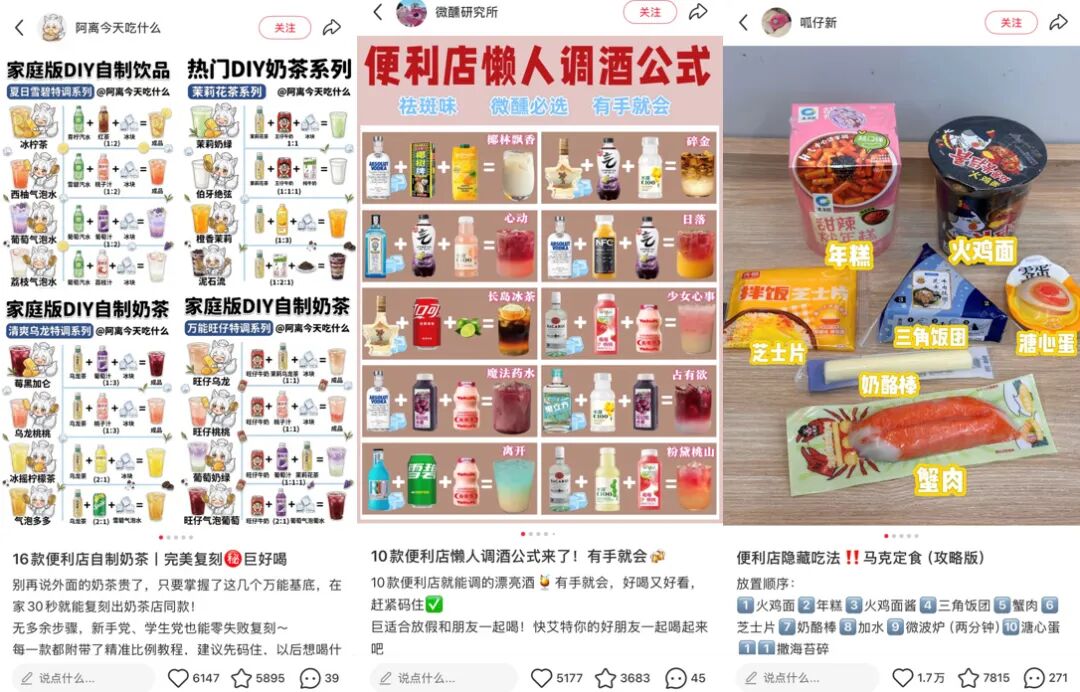
The rise of social media has endowed convenience stores with new aesthetic and social attributes. The Lawson store at the foot of Mount Fuji in Japan has become a famous photo spot, with its blue-and-white sign framed against the snow-capped mountain peak. China has also seen a wave of distinctive themed stores that have become part of urban landscapes, such as the minimalist-style 7-ELEVEn at Aocheng Plaza in Kunming, the futuristic glass-facade 7-ELEVEn at Tianhui Center in Tianjin, and the container-style Lawson store at Tianjin Dongjiang Coastal Park. On Xiaohongshu, topics such as "convenience store cocktail mixing", "hidden convenience store food hacks", "daily life working at a convenience store", and "convenience store diaries" maintain high levels of popularity.
More importantly, as an extension and complement of urban public services, convenience stores boast