Companies that ignore climate risk are being ruthlessly discounted by the capital market.
From extreme heat across Europe and multiple South Asian countries, to frequent heavy rains and floods worldwide, extreme weather events have dominated headlines, triggering flight delays, rail deformation and service suspensions, nuclear power output reductions, and labor heat stress... The physical climate risk, a looming "gray rhino", is rapidly translating into tangible economic costs, exerting a far-reaching impact that cannot be ignored on business operations, supply chain security, and the macroeconomy. Even as many enterprises are scaling back discussions on ESG (Environmental, Social, and Governance) and low-carbon commitments, how can decision-makers turn a blind eye to the crisis that is already at their doorstep?
Climate change has long moved beyond the realm of public relations and compliance, becoming a critical operational consideration that profoundly affects corporate valuation and long-term competitiveness. Research by Hongyu Shan, Associate Professor of Finance at China Europe International Business School, and his co-authors quantified the climate risk exposure of listed companies and analyzed its relationship with valuation, investment activities, and innovation, drawing a clear conclusion: The market valuation of companies that do not proactively respond to climate risks is being ruthlessly discounted by the capital market.
The Climate Risk Alert Sounded by Extreme Heat
In late June this year, an unprecedented heatwave swept across Europe. Temperatures hit 43.8°C in France, 41.7°C in Germany, 40.5°C in Poland, and 37.0°C in Denmark... These figures shattered national high-temperature records across European countries. This is not just a weather news story, but a gradually unfolding cost sheet: human lives, farmlands and power grids, flights and railways, and the operational efficiency of factories and stores are all being disrupted by extreme heat.
Data from the World Health Organization shows that as of June 28, over 150 million people in Europe had been affected by this heatwave. According to Reuters, preliminary statistics indicate that the excess death toll during the heatwave in France, Belgium, and the Netherlands has reached approximately 3,700, a figure that is likely to be revised upward.
The damage is not limited to rising thermometer readings — it has already impacted human health, agriculture, ecosystems, infrastructure, and labor productivity.
Extreme heat forced French nuclear power plants to reduce electricity generation due to limited cooling water supply, speed restrictions and delays were imposed on parts of London's railways and subways, some schools in the UK suspended classes or shortened school hours, the Eiffel Tower and the Louvre in Paris closed early, and hundreds of thousands of poultry died on farms in western France... As the heatwave moved eastward, Italy, Croatia, Serbia, Albania and other regions successively issued alerts for high temperatures or wildfires.
It is evident that Europe's extreme heat has evolved from a public health issue into a stress test jointly faced by the power, transportation, agriculture, tourism, and urban governance sectors.
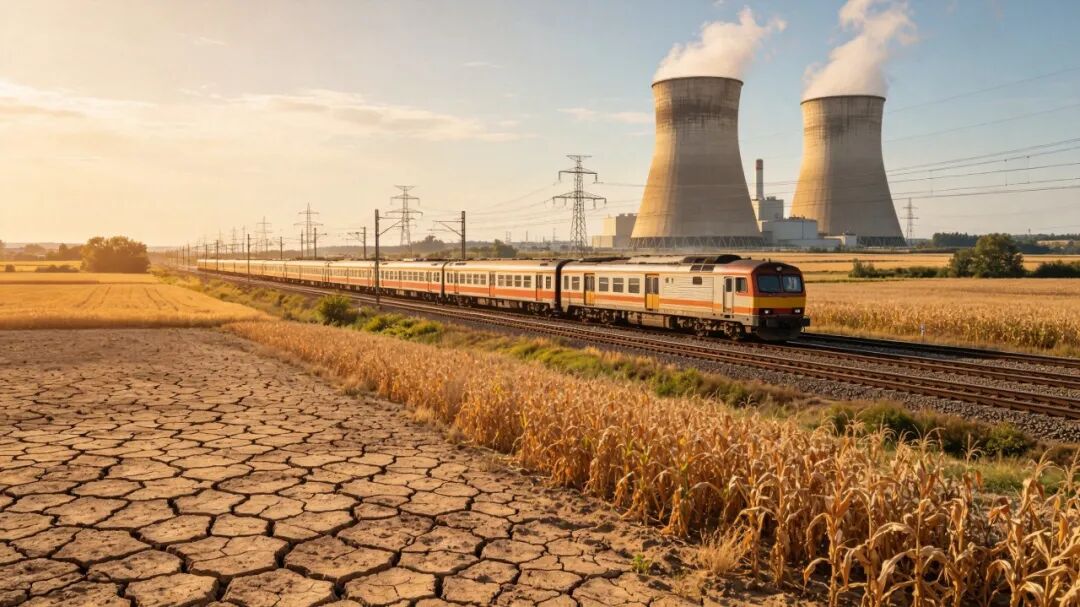
Climate extreme events are increasingly behaving like macroeconomic events. According to a quantitative estimate of economic losses published in a joint paper by the University of Mannheim and the European Central Bank, heatwaves, droughts, and floods in the summer of 2025 caused the European economy to lose approximately 0.3% of its output; if ripple effects such as productivity declines, supply chain disruptions, and damaged tourism revenue in subsequent years are included, the losses will continue to accumulate.
This is why, for enterprises, extreme weather is no longer an issue exclusive to climate or public health departments. It directly affects worker safety, labor efficiency, electricity demand, transportation delays, insurance claims, supply chain disruptions, and fixed asset damage, ultimately reflecting in costs, cash flow, and valuation.
What is particularly thought-provoking is that while these extreme weather events are occurring, ESG has become less prominent in political and business discourse compared to previous years. Many companies are reducing discussions on carbon policies, renewable energy targets, and decarbonization commitments.
However, natural disasters and extreme weather will not pause just because of the ESG retreat. For enterprises, the real question is not whether to continue talking about ESG, but how to confront the climate risks that have already arrived at their doorstep.
Transition Risks Are Receding, While Physical Climate Risks Are Rising
This shift can also be observed in the language used by enterprises themselves. The website CorporateClimateRisk.com, operated by our research team, tracks the frequency with which companies mention different climate risks in earnings calls. The relevant data on the site is updated quarterly through the fourth quarter of 2025 and is open to researchers, investors, and policymakers.
From this data, a clear divergence is apparent: Discussions on transition risks are cooling down, while conversations about physical climate risks remain at high levels.
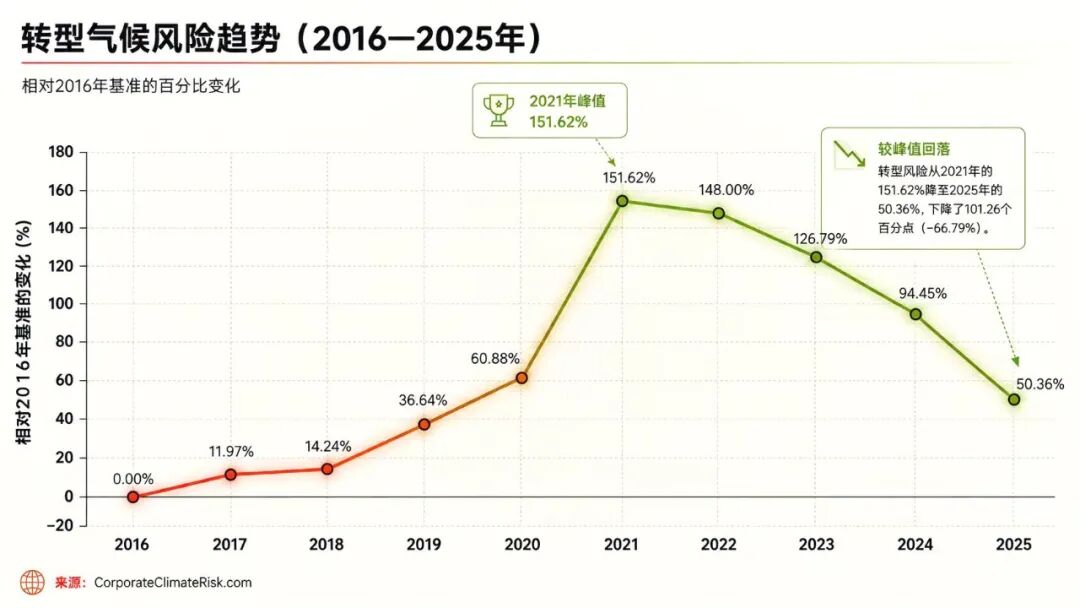
Figure 1: Trend of Transition Climate Risks (2016–2025), Source: CorporateClimateRisk.com
The so-called transition risks mainly refer to uncertainties brought about by regulatory changes, carbon policies, clean technologies, and the transition to a low-carbon economy. Since 2023, enterprises' attention to such risks has significantly declined. At the same time, corporate focus on physical climate risks has not receded in tandem.
Compared to 2016, companies' attention to acute physical risks in 2025 is about 147% higher, and attention to chronic physical risks is also close to historical highs.
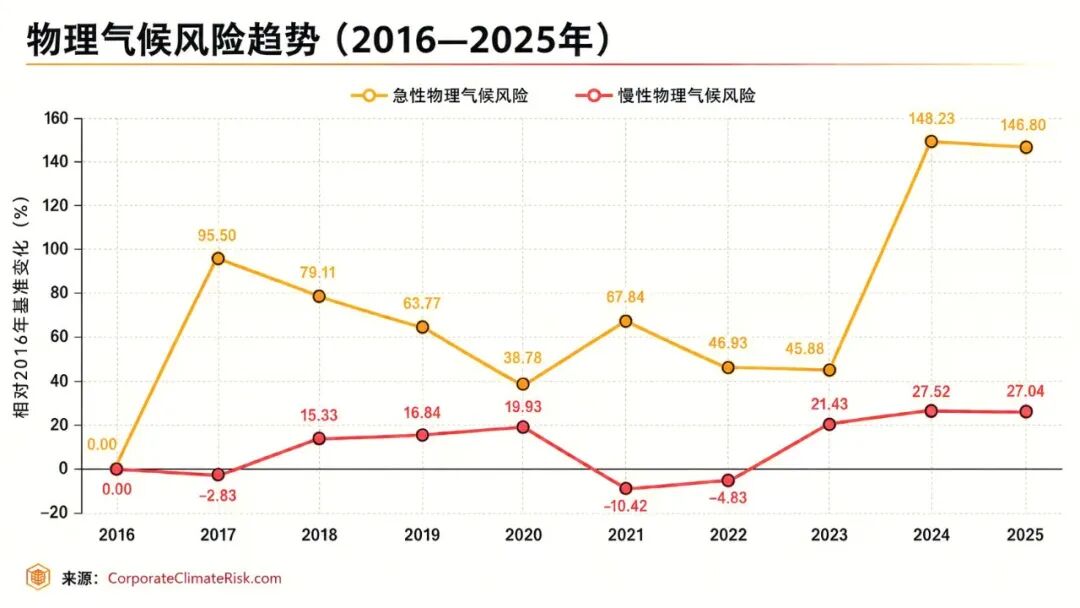
Figure 2: Trend of Physical Climate Risks (2016–2025), Source: CorporateClimateRisk.com
The underlying reasons are not difficult to understand. Transition risks are partially influenced by regulations, investor pressure, disclosure rules, and the political atmosphere around ESG. When these external pressures weaken, enterprises naturally talk less publicly about carbon pricing, renewable energy targets, or emission reduction roadmaps.
Physical climate risks are different — they stem directly from weather itself: heatwaves, floods, wildfires, storms, and droughts. Governments can delay climate regulations, but they can hardly postpone the next heatwave.
Quantifying Climate Risks at the Corporate Level
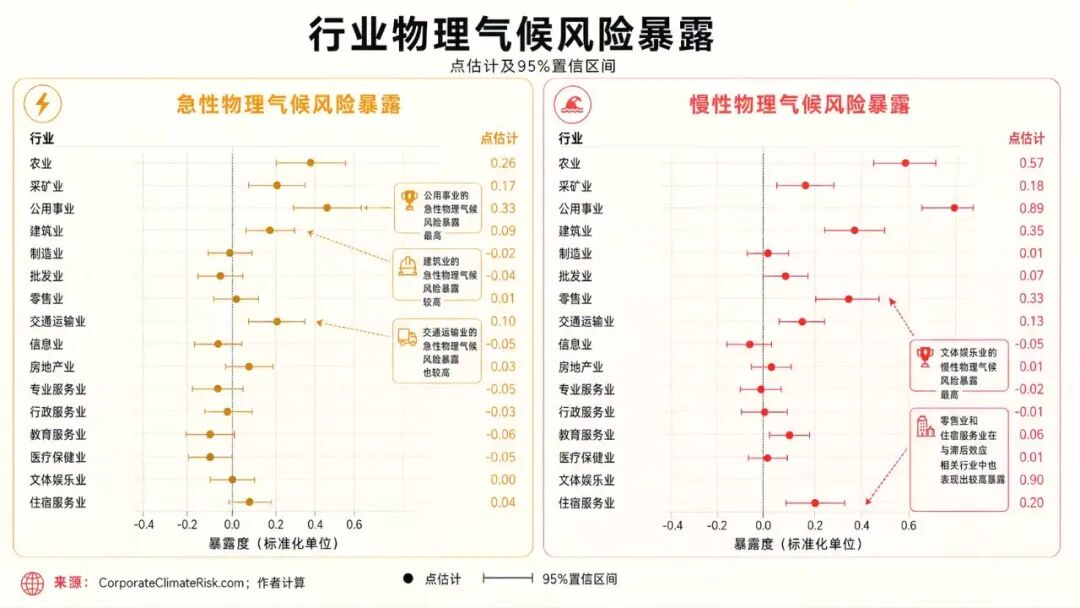
Figure 3: Exposure of Different Industries to Acute and Chronic Physical Climate Risks, Source: CorporateClimateRisk.com
The data also shows that the climate-related costs faced by different industries are not uniform. Acute physical risks typically first impact sectors whose assets and operations are directly exposed to natural disasters and extreme weather shocks.
Utilities are a typical example — power grids, transmission lines, substations, and power generation assets can all be affected by storms, wildfires, floods, and extreme temperatures.
Construction and transportation face similar situations. Construction sites rely on outdoor labor, material transportation, and weather-sensitive construction schedules; transportation networks may be forced to slow down due to heavy rains, waterlogging, road damage, port closures, or extreme heat affecting tracks and logistics.
These are not abstract ESG concerns — they are operational risks that can halt production, delay projects, and drive up costs.
Chronic physical risks present a different industry landscape. They are not one-off climate shocks, but long-term or recurring changes in climatic conditions: hotter summers, erratic winters, altered rainfall patterns, water scarcity, and other long-term shifts in weather variability.
Faced with these risks, the retail and hospitality and tourism industries are particularly sensitive. Retailers are affected by changes in foot traffic, cooling demands, inventory arrangements, consumer behavior, and store operating costs. Hotels, resorts, restaurants, and leisure enterprises face more direct impacts, as they depend on comfort levels, travel patterns, water availability, and destination attractiveness. Sustained high temperatures can shorten tourism seasons, push up air conditioning costs, reduce outdoor activities, and force enterprises to adjust their service models.
In short, acute risks abruptly disrupt operations, while chronic risks gradually reshape the environment in which a business model operates.
These observations are confirmed in our study "Corporate Climate Risk: Measurements and Responses", co-authored with Qing Li, Yuehua Tang, and Vincent Yao. Published in *The Review of Financial Studies* — one of the world's top three finance journals — the paper uses earnings call transcripts from U.S. listed companies, covering 4,719 firms and 139,959 firm-quarter observations, to separately measure enterprises' exposure to acute physical risks, chronic physical risks, transition risks, and the proactivity of their climate risk responses.
Why focus on earnings calls? Because they are closer to reality than many formal disclosures, and more aligned with the financial issues that companies truly care about. With limited time allocated to each earnings call, management and star analysts from investment institutions typically only discuss matters they consider important and that may impact operations and valuation.
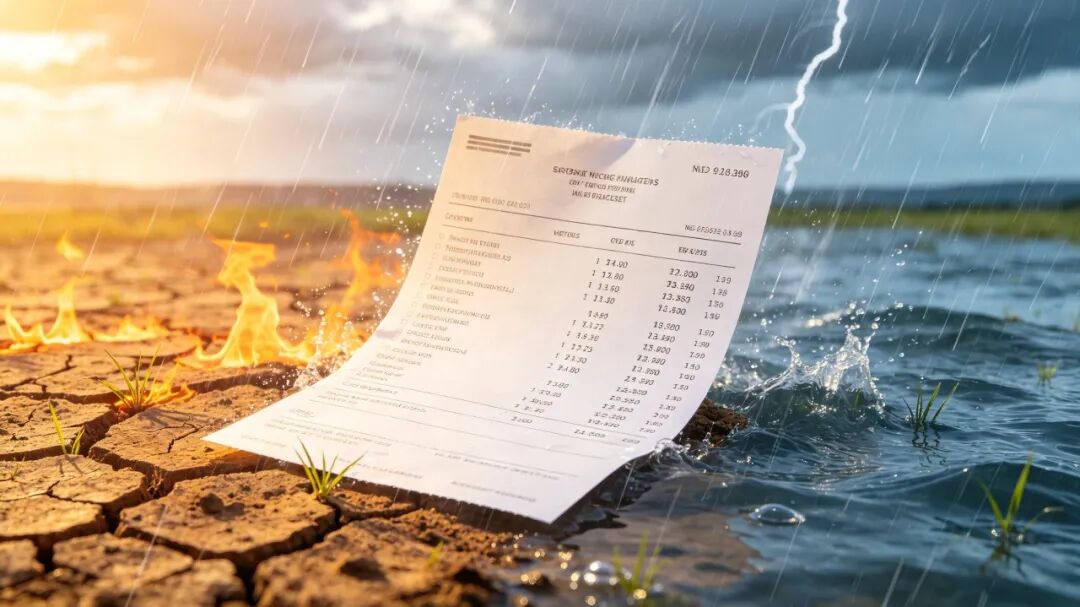
The study finds that enterprises facing higher climate risks typically experience valuation discounts. More notably, this discount is primarily observed among firms that do not proactively respond to these risks.
In contrast, companies that actively address climate risks follow different paths in terms of investment, green innovation, and workforce management.
The research also shows that proactive firms are more likely to increase capital expenditures and file more green patents after transition risks rise; non-proactive firms, on the other hand, are more prone to reducing R&D spending or cutting employment in subsequent periods.
This does not imply that statements made during an earnings call directly cause investment changes. Instead, it reflects that how enterprises talk about climate risks often provides advance insights into how they manage these risks.
This 2024 paper became the second most cited study among all papers published in the top three finance journals that year. In my view, this confirms that investors, researchers, and policymakers are all seeking more granular, operationally relevant data to understand exactly how climate risks are priced into assets and embedded in corporate decision-making.
Climate Strategy Requires a Two-Pronged Approach
The reduction in discussions about transition risks does not mean that companies can abandon climate risk management. More precisely, enterprises' climate strategies need to adopt a two-pronged approach.
The first prong is mitigation: reducing emissions, improving energy efficiency, investing in cleaner production methods, and preparing for a future policy environment that may become more stringent.
The second prong is adaptation: protecting workers from heat stress, redesigning factories and stores, enhancing infrastructure resilience, diversifying supplier bases, improving water resource management, upgrading cooling systems, and enabling daily operations to withstand more frequent and intense extreme weather events.
Mitigation addresses the root causes of climate change, while adaptation deals with the consequences that climate change has already brought — enterprises need to prioritize both. Focusing solely on emission reduction may underestimate the losses that are already occurring; focusing only on adaptation ignores the long-term transition direction. A truly effective climate strategy should simultaneously answer two questions: How do we reduce future risks, and how do we withstand the immediate ones?
So, what should global policymakers do?
First, policymakers and business leaders must separate climate risks from the narrow political labels of ESG.
The term ESG may fluctuate with elections, investor sentiment, and regulatory cycles. But physical climate risks are not empty rhetoric — they are closely tied to infrastructure, the workforce, supply chains, insurance markets, and corporate valuation.
Policymaking should not treat climate risks merely as a disclosure slogan, but integrate them into the core framework of economic resilience.
This means that climate risk data needs to be more comparable and of higher quality. Corporate disclosures should not be limited to emission targets, but also specify their exposure to heatwaves, floods, wildfires, droughts, and other physical shocks.
For investors, knowing a company's emission reduction targets is important, but understanding whether its factories, warehouses, stores, employees, and logistics networks can withstand extreme heat and floods is equally critical.
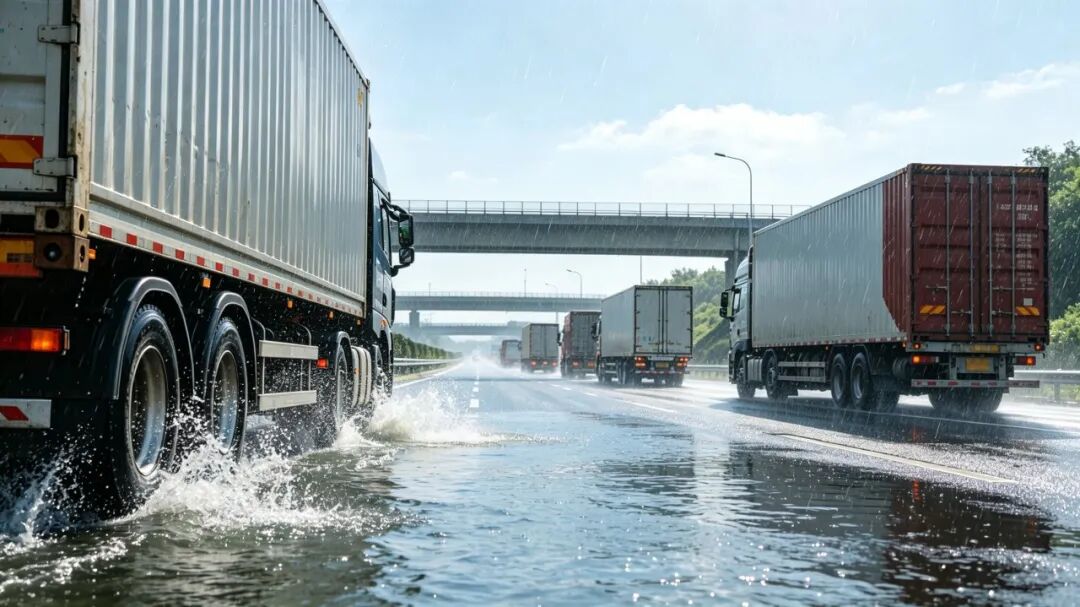
Second, governments and enterprises should place adaptation on an equal footing with emission reduction.
Emission reduction remains important, but many climate shocks are already impacting enterprises today. Public investment can be directed more toward heat-resilient cities, more robust power grids, flood control facilities, water infrastructure, early warning systems, and worker protection standards.
Enterprises, in turn, should conduct stress tests on their factories, suppliers, logistics networks, and workforce arrangements to verify whether they can operate normally under more frequent and extreme weather conditions. The goal is not to narrowly survive the next disaster, but to establish an operational system that can function reliably amid ongoing climate change.
It is worth emphasizing that finance plays a critical role in this process and cannot remain at the level of empty slogans.
Green bonds and green loans can support investments in energy-efficient buildings, flood control projects, power grid resilience, water conservation technologies, and renewable energy. Sustainability-linked loans and bonds can also tie financing costs to measurable climate targets, such as emission reductions, energy efficiency improvements, climate-resilient capital expenditures, or phased outcomes of adaptation projects.
When deployed effectively, these instruments can help climate finance evolve from symbolic ESG commitments to tangible actions reflected on corporate balance sheets.
While ESG politics may recede from boardroom agendas, climate exposure will not. Enterprises may talk less about transition risks, but Europe's heatwaves remind us that physical climate risks are becoming increasingly impossible to ignore and are growing more costly.
Companies that truly understand this shift will not treat climate risks as a public relations issue — they will address them as core issues related to valuation, financing, and long-term competitiveness.
About the Professor
Dr. Hongyu Shan is Associate Professor of Finance at China Europe International Business School (CEIBS). Before joining CEIBS, he served as an Assistant Professor in the Department of Finance at the Gabelli School of Business, Fordham University in the United States. Dr. Shan earned his Ph.D. in Finance from the Warrington College of Business at the University of Florida, and holds a Bachelor's degree in Economics from the University of Michigan, Ann Arbor.
Dr. Shan's research interests focus primarily on the impact of climate change, green finance, and ESG on financial markets and corporate decision-making. His academic work has