Yin Qi didn't take the advice.
"If you start too late, you might as well not start at all; if you start too early, you could end up working for nothing; if you do nothing, you will be unable to do anything in the future." At a press conference, Yin Qi, Chairman of Step Star and Chairman of Qianli Technology, shared a joke from the AI industry.
This also means that timing is crucial for entrepreneurship in the AI era. "We believe in the 'AI + Endpoint' story and are firmly advancing this strategy. We can't say this is the absolute best moment, but we bravely brought this product to fruition and happened to get it right. Looking back from the future, this might turn out to be a pretty good timing," he added.
On July 13, Yin Qi stood in the spotlight at Step Star's press conference, unveiling the company's first AI-powered smartphone. This marks a critical "leap" for Step Star as it officially embarks on the path of integrating software and hardware. Step Star launched the agent-native operating system Step AOS, the personal agent Step Amoo, and the AI endpoint brand STEPX, with the first agent smartphone STEPX Neo making its official debut.
Founded in April 2023, Step Star remained almost invisible during the most intense period of the "Hundred Models War" and did not make its first public appearance until March 2024, when it officially released its trillion-parameter large model. At this press conference, Yin Qi presented a list showcasing dozens of models developed by Step Star over the past three years. The outside world has hailed the company as the "Multimodal Overachiever," while Yin Qi joked that it should more appropriately be called the "Hardworking Large Model Pioneer."
Although Step Star has never fallen behind in the field of large model pre-training, it has maintained a relatively low profile compared with other companies among the "Six Little Giants." They once made inroads into the consumer (C-end) market, launching successive C-end smart assistants and applications after releasing their models, making various attempts, but none of these products became breakout hits. Coupled with the subsequent explosive growth of Kimi and DeepSeek in the C-end market, facing competitive pressure, Step Star made a strategic adjustment: contracting its C-end frontline and shifting its focus to "AI + Endpoint." At the end of 2024, after completing its Series B financing, the company's CEO Jiang Daxin publicly clarified the endpoint scenario strategy centered on four core areas: "automotive, smartphones, embodied intelligence, and IoT."
On January 26 this year, Yin Qi officially joined the company and took up the position of Chairman. On the same day, Step Star announced the completion of a Series B+ financing of over 5 billion yuan, setting a new record for the largest single financing in China's large model track. At that time, Yin Qi stated that the integration of AI with the physical space is an inevitable path toward AGI. Step Star's strategy is to continue investing in foundational model research and development, build a world-class foundational model, and accelerate the implementation of the "AI + Endpoint" strategy.
In an interview with media outlets including *China Entrepreneur*, Yin Qi further elaborated on his judgment: "China's large model industry needs to forge its own path of commercialization and industrialization. I don't believe this path lies in coding; we aren't certain if software-hardware integration is the answer, but it is the path we firmly believe in." He revealed that Step Star once tried to export agent capabilities to other endpoints and collaborated with smartphone manufacturers as a model supplier, but "after searching everywhere, we still couldn't find the most suitable endpoint." He consulted many friends in the endpoint industry, and "everyone advised us not to get involved in hardware," but Yin Qi did not follow the advice and ultimately decided to develop an AI endpoint on his own.
Whether Step Star can find an effective commercialization path through "software-hardware integration" remains to be verified by the market.
The following is an edited transcript of Yin Qi's interview:
Why Develop an AI Smartphone
Reporter: You mentioned earlier that many people advised you not to step into the hardware field, but you still went ahead with it. How do you confirm that the AI hardware you have designed can achieve a positive commercial cycle?
Yin Qi: The Step Star team has more than ten years of experience in the hardware supply chain. We are full of reverence for hardware development and approach it with great prudence. We chose this closed-loop path because we want to do the difficult yet right thing. Today's highlight is Step AOS, which means the first step is to build the operating system. If we cannot take the lead in launching this innovative endpoint now, it will be difficult for our Step AOS to form a value closed loop and reach consumers. This is a very straightforward logic.
The future ecosystem will be highly symbiotic and open. I believe that if Step AOS and its ecosystem can thrive, we will be more than willing to empower existing smartphone manufacturers with the capabilities of Step AOS. This could very well be the process through which an industrial chain takes shape.
Reporter: Previously, Step Star has already deployed hardware endpoints for in-vehicle infotainment systems and smartphones, likely by providing end-side large model foundations to manufacturers. This time, you are launching an AI endpoint brand. What is the most essential difference between this move and your previous strategy?
Yin Qi: Our previous model was B2B, providing full-spectrum AI capabilities to OEM manufacturers of smartphones and in-vehicle systems. I believe this business model will continue. However, in the agent era, under the current smartphone ecosystem, it is difficult for us to fully integrate our models, operating systems, and entire agent products into existing smartphone endpoints at this stage. We hope to take the lead in experimenting and first build this relatively complete system.
Reporter: Step Star has maintained very close cooperation with leading smartphone manufacturers in the past. After your own smartphone is launched, how will you balance the model business with your partners in the smartphone industry?
Yin Qi: In the agent era, I think everyone's mindset will change. People will find that many of today's global tech pioneers are likely open-source trailblazers. The ecosystem in the new stage may not be about "control," but more about openness and open source, with every team playing a vital role in this ecosystem. Moreover, AI has an extremely strong ability to build new ecosystems. Any old ecosystem that fails to embrace the new ecosystem may face great risks.
Reporter: Do you have sales expectations for the new generation of smartphones? Or is it more of a proof-of-concept initiative, similar to the Doubao smartphone?
Yin Qi: The Doubao smartphone is a very important exploration for the entire industry, bringing the concept of agent smartphones into the public view. However, we have unique ideas about the definition of agent smartphones and Step AOS.
We are in a remarkable era, and we even look forward to the emergence of more new agent smartphone brands. Only under this system can we accelerate product exploration. Maybe one day we will find that in the agent smartphone era, China truly defines the next-generation product experience and establishes a new paradigm for the next 10 to 20 years. That is the most important thing.
Reporter: What is the biggest challenge you have encountered so far in hardware development? How will you avoid similar problems in the future?
Yin Qi: Developing large models is hard, and hardware development is also hard. In a sense, combining the two is even more challenging. What is harder than that is that if we ourselves do not believe in other commercial closed-loop paths, I think that would be a far greater difficulty. I truly believe that China's large model companies need to forge their own path of commercialization and industrialization.
Reporter: Hardware development involves many complex engineering tasks, including supply chain management, quality control, and after-sales services. These are operations in completely different dimensions from large model development. The Step Star team does not have a natural background in this area. How will you catch up on the hardware expertise?
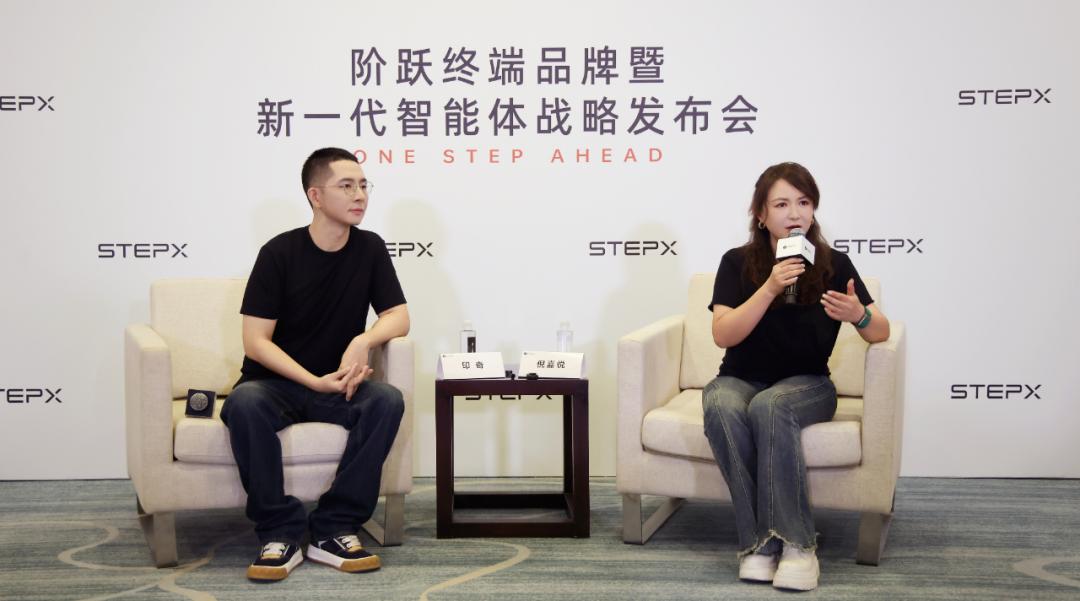
Yin Qi: First of all, in my more than ten years of entrepreneurial career, I have always focused on the integration of software and hardware. My doctoral research was in the field of hardware sensors, and I am genuinely interested in both software and hardware. Secondly, Ni Jiale (President of Step Endpoint) is a veteran in the hardware endpoint industry. We have a complete team that has a deep understanding of the entire supply chain system, quality control, and product R&D system. Precisely because of this, we see this as a great opportunity, and we also want to drive the entire industry forward.
Source: Interviewee
Now, under the entire Step Star system, the parent company is a purely large model-driven company with software at its core, while the Step Endpoint system under it has a strong software-hardware integration heritage. I also believe that the corporate DNA must be correct from the very beginning. If a company does not have a software-hardware integration DNA, it will be extremely difficult for it to excel in hardware development.
Reporter: When you develop endpoints and agents, what are the areas that Step Star must handle itself, what are the areas you will not touch, and what is the boundary between them? After entering the endpoint and agent field, what kind of companies could become your competitors, which might be different from traditional model companies?
Yin Qi: In the model field, we do not develop any video generation models, because we believe that this track is inherently the strong suit of large corporations. We focus more on foundational models, multimodal perception, and interaction capabilities. This is the strategy we formulated from day one.
On the agent side, we are very focused on perfecting the personal agent, that is, the agent on smartphones, and optimizing the interaction as the main entry point. In addition, whether it is existing internet giants or new teams, many excellent teams will excel at developing their specialized vertical agents. Therefore, we will definitely co-build, co-exist, and co-create vertical agents, and we will not develop them ourselves.
As for future devices, the criteria for AI Native are very strict. People may look at many existing smartphones and think that in a sense they are "smartphone + AI", which means adding some AI features. The agent endpoints we are trying to create are built from the AI-native perspective. Based on this standard, I think the types of devices we will develop in the future will be very limited. We will only create devices that are truly strongly related to AI.
Reporter: OpenAI will also release its own smartphone next year. Did Step Star's decision to launch its smartphone this year draw a lot of inspiration from OpenAI in terms of overall product ideas or strategies?
Yin Qi: My first entrepreneurial venture started in 2011 after graduation. At that time, the most talked-about term was "copy to China". I believe that in the current AI era, China should have such original capabilities. Of course, we also pay close attention to OpenAI. In the endpoint field, the companies that deserve the most attention might be Google Gemini and Apple, both of which have many excellent insights into AI endpoints. I think this is a process of mutual learning and reference. In terms of software-hardware integrated products, China has a very strong supply chain advantage. Combined with our AI strengths, I believe we can create products that amaze users around the world.
How to Define an AI Smartphone
Reporter: In terms of technical routes, what is the difference between your smartphone and the Doubao smartphone? Will this generation of products completely abandon the Android operating system, or will they still be built based on Android?
Yin Qi: Previous Agentic OS might be more about iterative upgrades on top of Android. Our approach will be somewhat different. Essentially, this OS should be built on all future end-side operating systems, following the principle of human-AI symbiosis, to build a runtime environment for agents from scratch, with downward compatibility for Android/Linux/RTOS. We believe that this kind of operating system in the future should be cross-end, not confined to a single smartphone or PC. This is our definition of the OS.
Under this OS definition, our approach could be very different from the definitions of agent systems by existing endpoint manufacturers. I don't think there is a standard answer right now. The ideal scenario is that everyone can move forward quickly through collaborative experimentation, and eventually find out which path is more correct.
Reporter: AI smartphones have been discussed for many years, and many traditional smartphone manufacturers are working on them. However, some internet application manufacturers have their own ecological barriers, and they may have their own entry points or privacy considerations for agent invocation. This creates major bottlenecks in promoting AI smartphones, which the Doubao smartphone also encountered before. How will Step Star solve this problem?
Yin Qi: First, in the agent smartphone era, besides some changes in hardware and significant changes in the operating system, more importantly, the underlying business logic and ecosystem will change. This change is the result of co-creation by all participants in the entire ecological chain, so we cannot determine what its stable state will look like right now.
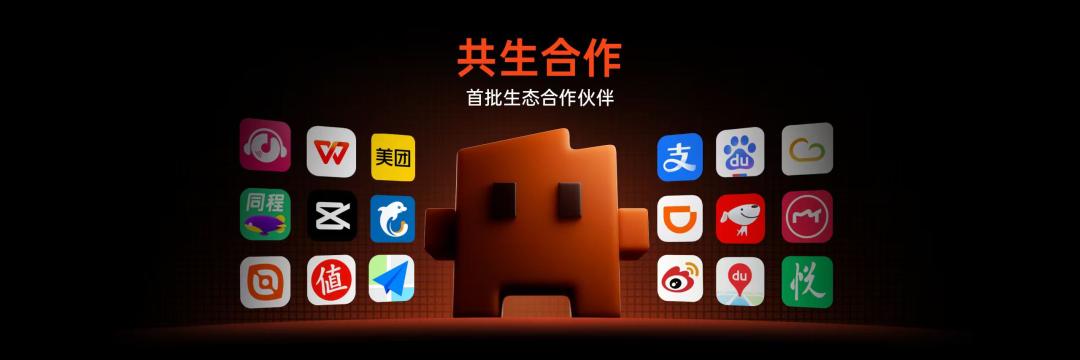
Second, during this co-creation process, the first batch of large companies we cooperated with communicated very well with us, and they fully embrace the agent era. For example, the manufacturers we are cooperating with this time all use interfaces instead of GUIs, which creates a very good mutual security mechanism. We believe that some industry standards will be formed very quickly in the future, and this requires the joint efforts of all parties.
Source: Interviewee
I have a more long-term vision. In the future, this kind of network might be more efficient than the current internet. On this network, advertising might not disappear, but it will no longer be the main form. Perhaps in the future, all participants in the chain will focus on providing their own services and share revenues based on their roles, which will be a more efficient model. So I think it will ultimately return to user value, and users will be the ones who pay for the value.
Reporter: In your AOS, you mentioned reconstructing the system designed for human use into a system for human-AI symbiosis. How is this reconstruction carried out? Why do you shift the focus from "for humans" to "for human-AI symbiosis"?
Yin Qi: In the past, smartphone manufacturers focused heavily on a task called energy consumption optimization. This required large smartphone batteries, because we wanted to ensure that the phone could last a full day of gaming and video playback. This required extremely refined optimization of every resource. For example, if I play a lot of games, I need to allocate sufficient resources to the systems related to the gaming experience.
The future agent smartphone might no longer be a traditional smartphone. Traditional smartphones were originally designed mainly for making calls, but agent smartphones might hardly be used for calls. Instead, people will interact with them. It's not that the longer the usage time, the better. Instead, you just need to have a very simple interaction with the agent smartphone, and it will complete the task for you. Our view is that the standard for a good agent smartphone in the future is that you look at it as little as possible, and complete tasks with minimal interaction. We don't want it to constantly occupy your attention. This is our vision for future agent smartphones.
Take resource allocation as an example. In the past, resource allocation was optimized based on people's core applications, such as the top three or top five most frequently used apps. The future agent smartphone will run one or more agents, which are responsible for many tasks. They will not only interact locally, but also extensively in the cloud.
The entire computing architecture of future agent smartphones will be completely different from that of current smartphones. This is why all companies believe that this (agent smartphone) era is coming, but they have been slow to enter the field. Because there are indeed many non-consensus points, and many changes are taking place at a very deep level. As a large model company, we have many of our own ideas, so we took the lead in developing it.
Reporter: You have built a very complete design from the model matrix to AOS, then to personal agents, security frameworks, and finally to endpoints. This is a huge project. What is the most important milestone or sign of phased success you have set for the next step?
Yin Qi: We hope that the early mass-produced agent smartphones can truly be used by efficiency-oriented AI Native users and form real co-creation. Many Skills and Agents in this field are still in a stage of rapid development. Our internal consensus is that in the first phase