Why are private labels a must-have "centerpiece" for supermarkets and hypermarkets?
"When I go shopping in supermarkets now, I will subconsciously head to the private label shelves" "For identical products, private labels truly offer better cost-performance" — on social platforms, a growing number of consumers are voicing their genuine recognition of private labels.
Against the backdrop where the sales growth rate of supermarket private labels continues to outpace the overall market, leading players have positioned private labels as a strategic weapon: capturing user mindshare, boosting supply chain efficiency, and building differentiated competitive moats. Players including Walmart, Freshippo, Pang Donglai, ALDI, and Yonghui are accelerating the expansion of their own brand territories along their distinct paths.
Today, private labels are no longer merely a "high-margin card" in retailers' hands, but a strategic core that allows them to control pricing power, define product standards, and build deep emotional connections with consumers. In other words, whoever excels at developing private labels secures the ticket to core competitiveness in the second half of the supermarket industry's evolution.
Domestic Private Labels: The Critical Period for "Quality Breakthrough"
If the past few years were the "trial phase" for private labels, 2025 and 2026 are undoubtedly the watershed for "refined cultivation".
Recently, 9 government departments including the Ministry of Commerce jointly issued the Opinions on Accelerating the Innovative Development of the Retail Industry, explicitly stating that by 2030, China will strive to basically form a modern retail system with rational layout, high-quality supply, diverse formats, smart convenience, and orderly competition.
In the section on "Improving Product Quality", the Opinions clearly put forward: "Promote retail business entities to strengthen procurement quality control and traceability, strictly select suppliers, encourage the development of private labels, and promote the quality self-commitment system".

Currently, the development of domestic private labels has entered a qualitative transformation stage centered on quality and value.
Previously, Zhang Yibo, Managing Director of Boston Consulting Group and Head of Greater China Retail, interpreted the China Private Label Development Report. At present, the penetration rate of private labels in China's supermarket industry is approximately 8%, still in the third global tier, far below the level of over 30% in mature European markets. However, over the past decade, China's private labels have achieved considerable development.
From the consumer side, the Supermarket Private Label Insights report released by NielsenIQ points out that 56% of Chinese consumers are willing to increase their private label purchases in the future, a proportion higher than the global average. Currently, the average price of Chinese private labels is 16% lower than that of manufacturer brands. This price advantage has become the entry ticket for private labels to enter the market, and it is also the main strategy driving growth through low prices at this stage.
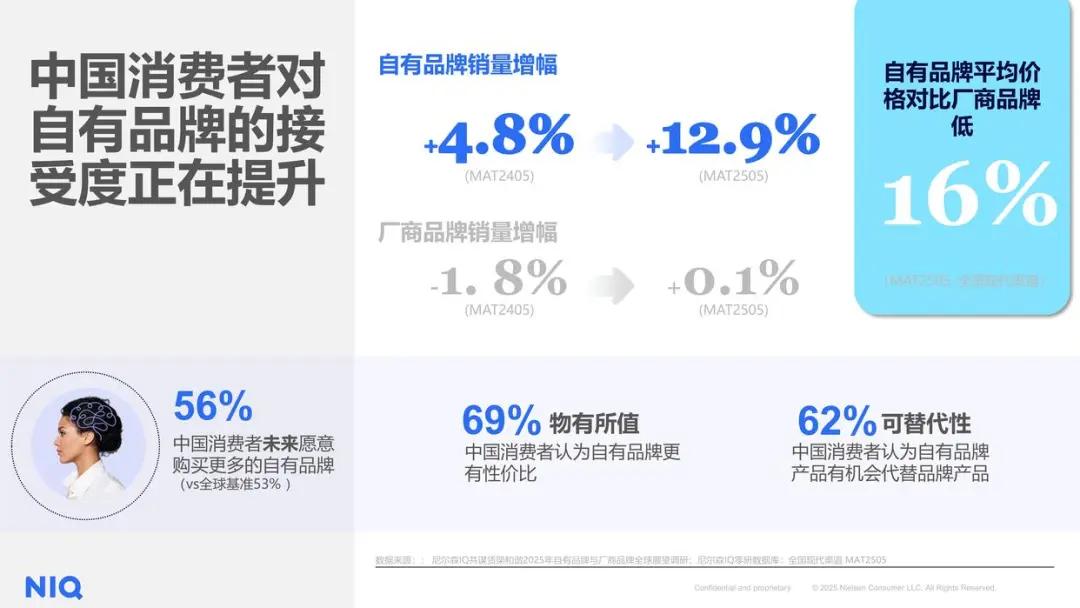
Image source: NielsenIQ Supermarket Private Label Insights
Leading retail enterprises have listed private labels as their "top strategic investment priority". According to the China Private Label Development Research Report (2025-2026), at the supplier level, the private label supply value for 80% of enterprises continues to grow. Large and medium-sized manufacturers have become the main force in development, private label SKUs account for 20% of total supplier SKUs, new products account for 50%, and 9% of SKUs contribute 80% of the total supply value.
In addition, the proportion of OEM/ODM orders that provide customized and exclusive formulas for retailers has risen significantly. This indicates that the relationship between retailers and factories is evolving from "OEM procurement" to "in-depth co-creation".
"Retail Business Review" believes that focusing on private labels is no longer just a tactical choice for retailers, but a core strategic lever for them to pursue breakthroughs in structural growth and build long-term differentiated competitive advantages. Its strategic value is specifically reflected in the following three dimensions:
First, create ultimate cost-performance. By deeply extending upstream into the supply chain, retailers can streamline intermediate links and reduce procurement costs, thereby retaining considerable gross profit margins while transferring more value to end consumers. This ability to balance "low cost and high quality" is the fundamental difference between private labels and the premium logic of traditional brands.
Second, forge differentiated product strength and build hard-to-replicate competitive barriers. The core mission of private labels is not to simply replicate best-selling products in the market, but to develop products with unique selling points, exclusive formulas, or limited attributes based on deep insights into target customer groups. This allows retailers to effectively get rid of passive dependence on homogeneous distribution brands and occupy an irreplaceable position in category mindshare.
Third, drive proactive product innovation and realize role upgrading from channel operators to brand owners. When retailers begin to take the lead in defining products, R&D design, and quality standards, their identity transforms from a passive "shelf lessor" to an active "product manager".
These transformations are not only an upgrade of the profit model, but also enable retailers to directly build trust-based brand connections with consumers, thus seizing the initiative in the second half of retail industry competition.
Leading Supermarkets Step Up Private Label Efforts
We have observed that the private label competition in 2026 has become white-hot.
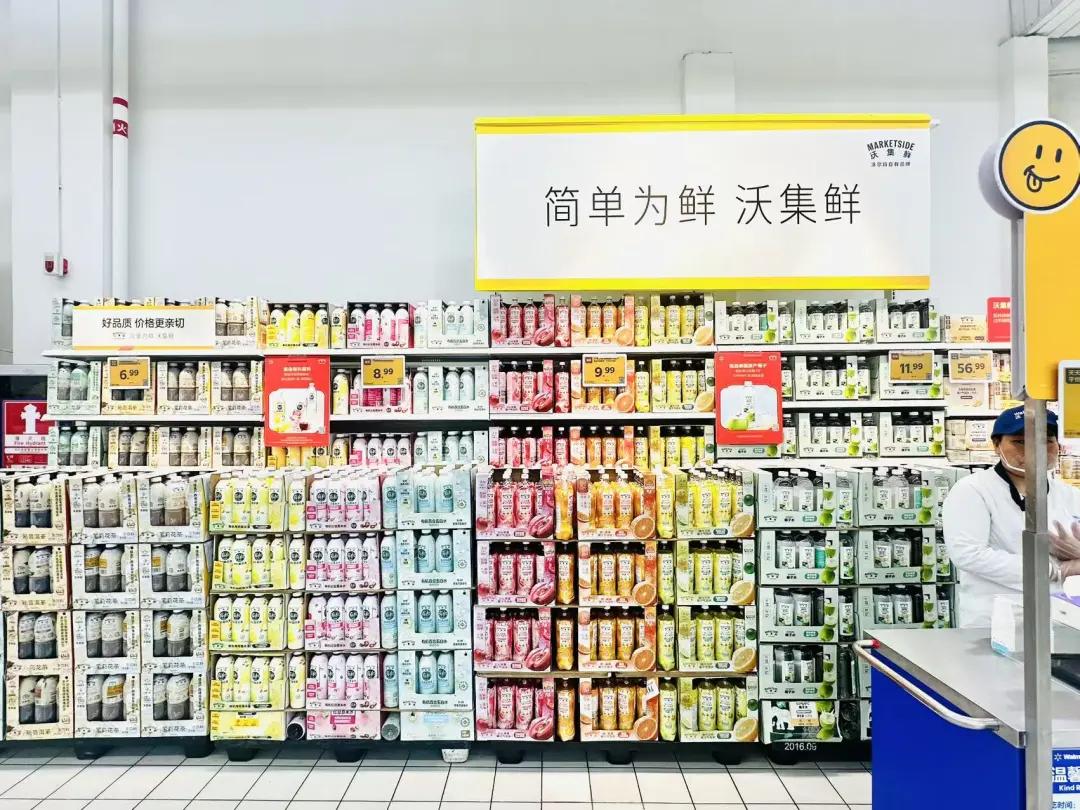
For example, Walmart has built its private label around the core brand "Great Value". Last November, Walmart announced the brand refresh and upgrade of "Great Value", adopting the new concept "Simple for Freshness, Great Value", covering core categories such as fresh food and groceries, and successfully gaining widespread attention in collaboration with Xiaohongshu.
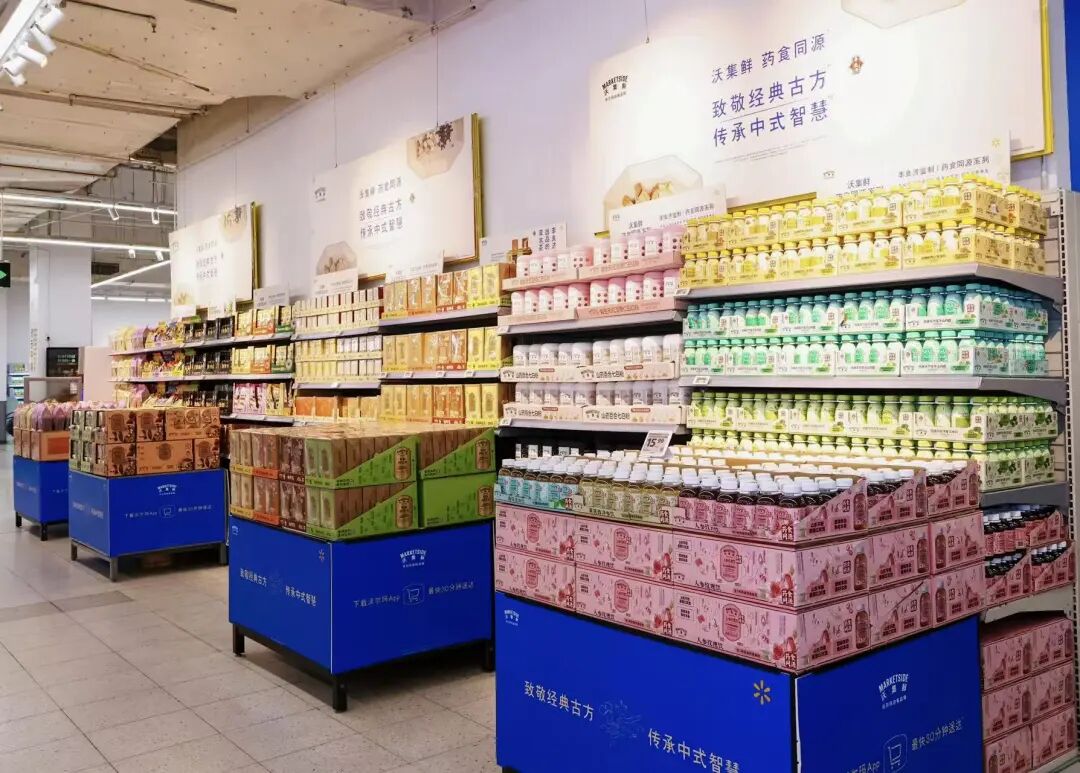
Since the beginning of this year, Great Value has frequently launched new products. The number of private label SKUs has grown to nearly a thousand. In July, Great Value made another key move — launching the "Food as Medicine" series, partnering with multiple time-honored Chinese brands, and rolling out products in two tiers: "Daily Series + Derivative Series", extending from essential three-meal scenarios to late-night snacks and pre-bed light food scenarios, with more than a hundred products expected to be gradually launched. Great Value is also Walmart's important bargaining chip for market competition in the local fresh food track.
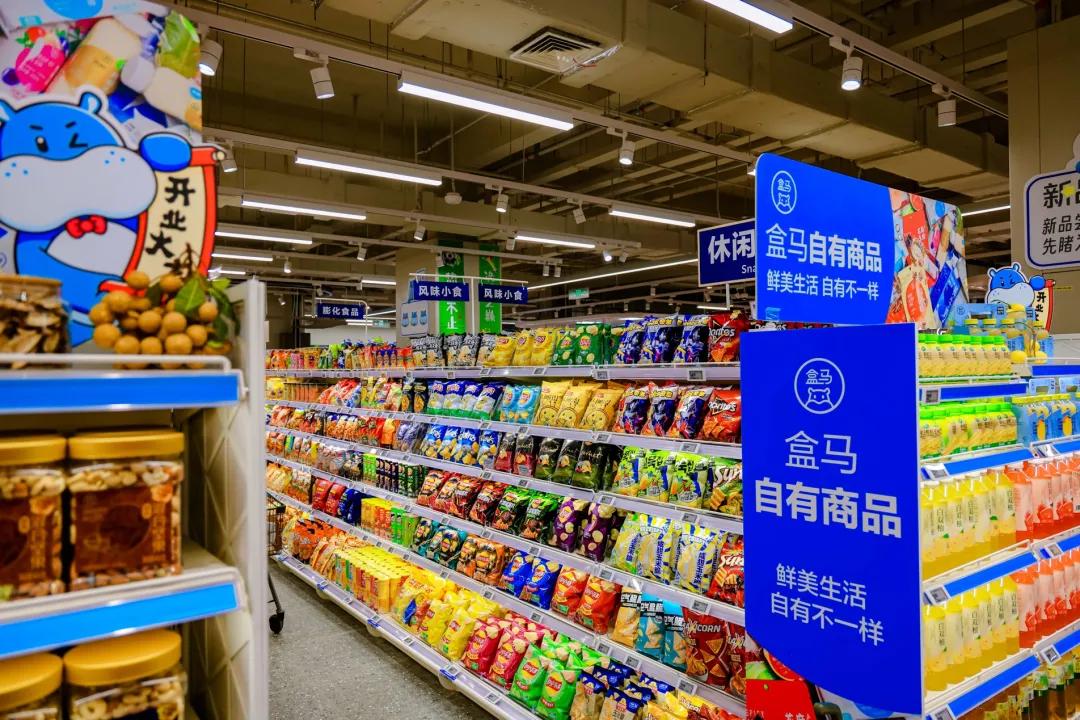
Freshippo has also positioned private labels as its core growth engine, forming a matrix layout represented by brands such as "Daily Fresh" and "Freshippo Workshop", which accurately covers all scenarios of daily diet. In 2025, its private label sales accounted for 35%, with many single products achieving annual sales of over 100 million yuan. Among them, the core brand "Freshippo MAX" saw its sales exceed 15 billion yuan, accounting for over 20% of total sales, with a gross profit margin of over 40%.
Notably, the private label product sales proportion of Freshippo's hard-discount format "Super H Discount NB" even reached 60%, further highlighting its differentiated capabilities in the ultimate cost-performance track.
At the operational level, Freshippo's private labels have gone beyond the traditional OEM model, deeply intervening in raw material procurement and production processes. Using data insights for reverse customization, and defining exclusive products with "Freshippo Standards", it has effectively improved user repurchase stickiness and consolidated its differentiated brand mindshare in the fresh food track.
Traditional supermarkets are in a painful transition period, and private labels are seen as the key to breaking the deadlock. Take Yonghui Superstores as an example. On July 14, 2026, it released its semi-annual pre-profit announcement, predicting that the net profit attributable to owners in the first half of the year would reach 250 million yuan, a year-on-year increase of 490 million yuan, successfully turning losses into profits.
As of June 30, Yonghui has completed the renovation and adjustment of 331 stores. In the first half of the year, the overall gross profit margin increased by 1.6 percentage points year-on-year, and the period expense ratio decreased by 1.8 percentage points year-on-year. The improvement in gross profit margin mainly benefited from the optimization of product structure and the increase in private label proportion. Currently, Yonghui's private label sales proportion has exceeded 40% for the first time.
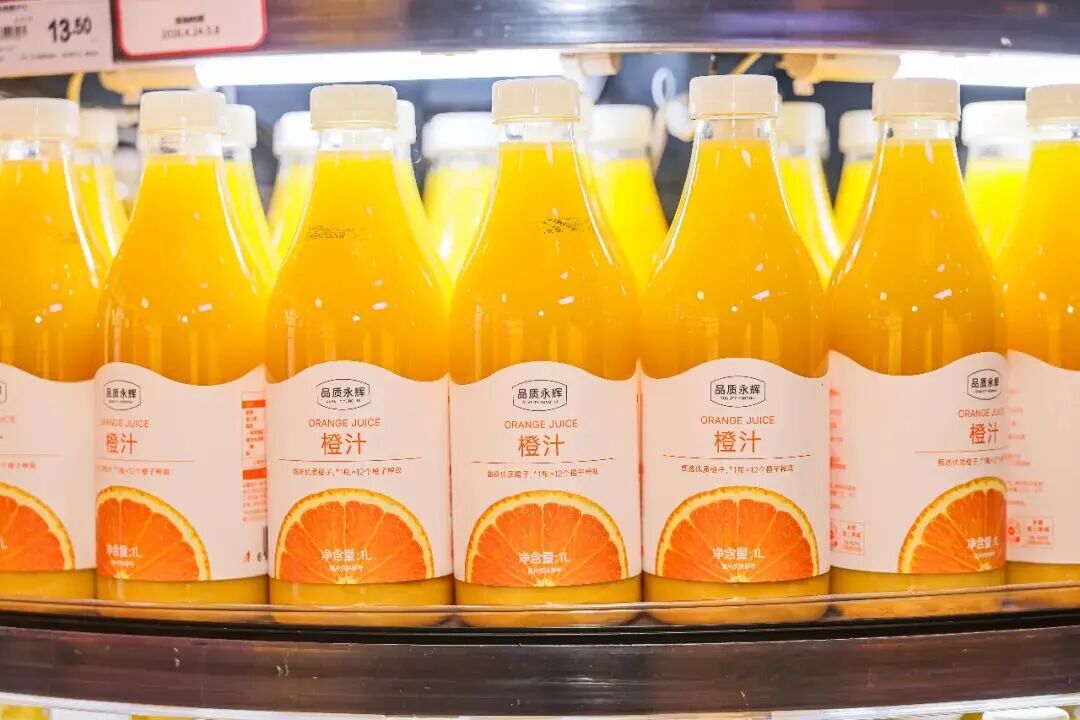
Specifically, many private label single products have grown into high-frequency repurchase products with strong reputations: Yonghui's customized Yili fresh milk has monthly sales of over 1 million units, and premium Yonghui orange juice has monthly sales of nearly 500,000 units. In 2026, Yonghui plans to develop 200 more private label single products, continuing to increase investment in its private label strategy.
Of course, ALDI, as a representative of hard discounting, stands out even more in private label development, with 90% of its products being private labels. Through deep localized R&D and direct procurement models, the price gap in some categories reaches 50%, successfully building price barriers. For example, its 9.9-yuan 52-degree pure-grain solid-state fermented liquor sold out immediately after launch, verifying the competitiveness of the "high quality at low prices" model.
For Pang Donglai, a representative of local domestic supermarkets, its private labels have achieved explosive growth from 75 million yuan in 2022 to 6 billion yuan in 2025, surging 80 times in three years and becoming a regional retail benchmark. Currently, its private label sales account for 30%, with over 100 SKUs, among which four single products have sales exceeding 100 million yuan, and the single-product repurchase rate exceeds 60%.
Founder Yu Donglai plans to increase the private label sales proportion to over 50% in the next three years, and build super single products with sales ranging from 500 million to 1 billion yuan.
Overall, leading retailers are completing a key identity transformation through private labels — evolving from passive "channel operators" to proactive "product innovators".
"The key to winning this private label competition lies in players with strong product development capabilities, precise localized adaptation, and efficient supply chain integration, who will gain critical advantages in the second half of retail development," industry insiders said.
Where Does Private Label Competitiveness Lie?
As supermarkets are all stepping up their private label efforts, the key to winning the competition no longer lies in "whether you have private labels", but in "doing them better". We believe that future competition will depend on whether enterprises can build solid barriers in the following dimensions.
First, the "flexible co-creation" capability of the supply chain. The success of private labels cannot be separated from deep bonding and collaborative innovation with upstream suppliers. This is no longer simple "OEM production", but full-link co-creation from R&D, design to production.
For example, co-developing products with suppliers. Take Walmart Great Value's "Food as Medicine" series as an example: it has in-depth cooperation with multiple time-honored Chinese brands, integrating classic ancient formulas into modern food formats. The daily series focuses on high-frequency essential categories such as dairy products, brewed tea, beverages, toast, and porridge ingredients; the derivative series extends to casual formats such as crispy biscuits, cakes, and jellies. This layout confirms that Walmart has established a complete closed-loop capability covering market insights, product R&D, and supply chain implementation.
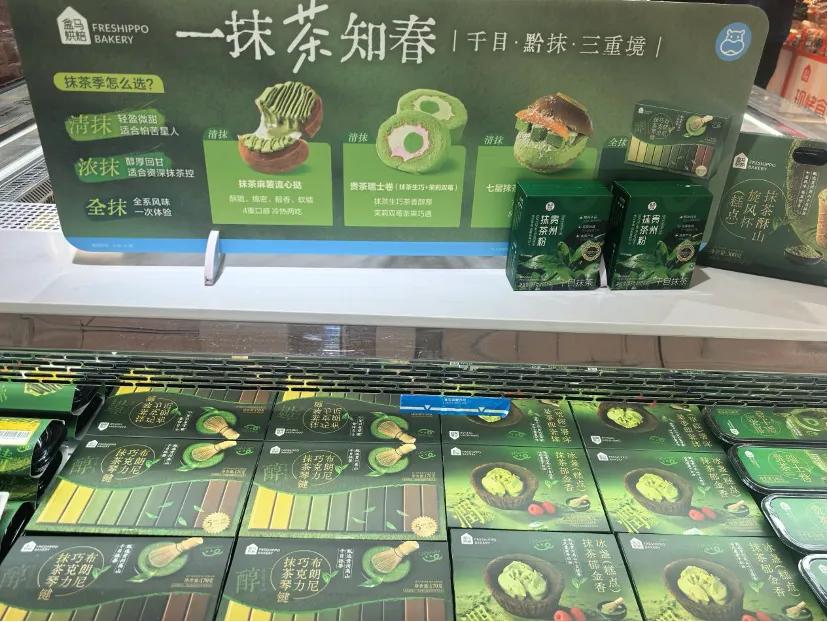
Another example is Freshippo's matcha series of baked products. Last February, the Matcha Freshippo Village at the foot of Fanjing Mountain in Guizhou brought the first batch of EU-standard ecological matcha to Freshippo's production factories across the country as the first spring tea matured, with a total raw material reserve of over 100 tons. This touch of green quickly appeared in Freshippo stores nationwide, and Guizhou matcha once again became a hit with the "national trend" matcha baked series. One month after launch, Freshippo's matcha baked goods increased by 300% year-on-year, and the overall procurement volume of Guizhou alpine matcha also increased 5 times compared to last year.
Second, data-driven "precise product selection" and "scenario innovation". Private labels must be built on profound consumer insights, rather than arbitrary decisions. Successful private labels often fill the "blind spots" of large brands or create new scenarios.
For example, the penetration rate of "Clean Label" in prepackaged foods continues to increase. On social platforms such as Xiaohongshu, "Clean Label" has become a key product focus.
Great Value quickly translated "clean ingredient lists" into specific products. Over the past year, the speed of product iteration around this concept has been clearly visible: from the "Little Green Bottle" milk with clean ingredients, to HPP apple juice, HPP watermelon juice, and various snacks that have gone viral on social media.
There is also Freshippo's scenario-based innovation, which develops products around the three core themes of "freshness, health, and self-pleasure". It precisely meets the different needs of northern and southern consumers for salmon fat content. The 25-strawberry red strawberry box cake innovated by Freshippo Bakery earlier also became a hit category.
ALDI has strengthened localization, launching local characteristic products such as Shanghai smoked fish, soy sauce duck, and International Hotel butterfly pastries, forming a flavor combination of "local + international".
Third, the fast-iterating "product manager" mindset. In the fast-paced consumer market, private labels must have the ability to "take small steps, run fast, and quickly test and correct errors". Compared with the six-month development cycle of traditional brands, retailers should use their stores as "test fields" to achieve monthly new product launches and eliminations.
For example, Sam's Club continuously collects member feedback for product optimization through methods such as member reviews, return cause analysis, and on-site research. Sam's Club has a complete new product planning cycle, and the planning period for organic private label products takes even longer.