Where Did 29.3 Billion Yuan Flow? — A Comprehensive Breakdown of Low-altitude Economy Financing in H1 2026
The frenzy of low-altitude economy financing is creating an illusion for some people.
292.89 billion yuan and 166 deals — this is the financing report card handed out by the low-altitude economy primary market in the first half of 2026, which has already surpassed the full-year total of 2025.
Volocopter Aviation completed two consecutive financing rounds within a single month, and Archer's $850 million private placement closed in June 2025 set a new global record. Capital appears to be pouring into the sector at a frantic pace.
Yet the situation requires closer dissection. The figure of nearly 300 billion yuan masks a structural differentiation that is far more significant than the number itself.
The top five aircraft manufacturers captured roughly 80% of the total capital, while the remaining dozen or so companies are left scrambling for less than 20%; star European enterprises have collapsed one after another, and Middle Eastern capital has quietly entered the market; negative news broke out intensively in June, shifting the industry from collective over-optimism to structural differentiation.
This report does not pile up meaningless data — it digs to the root of one core question: Where exactly did this 300 billion yuan flow, and who was left out?
Market Overview: Structural Differentiation Behind the Nearly 300 Billion Yuan
In the first half of 2026, the global low-altitude economy continued its high-heat trend that began in 2024.
According to data from IT Juzi, as of July 10, the total full-caliber financing for the year reached 166 deals, amounting to approximately 293 billion yuan, which has already exceeded the full-year figure for 2025. Among these, there were around 25 large-scale disclosed-value deals, totaling roughly 225 billion yuan.
This report centers its structural analysis on the 225 billion yuan large-deal caliber, as this data is traceable and verifiable; the 292.89 billion yuan full-caliber figure is provided for overall reference only.
In terms of financing event density, April and May emerged as the peak financing months of H1.
Volocopter Aviation alone completed two large-scale financing rounds within the month from late April to late May, totaling over 32 billion RMB.
This high-frequency, large-scale financing rhythm indicates that as the eVTOL airworthiness certification process advances and commercialization expectations strengthen, the capital market is accelerating its layout in the sector.
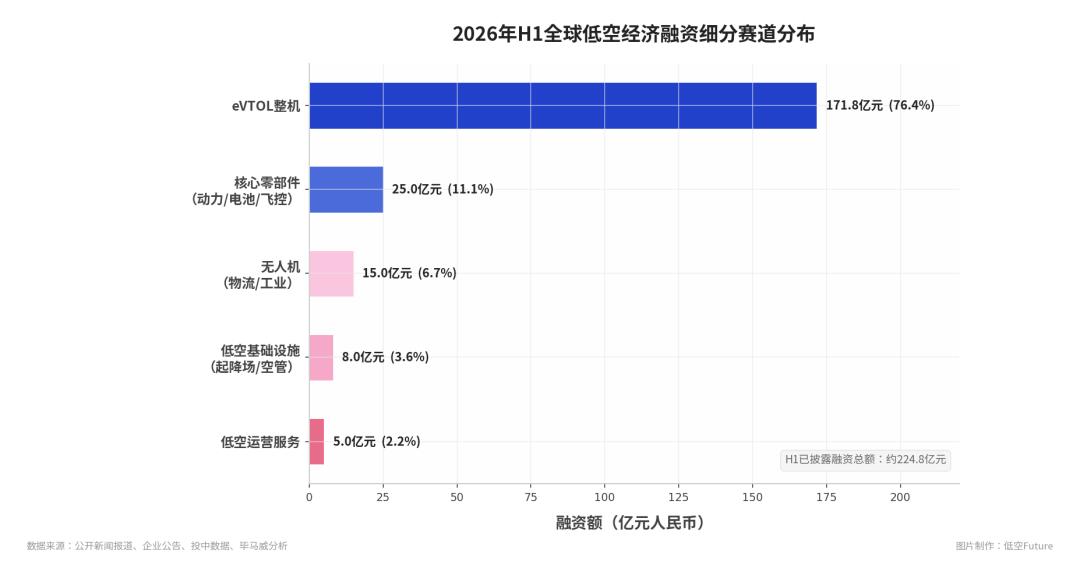
Figure 1: Distribution of Global Low-Altitude Economy Financing by Sub-Segment in H1 2026
Looking at the distribution of financing amounts, eVTOL complete aircraft R&D and manufacturing occupies an absolutely dominant position with approximately 172 billion yuan in financing, accounting for 76.4% of the traceable large-deal caliber (225 billion yuan).
Core components rank second with about 25 billion yuan in financing, making up 11.1%; drone financing totals around 15 billion yuan (6.7%); low-altitude infrastructure accounts for roughly 8 billion yuan (3.6%); and low-altitude operation services represent about 5 billion yuan (2.2%).
This inverted pyramid capital distribution pattern reflects that the current low-altitude economy is still in the early stage of industrialization.
Capital is prioritizing the complete aircraft manufacturing segment, which has the highest technical barriers and the largest market space, while sectors such as infrastructure and operation services — which can only become profitable after large-scale deployment — are still in the cultivation phase.
Leading Aircraft Manufacturers: Initial Market Pattern Taking Shape
eVTOL complete aircraft R&D and manufacturing is undoubtedly the absolute protagonist of low-altitude economy financing in H1 2026.
From a Chinese market perspective, Volocopter Aviation delivered the most eye-catching performance.
It closed a $300 million Series C round in late April, followed by a nearly 10 billion yuan Series C+ round in late May, marking two consecutive financing rounds in one month that set a new domestic record in the eVTOL field. The Series C+ round was led by China Life Science & Technology Investment, signifying the official entry of state-backed insurance capital into the sector. To date, Volocopter Aviation has raised over 50 billion yuan in cumulative financing, holding 1,900 confirmed orders and letters of intent, with potential order values exceeding 475 billion yuan.
Tianyancha data as of July 10 shows that Volocopter Aviation has completed its shareholding restructuring, with registered capital increasing from approximately 3.9 million yuan to 27.3 million yuan — a sevenfold increase — as the company establishes its A-share listing structure. Shareholding restructuring is a standard pre-IPO procedure, meaning Volocopter Aviation's public listing timeline may arrive earlier than market expectations.
It is worth noting, however, that Volocopter Aviation's high-density financing is directly tied to the time window for airworthiness certification. Its VE25-100 model is expected to obtain certification in the first half of 2027, and before that, the company needs to reserve sufficient resources to complete compliance verification and production line construction.
XPeng Huitian closed a nearly $200 million equity financing round in March, with Hillhouse Capital and Sequoia China increasing their investments once more. The company's cumulative financing has reached approximately $1 billion, making it the most well-funded manned low-altitude flight enterprise in Asia. It has already hired investment banks to prepare for a Hong Kong IPO, and if all goes smoothly, it will likely become the first flying car stock to go public, ahead of Volocopter Aerospace.
AutoFlight completed a $200 million capital increase in January, with CATL founder Zeng Yuqun personally investing $100 million and the founding team following up with another $100 million, pushing the company's post-investment valuation to $2 billion. Zeng Yuqun made this $100 million investment in a personal capacity, not through the CATL listed entity, assuming the investment risk himself.
Volocopter Aerospace announced the completion of a nearly 10 billion yuan Series D financing round in February, led by CITIC Securities Investment. The company formally submitted IPO counseling filings to the Sichuan Regulatory Bureau of the China Securities Regulatory Commission in April, planning to list on the STAR Market. In other words, Volocopter Aerospace is one of the first eVTOL enterprises to sprint toward the STAR Market in 2026.
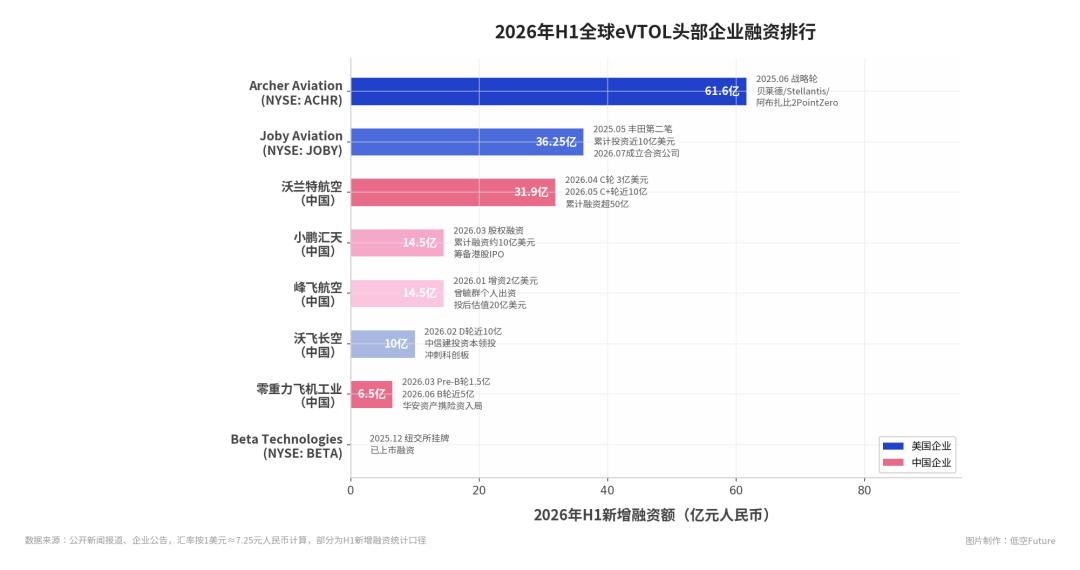
Figure 2: Global eVTOL Leading Enterprise Financing Ranking in H1 2026
U.S.-based Archer Aviation led the global field with $850 million in financing. This financing was closed in June 2025 and continued to exert industry-wide influence in 2026, with investors including BlackRock, Stellantis, and Abu Dhabi's 2PointZero.
Archer's valuation logic differs from that of Volocopter Aviation: Archer is already a publicly listed company, holding cooperation orders from United Airlines and the status of official supplier for the 2028 Los Angeles Olympic Games, so the capital market is pricing in a premium for its commercialization certainty.
Joby Aviation formally established a joint venture with Toyota in July 2026, with Toyota holding a 51% stake and Joby 49%. The second $250 million investment from Toyota is expected to arrive in Q4, bringing Toyota's cumulative investment in Joby close to $1 billion. This deep binding with an industry giant is the key reason why the capital market is willing to continue increasing its bets on the company.
The leading pattern in the complete aircraft track is initially emerging, but it is not yet solidified — new players still have the potential to break through via differentiated routes.
Zero Gravity completed two financing rounds in H1, which were not included in some statistical calibers: a 150 million yuan Pre-B round in March, and a nearly 500 million yuan B round in June, totaling 650 million yuan.
Zero Gravity is the only domestic enterprise that simultaneously deploys eVTOL and eCTOL (electric fixed-wing) technologies. Hua'an Asset, together with insurance capital, made its first entry into the company during the Series B round — a signal well worth monitoring.
As of now, Zero Gravity has completed 10 financing rounds. The TC certification process for its multi-rotor eVTOL ZG-ONE is underway, and the TC application for its tilt-rotor ZG-T6 has been accepted. ZeroG's strategic differentiation lies in its full-domain coverage across land, sea and air, with both land-based eVTOL and waterborne electric aircraft. This multi-scenario layout represents stronger risk resistance in the eyes of capital.
The Survival Landscape of Mid-Tier and Lower-Tier Enterprises
The leading financing figures look impressive, but the story beyond the top players is equally worth dissecting.
Among the 15 complete aircraft manufacturer financing deals, the top five companies account for roughly 80% of the total. The remaining six — Tianlingke, Huayun Xianxiang, Lanyi Aviation, Dragonfly Wing, Blue Vector, and Flight Era — make up less than 10%. Another roughly 10% belongs to mid-tier enterprises such as TCab Tech, whose financing scales fall between the leading and lower-tier players.
Blue Vector is the lower-tier enterprise with the fastest financing rhythm. It completed two consecutive rounds in June, led by Shenzhen Venture Capital and an industrial dollar fund respectively. Longtime shareholder Thick Snow Capital has increased its stake for the fourth time, Honghui Fund followed up for three rounds, and Jinding Capital added its investment twice. Over the past six months, five financing rounds have totaled over 400 million yuan, with the company's valuation multiplying several times within months.
Founder Wu Qiong has more than 25 years of experience in the aviation industry, and core team members boast an average of over 16 years of aerospace industry experience, having participated in more than 20 defense models and civil aircraft airworthiness certifications. Blue Vector's core value proposition is software-defined aircraft, and the logic behind investor follow-on investments is clear: bet on the team first, then wait to see if the company can deliver tangible airworthiness progress by the end of the year.
Huayun Xianxiang closed a Pre-A+ round of over 100 million yuan in May, led by Ant Group. The industrial signal behind this financing is far more important than the amount itself: Ant Group is laying out low-altitude payment systems, digital platforms and urban service networks, and its investment in Huayun Xianxiang essentially buys it a gateway to future eVTOL commercialization scenarios.
Huayun Xianxiang follows a full tilt-rotor technical route, having completed full-tilt transition flight verification in 2025. It is the first domestic and second global enterprise to master this technology. Its strategic choice is "cargo first, then passengers" — prioritizing low-altitude cargo transport before moving to manned services. This pace has become an advantage in the current environment where capital places greater emphasis on commercialization certainty.
Tianlingke completed its A+ round in May, just three months after its over 100 million yuan Series A round in February. Among its investors, CAS Star is one of China's most active hard technology investment institutions, and the participation of Songjiang State Investment and Jiliu Capital demonstrates the Shanghai local state-owned capital's recognition of the tilted ducted wing configuration. Tianlingke was only established in October 2023, yet it received its TC acceptance notice in April 2025, making it the world's first hybrid-powered manned eVTOL to enter the airworthiness process — an impressively fast pace.
Dragonfly Wing closed a Pre-A round of tens of millions of yuan in June, with Plum Ventures joining as an investor. Founded by a team from Beihang University, the company's founder Tao Guoquan began researching tilt-rotor technology back in 2010. Its core product QT2000 is a 5-seat full tilt-rotor eVTOL that has already accumulated 250 letters of intent for orders.
Lanyi Aviation completed the second tranche of its Pre-A round, worth tens of millions of yuan, in February with joint investment from Wuxi Venture Capital and Liang Venture Capital. Chairman Tiehong Dang is a core expert in the R&D of China's large aircraft ARJ21 and C919, and the team hails from COMAC. The TC application for its LE200 passenger eVTOL has been accepted by the Civil Aviation Administration of China, with cumulative orders totaling 360 units.
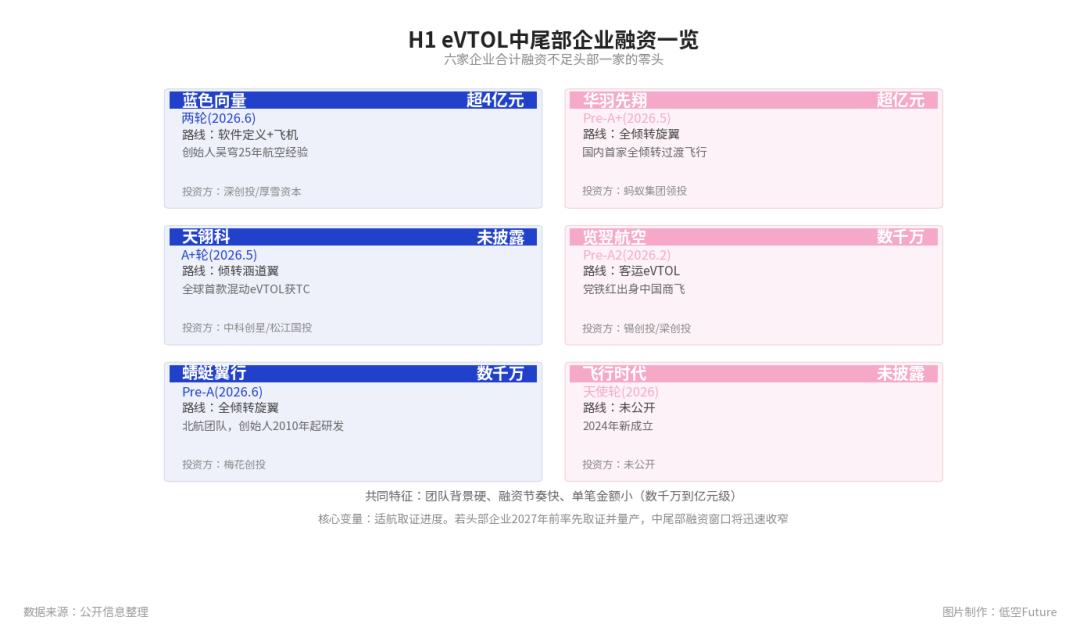
Figure 3: Overview of H1 eVTOL Mid-Tier and Lower-Tier Enterprise Financing
The common feature of mid-tier and lower-tier enterprises is their exceptionally strong team backgrounds.
Represented by talents from Beihang University, COMAC, and AVIC, these companies boast fast financing rhythms — most completing more than two rounds within half a year — but their individual financing amounts are relatively small, mostly ranging from tens of millions to 100 million yuan. Their survival space depends on one key variable: the progress of airworthiness certification.
If leading enterprises complete TC certification and start mass production before 2027, the financing window for mid-tier and lower-tier enterprises will rapidly narrow.
As capital diverts to tracks such as AI, embodied intelligence, and commercial aerospace, new entrants in the low-altitude economy are already facing significantly greater financing difficulties.
However, in early July, Sparo (Silicon Feather Technology) officially announced its financing, completing four rounds within half a year totaling hundreds of millions of yuan. Although this event falls outside the H1 statistical window, it proves that the market pattern is not yet completely closed.
Parts Financing Heats Up, Batteries as the Main Battlefield
In H1, core components financing reached approximately 250 billion yuan, accounting for 11.1% of total low-altitude economy financing. While this proportion is not high, the industry trend is crystal clear.
Junlian Electronics closed a nearly 100 million yuan A+ round in May, led by CITIC Securities Investment. This enterprise, which develops vehicle-grade SiC power modules, has already entered XPeng Huitian's supply chain.
Competition in the aviation battery track is becoming white-hot: Farasis Energy exclusively supplies second-generation semi-solid-state batteries to TCab Tech, EVE Energy has become a supplier for XPeng Huitian, and Sunwoda has launched a dedicated 320Wh/kg battery product.
Batteries are the core bottleneck restricting the range and payload of eVTOL aircraft. Whoever sets the battery standards will gain the qualification to participate in formulating the industry's overall rules.
Drone Financing Remains Low-Key, With More Mature Commercialization
The drone track raised roughly 150 billion yuan in H1, accounting for 6.7% of total low-altitude financing — a figure far less eye-catching than complete aircraft manufacturing. But this precisely reflects the industry's maturity. Companies such as Fonyu Technology, Meituan Drones, and Antwork have already achieved normalized operations in cities including Shenzhen and Shanghai, forming more mature business models and stable cash flow. They do not need to rely on large-scale financing to sustain their operations, unlike eVTOL enterprises.
In a report released in April 2026, KPMG pointed out that global drone service sector financing reached 50 deals totaling $6 billion in Q2.