What is the most profitable skill in the 21st century? It is not AI.
Shen Translation is a translation team under 36Kr, focusing on technology, business, workplace, life and other fields, with a focus on introducing foreign new technologies, new perspectives and new trends.
Editor's Note: In the AI era, everyone is scrambling for technological advancement, but the most profitable meta-skill has never changed: understanding human nature is the ultimate leverage for dimensionality reduction strikes. This article is translated from relevant overseas content.
Right now, no one knows exactly what skills to learn.
Artificial intelligence? Programming? Marketing? When everyone around you is engaging in performative programming and building applications that no one will ever use, am I wasting my time by sticking to the traditional path of going to school? Should I start a YouTube channel? Or launch a Substack newsletter? Should I even bother looking for a job at all? Or should I go solo and build my own business?
There are more opportunities available now than ever before, but this abundance of options has left more people paralyzed by confusion. The choices are endless, and you feel that even if you start learning something right now, it will become completely worthless in a year or two.
However, there is one skill that will truly never become obsolete.
You can call it a "meta-skill" — once you master it, every other skill you learn afterwards will be exponentially more powerful.
What is this skill?
Human nature.
Because if you understand how the human brain works — what drives it, what captures its attention, what prompts it to take action... you can make any business a success. You can carve out brand new opportunities for yourself. You can win the favor of others and build influence. You can navigate life with ease and grace, because you are no longer a slave to your own mind, but its master.
If you don't rely on working a traditional job, how else can you succeed? It is human beings who pay for your independent work. It is human beings who control the resources and opportunities you crave. To put it mildly, even if your only goal is to land a job, how can you possibly get the dream offer you want without understanding human nature?
But how on earth do you "learn" something as intangible as human nature?
In this article, what I hope to provide are exactly these: steps and principles that you can put into practice immediately. When everyone is blindly racing for speed and thinking that AI can make up for their lack of experience out of thin air, these methods will give you a competitive edge like a dimensionality reduction strike.
Anatomy and Utilization of Human Nature
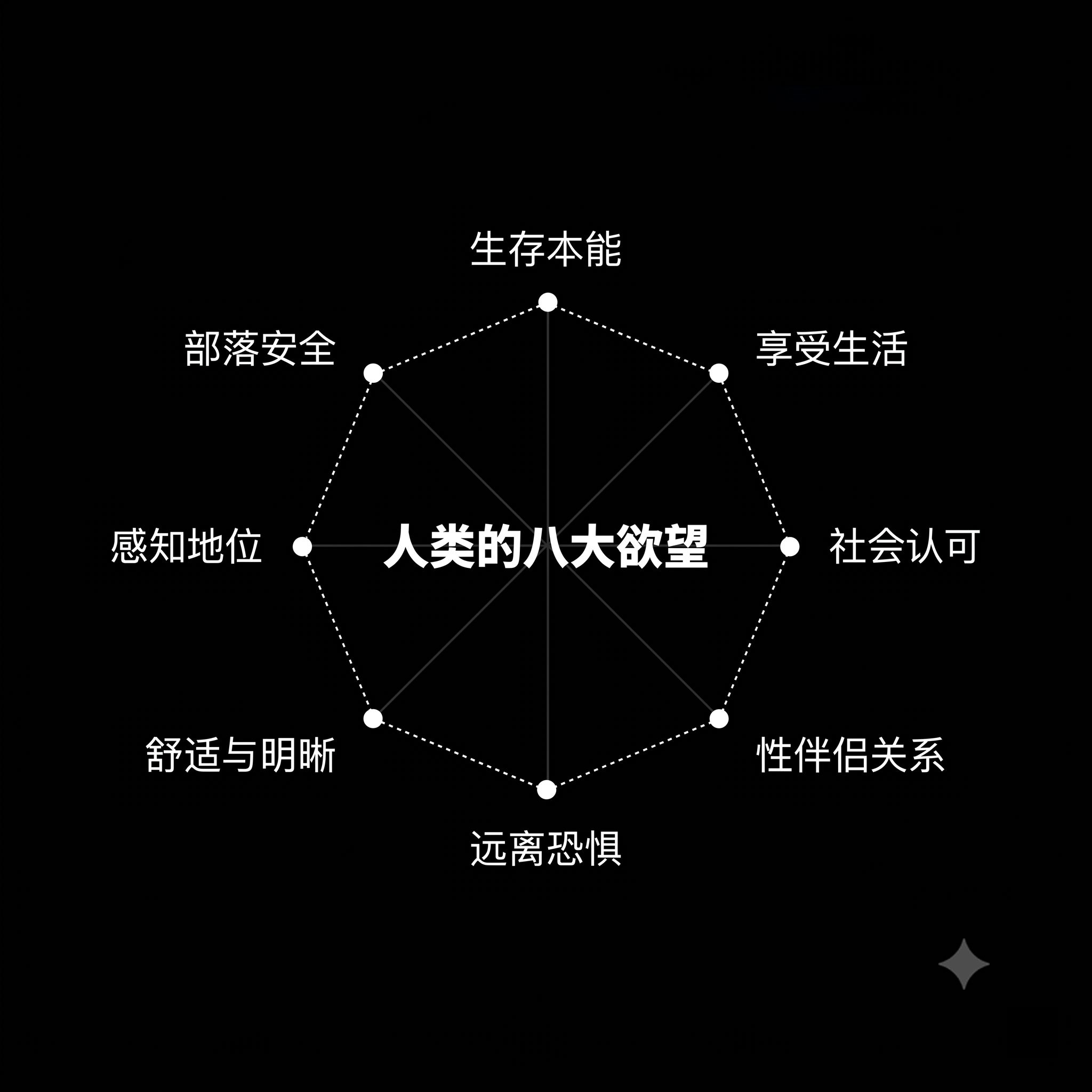
The human brain is a story engine.
This is what humans will involuntarily pay attention to.
The value of robots lies in practicality. If the DMV is fully automated and operates efficiently, who will care except its employees? Which normal person would willingly wait in a long queue for hours just to take a new driver's license photo?
The same logic applies to fast food or ride-hailing services. No one likes cashiers getting orders wrong. No one likes sitting in a dirty backseat listening to a stranger asking fake friendly questions, who does it purely to get you to tip them.
Leave the practical problems to robots to solve, so that humans can free themselves up to pursue meaning, purpose and narrative.
Humans love games and suspense. When the team you support is about to lose in the final inning, you will feel so nervous that your chest tightens. Humans love novelty. We will fly across half the world just to have a meal at a five-star restaurant.
Gaining insight into human nature is essentially mastering the art of storytelling.
But I am not going to teach you how to write fiction. No. Instead, I will teach you the principles of creating value. If you understand these, your writing will be better, your expression will be more powerful, you can build better products, attract more customers, make more friends, and know how to create value for others — thus enhancing your own value.
Essentially, I am passing on all the secrets of marketing, sales and how to influence others to you.
The human mind has three triggers. As long as you touch any one of them, the other person's attention will be drawn to you almost instinctively (provided that your audience is sensitive to that specific type of anxiety). If you hit all three points at the same time, you can firmly grasp a person, and this connection cannot be broken by pure logic.
If you engrave these "three major anxieties" firmly in your mind and apply them every time you write, speak or interact with others — you will be surprised to find that countless opportunities will come to you actively.
1. Survival Anxiety
The mind is indeed a story engine, but it is also a collection of survival strategies.
We are in subconscious threat detection mode at all times, because our neural circuits are exactly the same as those of our ancient hunter-gatherer ancestors. Obviously, we don't want to die, so we are extremely eager for a sense of security and problem-solving solutions (if you can make someone realize a problem, and then provide a solution in due course, that is the essence of sales).
But "security" here does not only refer to physical life and death, but a broad spectrum. If we let trivial little things occupy our minds, they will become as terrifying as the end of the world. These problems can be financial, social, or even just missing a potential opportunity that could give you a head start (or a better chance of survival).
Here are a few examples:
You wake up at the age of 30 and suddenly find that you have been living on autopilot, and the gap between who you are now and who you want to be is so huge that you feel it is impossible to make a change.
You spend ten years building someone else's dream, only to find that the other person doesn't care about you at all.
Some people who are clearly less capable than you earn ten times more money than you, just because they never overthink risks.
You may have already noticed that these lines sound a lot like posts I publish on social media. And these posts work extremely well, because they precisely trigger that psychological lever, forcing people to stop, reflect on their current situation, and crave a potential solution.
2. Identity Anxiety
The meaning of survival is far deeper than just physical existence.
Animals only try to replicate the information in their genes, while humans try to replicate the information in their consciousness.
This is why you feel threatened when the team you support is about to lose, and even get into a fight because of others' taunts. This is also why you choose to stand on the "anti-AI" or "pro-AI" side, hype and argue nonstop online all day long, repeating clichés like "AI is eroding your brain" instead of stepping out of these "religious fanaticisms", testing theories against reality, and pursuing the truth rather than following the trend.
Humans crave circles, status, and a sense of belonging.
Because without these, their chances of survival will drop sharply. You subconsciously accept the values and beliefs of your culture and parents, because if you don't, everyone will think you are a low-level loser who doesn't follow the normal path of going to school, working, and retiring at 65. Of course, this concept is changing, but this narrative was indeed regarded as the most "safe and smart" shortcut in the past few decades.
In the next section, we will learn how to precisely target this anxiety.
3. Growth Anxiety
By now, some of you should have figured out the pattern.
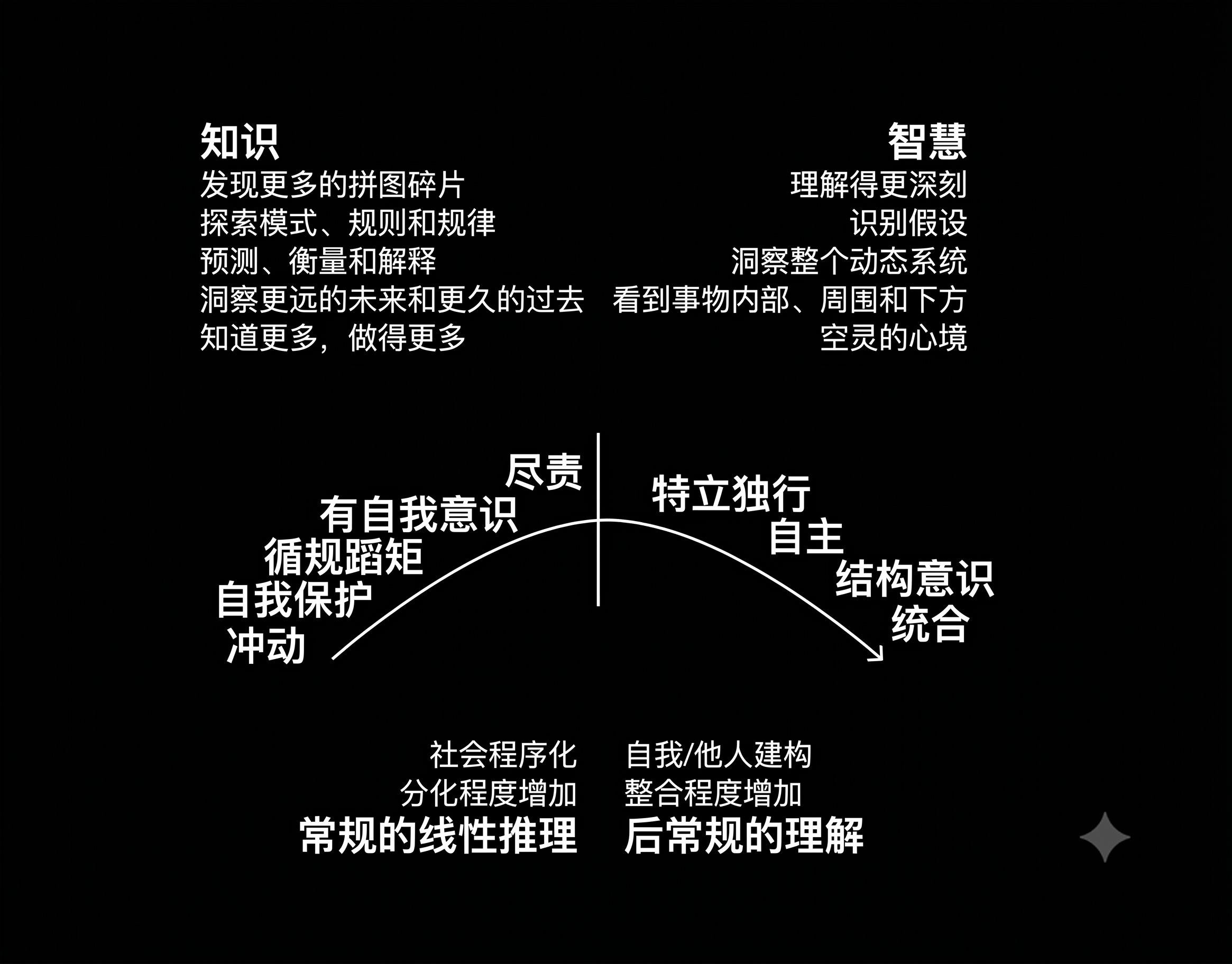
First of all, people need safety and comfort.
Secondly, they need a sense of belonging and status.
Thirdly, they crave deeper meaning, purpose and experience.
You may have these desires at the same time at any moment, but if you are in an insecure environment or under overwhelming pressure all day long, your vision will become extremely narrow, and you will have no time to care about anything beyond the immediate crisis. Once the most basic needs are largely met or suppressed, you will start to pursue higher-level status, belonging, and eventually growth — gaining clear cognition, clear direction, firm goals and self-transformation.
For creators who like to discuss profound ideas and insights: please remember that 90% of ordinary people have not reached this stage yet. You must first help them solve their low-dimensional real survival problems through your content or products, and lead them up this ladder step by step.
This all sounds great, but what exactly can you do with these core messages?
How will this make you a better writer, speaker or business leader? And how can you treat this as a skill to practice deliberately?
How to Leverage Psychological Levers to Get Everything You Want
The modern information environment is destroying our ability to think, and most people don't even notice it. Long-form essays may be one of the few remaining content forms that can truly cultivate your ability to understand the real world.
You can read all the best-selling books on persuasion.
You can study professional textbooks on psychology and behavioral science in depth.
You can think you fully understand the reasons behind human thinking and behavior, but if you don't put this knowledge to the test in the real world, you are just engaging in empty theorizing.
You need feedback. You need to put your work out into the real world to observe people's reactions. You have to write, speak, build a product and sell it. Starting a business is equivalent to self-actualization, because the market and reality will be your harshest mentors.
Right now, you just need to understand that "leveraging psychological triggers" and "utilizing human nature" are just fancy ways of saying "learning how to persuade others".
Tools themselves are neither good nor evil. Whether they are moral or not depends entirely on the person who uses them. A person with a low level of mind who only cares about his own survival will inevitably use persuasion in crooked ways. Their only pursuit is to make money rather than find meaning, because they are financially insecure, so they try to accumulate wealth through manipulation and calculation, rather than through equal value exchange and mutual benefit.
That being said, please be clear about your own position.
Here are 5 psychological levers that can trigger one or more of the three anxieties mentioned above respectively.
You need to create anxiety and tension first (that is the core that grabs people's attention when you write, speak, post or sell), and then present a solution (preferably to change the audience's behavior in a positive way).
Lever 1: Name the Threat (Trigger Survival Anxiety)
Before anyone cares about your solution (such as a video, product, etc.), they first need to realize that a problem exists. According to Eugene Schwartz's theory, users' awareness is divided into 5 levels:
Unaware — They don't even know they are facing a problem. You wake them up by directly pointing out the problem.
Problem-aware — They know the problem exists, but don't know there is a solution. At this point, you show them the solution.
Solution-aware — They know there is a solution, but are comparing various options and don't know your unique proposal.
Product-aware — They already know your proposal. At this point, they need to see evidence, have their doubts addressed, and see customer testimonials.
Fully aware — They just haven't taken action yet, and all they need is a final gentle nudge from you.
When I write these articles, I always start by pointing out a problem, without exception. You can scroll up and look at the first sentence: "Right now, no one knows exactly what skills to learn." This allows almost everyone to read on and resonate, and then I gradually lead to the demonstration of the solution. This is also the signature opening of most of my posts.
When you are scrolling through social media, try to observe how others use this trick. Once you see through it, you will never be able to ignore its existence.
The practical steps here are:
No matter what you are doing, from writing, making PPTs, daily conversations, to convincing your wife to let you go out and hang out with your buddies at night, always start with the problem. Set the tone and take control of the narrative.
Recall 5 pain points you have personally experienced in life → Congratulations, you now have 5 excellent content inspirations, which is far better than sitting there trying to force ideas out of thin air.
Lever 2: Mirror and Map Identity (Trigger Identity Anxiety)
Unconsciously, you have already classified yourself into a specific group or circle.
For example, consider yourself an "early riser".
For example, a "heavy coffee lover".
Or a Christian, atheist, Republican, Democrat, anti-AI advocate, pro-AI advocate, and any ideology or label we like to use to mark our own attributes.
For example, here is a YouTube video title with 3.9 million views:

It almost perfectly condenses all the elements we discussed into just a few words, covering the problem, identity and solution.
There are countless ways to leverage the identity trigger, but my most commonly used killer trick is just two simple words: "If you..."
That's it.
If you are lazy. If you are poor. If you are unhappy. If you are a writer.
Look, this instantly becomes the opening of 4 high-traffic viral posts, or a perfect opening for a public speech, or an eye-catching title for a YouTube video.
Lever 3: Exclusivity (Further Deepen Identity Anxiety)
Clearly point out who your content or product is "not for".
Exclusivity creates a strong sense of belonging and forces people to take sides.
This trick works best when used after step 2 "Mirror and Map Identity". Drawing a clear line helps you filter out the wrong audiences who are not on the same page as you and will never support you.
For example: "This is not for people who just want to 'try' to work out. This is for those who are fed up with their own excuses and are ready to completely transform themselves."
"If you are just looking for a lazy efficiency trick or morning routine, you have come to the wrong place."
"This is not for people who just want to run a side hustle to get by. We are here to build a real e-commerce business."
I think you get the idea.
Lever 4: Paint the Blueprint of Transformation (Trigger Growth Anxiety)
Ultimately, the ultimate purpose of insight into human nature is to change other people's lives.
At the very least, this is its most moral interpretation. This is also the way you build a lifelong career. You become a large-scale value creator. You focus on a mission, which is to do your best to solve pain points for as many people as possible. Persuasion is just the tool you use to inspire people to walk with you.
At this point, we have successfully grabbed attention (pointed out the threat) and filtered out people with different values (mirrored and mapped identity). Now we need to stimulate their desire by simulating the future.
You can also see in the introduction of this article that I triggered all these points frequently in just a few sentences.
Why does this trick work