Seres' proactive impairment hides the "financial side effect" of automakers' high-pressure intensive R&D
Behind Seres' proactive impairment lies the "financial side effect" of automakers' high-intensity R&D under pressure.
Auto industry performance has repeatedly missed expectations: BAIC BluePark projects a loss of 1.77 to 1.97 billion yuan, GAC Group reports a huge loss of over 4 billion yuan, and JAC has posted seven consecutive quarters of losses. Even Seres, the top performer that turned profitable for two years, can no longer hold on, forecasting a net loss attributable to shareholders of 1.5 to 1.8 billion yuan for the first half of 2026.
However, Seres' shift from profit to loss does not stem from a deterioration of its fundamentals. First, major raw material prices have risen sharply, pushing the per-vehicle cost up by nearly 20,000 yuan; second, based on the prudence principle, Seres has proactively adjusted the book value of some existing assets with limited applicability due to technology iteration and model upgrades.
With solid fundamentals, Seres is full of confidence and announced a share repurchase plan the very next day — with a planned repurchase amount ranging from 150 million yuan to 300 million yuan.
Backed by real money support, Seres' shareholders can breathe a little easier, but car buyers may need to act quickly. After all, with raw material prices surging continuously, the consumer electronics sector has already seen widespread price hikes. Will the automotive industry follow suit and open a window for price increases?
Two Major Squeezers That Erased Profits
Raw material prices are soaring, leaving downstream automakers reeling collectively.
Li Bin, founder of NIO, once stated bluntly that batteries and chips now account for over 50% of total costs, and cost control has gone "out of control."
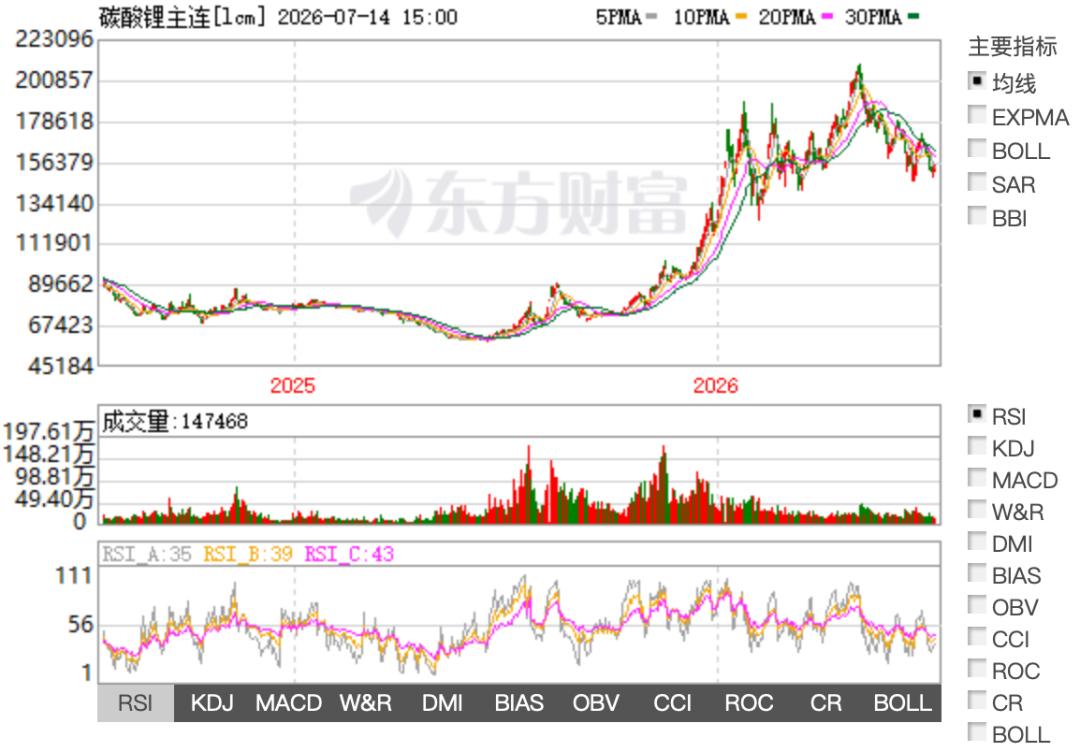
The price of lithium carbonate, the core raw material for batteries, has skyrocketed from 50,000 to 60,000 yuan per ton to around 180,000 yuan per ton, adding approximately 3,300 to 4,400 yuan to the per-vehicle battery cost.
Chips are another major cost component. Zhang Xinghai, Chairman (Founder) of Seres Group, revealed that a storage chip unit originally cost 20 yuan, but now the price is approaching 100 yuan, a direct 5-fold increase. The sharp rise in prices of storage chips, batteries, and other components has pushed the per-vehicle cost of AITO models up by 15,000 to 20,000 yuan.
He Xiaopeng also voiced his frustration: "The automotive industry is truly a challenging sector. Wherever there is a conflict, a supply disruption, a surge in shipping logistics costs, or a rise in raw material prices... all of these are closely related to us."
Soaring costs are eroding profits, and no automaker can stay unaffected — data from the China Passenger Car Association shows that the auto industry's profit margin fell to a historic low of 3.4% in the January-May period of this year.
The second blow to automakers' profits comes from technology asset impairment. AITO has almost no backlog of inventory, so the impairments in this performance forecast all relate to intangible technology assets.
Li Bin long ago summarized this industry pattern: the faster an automaker iterates its R&D, the shorter the technology obsolescence cycle, and the greater the pressure from intangible asset impairment.
However, this impairment is a one-time event that will not recur in the second half of the year, and it does not affect actual operating cash flow or the fundamental business performance. It also corroborates the automaker's technical strength — having a large amount of technical assets on the books eligible for impairment reflects a solid foundation of in-house developed technology. Simply put, this is the "financial side effect" of heavy R&D investment, rapid technology evolution, fast product iteration, and continuous user experience optimization.
Three Strategies to Overcome Industry Headwinds
With rising costs and peaking sales, automakers are facing sharply increased pressure.
The China Association of Automobile Manufacturers disclosed that in the first half of 2026, China's new energy vehicle sales reached 7.446 million units, with a year-on-year growth of only 7.3%.
Against the overall market pressure, AITO's performance has been quite impressive, with cumulative deliveries in the first half of the year rising 10.2% year-on-year, demonstrating the resilience of its core business operations. Among its models, the all-new AITO M9 series received over 42,000 firm orders within one month of launch, and the AITO M6 recorded over 30,000 cumulative deliveries 54 days after its release.
How long a company can withstand this pressure depends on its financial reserves. Seres stated, "The company maintains ample cash reserves and a robust asset-liability structure, with strong sustained operating capacity and risk resistance."
With this solid financial safety cushion, Seres has chosen to absorb the cost increases on its own, rather than passing the pressure on to end consumers. If Seres simply raised the terminal price of each vehicle by 10,000 yuan, its losses would narrow significantly. By choosing to bear the pressure itself and refrain from raising prices for users, Seres is making a proactive tradeoff to safeguard its premium brand positioning during the industry downturn.
Today, AITO's high-end strategy is becoming increasingly stable. The M9 Ultimate Master Extended Edition is set to begin deliveries soon, continuously enriching its high-end product portfolio. By adhering to its premium positioning without compromise during a high-pressure period, refusing to "trade price for volume," and balancing defensive resilience with offensive flexibility, Seres will only become more capable of navigating through industry cycles.
Deliveries growing against the trend, new models sustaining strong sales, and a robust cash flow safety cushion — Seres' fundamentals are more stable than many people realize.
How long will this high-pressure situation last, and how can automakers break through?
First, raw material price hikes are cyclical. Taking lithium carbonate as an example, its price once hit a sky-high 600,000 yuan per ton in 2022, fell to 60,000 yuan per ton in 2024, and now stands at around 180,000 yuan. The market mechanism will adjust supply and demand, and in the long run, lithium carbonate prices are expected to return to a reasonable range.
Second, explore relevant diversification, develop multi-brand strategies, and deploy a wider range of models to expand customer coverage.
Third, seek incremental growth through overseas expansion. In June this year, new energy vehicle exports surged to 523,000 units, a year-on-year increase of 1.6 times. The overseas market is experiencing high growth with greater price flexibility, which can offset rising costs — many vehicle models are sold at 3 times or more their domestic prices in foreign markets.
Approaching the Price Hike Window
Amid surging costs, the smartphone industry has already implemented two rounds of price increases, with even Apple raising prices across its product line by 15%-25%.
The window for widespread price hikes in the automotive industry is likely not far away.
Keeping prices unchanged for now is a responsible move during the industry downturn, as automakers are proactively absorbing a "subsidy" of 15,000 to 20,000 yuan in costs for their users. However, the trend of industry-wide price increases is gradually becoming clear.
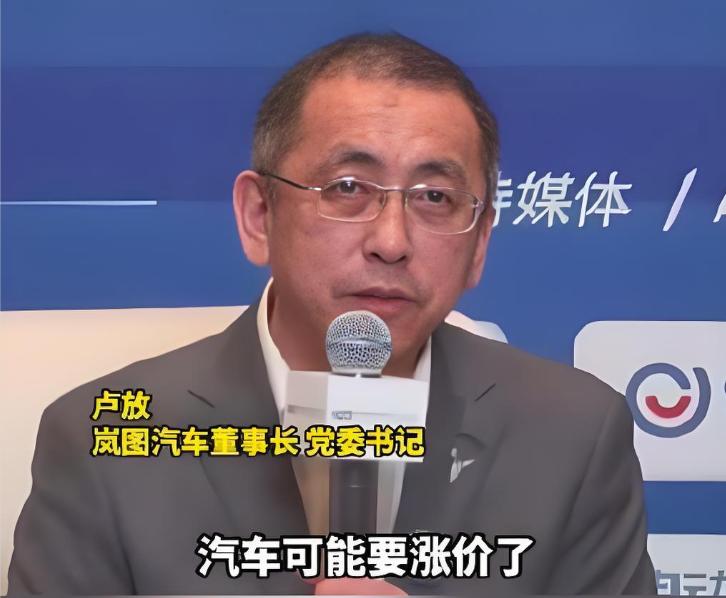
In April this year, Lu Fang, Chairman of Voyah Auto, was the first to signal the trend, stating, "Car prices may be about to rise." Even brands backed by established industry players are releasing price hike signals, indicating that cost pressures have permeated all segments of the market. New EV brands can no longer hold on either, as NIO's new Leida L60 model has already seen a price adjustment.
With a full product lineup in the mid-to-high end segment, a relatively strong brand, good public reputation, and high user loyalty, AITO has sufficient confidence to raise prices.
Once the first domino falls, a chain reaction will follow — similar to the smartphone industry, where the transition from "the first price hike announcement" to "industry-wide price increases" took only three months.
Once overall terminal prices rise, it will be almost impossible for them to fall back to previous levels.
First, raw material prices follow cyclical fluctuations, but price transmission has its rigidity, especially for premium brands. Price cuts would damage brand value and the trust of existing users, so automakers will not easily lower prices again.
Second, the industry landscape is shifting from "price wars" to "value wars," and a general upward shift in pricing benchmarks is an inevitable trend.
Third, the iteration of chip computing power, autonomous driving algorithms, and battery technology is accelerating, and R&D costs will eventually be reflected in product pricing. The more advanced the technology, the stronger the price support.
Price hikes are coming soon. Instead of waiting for the domino effect to pay tens of thousands of yuan more, potential car buyers should seize the window to make their purchases. Therefore, after the release of the interim performance forecast, it is not Seres' shareholders who should worry, but potential car owners.
This article is from the WeChat public account "Finance Story Collection" (ID: cjgshui), written by Chen Jiying, edited by Wan Tiannan, and published with authorization from 36Kr.