Invested 1.67 billion yuan and earned 25 billion yuan, he bet on a 150 billion yuan chip giant
Another massive return is on the table.
On July 9, Iluvatar CoreX (09903.HK), a Hong Kong Stock Exchange listed company, issued a placement announcement — issuing 14.857 million new H shares at a price of HK$476 per share, raising a total of HK$7.072 billion. Of the funds raised, 60% is explicitly marked for "supply chain procurement", which in simpler terms means "stockpiling": wafers, memory, and substrates, the most critical raw materials for AI chips.
On the day the announcement was released, Iluvatar CoreX's share price closed up 5.89% at HK$593, with its market capitalization exceeding HK$150 billion.
The market's attention quickly focused on one name: CPE Source Capital.
As the largest external shareholder of Iluvatar CoreX, CPE Source Capital holds approximately 20.62% of the shares. Calculated at the closing price of HK$593, the market value of this stake is equivalent to about RMB 27 billion — while CPE Source Capital's total invested cost is only RMB 1.67 billion.
- 01 - Behind the 27 Billion Return
The connection between CPE Source Capital and Iluvatar CoreX dates back a long way.
As early as 2017, CPE Source Capital was indirectly exposed to Iluvatar CoreX through Xinyu Jianhui, an early shareholder of the company, but later withdrew.
What was the landscape in 2017? That year, NVIDIA had just released its Volta architecture GPU, and the global market for AI training chips was almost entirely monopolized by NVIDIA alone; meanwhile, the domestic "general-purpose GPU" track was still in the conceptual stage, with most entrepreneurs still working on edge inference chips.
Iluvatar CoreX was born in precisely this environment. The company was founded in 2015 by Li Yunpeng, former R&D Director of Oracle's database division, and initially focused on edge-side AI inference chips. However, investors had different ideas — they believed that what was truly valuable was general-purpose GPUs, the kind that could compete head-on with NVIDIA.
The result of this strategic divergence was: founder Li Yunpeng left the company in 2019, and Iluvatar CoreX entered a turbulent period "without a helmsman".
CPE Source Capital truly entered the scene directly with its own fund in 2019. That year, large language models had not yet emerged, NVIDIA's market capitalization was less than a fraction of what it is today, and "domestic GPUs" were far from being the hottest concept in the capital market.
In May 2019, CPE Source Capital Phase I Investment Fund invested RMB 200 million to participate in Iluvatar CoreX's Series B financing. At the time of this financing, the company's pre-money valuation was approximately RMB 2.01 billion. After the transaction was completed, CPE Source Capital held about 8.41% of Iluvatar CoreX's shares.
In July 2020, the initial shareholders of Iluvatar CoreX transferred their 9.298% equity stake to CPE Source Capital Phase I Investment Fund for approximately RMB 4.11 million, and withdrew from the company's management team. A few months later, CPE Source Capital invested another RMB 400 million through its Nanjing Youxu subsidiary to participate in the Series C financing. After the completion of Series C, CPE Source Capital Phase I Fund and Nanjing Youxu held 13.63% and 12.32% of the shares respectively, with a combined shareholding of nearly 26%.
Obtaining nearly a 10% stake for RMB 4.11 million seems like an unbelievably cheap deal. But at that time, Iluvatar CoreX was far from being as certain a success as it is today.
Over the following two years, the company went through two successive CEO transitions — Diao Shijing, former Director of the Electronic Information Department of the Ministry of Industry and Information Technology and Co-President of Unigroup, took over as CEO in 2021, but resigned for personal reasons in 2022.
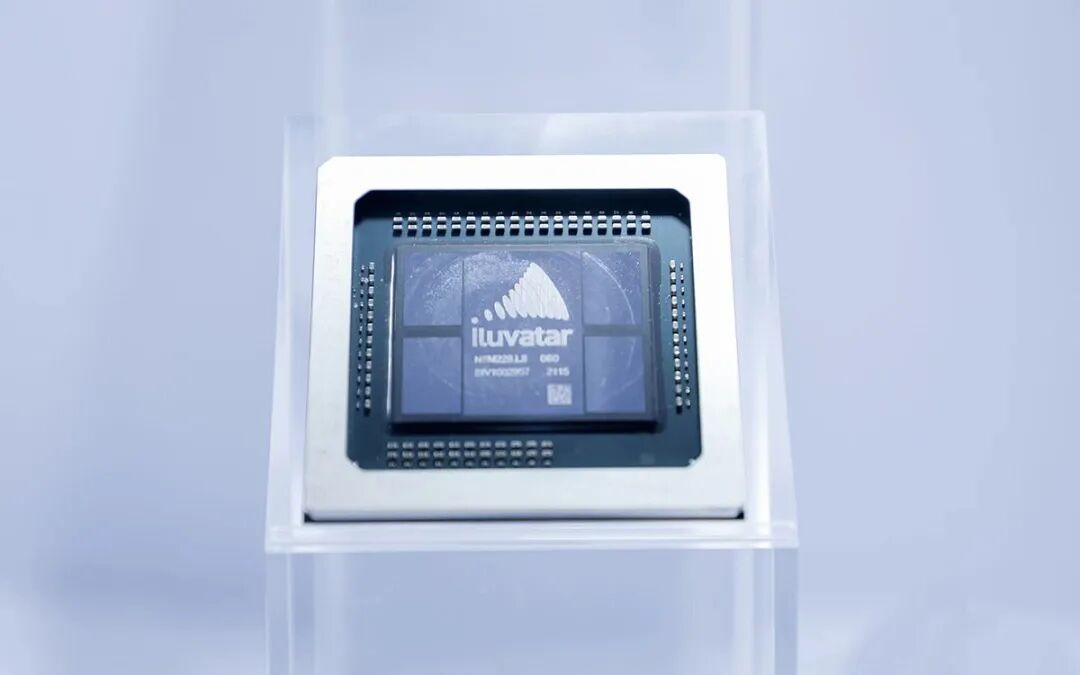
Iluvatar CoreX GPU Chip Source: Iluvatar CoreX Official Website
A typical investment institution, encountering a project with two overhauls of the management team and wavering product direction, would most likely have cut its losses and retreated long ago.
But CPE Source Capital did not.
In 2023, Xiamen Zhengmei under CPE Source Capital participated in the Series D financing, investing RMB 300 million, which included a RMB 50 million convertible note issued earlier and later converted into equity. At this point, Iluvatar CoreX's pre-money valuation had risen to RMB 10 billion, nearly five times that of CPE Source Capital's first direct investment.
By 2025, with the IPO not far away, CPE Source Capital once again made a heavy investment.
In April 2025, its subsidiary Masterwork Holdings subscribed for Iluvatar CoreX's shares with RMB 720 million; in June, Xiamen Zhengmei invested another RMB 50 million. The pre-money valuation of the Series D+ had reached RMB 12 billion. In this round alone, CPE Source Capital invested RMB 770 million, nearly three times the amount of its first investment in 2019.
Adding up all these transactions, CPE Source Capital has invested a total of approximately RMB 1.674 billion in Iluvatar CoreX through entities including CPE Source Capital Phase I Investment Fund, Nanjing Youxu, Xiamen Zhengmei, and Masterwork Holdings.
An even rarer move occurred in 2023: Ge Lujiang, a partner of CPE Source Capital, directly took on the roles of chairman and CEO of Iluvatar CoreX. A financial-background investor going to manage a chip design company — that's a first in the entire industry.
This is not the first time CPE Source Capital has done such a thing. Back in 2021, when Luckin Coffee was on the verge of delisting due to financial fraud, CPE Source Capital led the restructuring with a $240 million investment. Its founder Li Hui personally took over as chairman, pulling a dying company back from the ICU. Today, Luckin Coffee has an annual revenue of nearly RMB 50 billion, and CPE Source Capital holds a 31.3% stake, making it the absolute controlling shareholder.
However, Iluvatar CoreX is not another Luckin Coffee.
At Luckin Coffee, CPE Source Capital later gained control and was deeply involved in board restructuring, debt handling, and company operations; Iluvatar CoreX's prospectus explicitly defines CPE Source Capital as a "passive financial investor".
- 02 - Turning a Minority Stake into a Big Business
In China's investment community, CPE Source Capital has always been a special presence.
Founder Li Hui graduated from Renmin University of China with a bachelor's degree in economics, earned an MBA at Yale, and then went to Stanford to complete his doctorate. He served as an executive director at Goldman Sachs, President of Asia Pacific at Warburg Pincus, and a member of Warburg Pincus' Global Operating Committee. During his 14 years at Warburg Pincus, he led a series of star projects such as China Auto Rental, Red Star Macalline, Intime Department Store, and 58.com.
CPE Source Capital has been established for only nine years, but its assets under management have exceeded $7 billion (about RMB 500 billion). Its LP list includes GIC (Government of Singapore Investment Corporation), Temasek, China Investment Corporation, Ontario Teachers' Pension Plan, and the Chanel Family Office — all top-tier global institutions.
Different from venture capital that spreads bets widely, more than 70% of CPE Source Capital's projects fall under the category of controlling, co-controlling, or significant minority equity investments. It has named its methodology: investment-driven transformation. In simple terms, it means not only providing capital but also changing the company's operations.
The most typical case of this approach is Luckin Coffee.
In 2018, CPE Source Capital participated in Luckin Coffee's Series A and Series B financing, investing a total of about $180 million across the two rounds. In January 2020, before Luckin Coffee's financial fraud was exposed, CPE Source Capital sold about 20% of its holdings through placement, cashing out $232 million.
But what truly embodies its style is what happened after the crisis.
While many investors were eager to exit, CPE Source Capital dispatched seven professionals to Luckin Coffee to participate in management and restructuring. In 2021, it invested another $240 million in Luckin Coffee; in 2022, it led a consortium to acquire the shares held by founding shareholders for more than $400 million, eventually gaining over 50% of the voting rights and becoming the controlling shareholder.
CPE Source Capital turned a financial investment into a corporate reconstruction. Luckin Coffee subsequently completed its U.S. bankruptcy protection proceedings in 2022.
A similar strategy has been applied to other projects.
In 2020, CPE Source Capital invested over $300 million in Aneng Logistics, becoming a significant shareholder, and Aneng subsequently listed in Hong Kong in 2021. In 2025, CPE Source Capital joined forces with shareholders including Temasek to propose privatizing Aneng, with the transaction valuing the company at approximately $1.84 billion. At that time, CPE Source Capital already held about 24.32% of Aneng's shares. After the privatization is completed, CPE Source Capital will indirectly hold approximately 51.78% of Aneng Logistics's equity, officially becoming its absolute controlling shareholder.
In the healthcare sector, CPE Source Capital led a consortium to privatize China Biologic Products, a blood products enterprise, with the transaction valued at approximately $4.76 billion. The company was later renamed Taibang Biologic, becoming one of CPE Source Capital's most representative healthcare investments (with 110% control).
Other cases include the acquisition of Blue Bottle Coffee from Nestlé in 2026 — completing its high-end coffee portfolio; and the 100% acquisition of Jura, a German hidden champion in industrial automation, in 2025.
The common thread across these projects is clear: CPE Source Capital does not aim to invest in dozens of companies a year, but concentrates its capital on a small number of firms; when necessary and opportunistic, it strives for significant shareholdings, board seats, and even control; when a company encounters problems, it does not merely provide funds, but intervenes in governance, organization, and operations.
The general market perception is that CPE Source Capital was originally a consumer-focused fund. Luckin Coffee, Blue Bottle Coffee, LOHO Eyewear, and Haiziwang — these are all typical consumer projects.
However, in recent years, CPE Source Capital has made increasingly frequent and large-scale moves in the hard technology track. Iluvatar CoreX, Tudatong (LiDAR), Jura (industrial automation), XPeng Motors... it has laid out footprints in semiconductors, autonomous driving, and intelligent manufacturing.
This transformation is not a random chase for trends. In a 2021 interview with 21st Century Business Herald, Chen Weihao, a partner at CPE Source Capital, revealed the logic behind it: "Consumer enterprises are using technologies such as robotics and artificial intelligence to transform their original business models and supply chain management". Following this vein, CPE Source Capital has gradually built up its expertise in the hard technology field.
In simple terms: when investing in consumer businesses, it discovered the importance of technology; following the supply chain upward, it reached the chips sector.
This path dependence can create industrial synergy: the invested enterprises can do business with each other.
Iluvatar CoreX's Tongyang series of edge computing products "landed in scenarios such as Luckin Coffee with the help of CPE Source Capital as a link". It is hard to imagine what kind of business intersection a chip company making general-purpose GPUs and a coffee-selling company could have, but in CPE Source Capital's ecosystem, this kind of connection has taken place.
- 03 - Hidden Concerns Behind the Feast of Returns
From the end of 2025 to the middle of 2026, domestic GPU enterprises have set off an unprecedented IPO wave.
Moore Threads and Muxi Inc. successively landed on the Sci-Tech Innovation Board, while Biren Technology and Iluvatar CoreX chose the Hong Kong Stock Exchange. Enflame also just obtained its Sci-Tech Innovation Board IPO approval in July.
After going public, the market capitalization of these companies is astonishing — Moore Threads at about RMB 300 billion, Muxi Inc. at about RMB 390 billion, Biren Technology at over HK$130 billion, and Iluvatar CoreX at about RMB 122.1 billion.
The corresponding early-stage investment returns are also staggering:
Heili Capital's angel round investment in Muxi Inc., with RMB 50 million invested, has a floating profit of over RMB 7.4 billion, representing a 148x return
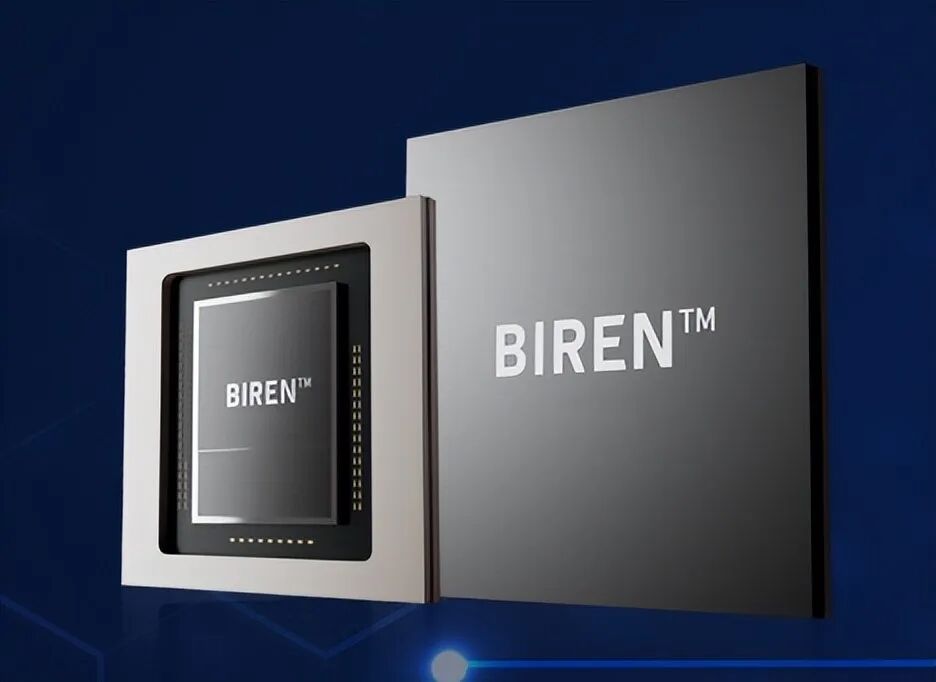
Biren Technology GPU Chip Source: Biren Technology Official Website
Ge Weidong's Hundun Investment invested in Muxi, with about RMB 800 million invested, its book value exceeds RMB 20 billion, representing a 14-16x return;
Zhuhai Gree invested in Biren Technology, RMB 140 million turned into RMB 1.445 billion, representing a return of over 10x;
CPE Source Capital invested in Iluvatar CoreX, RMB 1.67 billion turned into RMB 27 billion, representing a return of over 15x;
This group of investors has caught up with a rare concentrated realization period in the history of China's semiconductor investment.
Around 2020, Chinese GPU startups were intensively established or launched large-scale financing. At that time, Moore Threads, Muxi Inc., and Biren Technology were all just startups that had barely formed their teams; Iluvatar CoreX, although established earlier, had not yet achieved large-scale commercialization. GPU development requires high investment, a long cycle, and carries a high probability of failure. Capital needs to place bets when there is no profit, no mature product, and not even a stable customer base.
Five or six years later, the AI large model boom broke out, the United States tightened advanced chip exports, and Chinese internet companies and data centers began to look for local computing power suppliers. Investments that were once considered too expensive and too risky suddenly became the scarcest assets in the capital market.
But no matter how attractive the returns are, several fundamental issues cannot be ignored:
First, the entire industry is loss-making.
The combined market capitalization of the five companies exceeds RMB 800 billion, but none of them are profitable, and their total accumulated losses exceed RMB 20 billion. R&D investment is several times higher than revenue — Enflame's R&D investment over three years totals RMB 3.676 billion, while its total revenue in the same period is only RMB 2 billion. This is not a business model; it is a "cash-burning model".
This level of valuation is unthinkable in the traditional chip industry. But under the narrative of "domestic substitution + AI computing power", the market has accepted it all.
Second, the risk of customer concentration.
83.79% of Enflame's revenue comes from Tencent, which is an extreme case. The other companies also generally face the problem of excessive proportion of revenue from top customers. Once there are fluctuations in large customer orders, revenue will collapse directly.
Third, the disparity in market share is huge.
NVIDIA still holds 55% of China's AI accelerator card market, and Huawei's Ascend holds