Raised 200 million yuan, robots start farming for farmers: 92% less water, 94% less land
A company growing crops with robots and AI has just secured $30 million (200 million yuan) in Series C financing.
This company is called Hippo Harvest, founded in 2019 and headquartered in California, USA. This round of financing was led by Cox Farms, a large North American greenhouse operator, with participation from Congruent Ventures, Hawthorne Food Ventures, and other investors.
The company has been quite aggressive in raising funds. In February 2024, it completed a $21 million Series B financing. With just these two most recent rounds, it has obtained at least $51 million in funding.
Hippo Harvest's core products are water and fertilizer systems, and robots. According to the company, the organic lettuce and spinach grown in its greenhouses can now be sold at prices close to those of field-grown vegetables.
In the past few years, a number of star companies in indoor agriculture have collapsed.
Yet Hippo Harvest has secured Series C financing at this time, and plans to expand its cultivation scale from the current 1 acre to a new facility with a planned area of 30 acres.
What exactly did it do right?
For more profit opportunities, check out Pencil News Pro Opportunity Intelligence — spend 5 minutes to discover the profit opportunities behind the news

- 01 - This is a death trap of an industry
Indoor agriculture sounds promising.
It is unaffected by weather and enables year-round production; located close to urban areas, it has shorter transportation distances; water, fertilizer, temperature and humidity can all be precisely controlled.
But a large number of past projects got stuck on the same problem: they could grow vegetables, but couldn't sell them at prices high enough to cover their costs.
This is especially true for multi-level vertical farms that use full artificial lighting, which require continuous spending on lighting, cooling, ventilation, equipment maintenance and labor.
Studies show that energy costs can account for 40% of operating expenses in some indoor farms.
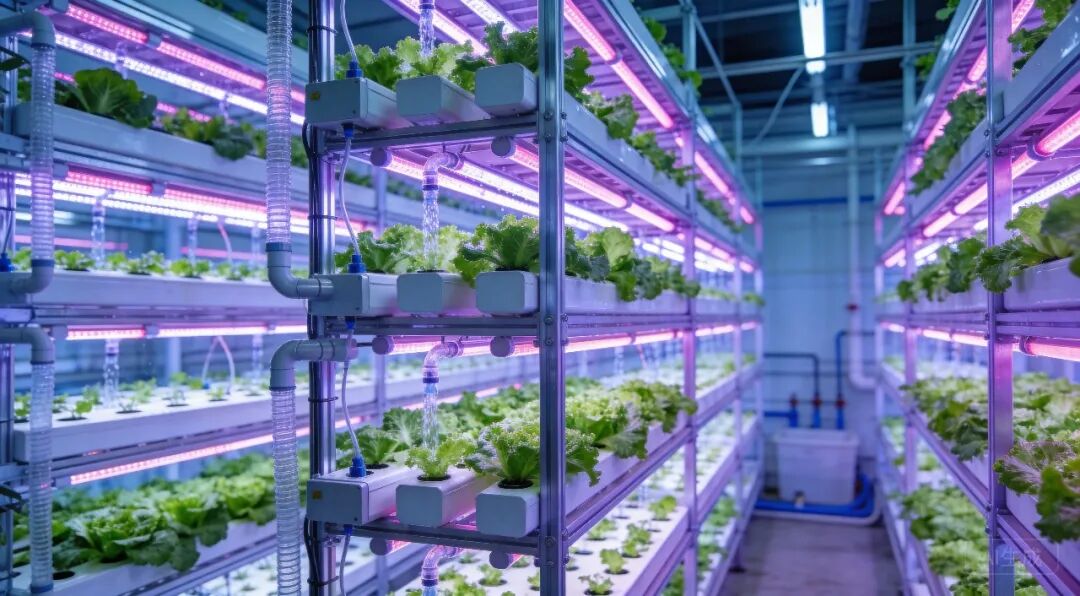
Inside a vertical farm: Multi-layer hydroponic cultivation system under LED lighting Source: AI-generated illustration
Capital quickly cooled off as a result.
Data from AgFunder shows that for "novel agricultural systems" including vertical farms, financing volume in 2024 dropped 53% year-on-year. AeroFarms and AppHarvest filed for bankruptcy one after another; Bowery Farming, which reached a valuation of $2.3 billion in 2021, also ceased operations in 2024.
Hippo Harvest's approach is different from multi-level plant factories built in enclosed warehouses.
It uses greenhouses instead of enclosed farms that fully rely on LED lighting. Strictly speaking, it is closer to a "robot smart greenhouse" rather than a traditional full-artificial-light plant factory.
This difference matters: while both fall under controlled environment agriculture, their energy structures and construction costs are not the same.
- 02 - Robots act as "tractors" in greenhouses
The core of Hippo Harvest is a closed-loop, root-direct water and fertilizer system, along with autonomous mobile robots and machine learning algorithms.
Traditional greenhouses typically water and fertilize entire areas uniformly. Hippo Harvest divides its cultivation space into smaller units, adjusting water, fertilizer, lighting and heating individually based on vegetable varieties, growth stages and local environmental conditions.
The autonomous mobile robots work like small tractors inside the greenhouse.
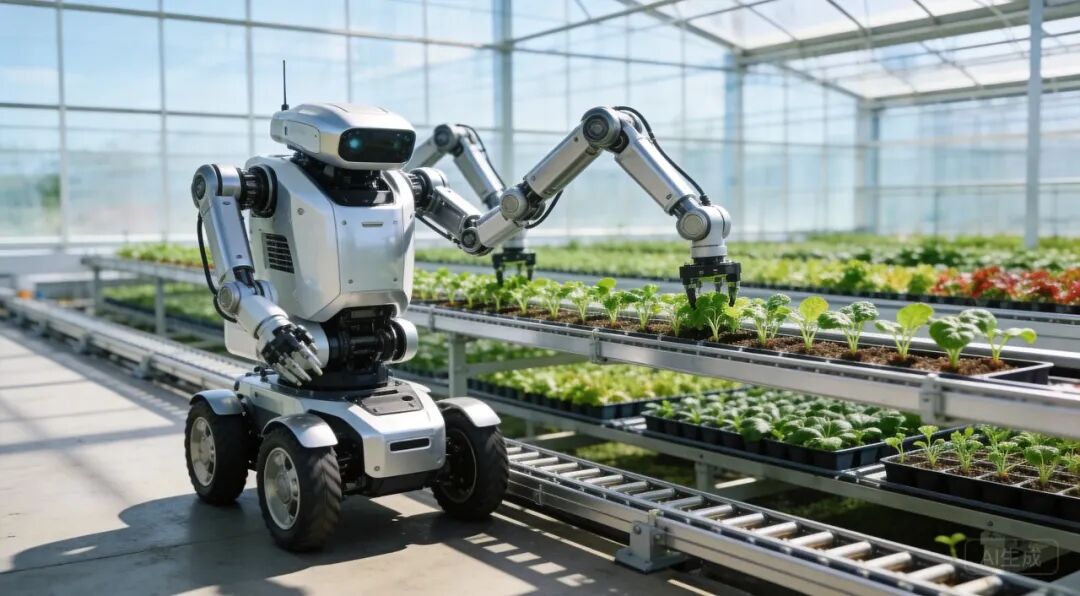
A robot tending to crops in a greenhouse Source: AI-generated illustration
They are responsible for transporting cultivation modules, caring for and monitoring crops, and automatically adjust the spacing between cultivation modules as vegetables grow: seedlings are placed more densely when small, and the gaps are gradually widened as the plants mature, improving the utilization rate of greenhouse space.
The robots are not entirely built from scratch. The company previously disclosed that it uses off-the-shelf robot bases, then installs custom tools designed for cultivation and harvesting. This approach reduces hardware development costs, allowing the team to focus on the water and fertilizer system, cultivation techniques and control algorithms.
According to data disclosed by the company, compared with traditional agriculture, this system can:
Reduce water usage by 92%; reduce fertilizer usage by 55%; reduce land occupation by 94%; and extend the shelf life of some leafy greens by up to 30%.
However, these figures currently mainly come from the company's own disclosures, and no complete third-party cost audit has been seen. The more critical metrics — per-kilogram cost, labor cost, energy cost, gross margin and equipment depreciation — have not been made public by the company. Therefore, the more accurate statement for "costs have matched field farming" should be:
The company claims its product pricing and unit economics are already competitive with field-grown vegetables.
This still needs further verification at the 30-acre scale.
- 03 - Expanding from 1 acre to 30 acres: the real test begins
After this round of financing, Hippo Harvest plans to build a new 30-acre facility in Hollister, California, which is currently in the permitting stage.
The company's existing cultivation scale is about 1 acre. That means, if the new project is completed, its planned area will be roughly 30 times the current size. The funds will also be used to develop the next-generation robotic cultivation system, with the goals of increasing yield, reducing unit costs, and accelerating the commercialization of spinach.
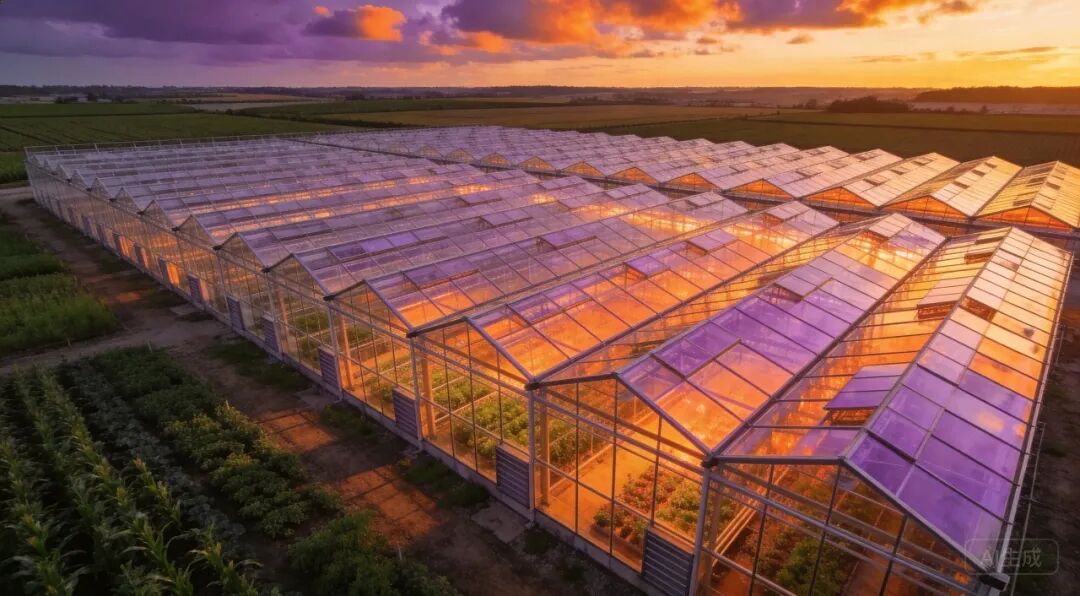
Aerial view of a large modern greenhouse facility Source: AI-generated illustration
Hippo Harvest is no longer a company that only grows vegetables in a lab.
In October 2024, it launched packaged salad products certified organic by the USDA, including spinach, arugula, kale, romaine lettuce and mixed salad blends. In early 2026, the company began supplying butter lettuce to retailers.
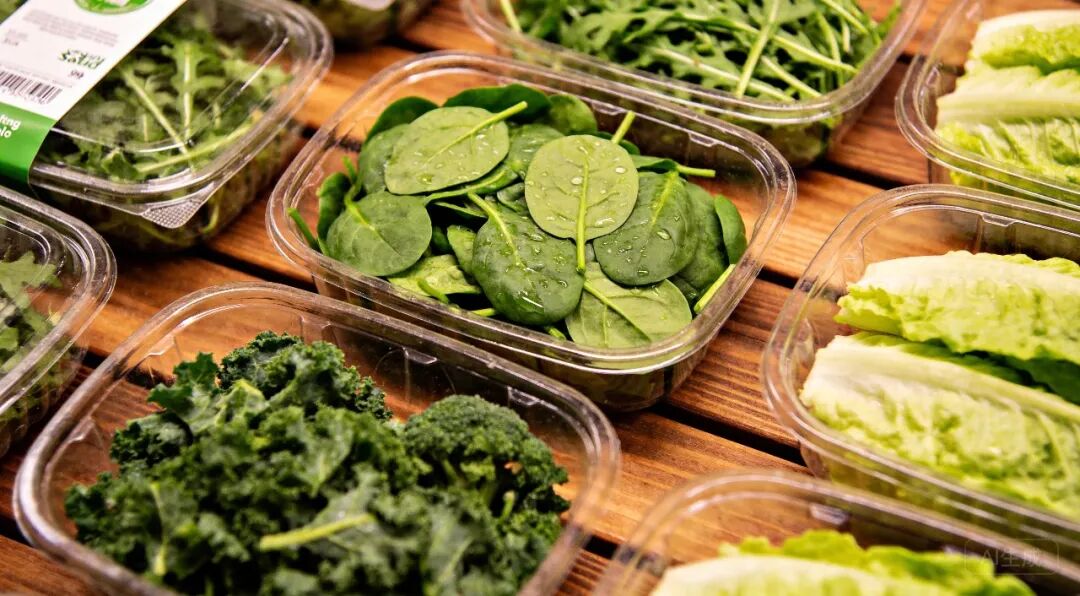
Display of organic-certified packaged salad products Source: AI-generated illustration
Currently, its products are available at retail channels including Sprouts, Haggen, and Gus's Community Markets in San Francisco, covering Northern California and the Pacific Northwest in the US.
The lead investor is also worth noting.
Cox Farms is not just a pure financial investment institution — it is a large North American greenhouse operator. It owns BrightFarms and Mucci Farms, with more than 700 acres of greenhouses, an annual output of over 450 million pounds of fruits and vegetables, and products sold in over 12,000 stores.
This means that Hippo Harvest's Series C financing not only brings capital support, but may also grant access to industrial resources in greenhouse operations, retail channels and scaled production.
- 04 - Start with lettuce and spinach
Hippo Harvest chose lettuce and spinach because these two categories have sufficiently large markets, while also having short shelf lives and high transportation losses — making them well-suited for production close to consumer markets.
USDA data shows that in 2024, the farm-gate value of US head lettuce, leaf lettuce and romaine lettuce was approximately $1.672 billion, $1.266 billion and $1.663 billion respectively, totaling around $4.6 billion for the three lettuce categories; the farm-gate value of spinach was about $545 million.
In the US alone, the combined farm-gate value of lettuce and spinach exceeds $5.1 billion.
What Hippo Harvest really wants to prove is not that robots can grow a box of premium salad that sells for a high price, but that robotic greenhouses can break into the mass vegetable market.
Once products have to compete with field-grown produce, companies can no longer only talk about water conservation, environmental friendliness and technological flair — they have to answer several more practical questions:
How many vegetables can be produced per unit area? How much labor and energy are needed per kilogram? Do the robots break down frequently? After expanding production capacity 30 times, can the product quality rate still be maintained? Will retailers keep placing repeat orders?
- 05 - Industry opportunity: just entering the scale verification phase
Hippo Harvest's Series C financing shows that the evaluation criteria for controlled environment agriculture are changing.
During the previous industry boom, capital cared more about how large the greenhouses were built and how advanced the technology looked. After multiple companies went bankrupt or ceased operations, investors have begun to ask more fundamental questions:
For the same kilogram of lettuce, how much more expensive are you than field agriculture?
Therefore, it is still overly optimistic to claim that plant factories are "on the eve of explosive growth". A more accurate judgment is:
The industry has moved from the technology verification phase to the cost and scale verification phase.
Hippo Harvest offers a possible path: instead of pursuing fully enclosed spaces, full artificial lighting and overly complex hardware, it leverages greenhouses, general-purpose robots, precise water and fertilizer management and algorithms to gradually reduce labor, land and resource costs.
For the industrial chain, the next stage of attention will not only be the "plant factory" concept, but the links that can genuinely contribute to cost reduction, including agricultural mobile robots, greenhouse automation equipment, machine vision, water and fertilizer control systems, and cultivation management software.
For the capital market, Hippo Harvest's production expansion acts more like an observation sample. What truly determines whether this model can influence industry expectations is not the financing news itself, but whether the 30-acre project can deliver lower unit costs, higher capacity utilization and growing retail orders after it goes into operation.
Robots can already grow vegetables. What needs to be proven now is: can they grow vegetables cheap enough?
This article does not constitute investment advice. For reproduction, please indicate the source.
This article is from the WeChat public account "Pencil News" (ID: pencilnews), author: Xi Wen, editors: Zou Wei, Wang Fang, published by 36Kr with authorization.