Zeng Yuqun of CATL: The Man Who Holds Half the Fate of China's New Energy Vehicle Industry
Zeng Yuqun has become even wealthier.
According to the recently released Hurun Global Rich List 2026 by the Hurun Research Institute, Zeng Yuqun, founder and chairman of CATL, ranked fourth on the rich list with a fortune of 3762.9 billion yuan, trailing only Zhang Yiming, Zhong Shanshan, and Ma Huateng.
Compared with the same list in 2025, Zeng Yuqun's net worth surged by 110 billion yuan within a single year.
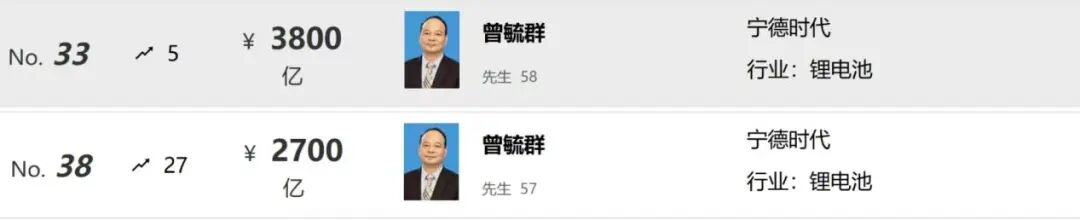
110 billion yuan exceeds the full-year net profit of roughly 70% of A-share listed companies in 2025, equivalent to a daily increase of 301 million yuan.
Not long ago, CATL announced a dividend distribution of 30.4 billion yuan, from which Zeng Yuqun pocketed 8.1 billion yuan.
Wealth is a quantitative expression of business power. How much a person's net worth can grow depends not only on how intelligent they are, but more importantly, on their position in the industrial chain.
Zeng Yuqun's position is firmly entrenched at the very top of the new energy vehicle industrial chain. In 2025, CATL's market shares in the global and domestic power battery sectors reached 39.2% and 43.42% respectively.
It is no exaggeration to say that Zeng Yuqun is the man who holds half the fate of China's new energy vehicle industry in his hands.
From "Boldness in Gambling" to "Profound and Broad Wisdom" — Zeng Yuqun's Three High-Stakes Gambles
On the wall of Zeng Yuqun's office, a calligraphy scroll reading "Boldness in Gambling" hung for many years.
An early investor once asked: "You are from Fujian, why don't you hang the phrase 'Striving Hard Leads to Success'?" Zeng Yuqun replied: "Pure striving is not enough, that's just physical labor; gambling is the real intellectual work."
But in 2023, that scroll was replaced by one bearing the characters "Profound and Broad Wisdom".
"Profound and Broad Wisdom" originates from The Doctrine of the Mean, meaning wisdom that is as vast and deep as a gushing spring. The replacement of the two calligraphy works to some extent encapsulates Zeng Yuqun's three decades of evolution: from a do-or-die gambling game to a far-sighted strategic chess game.
Let's rewind the timeline to around the year 2000.
Zeng Yuqun, Liang Shaokang, and Chen Tanghua resigned from their jobs to start a business, giving birth to the new energy technology company ATL, the predecessor of CATL.
The direction ATL chose was polymer pouch batteries — compact, lightweight, and portable, making them more suitable for consumer electronics products such as mobile phones and MP3 players. Later, Zeng Yuqun flew to the United States and spent 1 million USD to purchase the relevant patent license from Bell Laboratories.
After returning to China, Zeng Yuqun and his team immediately began trial-producing batteries according to the formula provided by Bell Laboratories. Unexpectedly, they were met with a major setback — after repeated charging and discharging cycles, the batteries would swell and deform, rendering them unusable.
Zeng Yuqun returned to the United States to confront the patent licensor, only to be met with a shrug and the response: "This (battery swelling) is an inherent problem, and we don't know how to solve it either."
Most of the capital in the company's accounts had been spent, yet the product was still unqualified. Zeng Yuqun could not sleep at night.
But he refused to give up. Zeng Yuqun locked himself in the laboratory. When he visited an electrochemical exhibition, he collected materials from all exhibitors, cross-referenced them repeatedly with the electrolyte manual, and realized that the solution might lie in the composition of the electrolyte.
He then contacted electrolyte manufacturers, developed seven new formulations, and tested them one by one. Two weeks later, the problem was solved.
Riding the rapidly developing "wave" of the consumer electronics industry, ATL's polymer pouch batteries, with their high cost-performance and strong adaptability, successfully secured orders for Apple's iPod, and later entered the supply chains of Huawei and Samsung.
Let's shift our focus to the 2008 Beijing Olympic Games.
When 50 pure electric buses entered the Olympic Village, the signal of national subsidies for new energy had become clear. However, at that time, ATL had already been acquired by Japan's TDK Group. According to policy regulations, foreign investment entering the power battery industry faced high access thresholds.
Zeng Yuqun, who had a keen insight into market trends, placed another big bet.
In 2011, Zeng Yuqun spun off the power battery business and established the purely Chinese-funded CATL in his hometown of Ningde.
In the early days of the business, BMW was selecting battery suppliers for its first electric vehicle, the Zinoro 1E. As a leading luxury carmaker, BMW's order was not large, but its requirements were extremely strict — the technical standard documents alone amounted to 800 pages.
Large manufacturers showed no interest as they thought it was not profitable, but Zeng Yuqun gritted his teeth and took the project.
Over the course of two years, Zeng Yuqun and his team thoroughly mastered German technical standards and built the largest power battery testing center in Asia. CATL became the sole battery supplier for BMW's Greater China region, completing the full process accumulation from R&D to certification.
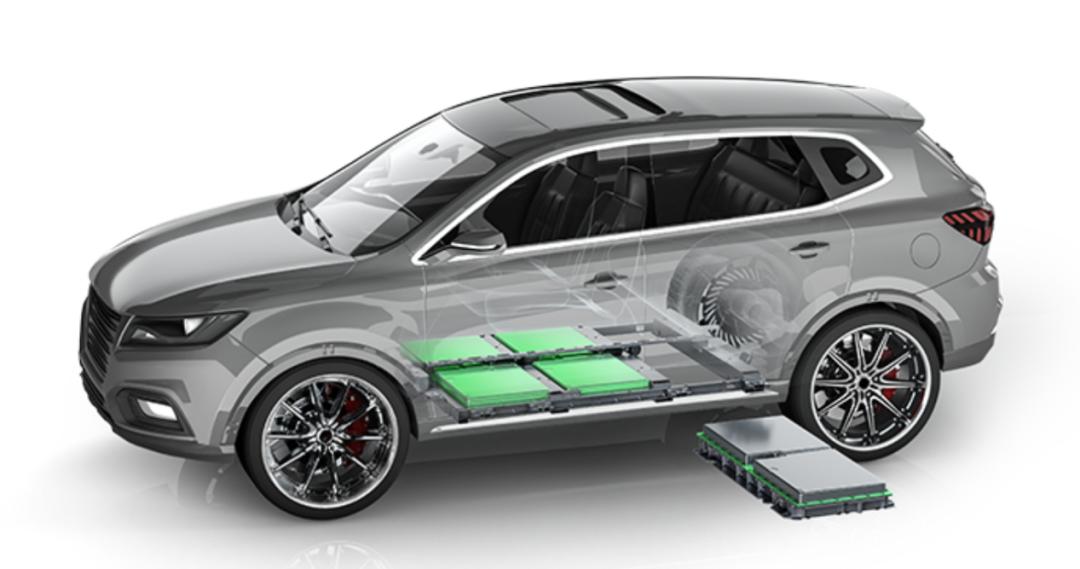
In 2014, BYD announced that it would "not sell batteries to external parties at all", which in turn presented an opportunity for Zeng Yuqun. CATL successively secured a large number of clients including Mercedes-Benz, Volkswagen, BAIC Motor, Great Wall Motors, and Jilin Automobile.
But Zeng Yuqun's gambling game was far from over.
For a long time, there has been an industry debate over which technology route is superior: lithium iron phosphate or ternary lithium. Targeting users' pain points of insufficient range, Zeng Yuqun led CATL to bet on ternary lithium batteries. Although they had higher costs, they boasted greater energy density.
At the end of 2016, national policies incorporated battery energy density into subsidy assessment criteria, making ternary lithium the biggest beneficiary. CATL then overtook Panasonic and BYD to claim the top spot in the global power battery market.
In the following eight years, CATL never relinquished that leading position.
The Dominance of the Super Supplier
These three high-stakes gambles propelled CATL to the summit of the industry.
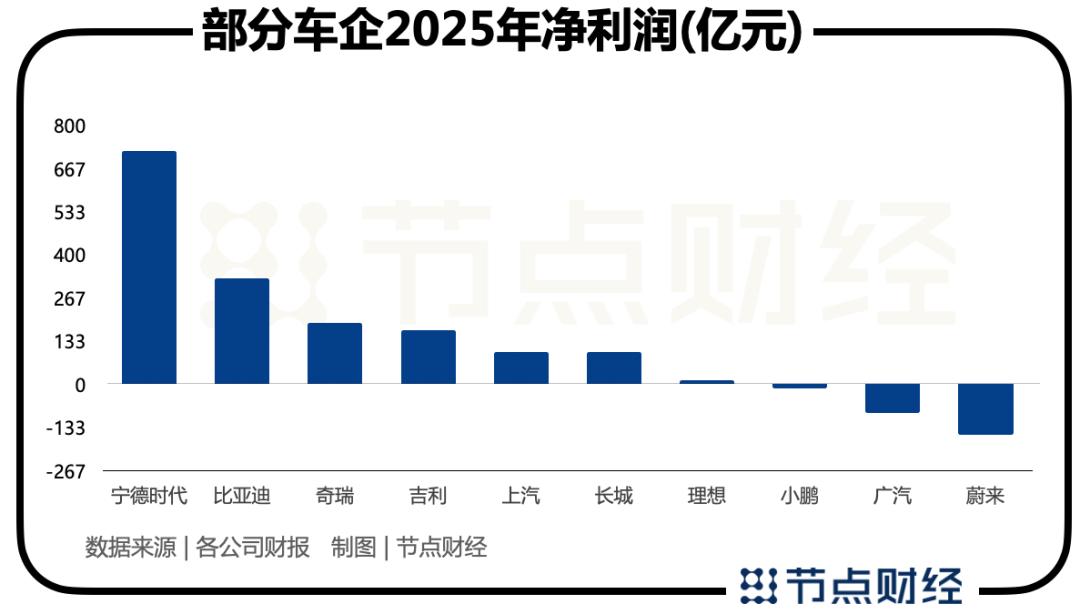
In 2025, CATL recorded revenue of 423.7 billion yuan, a year-on-year increase of 17.04%; net profit attributable to shareholders reached 72.2 billion yuan, up 42.28% year-on-year; gross profit margin and net profit margin stood at 26.27% and 18% respectively.
In the same year, the sales profit margin of China's automotive industry dropped to 4.1%, hitting a new low in nearly a decade. CATL's single-company net profit exceeded the combined profits of more than a dozen leading carmakers including BYD, Geely, Li Auto, and Great Wall Motors.
Reflected in market share, in 2025, CATL's global power battery market share reached 39.2%, claiming the global top spot for nine consecutive years, while its domestic market share hit 43.42%.
In 2022, Zeng Yuqun candidly stated: "One out of every three new energy vehicles worldwide is equipped with CATL's batteries." The proportion in China is close to half, with five out of ten new energy vehicles using CATL batteries.
This strong dominance stems from its dual control over both upstream and downstream sectors.
In its dealings with upstream suppliers, CATL's core strategy can be summed up in four words: lock in volume and price, and strictly control costs.
At the beginning of 2026, CATL signed an agreement with Ronbay Technology to purchase approximately 3.05 million tons of lithium iron phosphate cathode materials over six years, with a total value exceeding 120 billion yuan. Almost simultaneously, CATL invested 3.175 billion yuan to participate in the private placement of Fulin Precision, becoming its second-largest shareholder and securing a total supply of no less than 3 million tons of lithium iron phosphate products over the next three years.
This is not a new tactic. In the early years, Lead Intelligent became the "lithium battery shovel seller" relying on CATL's orders; Tianci Materials established deep ties with CATL, with sales derived from CATL once accounting for half of its total revenue.
It is reported that in 2021, no fewer than 20 enterprises related to CATL's business were in the process of launching IPOs.
However, CATL is also actively expanding its "circle of partners". In addition to Ronbay Technology and Fulin Precision, in 2026, it signed three-year long-term electrolyte agreements with New Zebang and Yongtai Technology respectively, totaling approximately 770,000 tons, corresponding to a cell demand of around 730 GWh.
The underlying logic of this adjustment is not only to reduce reliance on a single partner, but also to enhance the resilience and flexibility of the entire supplier network.
In the production capacity competition that often involves hundreds of billions of yuan, concentrating all chips in one place carries obvious risks. Distributing resources across more baskets is not a sign of distrust, but a way to make the entire system more flexible, more resistant to shocks, and better able to smooth out cyclical fluctuations.
From the upstream to the downstream, CATL has a firm grip on the lifeline of car manufacturers — batteries, which account for about 40% of a vehicle's total cost.
Based on CATL's data for the first quarter of 2026, securities firms estimated that the net profit per watt-hour of batteries is around 0.075 to 0.08 yuan. For a 100 kWh battery (approximately 100,000 Wh), CATL can earn roughly 7,500 to 8,000 yuan.
In contrast, the gross profit per vehicle for car manufacturers in 2025 was only 11,000 yuan, marking a decline for two consecutive years.
Car manufacturers are both resentful and fearful of their dependence on CATL, and the slogans of "developing batteries independently" and "introducing a second supplier" are shouted loudly.
But the reality is harsh. In 2025, among the car manufacturers that independently developed batteries, only Jiyao Energy of the Geely Group and Yinpai Battery of GAC Group broke into the top 15 of domestic installed capacity, with a combined market share of just 2.78%, far less than a fraction of CATL's share.
Several details demonstrate who holds the real power: by the end of 2025, CATL's contract liabilities reached 49.2 billion yuan, a year-on-year increase of 76.88%.
In other words, while car manufacturers are shouting the slogan of "de-CATLization", they are paying in advance to lock in production capacity. For example, GAC, which joked in 2022 that it was "working for CATL", partnered with CATL again in 2024 to launch battery-swapping vehicle models; some senior executives of car manufacturers once claimed "if you don't cut prices, you will lose me as a customer", but they often came back to negotiate again later.
In 2025, CATL's capacity utilization rate reached as high as 96.9%, with production lines almost running at full capacity. In the B2B industry, "CATL Inside" has become a selling point for car manufacturers and a favorite among consumers.
A Broader Strategic Game
After securing victory in the passenger vehicle battery battle, Zeng Yuqun set his sights on a broader world.
In November 2025, Zeng Yuqun delivered a keynote speech at the "2025 World Power Battery Conference" in Yibin, Sichuan, stating: "The new energy industry is advancing from 'partial breakthroughs' to an 'era of all-round growth'."
The "all-round development" Zeng Yuqun refers to is being rapidly implemented across various sectors.
In May 2026, Zeng Yuqun appeared in Xiamen, where CATL formed a "strategic partnership" with the city. The two sides will jointly promote the construction of a zero-carbon technology city and deepen full-chain cooperation in the new energy industry.
The signed cooperation covers three areas: regional production bases for high-performance automotive and energy storage lithium batteries, low-altitude economy layout for AutoFlight's eVTOL, and R&D of cutting-edge new energy technologies as well as high-end talent cultivation.
The low-altitude economy is Zeng Yuqun's new strategic playing field.
According to Node Finance, AutoFlight, a subsidiary of CATL, has completed key test flights for the world's first 5-ton-class aircraft, and its 2-ton-class eVTOL has completed demonstration flights in Kazakhstan. In accordance with the joint plan, Xiamen will build a complete industrial closed loop of "scenario traction — fleet scaling — infrastructure networking — industrial agglomeration".
Zeng Yuqun's goal is clear: to bring aircraft from the laboratory to the skies above cities, so that "flying taxis" are no longer just scenes in science fiction films.
Energy storage is another rapidly growing business curve.
In 2025, CATL's energy storage battery sales reached 121 GWh, a year-on-year increase of 29%, while the shipment volume of its system integration business rose by more than 160% year-on-year.
More importantly, the industry boasts long-term growth potential and an astonishing growth rate. By the end of 2025, the cumulative installed capacity of China's new-type energy storage reached 136 GW/351 GWh, representing a more than 40-fold increase compared with the end of the 13th Five-Year Plan period.
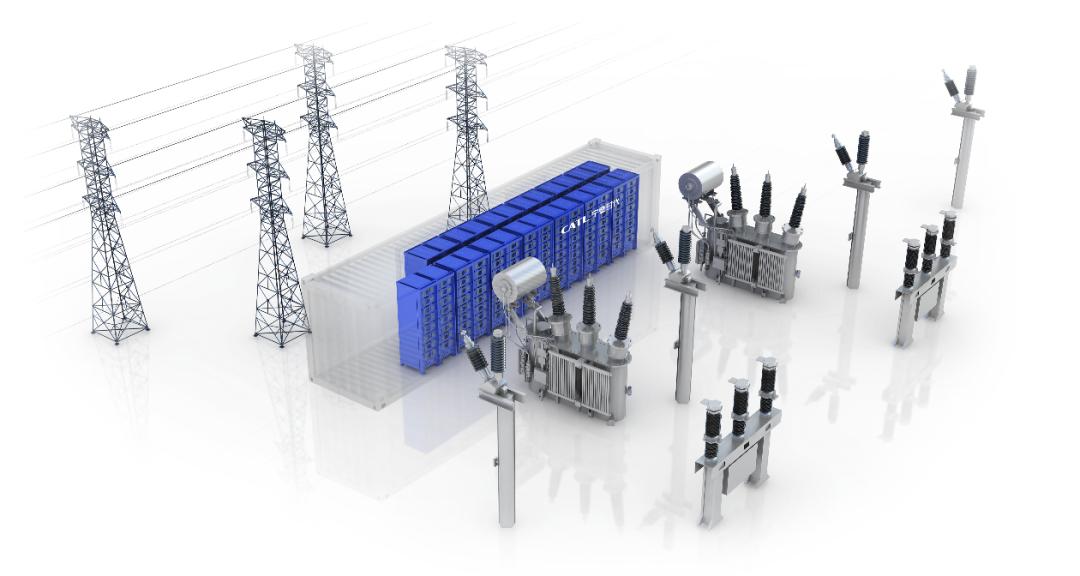
Regarding the current state of the energy storage industry, Zeng Yuqun expressed dissatisfaction, criticizing that the actual operating lifespan of equipment is far lower than what companies have promised, and that existing standards are still limited to component-level testing.
At the end of May 2026, the Xiamen Empirical Energy Storage Technology Research Institute, co-built by CATL and Xiamen, was officially launched. With a total investment of about 3 billion yuan and an area of 150 mu, it is the world's largest energy storage empirical platform.
Wu Kai, an academician of the Chinese Academy of Engineering and CATL's chief scientist, described its significance: "