Diving into Sea of Oblivion, I finally understand NetEase's ambition.
By Xiao Kui
Edited by Preserved Fruit
On July 9th, NetEase's Joker Studio officially launched their seven-year passion project — Sea of Oblivion, a vast oceanic adventure RPG. The PC version entered public beta first, and the mobile version will be available to players on July 23rd.
This whimsical puppet-style nautical game had already drawn widespread attention before its official release. On the eve of the public beta, pre-registrations across all platforms exceeded 36 million, claiming the top spot on pre-order charts of TapTap, Bilibili and other major platforms. Its gameplay PV racked up over 10 million views on Bilibili, and Guangda Securities projected its first-year revenue could reach 5 billion yuan.
NetEase's management has repeatedly highlighted the game in earnings calls for three consecutive quarters, describing it as "refreshingly innovative". Seven years of development, cross-platform support for three devices, and a 50 million-yuan creator support program — from R&D resources to ecosystem investment, the studio has gone all in, making this arguably NetEase's most heavily backed product in recent years.
This marks the first time the team behind Identity V has ventured into the open-world genre, retaining the studio's signature whimsical art direction. At a time when most domestic games either chase hyper-realism or flood the market with polished anime aesthetics, Joker opted for bright, high-saturation colors to build a vast ocean world stitched together with puppet characters and pop art elements.
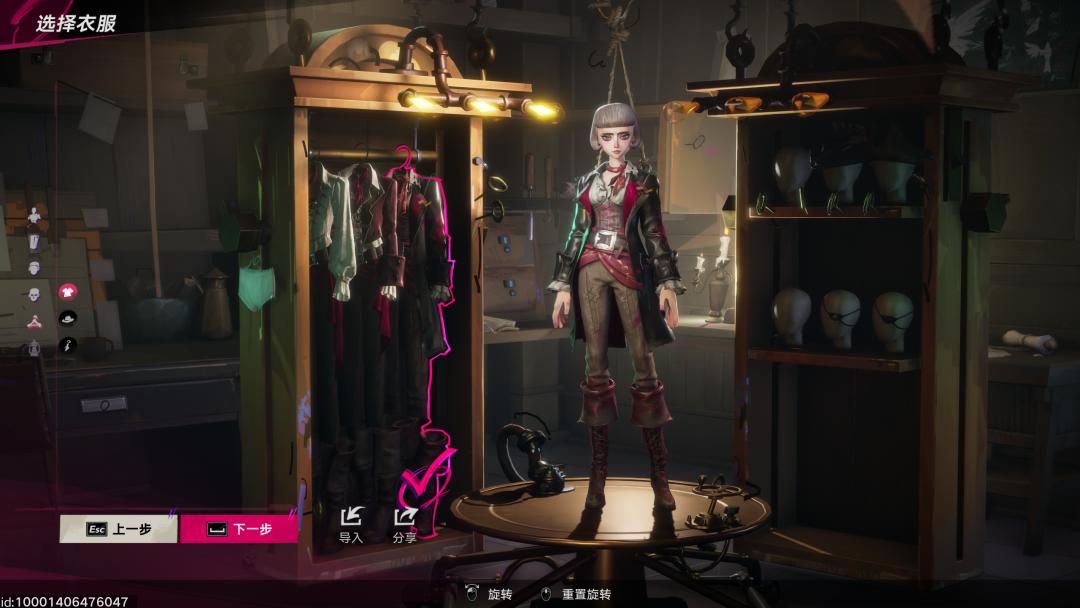
Character Customization System
For Joker Studio, this consistent artistic style gives Sea of Oblivion strong distinctiveness. Today's open-world market is saturated with games leaning into realism or anime aesthetics, and against this backdrop, the game's puppet protagonists immediately stand out visually, creating clear differentiation from competing titles.
However, for an open-world game, what truly retains players is gameplay. After experiencing Sea of Oblivion, I believe what makes it truly special is its highly coherent, interconnected ecological loop system.
01
The game is set in a cursed sea region — anyone who falls into the water loses their memories and talents. Players take on the role of an amnesiac puppet captain, sailing out with an enigmatic girl named Aisha, gradually retrieving lost memory fragments for themselves and their companions through repeated exploration.
What's notable is that "oblivion" isn't just a decorative narrative label — it's deeply integrated into the core gameplay.
Every voyage is essentially a self-contained roguelike adventure. All items collected at sea are permanently lost once you return to port or get defeated, and your character resets to base stats. If your "memory gauge" drops to zero after being defeated, the current exploration ends immediately, with only a small amount of rare resources tied to long-term progression able to be brought back to the main city. What accumulates after each return is purely your knowledge of wind patterns, dice probability calculations, and familiarity with each island's mechanics.
Every return to port resets progress, creating a cyclical loop. This design makes every voyage something to take seriously — wind direction, supplies, and route choices all directly impact how far you can travel, because you truly stand to lose everything you gathered.
The reason this loop continuously feels fresh lies in the rhythm contrast created by its dual land-sea combat systems.
At sea, combat is real-time. You need to steer your ship, dodge storms, use ocean currents and wind to gain advantageous positions, and always pay attention to the weather — storms will genuinely alter cannonball trajectories. When facing sea monsters, you must focus fire on their glowing tentacles, which are their weak points. Your ship can be upgraded by reinforcing its keel and cannons, while crew members can be assigned to different gun positions to form tactical divisions of labor.
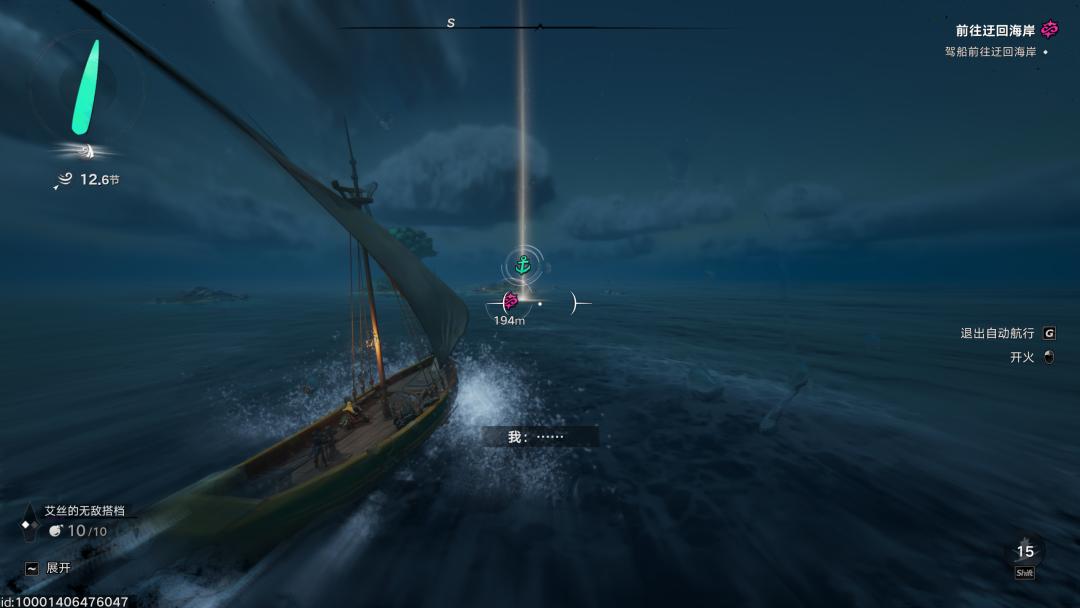
Real-Time Naval Combat
Once you step onto land, combat instantly switches to strategic turn-based mode, incorporating dice-roll checks. Players can spend varying numbers of dice to trigger skill checks, with higher rolls producing stronger effects — the more dice you invest, the more powerful your skills become.
Enemies also display a fixed stun gauge; if the sum of your dice rolls exceeds this value, you trigger an extra action turn. With good luck chaining multiple triggers, you can theoretically create a continuous combo loop where "my turn keeps going". Additionally, attacks can deplete enemies' posture meters, and emptying this meter deals massive damage while delaying their next action.
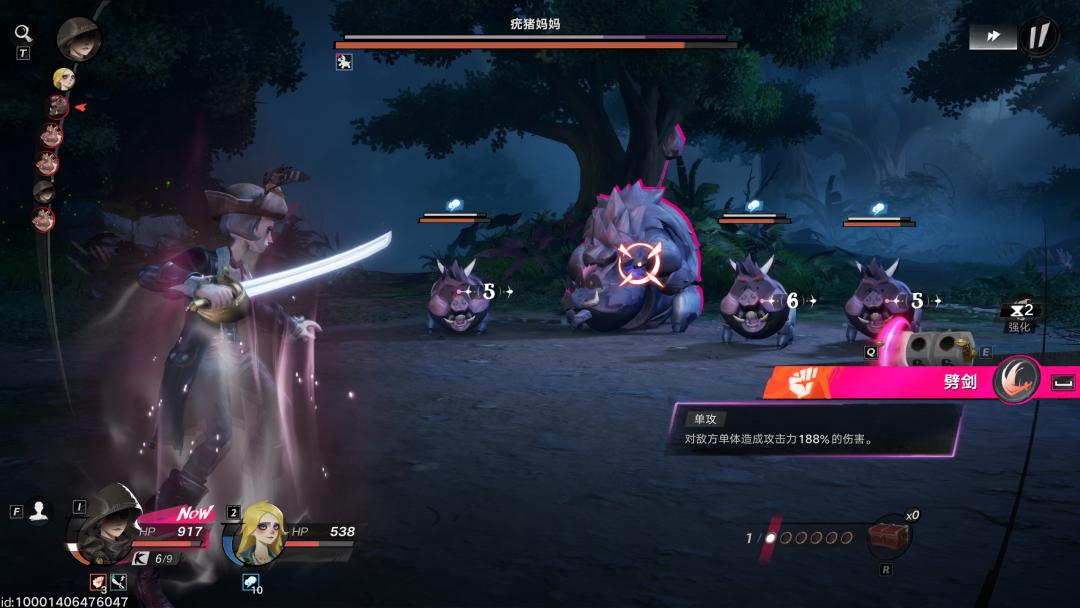
Strategic Turn-Based Combat
Pure rhythm changes in combat mechanics can't sustain long-term replayability. No matter how exciting naval battles are or how tense dice rolls feel, when you return to port to count your loot, the question inevitably arises — beyond feeding items into character upgrades, what meaningful purpose do these finds serve?
Joker Studio set out to solve an inherent problem in the "loot-shoot-escape" gameplay loop: how to prevent repeated voyages, collection, combat, and retreat from becoming mindless grind.
Their answer is remarkably bold: fully open up resource circulation between players through a highly flexible auction house system.
Top-tier treasures and golden pots discovered through free open-world exploration can be sold on the market for the exclusive tradable currency "Gold Bullion". High-spending players can sell excess cosmetic items for progression resources, while low-spending players can accumulate Gold Bullion through regular gameplay to redeem content that would normally require payment. Logically, this makes it theoretically possible to unlock all paid content without spending real money.
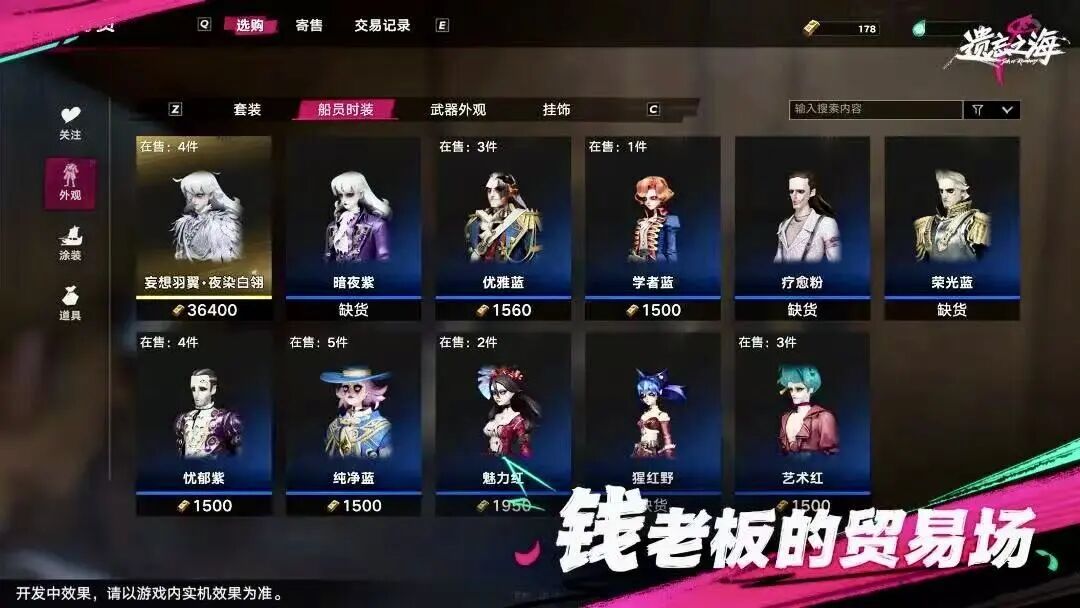
Auction House
At its core, the auction house provides massive positive feedback for the "loot-shoot-escape" gameplay loop. It ensures that the rewards from every voyage are no longer limited to personal character progression, but gain broader social value and tradability. This makes the motivation to set sail even stronger — you're not just grinding for yourself, you might discover a "treasure" that other players desperately need. This implicit possibility is far more compelling than any fixed reward.
However, this design represents a risky move for a content-driven open-world game. Auction house mechanics have been thoroughly tested in the MMO genre, and NetEase, with long-running titles like Fantasy Westward Journey under its belt, clearly understands the fundamentals of supply and demand regulation. What remains unproven is whether MMO experience can be directly transferred to an open-world game built around roguelike cycles.
Maintaining ecological stability in the auction house requires two non-negotiable prerequisites: a sufficiently large player base, and a precise, dynamically responsive supply-demand regulation system. The former will be answered by Sea of Oblivion's launch metrics, while the latter represents an endless governance challenge requiring perpetual dynamic balancing. Some industry observers have described this as "venturing into ecological territory that most open-world games dare not touch".
The risks behind this temptation are equally prominent: when the "privileges" of paying players can gradually flow to low-spending players through market mechanisms, no one can accurately predict how this will shift overall willingness to pay. On the other hand, if this ecosystem can truly stabilize, the positive feedback it brings to the "loot-shoot-escape" loop is undeniable. NetEase has taken an audacious step that sparks immense curiosity.
If the "loot-shoot-escape" cycle forms the game's skeleton, character progression is the flesh on its bones, delivering immediate positive feedback for every battle players fight.
Even the way characters are obtained in Sea of Oblivion defies conventional design. Instead of using a gacha system, players earn characters for free by clearing deeper levels of the nightmare difficulty dungeon. By completing the "Voyage of Oblivion" once per week, there's a 50% chance to obtain an SSR character, meaning even average-luck players can reliably get at least one SSR per month. Payment points are primarily limited to cosmetics and progression speedups.
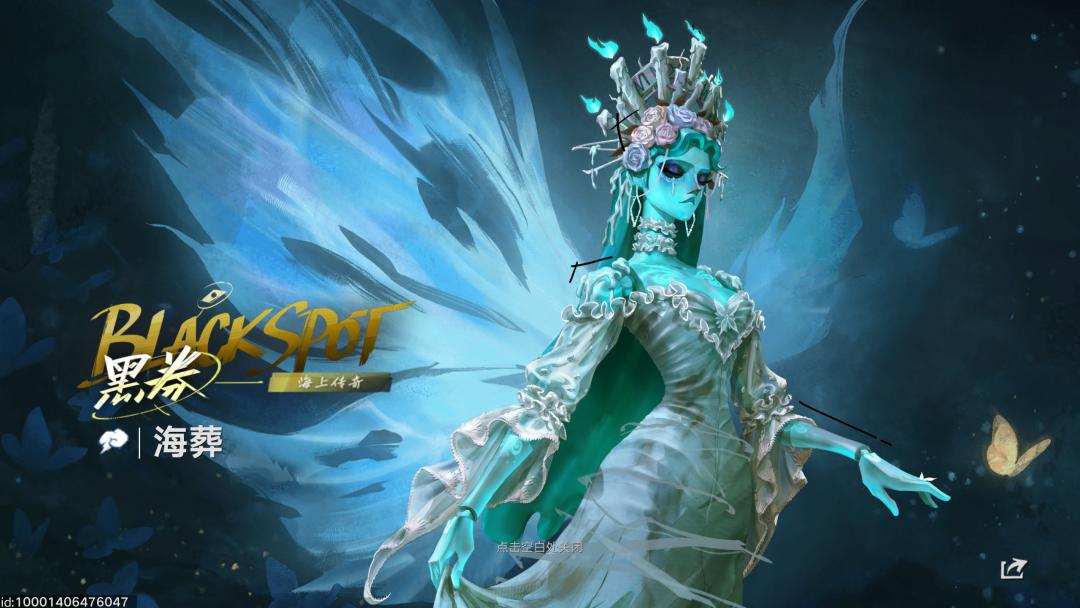
Obtaining SSR Characters
Resources accumulated through the "loot-shoot-escape" loop ultimately feed into progression; and a well-built powerful team lets you go further and earn better rewards in the next round of the "Voyage of Oblivion". Battles provide a validation ground for progression, while progression provides the stats needed for combat — together, they form a clear flow state for player growth.
02
But these are just surface-level elements. What truly makes me feel Joker has bet massive ambition on this game is its multi-run progression system and main city ecosystem.
The core gameplay loop "Voyage of Oblivion" operates on a seven-day cycle, where you loot islands and build up your party before reaching the Sea of Oblivion to claim your rewards. The efficiency curve across multiple playthroughs is nearly exponential: some players report spending nearly seven hours to barely complete their first run, less than three hours on the second, and can finish an entire run in about an hour by the third. This compression doesn't come from reducing difficulty — it comes from your accelerated understanding of the game.
This is precisely what makes roguelike games so captivating: it's not your character stats that grow stronger, it's you. Every character can be freely customized with different class skills, shanties, talents, and equipment. You can play a damage-over-time support build in one run, switch to a main damage dealer in the next, and test out completely bizarre combinations after that. Every "Voyage of Oblivion" is like reshuffling a deck of cards, and your "good luck" comes from a steadily deepening mastery of the game.
The main city, Ottopia, is arguably the game's most groundbreaking feature. Most game cities feel like functional transit hubs, offering standardized services for upgrading, trading, and picking up quests, leaving players with little reason to wander around voluntarily. Ottopia is different — it's a fully explorable living city.
You can freely enter any building, interact with NPCs for fun, battle them, and even take steps to "remove" certain characters. When an NPC is gone, the shop they ran will close down or be taken over by someone else. Player actions tangibly influence the city's prosperity and the shifting balance of power between factions.
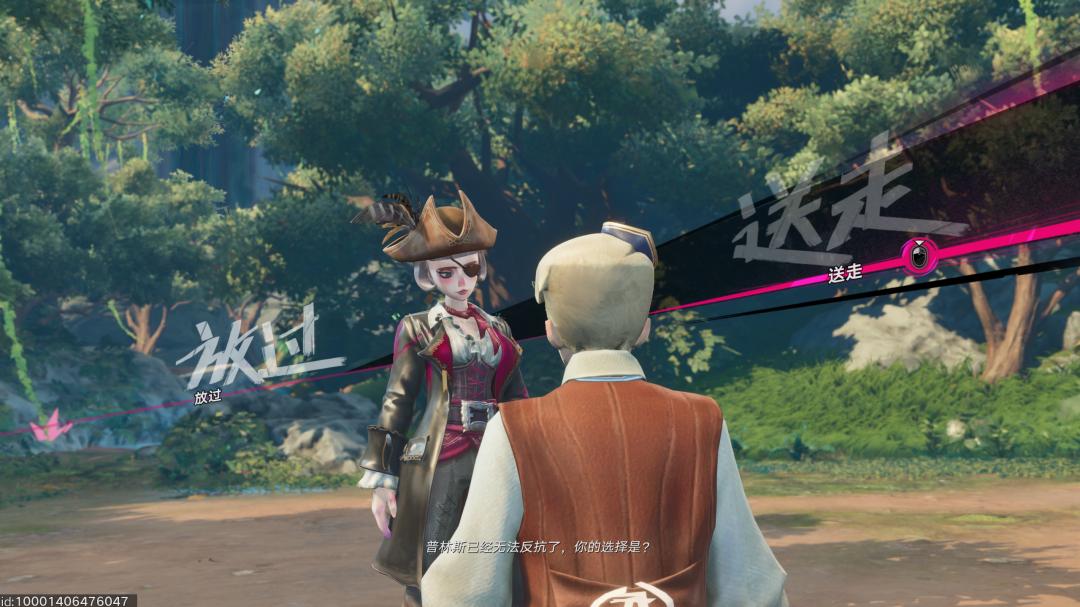
Removing NPCs
The development team even hid elaborate easter egg designs. For example, the "Desolate Ending": if you choose to remove most of the city's NPCs, Ottopia becomes dilapidated, damp, and perpetually rainy, and you receive a toy umbrella as a memento. Even more absurd is the hidden "Crash Ending": the game enters a 404-like error state, where progression, sailing, and even payments become impossible, forcing you to contact customer support for a rollback. This kind of gameplay is almost unheard of in mainstream commercial titles. It carries a deliberate "we won't pander to everyone" attitude — a rebellious spirit that is the rarest commodity in today's homogenized market.
Aligned with this philosophy is the game's narrative approach, which rejects traditional linear main story design. If you rush through the main quest, the plot will feel surprisingly thin, as the team has hidden most of its narrative depth in fragmented storytelling and side quest choices. When players find an old diary on a foggy island, where a few scattered paragraphs piece together the life of a long-lost sailor, the quiet emotional impact hits far harder than standard standing-dialogue cutscenes.
This level of freedom makes the main city feel more like a breathing community than a cold function menu. Of course, players who want to rush through the story might feel disoriented, but if you take time to wander slowly, you'll likely be touched by small details tucked away in corners.
Sea of Oblivion intentionally creates distinct geographical diversity across its sea regions. The White Sand Sea features bright, treasure-hunting vibes, while the Crossing Bridge Sea offers water-gun battles shrouded in dense fog. These two completely different island atmospheres make every dock at a new port feel like drawing an unknown card. The Hidden Sea region will unlock at the end of July, further expanding the depth of the game's map.
But the true magic of the nautical theme lies in its natural alignment with the ultimate goal of open-world exploration: extending flow state and providing immersive relaxation. Just as you can choose to rush straight to quest markers or wander aimlessly in other open worlds, in Sea of Oblivion you can sail directly to target islands for resources, or simply enjoy sailing for its own sake — feeling the wind shift, watching the sunset paint the ocean golden, stumbling into a sudden rainstorm, or discovering a hidden cave not marked on any map.
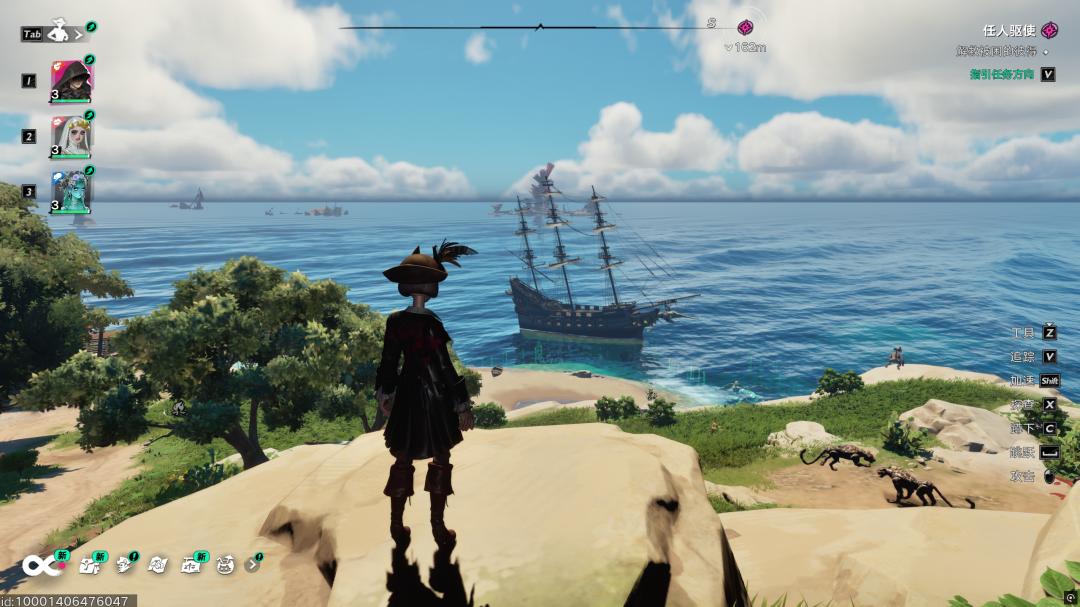
Scenery by the Island Shore
As someone who has personally sailed these waters, what I see in this game goes far beyond stacked gameplay mechanics — it's a long-lost, adventurous "ambition".
On one hand, its ambition is tangible and concrete. Multi-run roguelike progression, dual land-sea combat rhythm contrast, player-intervenable main city ecosystem, and fragmented narrative — none of these individual elements are revolutionary on their own, but when integrated into a single framework designed to interlock, you clearly feel this team refuses to make just a "passable open-world game". Their goal is to ensure every subsystem in their open world feeds into and supports one another.
On the other hand, the risks are equally concrete. Can the auction house's supply-demand balance sustain long-term operations? Will the repetitiveness of multi-run progression backfire after a hundred hours of play? Will the complex dual-combat system alienate casual players? No one can guarantee the answers to these questions right now.
After years of domestic open-world game development, what's truly scarce has never been capital or engine technology — but creators rethinking the very meaning of "openness": not just expanding map sizes, but breaking boundaries at the rule design level.
Seven years of refinement, shifting from asymmetric competitive games to open-world adventures — regardless of whether the final market reception is hot or cold, Sea of Oblivion's maiden voyage itself has provided Chinese developers with a new line of thinking: the future of open-world games was never meant to follow only one path.
This article was first published on