Don't rush to recycle your old phone, because the prices of new phones have risen across the board.
You've probably all heard the news about Apple's price hikes, right?
On June 25, our entire editorial team was on an overseas team-building trip (so we missed the breaking news). Then Apple pulled an unexpected move: they performed unscheduled maintenance on their official website in the middle of the night, and when the site came back online, everyone saw the changes:
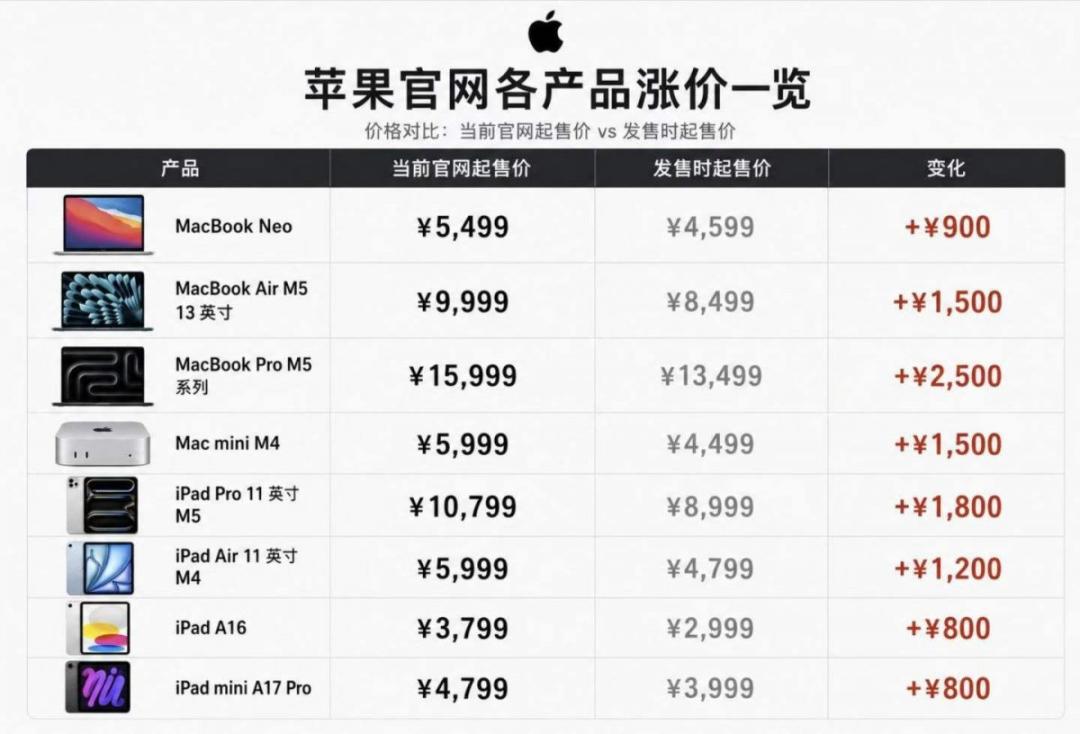
Holy cow, the MacBook Air went from 8,499 yuan to 9,999 yuan, and the MacBook Pro jumped all the way to 15,999 yuan — a 2,500 yuan increase...
For the iPad line, the original 4,799-yuan iPad mini got an 800-yuan price hike; the iPad Air went up 1,200 yuan to 5,999 yuan; the iPad Pro also surged from 8,999 yuan to over 10,000 yuan, a 1,800 yuan increase.
Even the most affordable entry-level iPad, which used to cost under 3,000 yuan, now sells for 3,799 yuan. That truly feels like the end of an era...
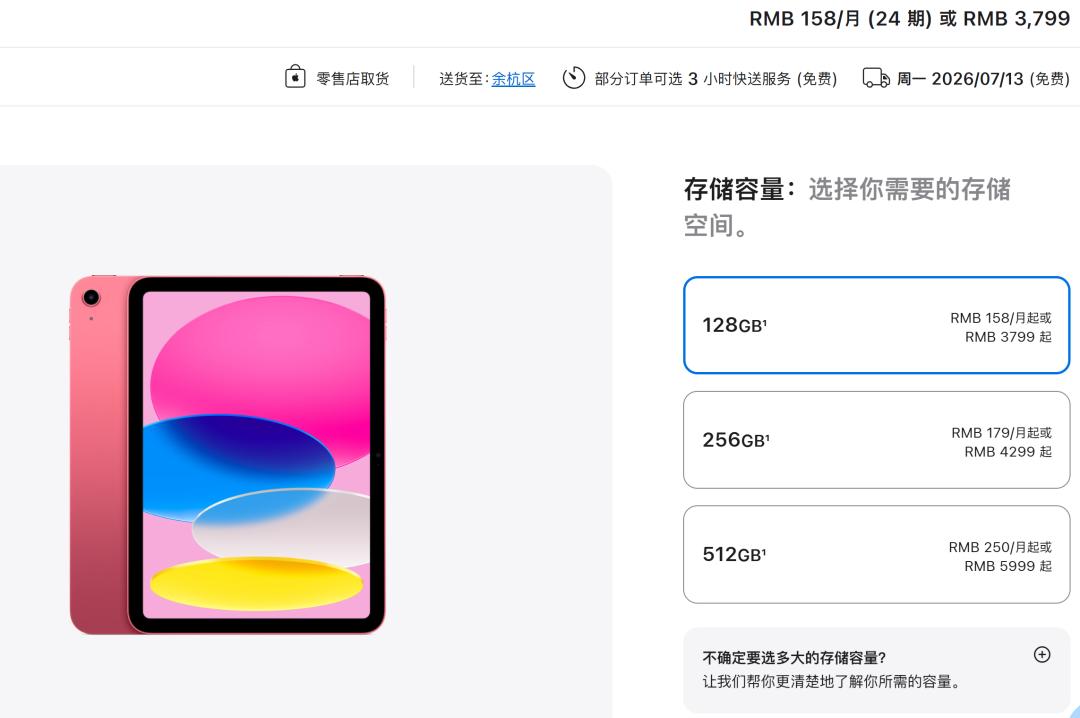
This round of price hikes isn't limited to the Chinese market — Apple rolled out a global across-the-board increase...
Prices for Mac, iPad, HomePod, Apple TV, and Vision Pro all rose by 15% to 25%, while iPhone, Apple Watch, and AirPods temporarily stayed at their original prices.
When asked about the unannounced price increases, Apple gave its official response: "Memory costs are sky-high, we simply can't afford to absorb them anymore..."
In Tim Cook's exact words: "In my 40+ years of experience, I have never seen anything like this in any industry's supply chain. Price increases are inevitable, and we have already done our best to offset rising costs."
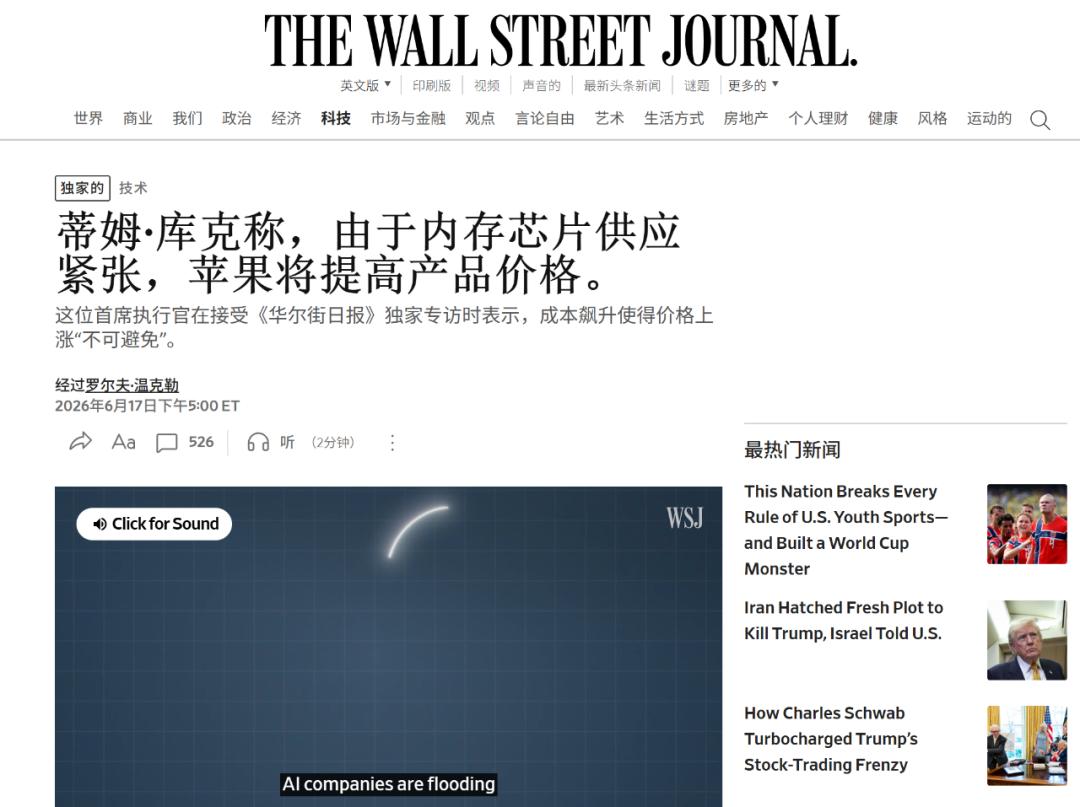
We're not entirely sure why Cook alternates between saying 40 years and 100 years, but the logic behind these price hikes is obvious even to people who haven't spent 40 years in the supply chain industry.
The memory price surge, just like the rising costs of raw materials such as copper, is 100% driven by AI.
As we all know, modern AI data centers require massive amounts of high-bandwidth HBM memory and server DRAM. Tech giants are pouring unprecedented funds into AI development, with companies like Google even taking on debt to build new data centers...
So the three major memory giants — Samsung, SK Hynix, and Micron — made a joint decision to redirect most of their production capacity to fulfill high-value AI orders. As a result, memory supply for the global consumer electronics market has been drastically squeezed, with traditional DRAM prices surging 700% over the past four years.
According to Intel CEO Lip-Bu Tan's assessment, this memory shortage will last for at least two years, with no relief expected before 2028, and the entire industry currently has no effective solutions to address it.
At this point, no amount of influence can change the reality — consumer electronics memory production is now prioritized behind AI chip manufacturing.
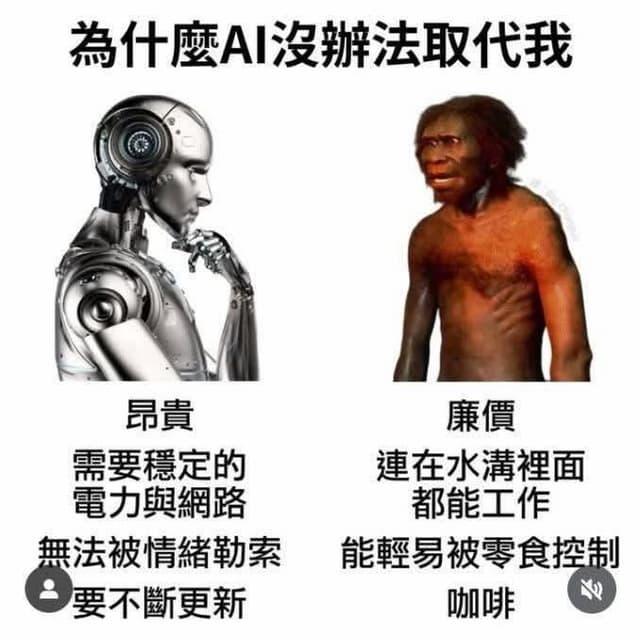
At this point, many readers might ask: But this is Apple we're talking about! The world's largest purchaser! The undisputed GOAT of consumer electronics!
With Apple's massive global order volume and its famously ruthless supply chain management, how could it fail to pressure these three suppliers?
The answer is: They could do it before, and they did it extremely aggressively...
Micron's Chief Business Officer Sumit Sadana said in a recent interview: "During the memory market's lowest point in 2023, some large customers pushed prices extremely low in a very unconstructive way. The resulting razor-thin margins forced us to put many factory expansion investment plans on hold."
It's pretty obvious who he's referring to without even naming names...
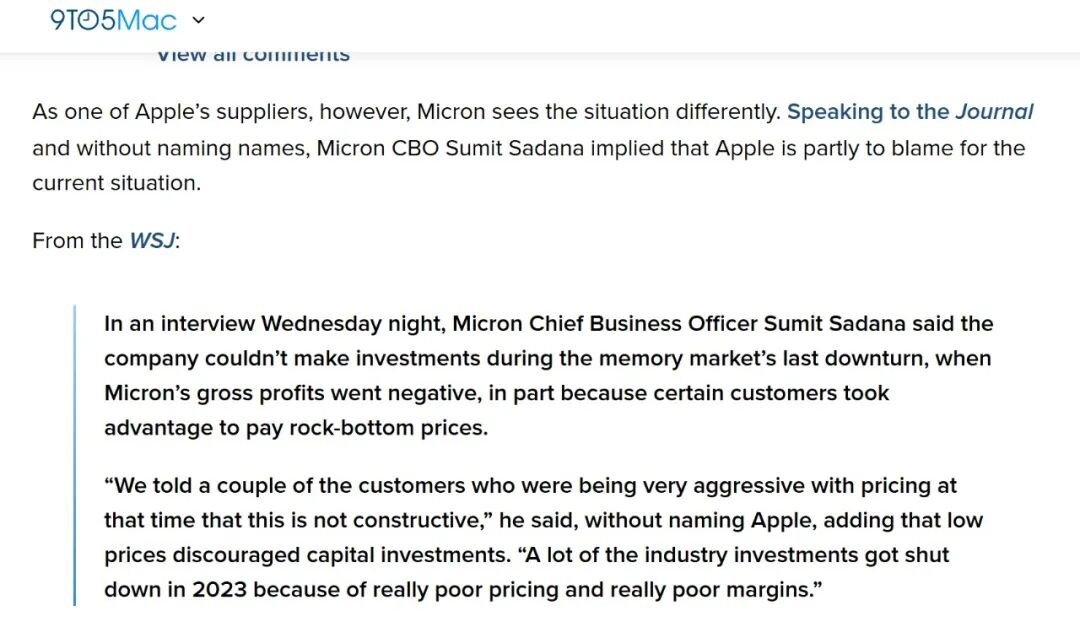
In the past, when the memory market was oversupplied, Apple would simply send non-negotiable purchase orders to suppliers — there was no room for discussion, and suppliers had no choice but to accept.
But the tables have turned now. The three giants are raking in massive profits from AI orders, and they have become critical strategic material suppliers in the AI era. So when Apple once again tries to push for lower prices, the three suppliers have quietly aligned their positions.
Three years ago you crushed us when we were at our lowest, now that you're facing shortages you come back to us? Get in line. Apple used to be able to lock in low-price long-term contracts for a full year, but now they can only sign half-year contracts, and some memory component prices have directly doubled.
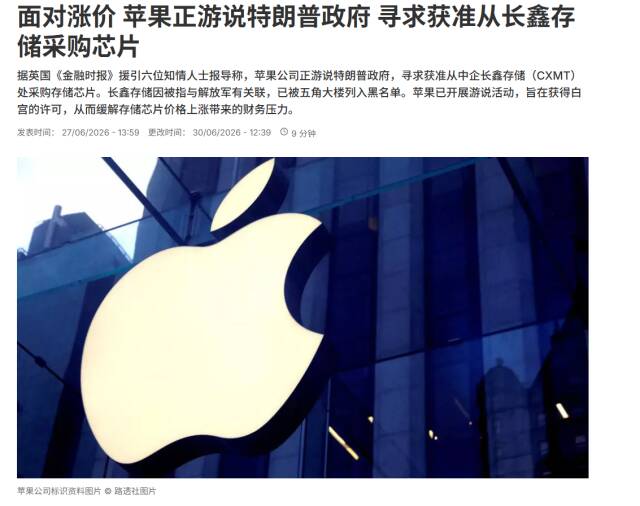
As a result, Apple has even started lobbying the US government to allow China's ChangXin Memory Technologies to join its supply chain. The mighty Apple has been reduced to scrambling for alternative suppliers around the world (no disrespect to ChangXin, of course).
By the way, the fact that iPhones weren't included in this round of price hikes doesn't mean Apple suddenly became more generous. According to some analysts, Apple is likely using its high-margin products like Mac and iPad to absorb the impact first, and will raise iPhone prices later.
Current leaks suggest the standard iPhone 18 will see a $50 price increase, while the Pro and Pro Max models could jump by $200 — meaning the entry-level price of a future iPhone Pro will almost certainly start above 10,000 yuan.
If even Apple is in this situation, the Android ecosystem has already been completely overwhelmed by this price surge.
In the first quarter of 2026, flash memory and DRAM prices surged by more than 50% again, triggering a collective price hike wave in the Chinese smartphone market.
On March 10, the OnePlus 15's starting price was raised to 4,499 yuan, 500 yuan higher than its launch price. Shortly after, the top-tier variant of the iQOO 15 saw a cumulative price increase of 1,500 yuan, and Honor's new Power 2 model also started 700 yuan higher than its predecessor.
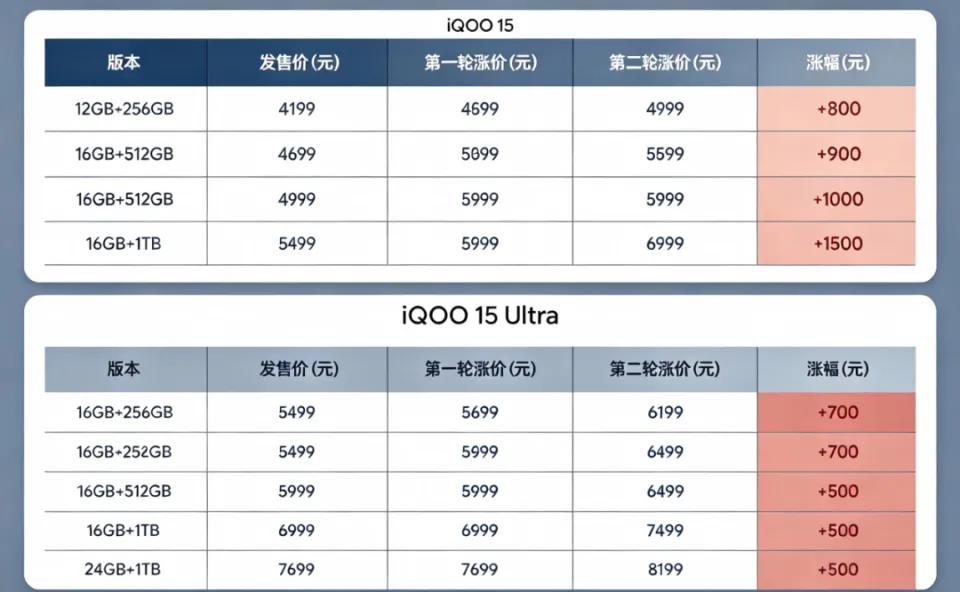
Flagship phones getting a few hundred yuan more expensive is something that wealthy users can tolerate, but for mid-range and budget phones, this basically makes them unsellable...
Low-end phones already have extremely thin profit margins — a 1,500-yuan smartphone that sees its memory costs rise by a few hundred yuan means manufacturers lose money on every single unit they produce.
Worse still, during the period when memory was cheap a couple of years ago, manufacturers pushed 512GB large storage configurations down to budget phones priced around 1,000 yuan in order to compete for sales.
Now that situation has become completely unsustainable.
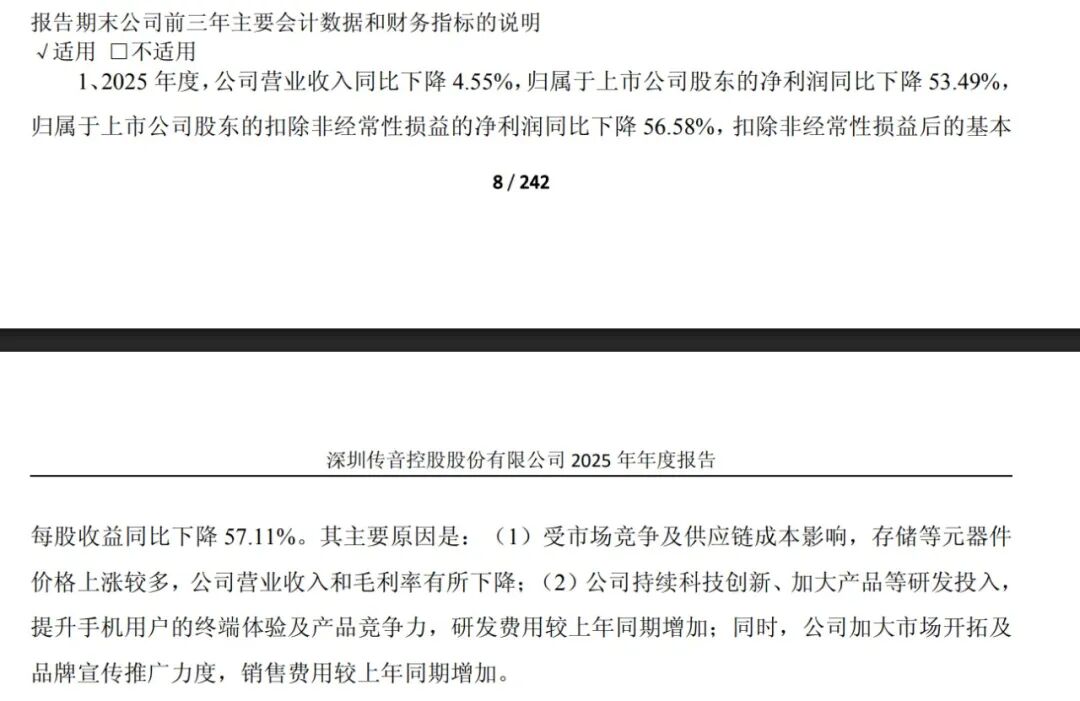
Take Transsion as an example: its 2025 smartphone shipments rose to 169 million units, but its net profit plummeted by more than 53%. The more units they sell, the more money they lose, because component costs have increased by over $10, but the purchasing power of consumers in African markets can't keep up.
If they downgrade the specs back to 8GB RAM + 128GB storage, even running apps like WeChat would be a struggle; but if they keep the large storage configurations they have to raise prices, which consumers won't accept.
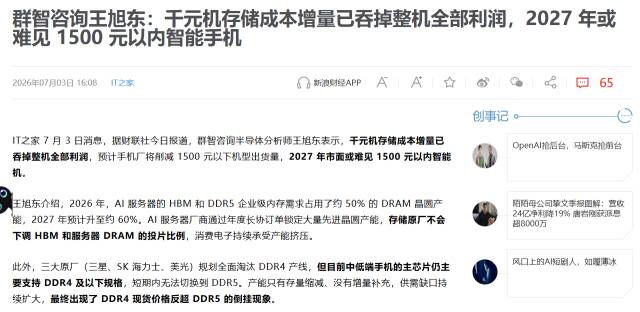
As a result, some industry analysts even predict that by 2027, smartphones priced under 1,500 yuan might completely disappear from the mainstream market...
However, while everyone else is trapped by these price hikes, the only company taking the opposite approach is Huawei.
By fully shifting to self-developed Kirin chips, Huawei avoided Qualcomm's nearly 20% price increase for 3nm processors; on the memory side, they have deep partnerships with ChangXin (DRAM) and YMTC (NAND), giving them component costs 15% to 20% lower than the three international memory giants.
That's why the starting price of the Pura 90 Pro Max didn't go up at all, remaining at 6,499 yuan.
But even this exception has its limits. ChangXin's production capacity is still in the ramp-up phase, with projected monthly output of only 350,000 wafers by the end of 2026 — which is barely enough to supply China's top domestic smartphone makers alone.
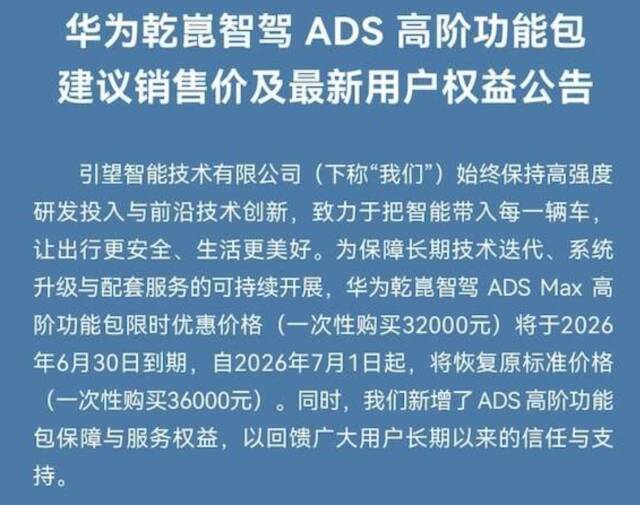
So even Huawei can't do anything about automotive-grade memory outside the smartphone space. The industry has seen automotive-grade memory prices surge 180% in three months, and Huawei's ADS 2.0 intelligent driving system has also removed its limited-time discount, with actual terminal prices rising from 12,000 yuan to 15,000 yuan.
All in all, while Apple remains the undisputed leader in the consumer electronics industry.
The fact that even it now has to accept the new rules of the AI supply chain signals that the era is shifting.
In this booming AI era, supply chain power is transferring away from consumer electronics giants like Apple, moving toward companies like NVIDIA, Microsoft, and the manufacturers building AI infrastructure and memory chips.
Back during the First Industrial Revolution in 1830, the frantic expansion of railway lines caused iron and coal prices to skyrocket.
At that time, Britain's most profitable companies were canal operators that monopolized national transport, and they initially dismissed the price hikes as irrelevant. But steel and coal producers all shifted their production to serve the railway companies, which had deeper pockets and stronger demand. The canal companies couldn't get cheap coal and iron anymore, and couldn't control the costs of building new ships. Their profits collapsed, and they were eventually swept into the dustbin of history.
The present moment is exactly the same as that historical period.
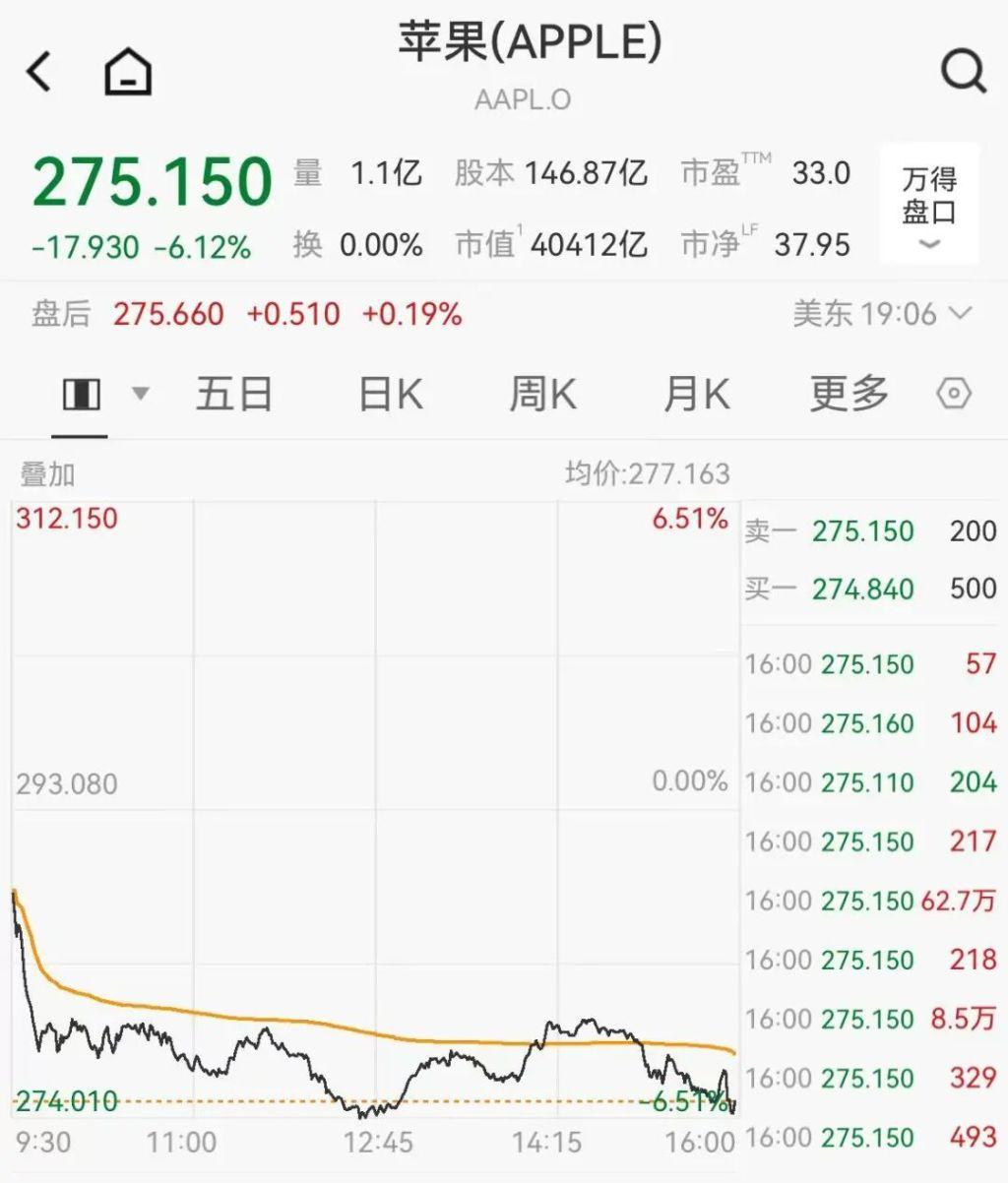
This is probably why Apple's stock price plummeted more than 6% on the day of the price announcement, marking its largest single-day drop in a year, with over $260 billion in market value wiped out in a single trading day.
Of course, Apple won't disappear as easily as those old canal companies — it still has massive cash reserves and an unbreakable ecosystem moat. But the old Apple era, where it could squeeze suppliers to the absolute limit to maintain perpetual high profits and stable pricing, is truly over.
In the world that's coming next, everything will revolve around AI.
For ordinary people like us, we'd better prepare for the reality that smartphones, air conditioners, computers, and all kinds of electronics will keep getting more expensive. This is the cost that AI is imposing on all of us.
This article is from the WeChat public account "X.PIN", written by Naxi, edited by Jiang Jiang & Mian Xian, and published by 36Kr with authorization.