Toyota could lose hundreds of billions of yen due to halting next-generation EV development
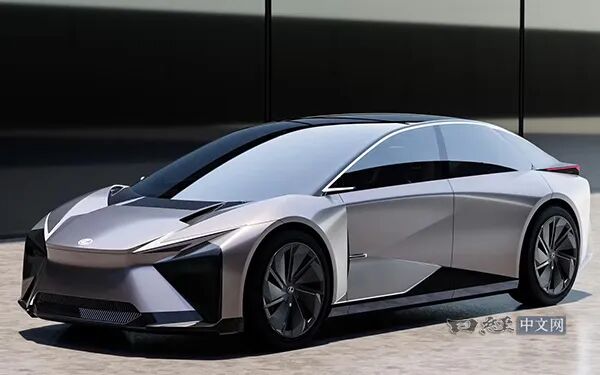
The development of the next-generation battery electric vehicle has been halted, a rare move in Toyota's history of next-generation vehicle development (the originally planned LF-ZC)
"Since it was positioned as a next-generation vehicle, the shock of the development halt is unprecedented," the impact of Toyota's announcement in May to suspend the development of its next-generation EV "LF-ZC" is rippling through the entire supply chain. Behind the expanding "vortex" of losses lies the fact that the "LF-ZC" adopts a manufacturing method completely different from conventional ones...
It is reported that Toyota will compensate component manufacturers for part of their losses due to the suspension of the next-generation battery electric vehicle (EV) development. The total amount could reach tens of billions of yen. At that time, each component enterprise was preparing to invest in dedicated equipment and other funds for this project. This rare move to halt development and offer compensation appears to be closely related to the decision of Toyota's new CEO Kenta Kon, who took office in April.
"Since it was positioned as a next-generation vehicle, the shock of the development halt is unprecedented," an executive at a Toyota supplier said. Currently, the most high-profile issue within the Toyota Group is precisely the suspension of the development of the Lexus luxury brand coupe-style EV "LF-ZC", a next-generation vehicle project disclosed on May 29.
A single component manufacturer could suffer losses of up to 10 billion yen
The "LF-ZC" is a streamlined, low-height "sports car" model. In addition to being equipped with new high-performance batteries, it also uses "Gigacasting", which enables integrated molding of components through aluminum casting. It was originally set to be a next-generation EV that embodies the essence of Toyota's latest technologies.
The shock of the development halt has spread across the entire supply chain. It is understood that major Toyota-affiliated automotive component enterprises are expected to record losses in the scale of tens of billions of yen respectively. Among them, there are enterprises whose maximum losses could reach approximately 100 billion yen.
Toyota is believed to compensate for part of the losses, with the total scale potentially expanding to tens of billions of yen. Toyota's consolidated net profit under International Financial Reporting Standards for the 2026 fiscal year (ending March 2027) is projected to decline by 22% year-on-year to 3 trillion yen. Although the impact of this compensation currently appears minor, it could still become a new downward factor for business performance.
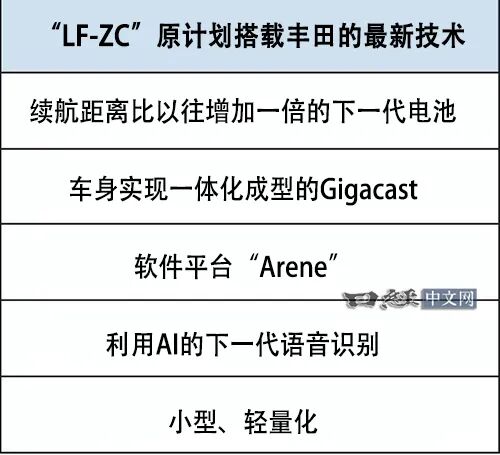
Behind the expanding "vortex" of losses is the fact that the "LF-ZC" adopts a manufacturing method completely different from conventional ones.
Normally, automobile bodies are formed by joining multiple metal parts together. However, gigacasting uses an ultra-large casting machine to achieve integrated molding as a single large component. In the words of an executive at a Toyota supplier, it is a method of "building cars like making taiyaki with a large machine".
Since Tesla from the United States officially introduced it in EV manufacturing, gigacasting has attracted global attention as a technology that will transform next-generation automobile manufacturing. Toyota has also been advancing its research and development. While this manufacturing technology can achieve weight reduction and is expected to extend driving range, precisely because it is a next-generation technology, in addition to the difficulties in mass production, the defect rate may also rise.
An executive at a Toyota supplier said: "Considering that the next-generation manufacturing method will become the mainstream in the future, many suppliers have made huge investments so as not to fall behind". Among large enterprises, in addition to building new dedicated factory equipment and production lines, some enterprises have even pushed forward with the reconstruction of their factory buildings.
In response to the handling of LF-ZC-related losses and guarantees, Toyota stated that "since the situation varies for each enterprise, we will communicate individually".
"Toyota's Unprecedented Development Halt in Its History"
Exploring the reasons behind this development halt reveals a shift in Toyota's product strategy. It is reported that Toyota first notified relevant enterprises before May 27. This was a large-scale project that involved many technicians and related enterprises several years ago.
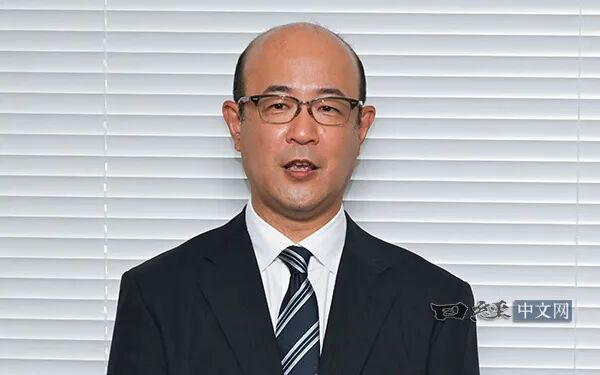
President Kenta stated that in order to reduce the break-even sales volume, adjustments and cuts including production models will be implemented
Hiroki Nakajima, Toyota's Vice President and Chief Technology Officer (CTO), said in an interview with media including the Nikkei Asia that: "Among the employees involved in the LF-ZC development, many technicians expressed their unwillingness with tears. I feel very sorry". He also added: "The technologies cultivated through LF-ZC will be fully applied to subsequent models. Therefore, technological development will continue".
A Toyota insider said: "Halting development at such a timing should be unprecedented in Toyota's history". He also stated: "When next-generation models such as the hybrid vehicle (HV) 'Prius' and the hydrogen-powered fuel cell vehicle (FCV) 'MIRAI' were launched to the market, many were released without considering profit or loss".
There are also many views that the intentions of Toyota's new management, which took office in April, have played a role. President Kenta attaches great importance to the business indicator known as break-even sales volume. Regarding the reduction of break-even sales volume, he said at the financial results press conference in early May that it also includes "adjustments and cuts to production models". Automotive component enterprises believe that Toyota will maintain a profitability-focused product strategy in the future.
The number of automakers halting EV development is on the rise. In March, Honda suspended the development and sales of 3 models, including 2 flagship EVs in the "Zero Series", and began negotiations on compensation for component manufacturers. Due to compensation costs and impairment losses, Honda recorded a loss of 1.2 trillion yen in the 2025 fiscal year, marking its first loss since its listing. It is also projected to post a loss of 500 billion yen in the 2026 fiscal year.
This article is from the WeChat Official Account "Nikkei Chinese Website" (ID: rijingzhongwenwang), written by Kousuke Okamoto, and published by 36Kr with authorization.