Why does Avtriz get to submit its prospectus to the Hong Kong Stock Exchange for the second time?
On June 30, Avita submitted its second listing application to the Hong Kong Stock Exchange. On July 1, Avita obtained an L3-level autonomous driving test license. The transition of advanced intelligent driving from the "technology demonstration" phase to the "commercial implementation" phase was timed precisely, as if offering a reassurance to ease the capital market's doubts.
Whether this battle can be won hinges on three variables.
Three Curves Turning Upward Simultaneously
Looking through the prospectus, three sets of figures are on a rising trajectory.
The first set is revenue.
In 2022, revenue stood at only 28.34 million yuan. It jumped to 5.645 billion yuan in 2023, 15.195 billion yuan in 2024, and 25.631 billion yuan in 2025 — representing a three-year compound annual growth rate exceeding 300%. Vehicle sales revenue grew from 5.542 billion yuan to 23.902 billion yuan, multiplying 4.3 times over three years. Even more notable is non-vehicle revenue: ecosystem and after-sales services surged from 103 million yuan in 2023 to 1.729 billion yuan in 2025, with its proportion of total revenue rising from 1.8% to 6.7%, marking a nearly 17-fold increase over three years. As the total vehicle ownership surpasses 200,000 units, the revenue pool from software subscriptions, after-sales services, and ecosystem offerings is opening up. This means Avita's business model is evolving beyond one-off vehicle sales to recurring service-based revenue, enhancing customer lifetime value.
The second set is gross margin.
It was still at -3% in 2023, turned positive to 6.3% in 2024, and further improved to 9.4% in 2025 — a 12.4 percentage point increase over three years. With 122,700 units sold in 2025, economies of scale diluted the fixed cost per vehicle, the proportion of high-priced models increased, and battery supply costs were contained. Avita's gross margin trend is upward, while many peers have seen their gross margins decline amid price wars, and this contrast speaks for itself.
The third set is operating cash flow.
It turned positive for the first time in 2024, recording 1.755 billion yuan, and expanded to 2.315 billion yuan in 2025. Two consecutive years of positive cash flow mean Avita has achieved self-sustainability through vehicle sales. Inventory turnover days were reduced from 96 days to 36 days, outperforming the industry average of 50 days — reflecting improved channel efficiency and solid inventory management. In 2025, sales and marketing expenses reached 3.281 billion yuan, and R&D expenses hit 2.086 billion yuan. These fixed costs are being diluted on a larger revenue base, and operating leverage is starting to take effect.
The acquisition of the L3 license is another key signal. It means Avita's advanced intelligent driving is no longer just a technical parameter in a presentation, but a product feature that can be commercially deployed and monetized from users. Shifting from one-off vehicle sales to recurring software service revenue — if this business model transition is successfully implemented, it will fundamentally transform Avita's profit structure.
Revenue, gross margin, and cash flow — three upward-trending curves, coupled with the commercialization of the L3 license — together constitute the core evidence of Avita's "turning point."
But are these signals strong enough? That depends on the next two variables.
A Race Between Sales Volume and Cash Reserves
Avita's total sales in the first five months of 2026 reached 20,160 units, averaging 4,032 units per month. According to aggregated media data from Tianyancha, the monthly sales threshold for leading new-energy vehicle startups has risen to 30,000 units. Li Auto, NIO, and Xpeng have all crossed this line, while Leapmotor has reached 80,000 units. Avita's best monthly sales in May stood at 7,336 units, still a distance away from the baseline of "10,000 units per month."
The direct consequence of insufficient scale is that costs cannot be effectively diluted. In 2025, the cost of sales as a percentage of revenue remained as high as 90.6%, with raw material costs reaching 20.8 billion yuan, accounting for 89.6% of the cost of sales. The company acknowledged in its prospectus: "Our relatively small procurement volume limits our bargaining power with component suppliers." Within the same supply chain, larger automakers can secure lower prices, while Avita has to accept higher costs — this is the iron law of economies of scale.
In terms of cash reserves, Avita's cash fell from 19.3 billion yuan at the end of 2024 to 9.7 billion yuan at the end of 2025, and further to 6.2 billion yuan by the end of April 2026. Over a year and a half, the company consumed 13.1 billion yuan in cash, burning an average of more than 700 million yuan per month. At this rate, the 6.2 billion yuan cash reserve will not last a year. While operating cash inflow reached 2.315 billion yuan in 2025, the company still posted a loss of 3.489 billion yuan — the gap in self-generated profitability persists.
The integration with Deepal is a cost-reduction initiative that Changan Automobile is advancing. The two brands will operate independently with differentiated positioning, but share deep resources in back-end areas such as technology, supply chain, and system capabilities.
The direction is correct — reducing costs, improving efficiency, and avoiding internal friction. However, Deepal's S09 enters Avita's price territory at 259,900 yuan, and the two brands have a high degree of overlap in the 250,000 to 300,000 yuan price range. Consumers will ask: with the same technical foundation, why pay tens of thousands of yuan more for an Avita? Avita still needs to articulate a clearer narrative to justify its high-end positioning.
The other side of integration lies in organizational restructuring. Two brands, two sets of distribution channels, and two teams need to achieve synergy in supply chain and R&D, which requires breaking down departmental silos and coordinating benefit distribution. This cannot be resolved by a single document; it demands time and management investment.
Industry concentration is continuing to accelerate. According to aggregated media data from Tianyancha, the retail penetration rate of new energy passenger vehicles reached 62.9% in May 2026, a record high, but most of the incremental market share is captured by leading brands. Data from the China Passenger Car Association shows that from January to May this year, cumulative retail sales of passenger vehicles across the country reached 7.11 million units, down 19% year-on-year. The automotive industry's total profit was 144 billion yuan, down 20% year-on-year, with the industry profit margin dropping to 3.4% — the lowest level in the same period over the past five years. With both terminal sales and industry profits declining, automakers' profit margins are being further squeezed.
Against this industry backdrop, Avita has chosen to go public.
The Final Opportunity Window
The underlying logic for the second listing application is simple: Avita needs to raise funds through an IPO to replenish cash and support large-scale expansion. But an IPO also requires a compelling story — what makes Avita stand out?
The answer lies in the second half of the year.
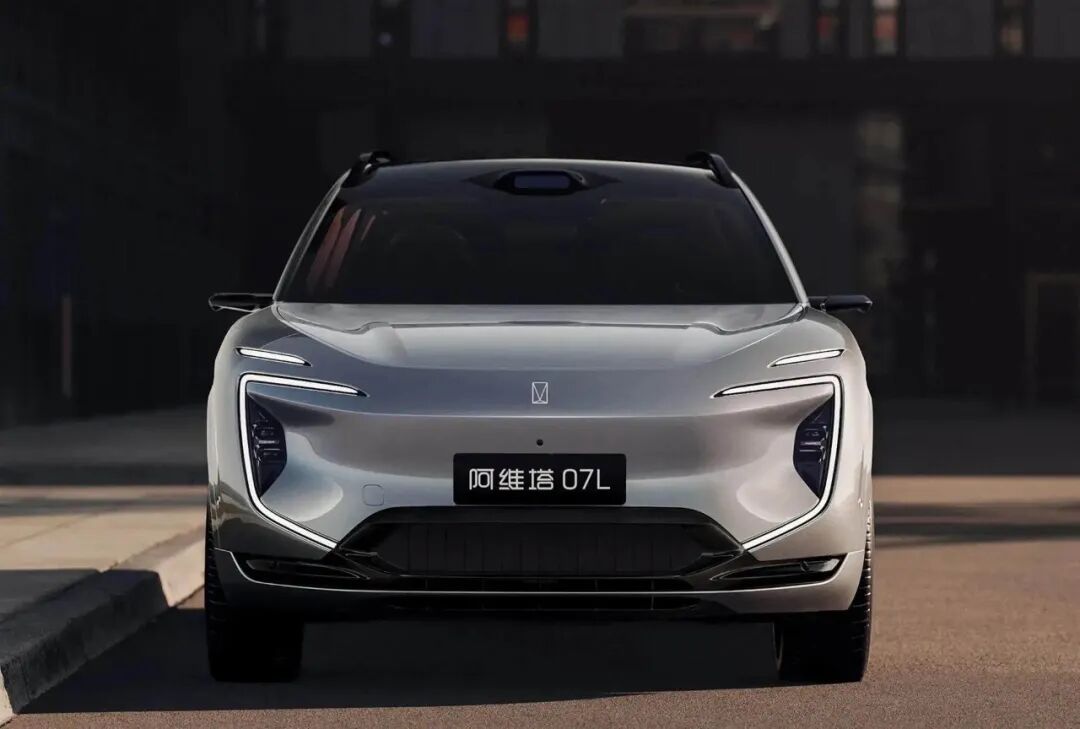
Avita's 07L, a large five-seat luxury SUV, is scheduled to open for pre-orders in the third quarter, equipped with the latest intelligent driving system and battery technology. By the end of the year, a flagship large six-seat SUV will be launched, featuring CATL's condensed-state battery. If these two new models gain strong market traction, sales are expected to hit an inflection point. According to the plan, Avita will launch 17 models by 2030, covering all segments including sedans, SUVs, and MPVs.
The timing of the second listing application was set before the launch of new products in the second half of the year — if order data for the 07L and the flagship six-seat SUV is strong after their release, Avita can present the latest sales figures during the Hong Kong Stock Exchange's hearing to support its valuation.
Overseas markets are another growth pillar.
In 2025, overseas revenue reached 1.398 billion yuan, surging more than 5 times year-on-year, with the average selling price per vehicle overseas exceeding 300,000 yuan — higher than the domestic market. Avita has consistently ranked first in high-end pure electric vehicle sales in Thailand, and its market share in the high-end new energy segment of the UAE has exceeded 10%. As of May this year, its business covers 43 countries with 95 overseas distribution outlets. The overseas segment has achieved stable profitability, acting as a buffer against domestic price war pressures. In the first five months of 2026, overseas sales skyrocketed 33.4% year-on-year, a growth rate far outpacing the domestic market.
Avita's overseas expansion strategy differs from most automakers: it does not chase market share through price cuts, but generates profits via high-end positioning. This model of "high pricing, strong brand recognition, and high profitability," if replicated in more markets, will become a key component of its long-term competitiveness. However, overseas expansion also requires investment — channel construction, brand building, and local adaptation all demand capital.
The product strength of the 07L will be the critical variable.
According to aggregated media data from Tianyancha, as Avita's first large five-seat luxury SUV, the 07L is positioned between the brand's existing sedan and SUV product lines, targeting families looking to replace or add a new vehicle. This group of consumers is relatively less price-sensitive, and places greater emphasis on space, intelligent features, and brand experience. If the 07L can build differentiated competitiveness in the 300,000-yuan price range and contribute 5,000 to 8,000 units in monthly sales, Avita's monthly sales level will jump from 4,000 units to 8,000 to 10,000 units, crossing the survival threshold.
From the perspective of the IPO timeline, the Hong Kong Stock Exchange's IPO review process typically takes 6 to 12 months. With the second listing application submitted on June 30, if the documents are in order and no issues arise during the review, Avita could complete the hearing and listing as early as the end of 2026 or the beginning of 2027. This time window aligns perfectly with the new product launch cycle in the second half of the year — essentially, Avita is using "new model order data" as the core support for its IPO valuation.
Therefore, Avita is fighting a battle against time: leveraging the surge in new model sales in the second half of the year and overseas expansion to offset the decline in domestic sales and cash consumption in the first half of the year, and breaking through before the capital market's doors close. The key to this sprint lies in whether sales can truly pick up in the second half of the year, whether the integration with Deepal can deliver quick results, and whether the high-margin overseas model can be continuously replicated. These three variables are all indispensable.
Avita's story has not reached its final chapter. Some investors are willing to wait, because they see the signs of a turning point.
This article is from the WeChat official account "LingTai LT" (ID: LingTai_LT), written by Zhang Qian, edited by Hu Zhanjia, and published with authorization from 36Kr.