Will WeChat's "Little Green Book" become the next content trend?
Have you noticed that this year, image posts are popping up everywhere in your WeChat Public Feed browsing experience?
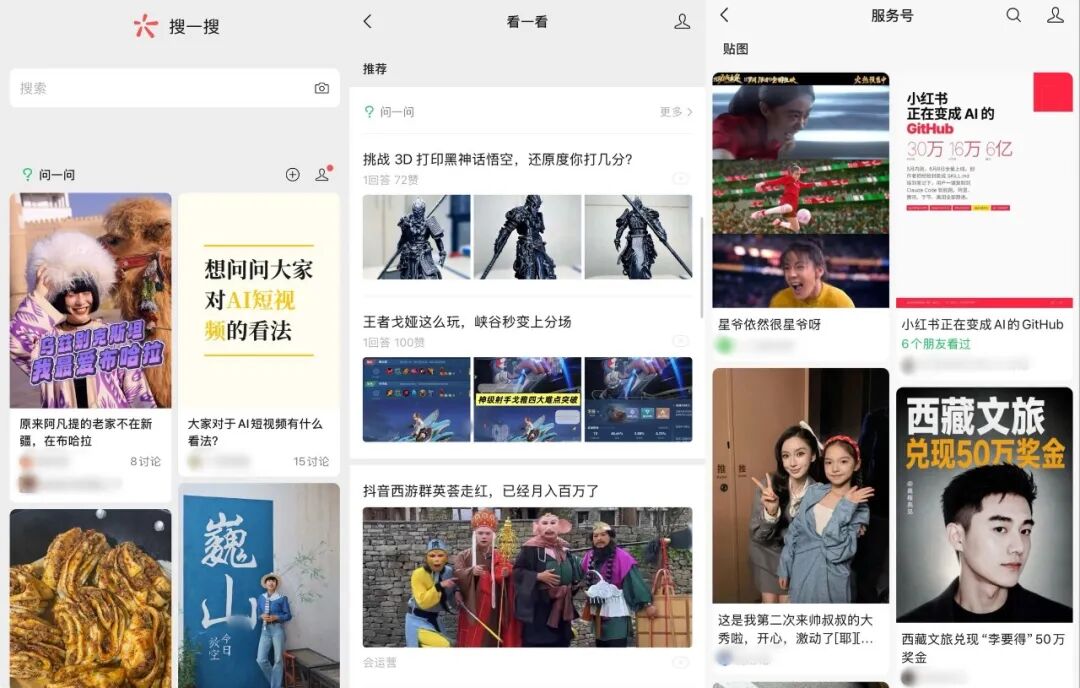
There is a dedicated "Image Posts" section in the service account feed, an image post tab on official account homepages, heavy recommendations for image content in the "Look" discovery tab, and even the chat list entry is making room for image posts.
In the past, WeChat Official Account articles typically started at 3,000 to 5,000 words, with attached images serving as mere embellishments. Now, when you open the message list, scrolling through shows nothing but image post content. Their layout resembles Xiaohongshu posts, the reading experience feels like browsing Moments, and users swipe away immediately after a quick glance.
In March this year, WeChat officially renamed "Text & Image" to "Image Posts", opened an independent creation entry in the backend, and even placed Image Post Accounts side by side with Channels on the works page, treating it as a fully independent content creation format.
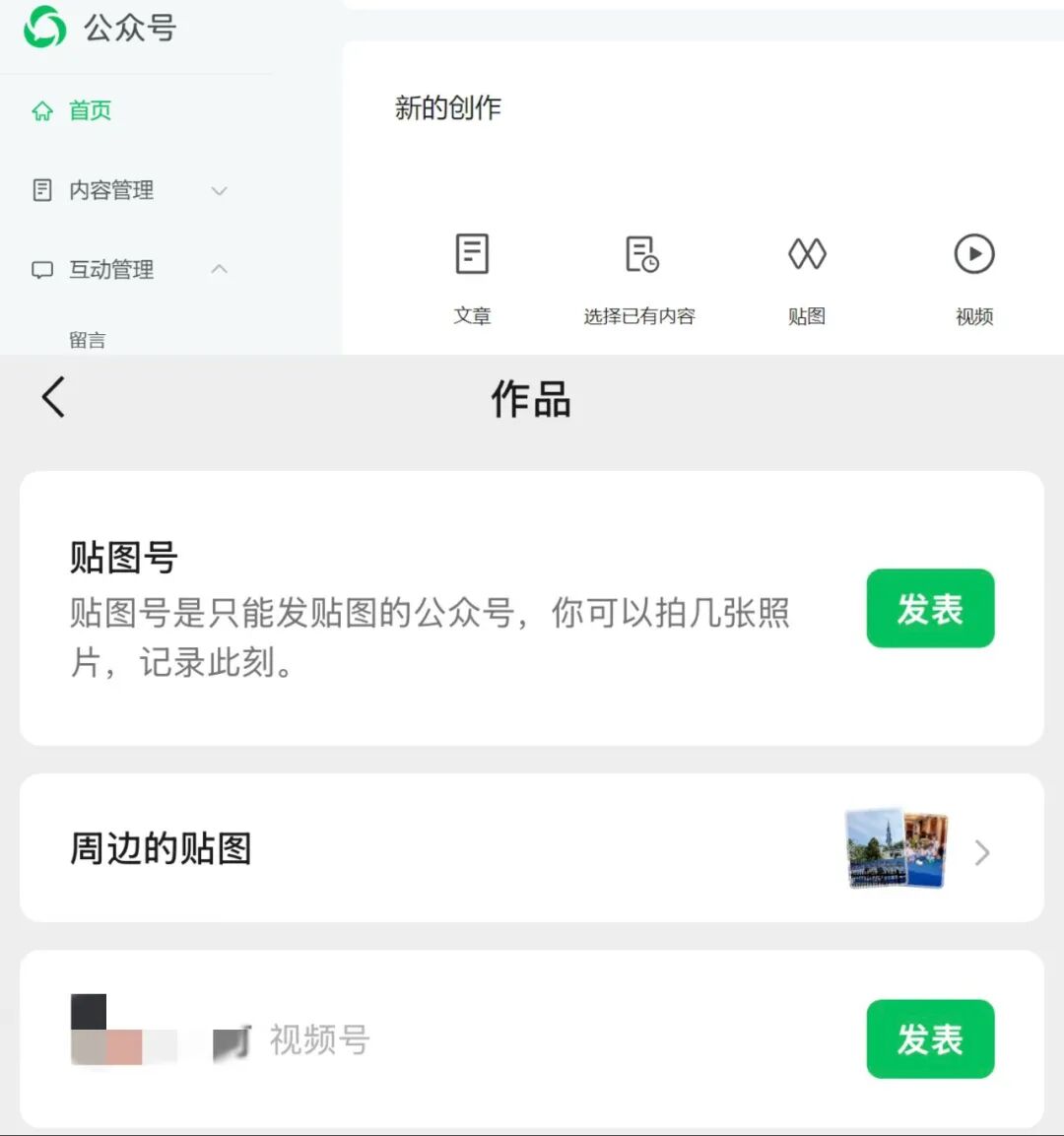
Moreover, WeChat is actively adding more recommendation slots and traffic support to image post content. Official data shows that among the first batch of creators eligible for the Traffic Monetization program for Image Post Accounts, the average views of image posts are 3-5 times higher than traditional official account text-image articles, while user dwell time has increased by 40%.
TopKlout believes these changes are worth discussing in depth.
After all, WeChat Official Accounts have been a content ecosystem centered on long-form text and images for over a decade. Now that the platform is suddenly pushing hard for short-form image content, is this a renaissance of visual content, or a retreat of in-depth long-form content? Can image posts sustain long-term development?
Image Posts Favored by Platform Traffic
Let's first take a look at this feature nicknamed "Little Green Book".
In February 2023, WeChat launched the Image Message feature, allowing a maximum of 9 images paired with 1000 characters of text. Due to its layout being extremely similar to Xiaohongshu, netizens playfully named it "Little Green Book". At the time, many people thought it was just a supplementary feature that would not disrupt the long-form text-image ecosystem of WeChat Official Accounts.
This year, the name was changed to "Image Posts", with upgraded features supporting static images, GIF animations, and even converting 3-second short videos into Live Photos. The editor has added text tools and stickers, continuously lowering the barrier to creation.
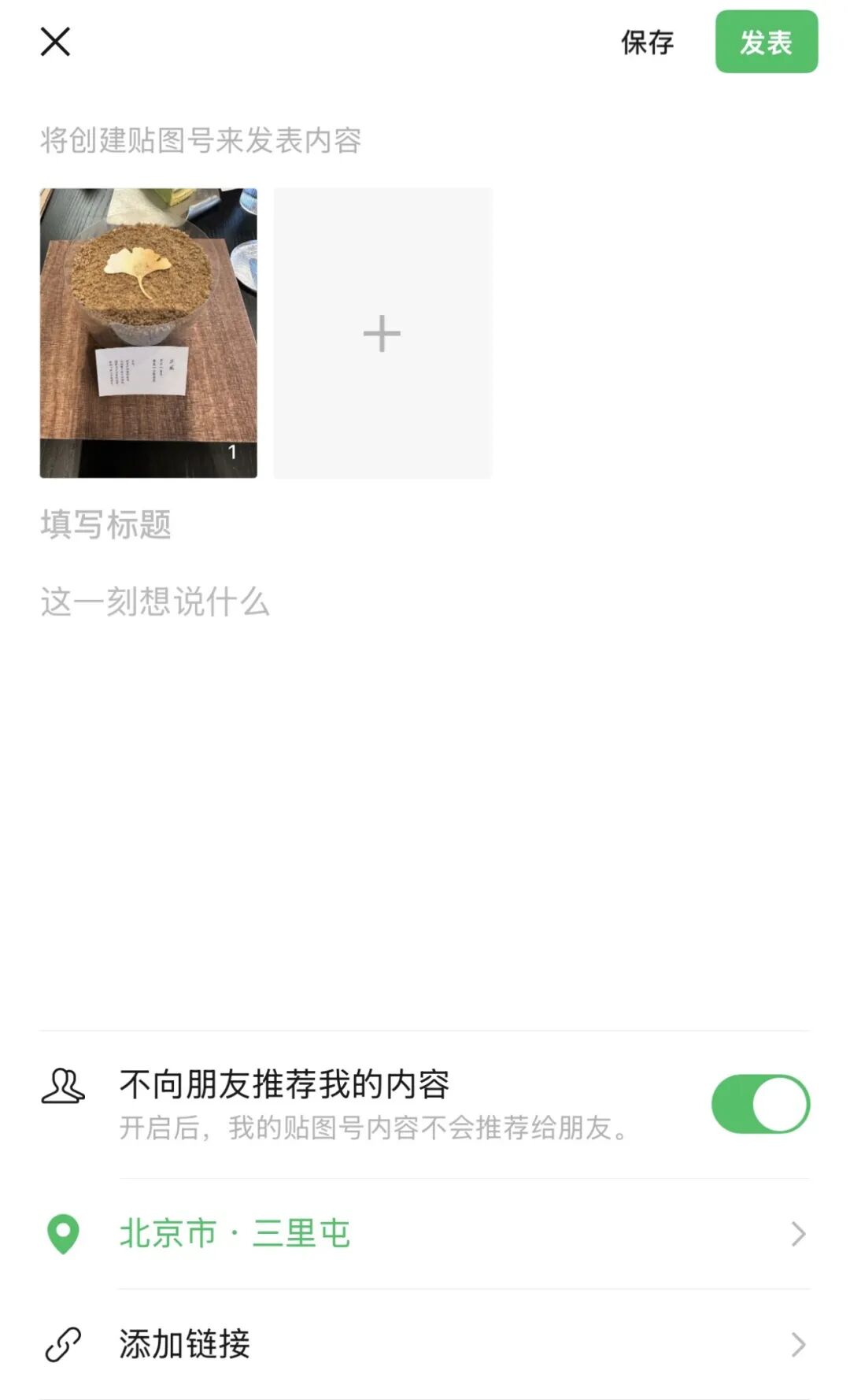
More importantly, Image Post Accounts are defined as "official accounts that can only publish image posts", with independent traffic entrances and dedicated recommendation mechanisms.
For the same piece of content, when both the image post version and the traditional article version are published simultaneously, the image post version often achieves higher exposure and view conversion due to differences in the platform's recommendation logic and traffic entrances.
Creators on social platforms have also complained that the carefully written long-form articles have seen a sharp drop in open rates, while casually posted image posts have gone viral across Moments.
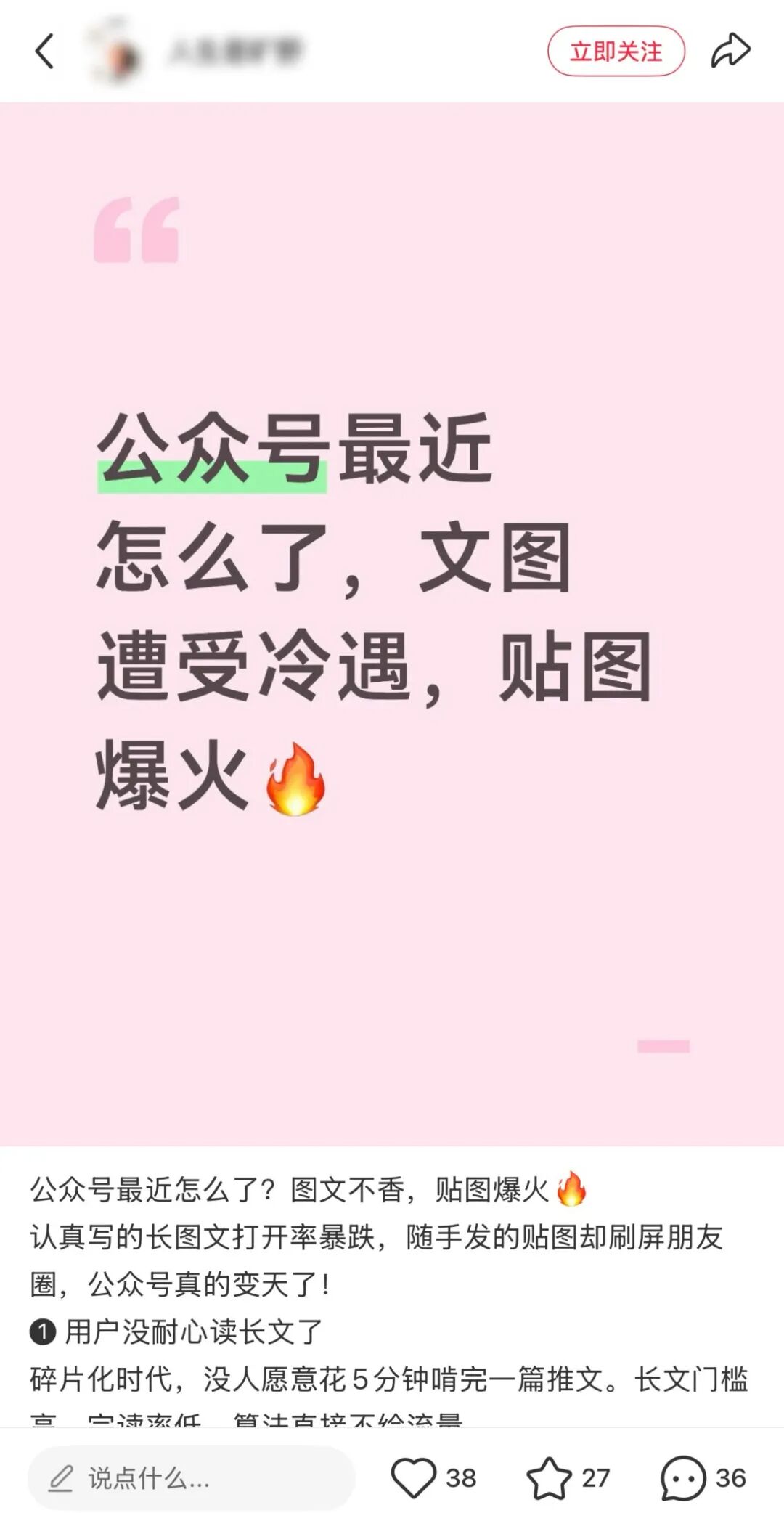
Image source: Xiaohongshu
The core of the issue is: when the platform assigns higher distribution weight to short-form visual content, creators will naturally shift their energy to this format, and the space for in-depth content gets compressed. This compression manifests in two dimensions:
First, traffic compression. Image posts get more recommendation slots and exposure opportunities, so the traffic available for long-form text-image content naturally decreases;
Second, psychological compression. When creators realize that putting in effort to write long articles is less rewarding than casually posting image posts, many will abandon in-depth content to pursue quick, low-effort content. It's not that they don't want to create high-quality work, but that high-quality content no longer delivers sufficient returns.
Some might ask: Isn't WeChat developing image posts to directly compete with Xiaohongshu? Lightweight content is an inevitable trend, so can WeChat succeed this time?
Why Develop "Little Green Book"?
If we compare the content ecosystem to a reading scene, WeChat Official Accounts are like a well-stocked library that has accumulated years of in-depth long-form content, where long-time users are used to immersing themselves in reading.
In recent years, a trendy magazine shop called Xiaohongshu has appeared on the "street". It is filled with visually rich, beautifully formatted quick-read content cards.
Young people passing by can easily flip through them to get inspiration, gradually forming a daily habit. While old users still visit the "library", their dwell time there has noticeably decreased.
Xiaohongshu has developed rapidly, capturing user time and creator attention that originally belonged to WeChat's visual content ecosystem.
WeChat has not failed to notice this trend.
In the years when WeChat Official Account open rates fell below 1%, it wasn't that content quality got worse, but that readers increasingly lacked the patience to finish a 3000-word article.
Users' fragmented time has increasingly flowed to Xiaohongshu and short video platforms, making the original long-form text-image model of WeChat Official Accounts feel increasingly "heavy" in this trend.
Many official accounts that have focused on in-depth content for over a decade have seen their open rates drop by nearly half. When users no longer have the patience for long-form articles, the platform must offer lighter content formats to retain them.
So the core issue is simple: WeChat's push for image posts is a strategy to compete for user time and creator supply with a lighter content format. The positioning of WeChat Official Accounts is shifting from an in-depth reading stronghold to a full-format content platform.
Platform Boost: Where Does the Traffic Dividend for "Little Green Book" Come From?
Let's talk about the most practical question: How big is the traffic dividend for image posts, and why is it so high?
It comes down to several key characteristics:
First, extremely high completion rate. A few images paired with 200 words can be read in seconds, allowing users to instantly judge if it's worth their time, with no risk of abandoning the content halfway. In comparison, the completion rate for long-form text-image content is usually less than 30%, with many readers dropping off after the opening paragraphs.
Second, the recommendation system can distribute content more efficiently. The interaction cycle for image posts is shorter and faster: click, view images, swipe away, and a full content consumption loop is completed in just a few seconds. Algorithms prefer this content with short feedback loops, as it makes it easier to quantify whether a user likes the content.
Third, low creation barriers lead to massive content supply. Creators can publish three to four image posts a day, whereas writing a single long article takes two to three days. With a larger content pool available for algorithm distribution, recommendation efficiency and coverage naturally improve.
As for content quality, it shows a clear polarization. High-quality image posts can deliver real value, such as practical organization tips, travel guides, and wellness hacks that users save immediately after reading.
But a large number of image posts feel hastily put together: the copy is just a clickbait one-liner, or it is directly repurposed from Xiaohongshu content with a new cover, lacking any real depth.
In terms of ad revenue, the earnings from the Traffic Monetization program for image posts are indeed impressive. Some creators report that a single image post with a few thousand views can generate dozens to hundreds of yuan in revenue, and with frequent daily updates, earning hundreds or even thousands of yuan a month is not uncommon.
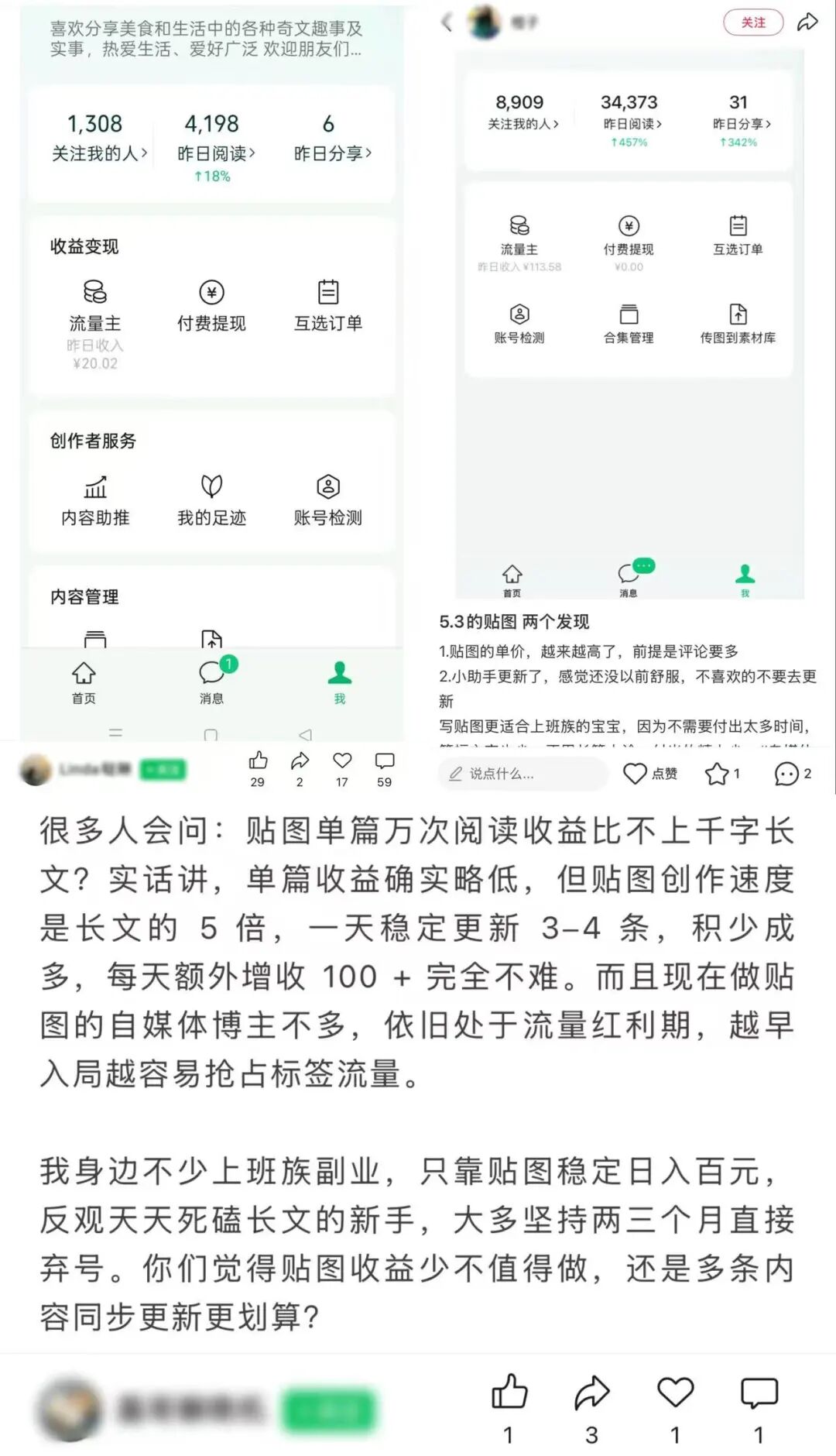
Image source: WeChat Official Accounts, Xiaohongshu
The problem is that these earnings are built on the foundation of platform traffic tilting. Once the platform reduces the recommendation weight for image posts, the revenue will shrink rapidly.
Traffic dividend does not equal long-term ecosystem dividend.
The Format Is Easy to Copy, But the Community Vibe Is Hard to Replicate
How far can WeChat's image posts go? The answer lies in the fundamental differences between WeChat and Xiaohongshu.
The core competitiveness of Xiaohongshu is its unique community atmosphere. The value of a single post comes not just from the content itself, but also from the high-quality interaction in the comment section.
After reading a travel guide, users go to the comment section to share their own travel experiences; after reading a product recommendation post, they ask detailed follow-up questions about product usage in the comments.
This complete ecosystem that connects content, interaction, and user trust took Xiaohongshu many years to build.
WeChat's visual content ecosystem, however, is inherently flawed at this most critical interaction stage.
The message reply feature for official accounts is not available for newly registered accounts. At the stage when Image Post Accounts most need interaction to build a community atmosphere, their interactive capabilities are at their weakest.
Without a functional comment section, image posts are nothing more than a one-way content display window. Users leave immediately after viewing, with no feedback, no discussion, and no sense of community belonging.
It's like a public square full of information boards but no seating areas: people walk by, glance at the boards and leave, no one stays to communicate with others.
Over time, user sense of participation will continue to weaken.
Then there's the issue of content quality. A large number of accounts directly repost viral Xiaohongshu posts to WeChat, changing the cover, modifying a few words, adding a couple of images, producing almost no original in-depth content. While there is some practical useful content, most are clickbait-style fast food posts titled "5 Little Tips for XX" or "3 Steps to Master YY".
This cannot be blamed on creators alone. When the platform uses traffic tilting to clearly signal that "quick, low-effort content is more valuable than in-depth work", creators will naturally flock to directions with lower barriers and faster returns. Who the algorithm favors, and who gets the traffic, determines the overall content quality level of the entire ecosystem.
For creators, the best strategy is to adopt a two-pronged approach: use image posts for daily user reach and traffic acquisition, and use long-form text-image content to build deep user trust and accumulate brand value.
The algorithm era has an even greater demand for truly scarce in-depth content than the past. Anyone can create short-form image posts, but the ability to write a high-quality article that users finish reading and want to share remains extremely valuable.
Final Thoughts
WeChat's development of "Little Green Book" represents a self-rescue effort for WeChat Official Accounts.
User reading habits have changed, the competitive landscape of the content market has shifted, and WeChat Official Accounts cannot afford to stand still.
But the key to this self-rescue is not simply turning long content into short content, but enabling long and short content to coexist and complement each other. Whether WeChat can transform image posts from a mere traffic tool into a genuine sustainable community ecosystem is the key to determining how far "Little Green Book" can go.
For a long time, WeChat Official Accounts have been the last refuge for in-depth content. If this refuge also turns into a fast-paced traffic playground, that will be a real loss for the content ecosystem.
Finally, how far do you think WeChat's "Little Green Book" can go? Feel free to share your judgment in the comment section~
This article is from WeChat Official Account "TopKlout" (ID: TopKlout), authored by Xiao Yang, and republished by 36Kr with authorization.