New products account for 35%, and coffee brands are more determined to "counterattack" the tea drink track
"Bright, sour-sweet with a lingering aftertaste has become a core flavor profile in this year's peak season," and "Sugar and fat reduction are no longer enough; adding functional benefits to health has become the mainstream."
At the recently concluded 2026 Super Premium Product Conference hosted by Kamen, Li Xiaofan, Chief Operating Officer of Kamen, shared her insights into beverage trends for the second half of the year, focusing on three key directions. Let's dive in. (The following is an edited transcript of her speech.)
New Product Launches: From "Chasing Quantity" to "Stabilizing Rhythm"
Over the past decade, we have continuously tracked new product launches from mainstream brands and compiled annual product reports.
In 2025, we documented 2,550 products; in the first half of 2026, we continued monitoring new releases from 55 brands, including 41 tea beverage brands and 14 coffee brands.
From this dataset, I noticed an interesting trend: the launch frequency of new tea beverage products has stabilized, and the industry is moving away from the "quantity race."
In the first half of the year, the 41 tea beverage brands launched an average of 22.5 new products, totaling 924 recorded new items. This pace is largely consistent with the full-year average of 44.3 new products per brand in 2025.

Looking back over the past decade, 2022 marked the peak of new product launches, with an average of 53 new items per brand annually—equivalent to releasing more than one new product every week. In 2024, this number plummeted sharply to 11.5. However, since 2025, the volume of new product launches has remained within a stable range.
What does this indicate? It seems that industry players have reached a tacit agreement to press pause on the blind pursuit of quantity.
Monthly new launch data further validates this: comparing the launch pace from January to June 2025 with the same period in 2026, despite minor adjustments to the brand sample scope, the rhythms are highly aligned, with differences in some months only in single digits.
This is not just a mutual understanding among peers, but also a sign of overall maturity in the tea beverage market.
The explosive, rapid-growth wealth creation myths are unlikely to repeat themselves. Instead, minor iterations, subtle innovations, and localized personalized development will become the mainstream for the foreseeable future.
Industry Trends: Three Noteworthy Signals
In the first half of the year, many tea beverage industry peers asked me the same question: What's the next big trend? I'd like to highlight three key directions: flavor profile evolution, upgraded health concepts, and tea-coffee integration.
1. Flavor Profile Evolution: Rise of Niche Fruits, Bright Sour-Sweet with Lingering Aftertaste as Peak Season Anchor
Every year, we track the usage of fruits by tea beverage brands. In the first half of the year, popular fruits like perfumed lemon, strawberry, coconut, watermelon, and mango remain dominant, but niche varieties such as prickly pear, baban citrus, cranberry, and wax apple have started appearing frequently on menus.

Several categories of fruits deserve special attention.
First up is apple. In past years, apples were rarely used in tea beverages, but this year they have surged in popularity thanks to their cost-effectiveness and high versatility, jumping straight into the top 5 most frequently used fruits in 2025.
Next is guava, a fruit native to South China that many consumers in northern regions had never tried before. Now it has spread nationwide along with the expansion of new-style tea beverages, maintaining its popularity to this day.
Additionally, the berry family rich in anthocyanins has garnered significant attention. Beyond common blueberries and strawberries, niche berries like maqui berry, aronia berry, and acai berry have appeared frequently on new-style tea beverage menus from 2025 to 2026.
Another critical flavor shift is: The demand for sweetness has been largely satisfied, and bright, sour-sweet with a lingering aftertaste has become the anchor flavor profile for this year's peak season.
I mentioned at last year's R&D Conference that bright, sour-sweet with a lingering aftertaste was a standout flavor, spreading across menus of all brands alongside the "mountain wilderness" trend. Back then, we were wondering how long this flavor would last.

This year, we've found that it has become a standard offering for the peak season. Ingredients like star fruit, green mango, amla, sour papaya, Chinese olive, and roselle have been widely used in spring and summer products this year.
2. Upgraded Health Concepts: From "Subtraction" to "Addition"
We've observed that the era of "adding benefits" to health has arrived.
In 2025, 181 out of 1,859 new products incorporated vegetable ingredients, accounting for 10% of the total. In the first half of this year, the popularity of vegetable-fruit blends slightly softened, but kale remains the "top vegetable" in new-style tea beverages.
Another unexpected finding: tomato, which was not frequently used last year, has stood out across multiple brands in the first half of this year, spawning viral hits that generated massive discussion on social platforms.
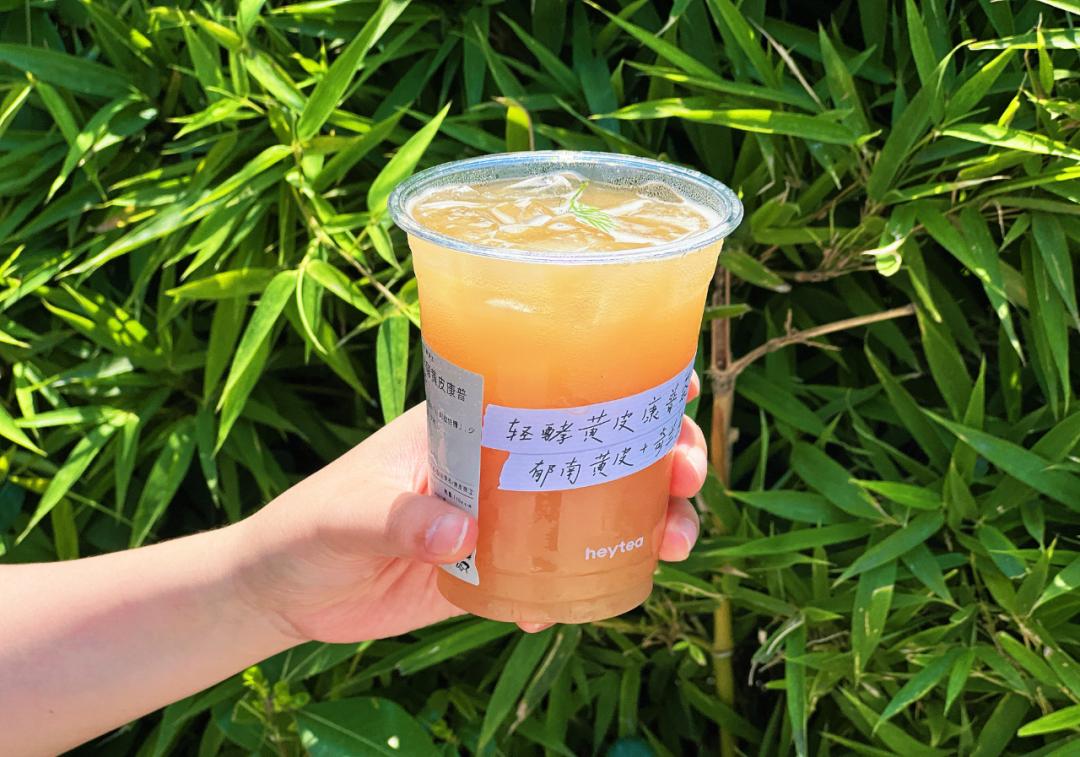
The definition of health continues to expand. For example, kombucha—once seen as a niche, exotic flavor—has been launched by HeyTea this year, sparking widespread public debate.
Coffee brands are also focusing on nutritional value. Starbucks launched a high-protein latte in the first half of the year, containing 20 grams of protein per serving—perfect for office workers to get their caffeine fix while supplementing nutrition, with a clear and compelling selling point.
Today's consumers are more knowledgeable about formulations than ever, and even more adept at reading ingredient lists than industry practitioners. The "subtraction" approach of reducing sugar and fat is no longer sufficient. This year, it's evident that adding functional health benefits to products has become the mainstream.
3. Tea-Coffee Integration: Coffee Brands Show Stronger Determination to Expand into Tea Beverages
We often discuss tea beverage brands launching coffee products, but the data shows that coffee brands are putting even more effort into incorporating tea elements.
In the first half of 2026, coffee products accounted for 7.5% of new launches from tea beverage brands; among the 14 coffee brands we tracked, a total of 325 new products were released, 114 of which contained tea ingredients (including matcha and roasted tea), accounting for a staggering 35%.
This clearly demonstrates the strong resolve of coffee brands to expand into the tea beverage space. As cross-category exploration deepens, multi-category operations have become a common practice for chain brands.
The competition rules for this year's National Finals of the New-style Tea Beverage Contest also echo this trend: one core creative concept paired with two innovative products.
Closing Remarks
Having gone through the golden decade, every year when I review new products, I feel that after this remarkable period, the beverage industry still brims with vitality. This is an innovation-driven industry, one that rewards high-quality products, and one where exceptional offerings can deliver extraordinary experiences to consumers.
This article originates from the WeChat Official Account "Kamen" (ID: KamenClub), authored by Kamen, and published by 36Kr with authorization.