Taobao has launched the Good Price Card, continuing to focus its efforts on price-related strategies.
Shortly after the conclusion of the 618 shopping festival, Taobao has already begun merchant recruitment for its next major promotional event, the "Super 88". Moreover, indications suggest that beyond large-scale sales campaigns, Taobao appears to be planning another major initiative centered around product pricing.
Recently, Taobao App has added a new "Good Price Card" feature to its search scenarios. A dedicated good price card section has been introduced at the top of the search results page, which centrally displays low-priced authentic products relevant to the search query. The exposure logic of this feature is personalized for each user, intelligently calculating based on the post-subsidy inclusive price at the user level and consumers' personal assets (such as coupons and red envelopes) to showcase the top 1 lowest-priced product.
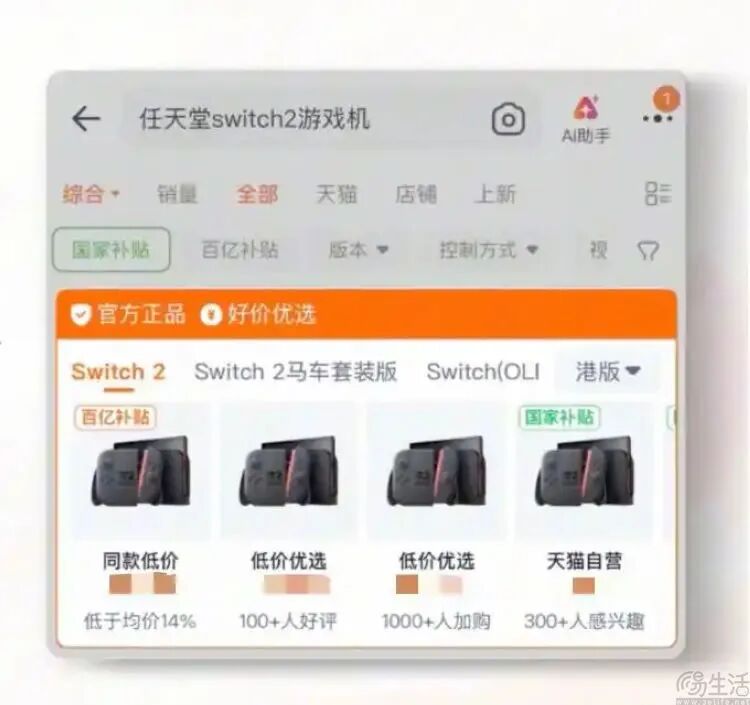
It is understood that this feature is currently in the phase of gradually expanding category coverage. Behind it lie three core tracks: same-product low prices, trade-in subsidies, and interest-free installment payments. These are the distinctive directions refined by Taobao based on the most concerning demands of consumers across different categories. Merchants can adjust prices or services for different tracks to enhance the competitiveness of their products, and a single product can gain exposure across multiple tracks simultaneously.
Although "good prices" do not entirely equate to blindly pursuing ultra-low prices, and Taobao has set access thresholds for the Good Price Card—such as a product quality score higher than 60, and historical transaction volume in the past 365 days greater than 0—it is not difficult to see from the rules that the essence of the Good Price Card remains encouraging merchants to increase product exposure and conversion rates by offering profit concessions.
It is worth noting that during the e-commerce low-price war around 2023, Taobao also emphasized "good prices" rather than "low prices".
In fact, it has become increasingly difficult for merchants to obtain free platform traffic nowadays. Given the established fact that overall GMV growth is slowing down, the model of driving revenue solely through user growth and category expansion has become ineffective. Therefore, improving the monetization efficiency of existing stock traffic has become the most realistic growth path for Taobao.

Based on this strategy, Taobao has continued to implement a number of commercial adjustments in recent years to steadily increase monetization rates. For example, in September 2024, Taobao announced that it would charge a 0.6% basic software service fee on transaction value from all merchants. Subsequently, it launched the advertising product "Full-site Promotion", stating that it would activate the entire Taobao ecosystem's traffic including search, homepage, pre-purchase and post-purchase information feeds, and NewDetail, to drive the overall improvement of sellers' GMV. This year, Taobao further enhanced monetization efficiency by directly linking platform subsidies to merchants' advertising expenditures.
However, this series of measures has also directly increased the operating costs for merchants.
In Taobao's words, the Good Price Card can help merchants gain more traffic on the search page while reducing the pressure of managing natural rankings. From this perspective, by linking product prices to exposure volume through the Good Price Card, Taobao seems intent to redirect merchants' previous dissatisfaction with unfair platform traffic allocation into competition among merchants themselves. In this way, the platform is no longer the opposing party in the conflict, but the rule-maker and traffic referee, guiding all merchants to compete on the same dimension through unified rules.
Moreover, considering that search is Taobao's core traffic scenario and the core window carrying users' active and definite demands, this move by Taobao is more like an open, calculated strategy. After all, even if some merchants are unwilling to offer profit concessions, it would be difficult to convince all merchants to form a unified front.
In addition, price has always been a fundamental element of the retail industry and the most direct and effective core lever to drive users' consumption decisions. After the "Billion Subsidy" initiative was plagued by counterfeit product controversies, Taobao needs to introduce a new normalized marketing tool to replace the Billion Subsidy and reshape users' perception of cost-effectiveness.
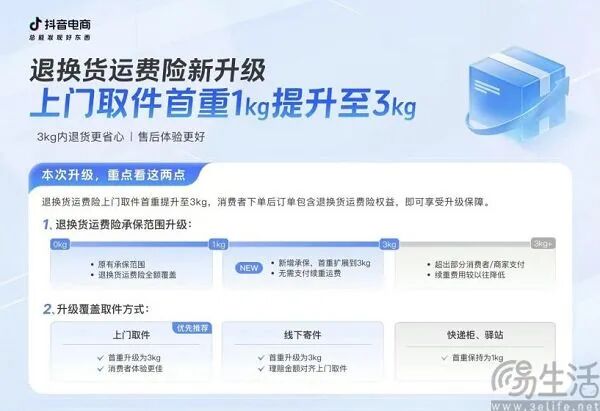
On the other hand, as it is temporarily difficult to compete in the instant retail sector, platforms such as Pinduoduo, Douyin E-commerce, and Kuaishou E-commerce are increasing their investment in traditional e-commerce scenarios. Some are optimizing services, some are continuing to implement low-price strategies, and others are continuously penetrating traditional shelf-based scenarios. As competitors step up their offensive, Taobao naturally needs to defend its core market. The launch of the Good Price Card may well be Taobao's measure to reinforce user mindset in the core shelf-based e-commerce scenario.
However, as the regulatory system for the e-commerce industry continues to improve, where will the price wars of e-commerce platforms head under such a background?
This article is from the WeChat Official Account "Three Easy Life" (ID: IT-3eLife), authored by San Yijun, and published with authorization from 36Kr.