Disassembling 7,400 Yeehot Outlets: Rising from Low-Tier Markets with Low Prices, Yet Trapped in Mint
When it comes to YeeHoTea, the first thing that comes to mind for many might be the "Mint King" in the freshly made tea beverage industry.
In the summer of 2022, a cup of Mint Green Milk Tea helped YeeHoTea break out of the low-tier markets, quickly boosting its brand awareness and making mint the brand's most distinct label. In the following years, YeeHoTea continuously reinforced this brand perception.
In June this year, YeeHoTea launched another mint-focused marketing campaign, officially announcing Wang Yuan as its first global brand spokesperson, and launching new products such as Mint Sparkling Lemonade and Vitality Mint Mini Rice Balls, further amplifying the "Mint King" brand mindset with the "Summer Refreshment Formula". Official data shows that the new products sold over 2.03 million cups in their first week, with total online exposure exceeding 2.2 billion views.
It is undeniable that mint-based products have indeed brought huge traffic and public attention to YeeHoTea. However, relying solely on the "Mint Green Milk Tea" is not enough to support a brand's growth from Guanggu to a nationwide presence, transforming from an obscure name to one of the top 10 largest store networks in the industry.
So, did YeeHoTea really rise to prominence solely because of mint? When "mint" is no longer its exclusive label, what will it rely on for its next phase of development? In this article, Tea & Coffee Observer will break down the brand's real growth logic by analyzing YeeHoTea's network of over 7,400 stores, its pricing strategy, and its expansion path.
Using Low Pricing as a Weapon to Rise from Low-Tier Markets
Since its early days, YeeHoTea has long kept its product prices under 10 yuan. Up to now, out of YeeHoTea's 53 products, 28 are affordable options priced at 10 yuan or less, accounting for 52.83% of its lineup. Its signature products, YeeHo Roasted Milk Tea and Mint Green Milk Tea, both fall within this price range.
This low-price strategy helped YeeHoTea quickly open up the market in its early stage, forming a distinct brand perception through high cost-effectiveness and accumulating a large consumer base. However, low pricing means lower profit per cup, so the brand needs a larger store network to dilute supply chain and operational costs, which explains why YeeHoTea has continued expanding in recent years.
From the perspective of city tiers, YeeHoTea's store layout has clearly tilted toward lower-tier cities. Data from Yilan Business shows that YeeHoTea had a total of 7,461 stores in May, of which 4,668 were located in third-tier and lower cities, accounting for 62.57%.
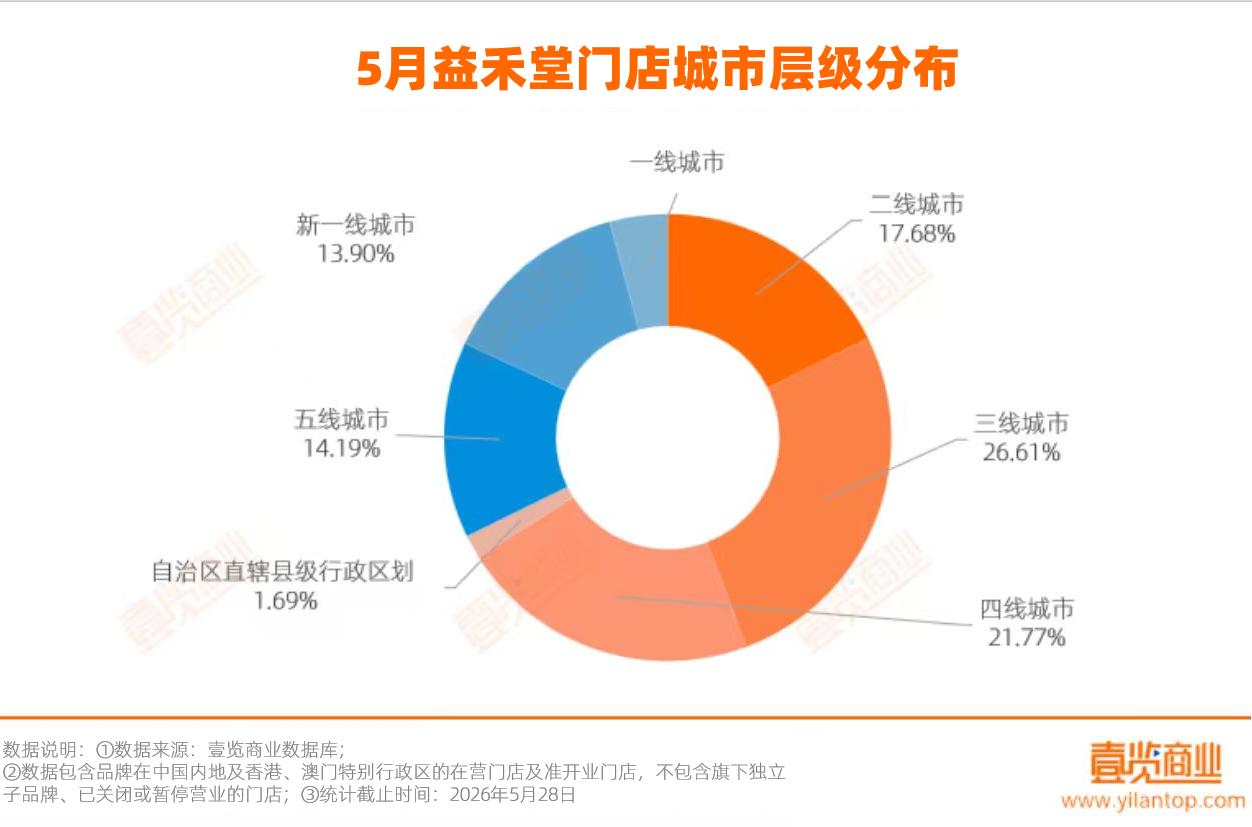
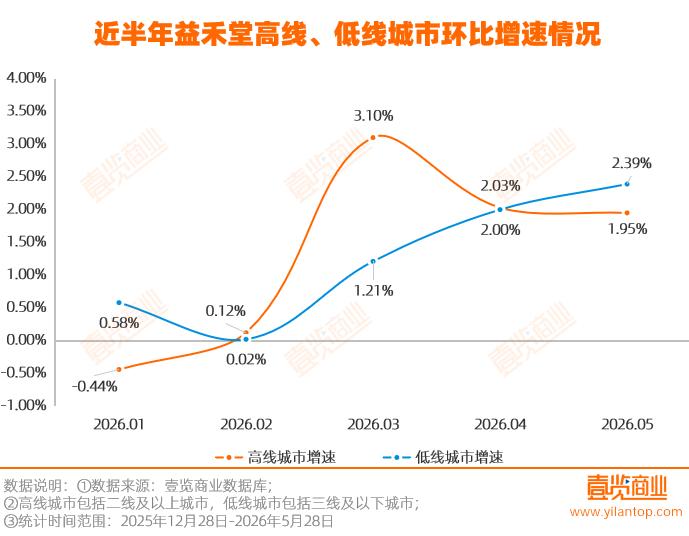
Not only are existing stores concentrated in low-tier markets, but new stores are also continuously tilting toward lower-tier cities. Data from Yilan Business shows that since the start of this year, the growth rate of stores in high-tier cities has slowed down overall, dropping to 1.95% in May with a net increase of 51 stores that month. In contrast, the growth rate of stores in lower-tier cities rose from 0.58% in January to 2.39% in May, with a net increase of 112 stores in May. For the first time, it surpassed high-tier cities in both growth rate and net new store count, becoming YeeHoTea's main source of incremental growth.
To further tap into low-tier markets, YeeHoTea has continuously lowered its franchise entry requirements in the past two years.
On one hand, YeeHoTea has introduced supportive policies such as franchise fee waivers, material discounts, and renovation subsidies, reducing the initial investment for a single store to 117,000 yuan. On the other hand, it implements an exclusive business model of "one store per town, regional joint promotion" to avoid internal competition among franchisees, which helps stabilize customer flow and support long-term deep development.
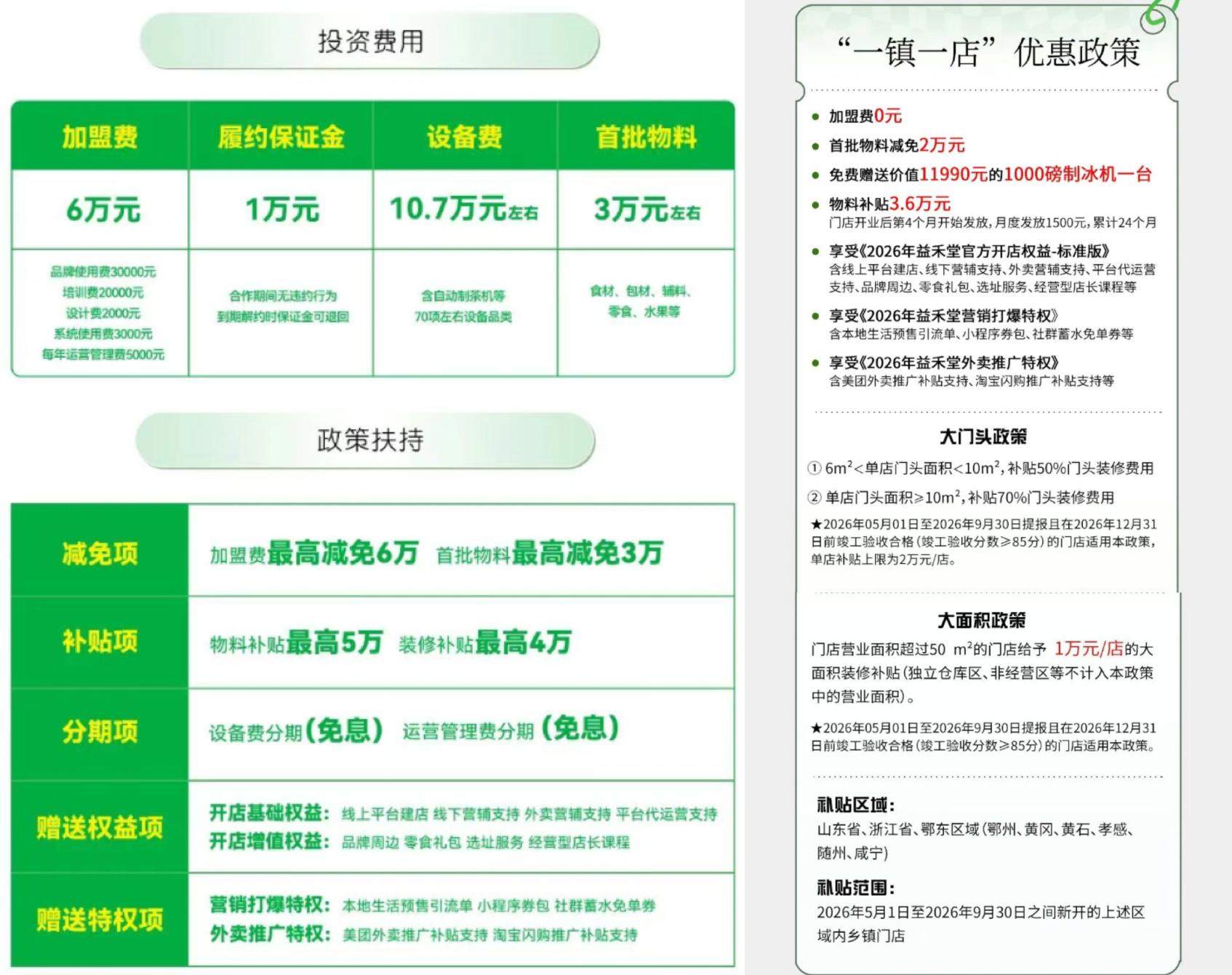
Source / YeeHoTea Partner Center
The brand quickly attracts franchisees with low entry barriers to secure locations in towns and townships, and reinforces franchisees' confidence through exclusive authorization to improve store opening success rates, thereby increasing market penetration and brand influence in low-tier markets and achieving efficient scale expansion.
It can be said that lower-tier cities are no longer just YeeHoTea's stronghold market, but the main source of its future new stores.
Reliance on Campus Scenarios
In addition to expanding into lower-tier cities, YeeHoTea has extended its sinking strategy to a specific consumer group: students on campus.
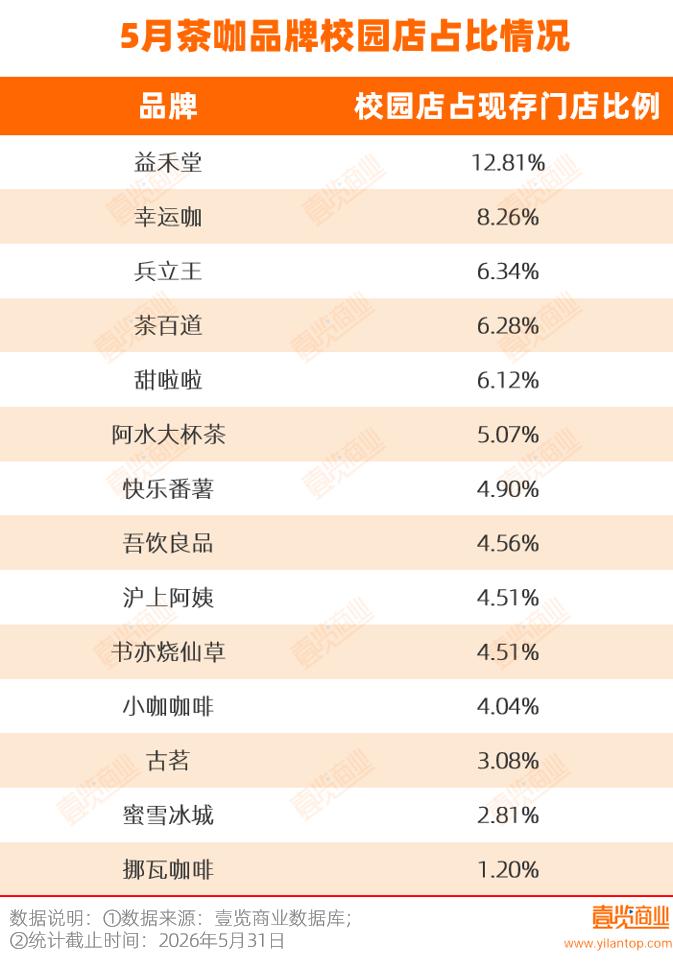
Among tea and coffee brands, YeeHoTea is the only chain brand with campus stores accounting for over 10% of its total network. Data from Yilan Business shows that in May, YeeHoTea had 956 campus stores, accounting for 12.81%. In comparison, Lucky Coffee's campus channel accounts for 8.26%, Tianlala 6.12%, Guming 3.08%, while Nowwa Coffee and Mixue Bingcheng account for only 1.20% and 2.81% respectively.
Taking Guangdong and Fujian as examples, YeeHoTea's campus penetration is particularly notable. There are 165 regular universities in Guangdong Province, and YeeHoTea has a presence in 65 of them, accounting for 39.39%, including 41 stores in Guangzhou covering institutions such as Guangdong University of Education and Guangzhou Institute of Science and Technology. There are 90 regular universities in Fujian Province, and YeeHoTea has a presence in 45 of them, representing a 50% penetration rate, including 30 stores in Fuzhou covering Fuzhou Software Vocational Technology College and Fujian Normal University.
While many brands treat campuses as just a sales channel, YeeHoTea regards campuses more as an entry point for user operation.
First of all, students have limited spending power, and the price range of around 10 yuan fits their daily consumption. YeeHoTea's drinks can also meet their needs for hydration and frequent purchases, which helps cultivate their consumption habits during school, build long-term brand loyalty, so that they will still prioritize choosing YeeHoTea's products after graduation.
Secondly, the products are highly standardized with low production thresholds, allowing the brand to hire student part-timers. The hourly wage for students is lower than that of full-time social employees, so the labor cost per cup in campus stores is lower than that in commercial district stores or street-side stores. Although affected by winter and summer vacations, since part-time employees do not have fixed scheduling requirements, off-season losses can be effectively minimized.
Finally, the closed nature of campuses and limited store locations form a natural barrier. Most universities implement closed or semi-closed management, making it difficult for food delivery services to reach dormitory areas. At the same time, campuses have a limited number of prime locations. YeeHoTea's early occupancy gives it a first-mover advantage, making it difficult for competing brands to secure high-quality storefronts when they enter the market later, while also facing the challenge of students' already formed brand preferences.
Therefore, for YeeHoTea, campuses are not just part of its store network, but also an important channel to reach young consumers in advance.
Products Trapped by "Mint", Low-Price Advantage Being Eroded
However, store scale is ultimately only the foundation of brand growth. As stores in lower-tier cities gradually become saturated, the final growth point must return to the product level. At present, YeeHoTea's core product label, "mint", has not continued to act as a new growth engine.
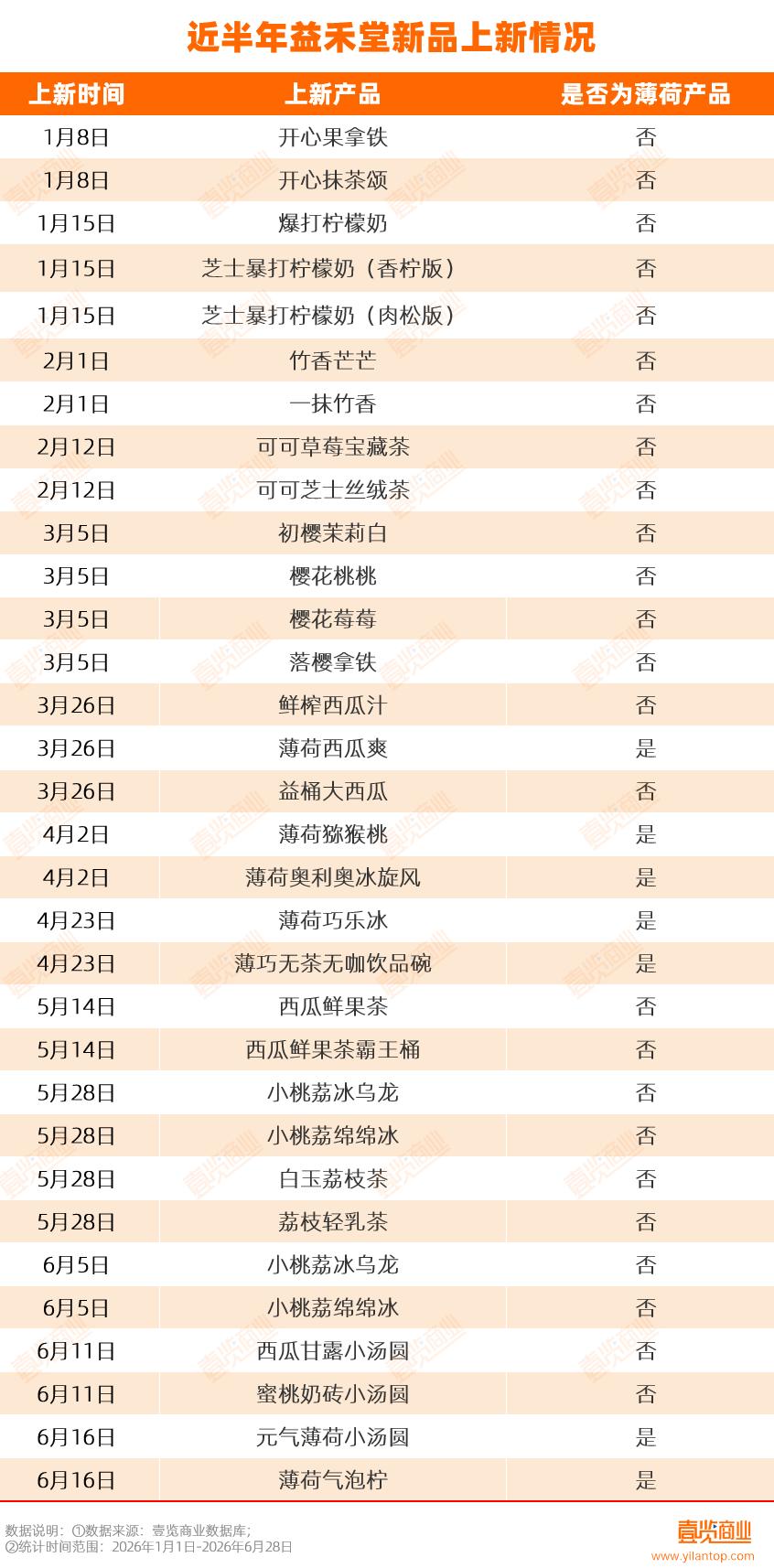
Data from Yilan Business shows that from January to June this year, YeeHoTea launched a total of 32 new products, of which only 7 were mint-related. Among them, only the Mint Sparkling Lemonade and Vitality Mint Mini Rice Balls, launched in sync with Wang Yuan's endorsement, gained real market popularity.
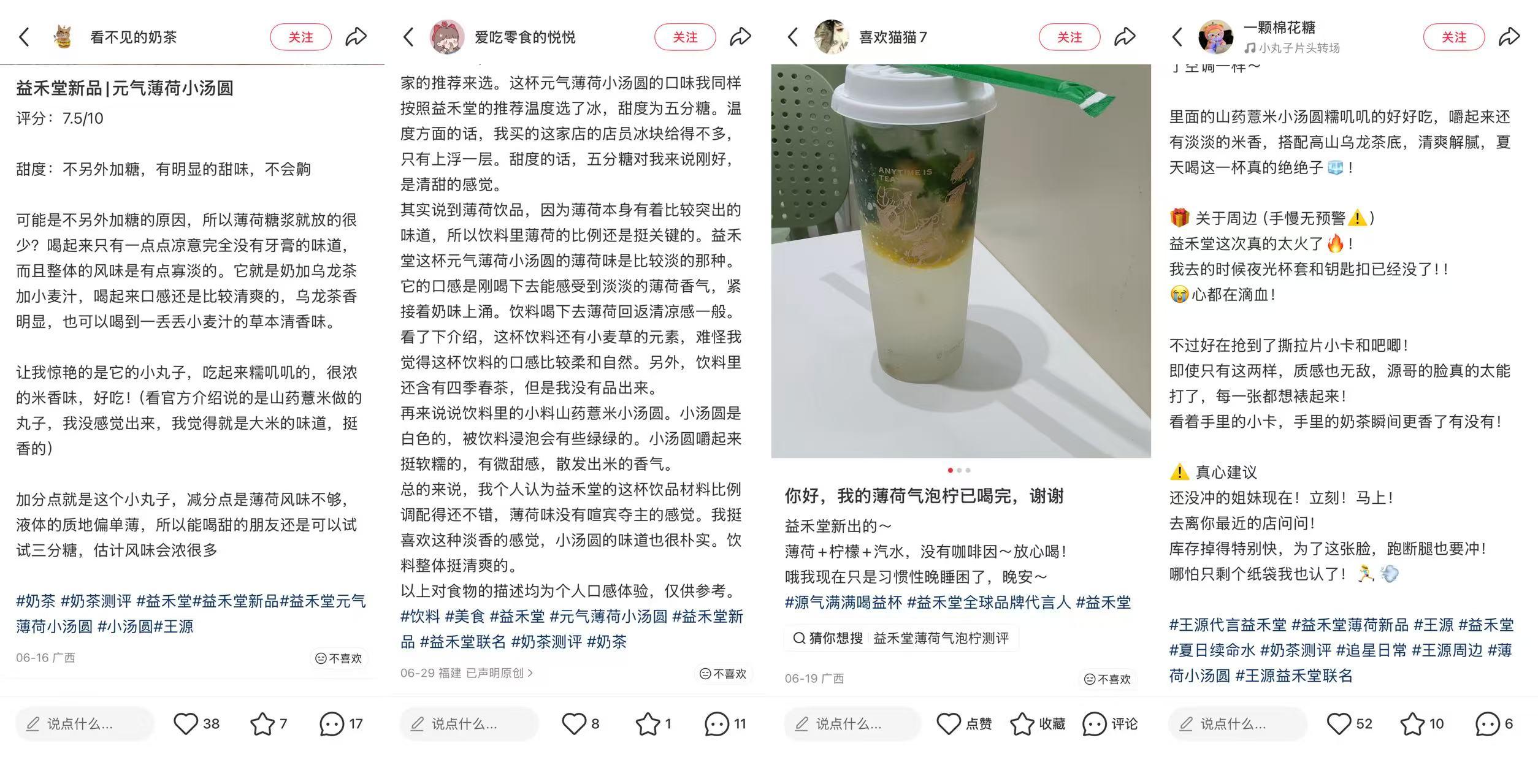
From consumer feedback, the popularity of these two products stems more from the endorsement effect than from the products themselves. Tea & Coffee Observer searched Xiaohongshu and found that a large amount of related content revolves around keywords such as "Wang Yuan", "endorsement", and "co-branding", while discussions about the product taste are relatively limited. Some consumers even commented that the products taste "a bit bland". This means that this round of sales surge relies more on marketing events rather than the inherent consumption appeal of the products themselves.
More seriously, mint is no longer an exclusive label for YeeHoTea. Tea brands such as Yidiandian, Shuyi Shaoxiancao, Yee3 Coconut, and Mixue Bingcheng have all launched mint-related products. The coffee track has also accelerated its entry into this segment: COSTA COFFEE launched Sea Salt Mint Cloud Top Latte, and Luckin Coffee launched Icy Coconut Latte with Mint. Mint is becoming a common product element adopted by the entire industry.
At the same time, YeeHoTea's low-price strategy is also facing increasingly fierce competition.
Currently, YeeHoTea's product prices have long been maintained within the 5-10 yuan range, a price band that is already crowded with a large number of chain brands such as Mixue Bingcheng, Luckin Coffee, and Tianlala. Data from Yilan Business shows that by the end of May, Mixue Bingcheng had nearly 47,500 stores, while Nowwa Coffee, Lucky Coffee, and Chabaidao all had more than 8,000 stores each, and Tianlala and Shuyi Shaoxiancao also had over 5,000 stores.
Similar pricing, converging products, and increasingly dense store networks have made the cost for consumers to switch brands lower and lower. Taking Guangxi University of Chinese Medicine as an example, within a 500-meter radius of YeeHoTea's store, there are 10 tea and coffee brands, including Mixue Bingcheng, Cotti Coffee, Yidiandian, and Luckin Coffee, all of which have similar price positioning to YeeHoTea. These competitors are densely located nearby, continuously diverting customer flow.
This competition has eventually been passed on to franchisees.
On the revenue side, the continuous increase in store density has led to a steady diversion of foot traffic at individual stores. Meanwhile, various platforms keep launching low-price promotions, further squeezing store revenues. A franchisee in Gansu revealed to Tea & Coffee Observer that the price of a mint lemonade on the mini-program is 5 yuan, while the group-buying price on Meituan is 3.29 yuan. After deducting the cost of hard raw materials: 0.70 yuan for the plastic cup, 0.17 yuan for mint, and 0.32 yuan for lemon, the gross profit is only 2.10 yuan. After further deducting labor costs, rent, utilities, and platform commissions, the profit margin becomes very limited.
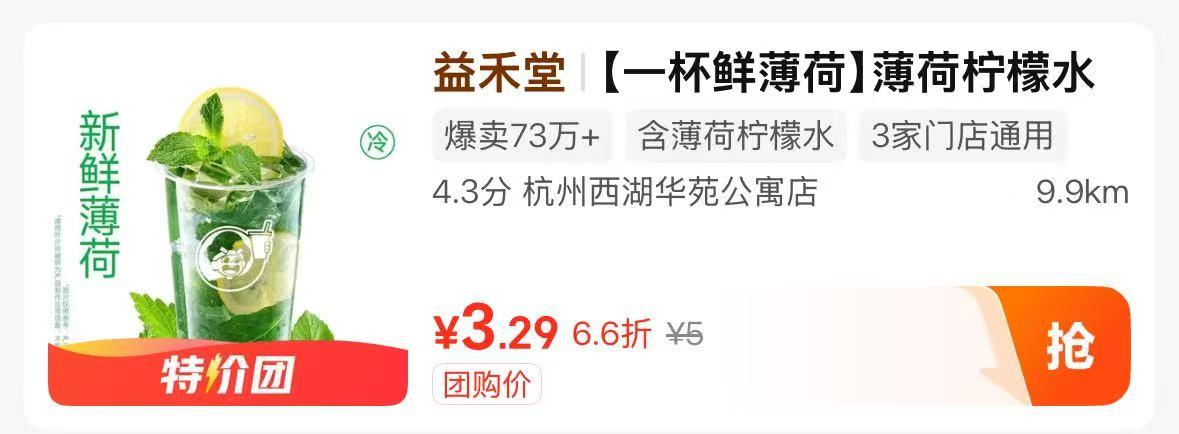
Source / Meituan
However, franchisees have not obtained lower procurement costs despite selling products at low prices. A franchisee in Beijing told Tea & Coffee Observer that at the end of May, YeeHoTea's supply price for mint was 14.17 yuan per jin. According to data from Yimutian, the wholesale price of spearmint from Xundian, Yunnan, is 2.65 yuan per jin, and the 6-jin wholesale price of the same Yunnan Xundian spearmint on Taobao is 45.40 yuan, which is about 7.56 yuan per jin, only around half of YeeHoTea's supply price.
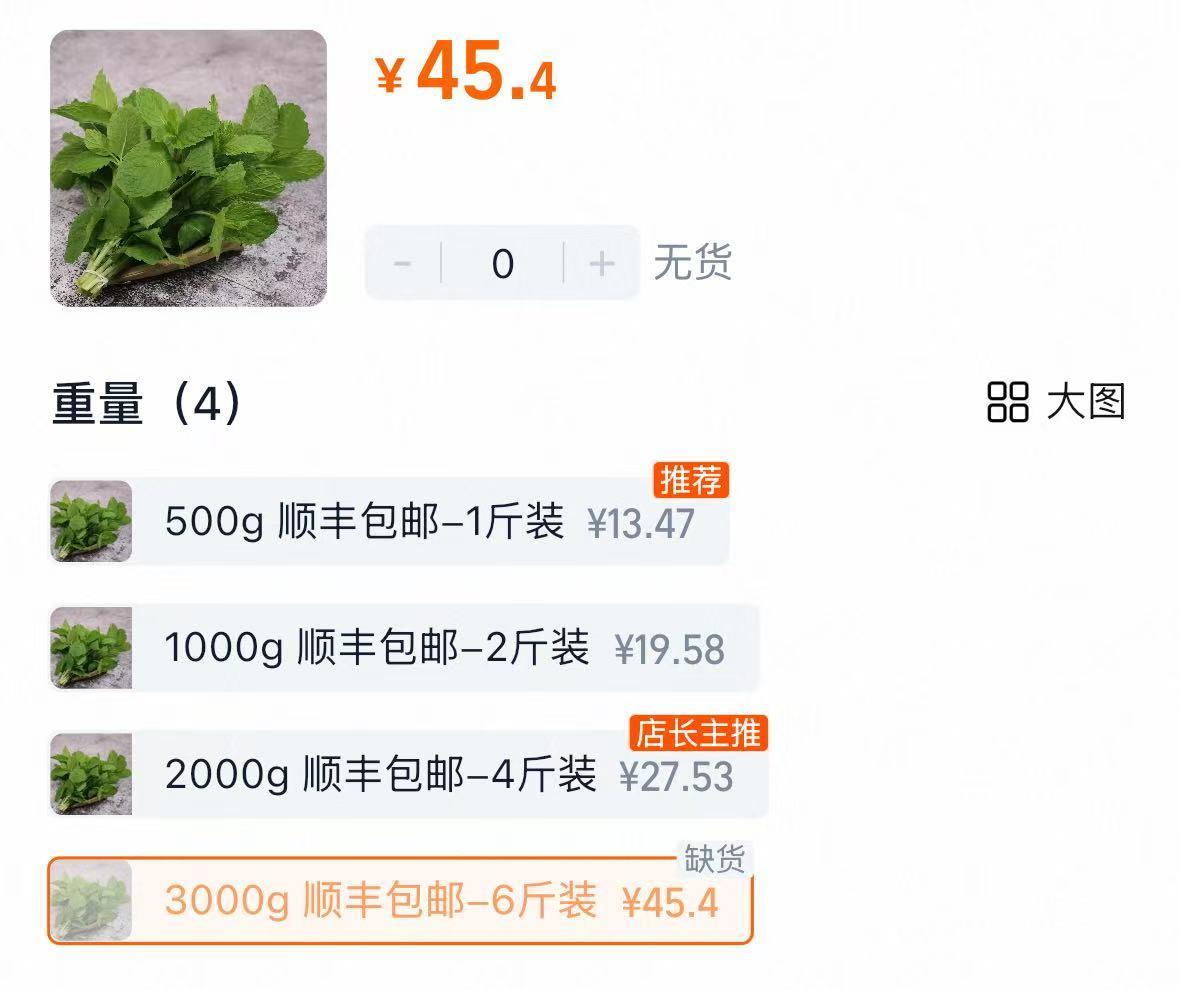
Source / Taobao
With external selling prices under continuous pressure and internal costs remaining high, franchisees' profit margins have been severely squeezed, forcing many to close stores to stop losses. Data from Yilan Business shows that YeeHoTea's store closure count dropped from 176 in December 2025 to 65 in January 2026, rebounded to 145 in February, and has since remained above 100 closures per month. For a brand that is still in expansion, maintaining a persistently high store closure volume means that the operational pressure on franchisees is increasing.
