German entrepreneurs discuss "learning from the 996 work schedule", while Chinese automotive industry workers just want to clock off on time
Even the former global model of manufacturing efficiency, German automakers, can hardly stay afloat amid plummeting sales and profits. Lacking external outlets to release pressure, the strain on German auto companies ripples inward, finally erupting uncontrollably among the most frontline auto workers.
Recently, news of layoffs, pay cuts, extended working hours, and worker and union resistance in German auto companies has emerged in an unending stream.
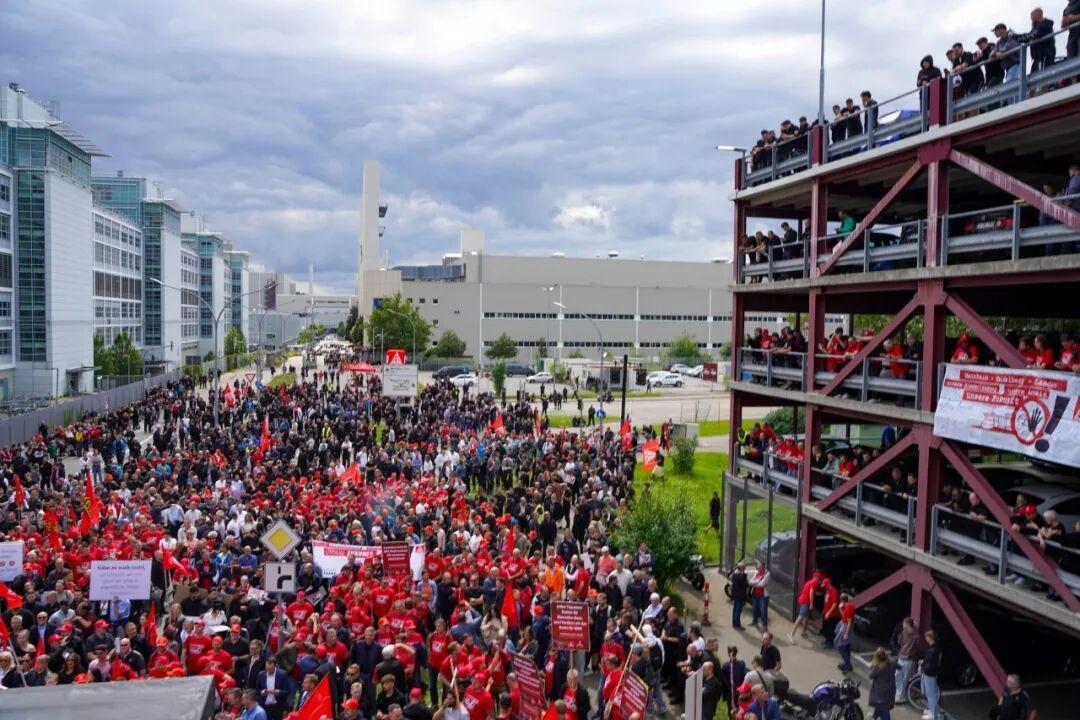
Earlier, Volkswagen was reported to plan expanding layoffs to 100,000 people while shutting down 4 German factories; BMW was revealed to plan completing a 5% global workforce reduction by the end of the year. In the latest news, Porsche plans to cut an additional 4,000 jobs in its German homeland; German labor unions, together with workers, are staging large-scale protests opposing the Mercedes-Benz management's proposal to extend working hours to 40 hours.
Beyond the automotive industry, Germany's entire manufacturing sector is facing periodic pressure. A survey of 1,000 companies by the Horváth Institute and Germany's *Handelsblatt* also shows that 60% of companies expect to continue laying off staff in Germany over the next 4 years. As many as 100,000 industrial jobs could disappear in 2026 alone, concentrated mainly in the automotive, mechanical engineering, and construction sectors.
Against this backdrop of overall pressure, a highly controversial public opinion trend has emerged in Germany's public discourse. *Süddeutsche Zeitung* reports that amid the economic slowdown, some entrepreneurs have begun to reflect: is the current 40-hour workweek already outdated? In the fierce global market competition, should Germany learn from the "Chinese speed"?
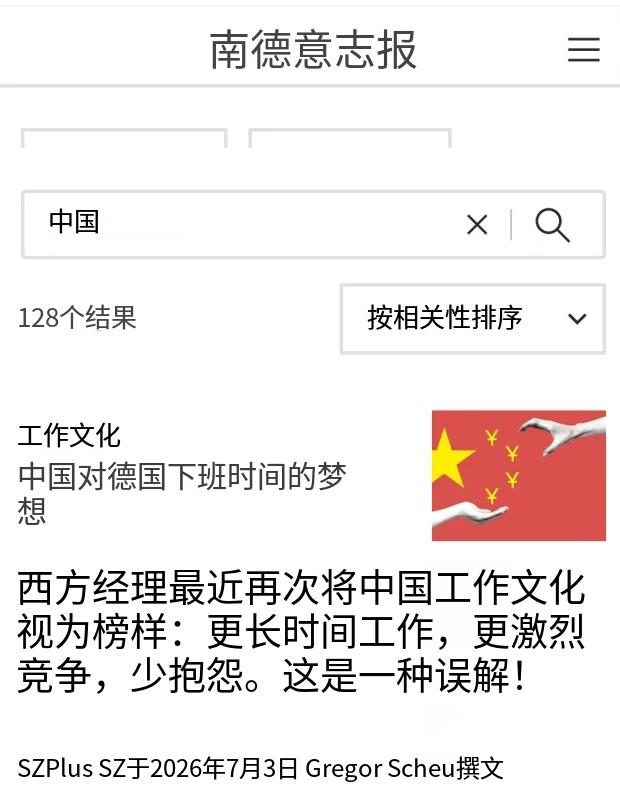
The ironic twist is that on the other side of the ocean, Chinese "workers" in high-intensity work environments are full of longing for Germany's relaxed workplace culture. Some Chinese netizens say that even if they have to leave their hometowns and accept "unpalatable German food," they would still trade for 28 days of paid annual leave and fewer weekly working hours.
These two diametrically opposed demands outline the distinct workplace dilemmas in the Chinese and German automotive industries.
High Wages and Short Working Hours for Workers: German Business Owners Want to Emulate "996"
Once upon a time, German auto workers enjoyed the world's top workplace benefits and work rhythms. In previous international comparisons of annual working hours, Germany ranked among the lowest, while being among the leaders in leisure time.
Take Porsche's factory workers as an example. In 2013, Porsche, at the peak of its success, achieved a global sales volume of 162,000 units, setting a new record. Its operating profit soared from €5.879 billion the previous year to €14.3 billion, with net profit surging to €2.579 billion, gaining tremendous momentum for a time.
Against the backdrop of a booming market, Porsche took the initiative to optimize its working hour system to ease employees' work pressure. In September of that year, the 3,500 employees at the Stuttgart-Zuffenhausen plant saw their weekly working hours reduced from 35 to 34.5 hours, and in December of the same year, the 34-hour workweek was officially implemented, with employees' salaries remaining fully unchanged.
Fewer working hours and stable high salaries were the best reflection of the strong profitability and solid confidence of German luxury car brands at that time.
Thirteen years later, the industry changed dramatically. Amid a sharp decline in market sales, Porsche's operational pressure surged. In 2025, this once "profit cash cow" saw its sales profit plummet from €5.64 billion to €413 million.
At the same Stuttgart-Zuffenhausen plant, layoffs became the main theme this time. After finalizing 3,900 layoff positions, Porsche again plans to cut an additional 4,000 jobs to reduce costs and stabilize its operational fundamentals.
What surprises the public as much as the layoffs is the high salaries of Porsche employees. Under questioning from shareholders, Porsche was forced to disclose its highly confidential internal employee compensation structure for the first time in its history.
It is understood that among the 23,000 employees, more than 9,000 had taxable gross income exceeding €100,000 (about 777,000 yuan) in 2025, accounting for nearly 40%. Even the frontline assembly/production workers in the factory have an average annual salary of €58,000. And all of this is still based on a 35-hour workweek.
The same dilemma also hangs over Mercedes-Benz. Data shows that Mercedes-Benz's net profit in the first quarter fell by 17% year-on-year, making cost reduction and efficiency improvement the core demand for the company's survival. In addition to layoffs and the suspension of employee bonuses, Mercedes-Benz has focused its core cost-cutting measures on working hour reform.
Previously, the Mercedes-Benz management wanted to extend the original 35-hour workweek of some workers to 40 hours without pay, in order to reduce costs and improve efficiency. Undoubtedly, this reform, which touches on the core interests of employees, sparked a wave of strong protests. Multiple Mercedes-Benz factories in Germany simultaneously staged large-scale protests, with tens of thousands of workers joining the union to pour into the streets, firmly resisting the measure of extending working hours without pay.
Beyond leading automakers, in order to extend workers' working hours, some German entrepreneurs have forcibly linked the pressure on Germany's manufacturing sector and the rise of China's manufacturing industry to working hours.
They believe that the core advantage of China's rapid manufacturing rise is ultra-long working hours, rapid response, and high-frequency innovation. To this end, they question that the 40-hour work system is no longer keeping up with the times, and hope to learn the so-called "Chinese speed." Under this one-sided perception, some business leaders regard China's "996" work model as a competitive advantage, see Germans' emphasis on vacation and quality of life as a burden, and believe that only by working like the Chinese can the German economy regain its competitiveness.
The Most Simple Aspiration of Domestic "Workers"
According to statistics, the average weekly working hours of employees in Chinese enterprises are indeed longer. After 9 years of continuous growth, China's average weekly working hours finally began to decline in 2026. Data from the National Bureau of Statistics shows that in the first five months of 2026, China's average weekly working hours were in the range of 48 to 48.3 hours.
Although it has decreased, the working hours of Chinese employees are still at a high level, exceeding the statutory working hour standard of no more than 44 hours per week on average.
The differences in the automotive industry are even more pronounced. The statutory weekly working hours for engineers in the German automotive industry is 35 hours. Workdays usually run from 7 a.m. to 2 or 2:30 p.m., with a clear boundary between work and life, and no work matters are handled after work.
In contrast, in China, auto parts companies and complete vehicle manufacturers are all severely affected by overtime work. Many engineers at Chinese manufacturers work 14 hours a day, and even lack basic two-day weekends, replaced by alternating single and double weekends or only one day off per week.
The previous domestic wave of anti-involution in the workplace and industry price correction, while curbing the chaotic disorder of unordered price cuts and cutthroat competition in the industry at the macro level and promoting the automotive market to gradually return to a healthy development track, has only achieved limited improvement for frontline practitioners to a certain extent. Behind the overall improvement of the industry's competitiveness and the steady growth of corporate revenue is the silent consumption of ordinary workers.
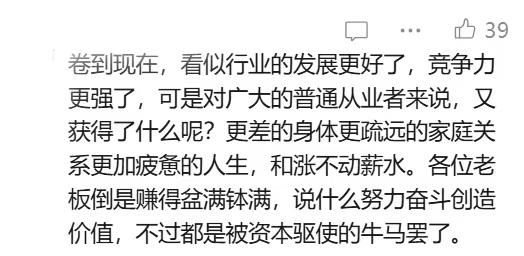
Previously, a netizen left a comment under the article *Ban Overtime and Send People Off Work? Anti-Involution Fails to Land in the Automotive Circle*: "After all this involution, it seems that the industry has developed better and become more competitive, but what have the vast number of ordinary practitioners gained? Worse health, more distant family relationships, more tired lives, and stagnant salaries. The bosses, however, have made huge profits, talking about working hard to create value, while we are nothing more than 'beasts of burden' driven by capital."
That is precisely why implementing the 8-hour workday, ensuring two-day weekends, and clarifying the boundaries of overtime have become the most simple and core demands of Chinese workplace people today.
This current mutual admiration between Chinese and German workers seems absurd, but it is actually a true microcosm of the different development stages and competitive landscapes of the two countries' manufacturing industries. Behind the two public narratives lies the survival anxiety of their respective industries.
The German auto industry's admiration for the "Chinese working hour model" is essentially a helpless self-rescue after the disappearance of industrial dividends. In the past, relying on technical barriers, brand advantages, and an efficient and lean short-hour work system, the German automotive industry enjoyed high profits and generous workplace benefits.
However, under the multiple pressures of the impact of new energy transformation, intensified global competition, and excessively high local labor costs, corporate profit margins have been compressed, and companies are no longer able to maintain the workplace model of high benefits and short working hours. This is exactly the same as the union pressure faced by General Motors and Ford when more cost-effective Japanese cars entered the US market in the past. The so-called "admiration for China's overtime speed" is nothing more than a passive compromise by German companies in the face of a wave of layoffs, and a projection of anxiety during the industrial downturn.
Chinese workers' longing for Germany's short-hour, high-benefit workplace culture is an instinctive demand under high-intensity involution.
At present, China's automotive industry is in a fierce competition of elimination, especially in the context of extremely low profit margins. Extending employees' working hours and overdrafting human value to gain market advantages is a last-resort "survival" measure. The exhaustion and longing of frontline practitioners are precisely the hidden cost behind the rapid development of the industry.
In the final analysis, working hours are never the core secret of manufacturing competition. Ultra-long overtime that overdrafts human resources and extreme cost reduction that cuts benefits are only short-term emergency measures, which cannot lead companies to long-term development. This mutual admiration reflects the pains of the global manufacturing transformation. How to enable frontline employees to live a decent life even in a difficult market environment is not only the responsibility of business operators, but also the deepest expectation in the hearts of all practitioners.
This article is from the WeChat public account "Auto Commune" (ID: iAUTO2010), written by Sai Jiatong, and published by 36Kr with authorization.