14 romance shows are scheduled to premiere in the second half of the year. How did the unbranded romance shows become the darlings of streaming platforms?
In 2026, the romance variety show market not only witnessed frequent head-to-head competitions, but also ushered in a rare seamless relay of new releases. Youku's Heart Signal 20: Winter wrapped up in late May, Tencent's Love Actually S5 took over the slot, and immediately after that, iQiyi's Because I Want to See You S6 and Mango TV's The Distance Between Us and Love: Journey Season premiered one after another in early June.
With authentic emotional twists and diverse social topics, romance variety shows have consistently dominated social media trending lists and short video secondary creation rankings. Data shows that from January to July 2026, a total of 7 new romance variety shows have been launched across all platforms, a figure that in just seven months is approaching the full-year total of 2025 (8 shows). According to incomplete statistics, 14 romance variety shows are scheduled for release in the second half of 2026.
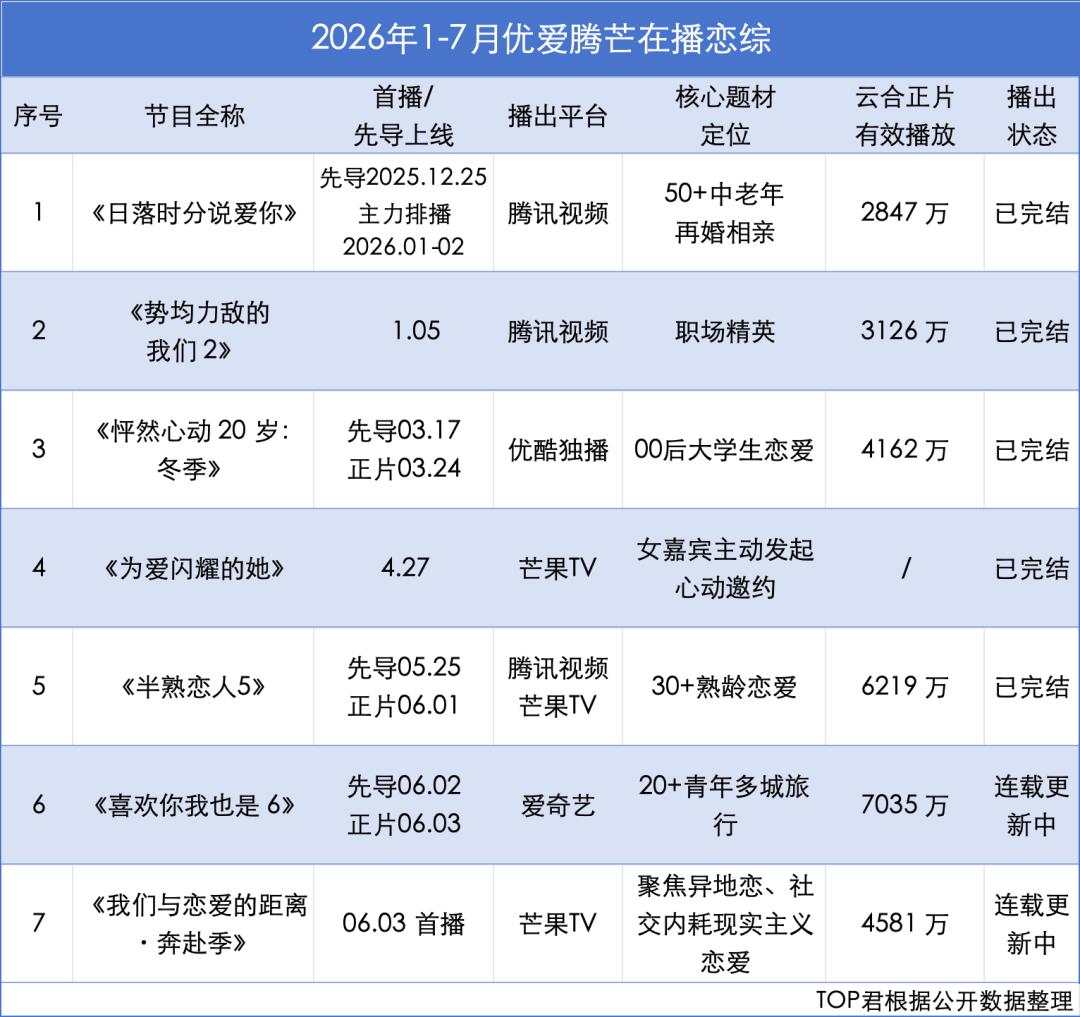
Yet the soaring popularity of the content cannot mask the sluggishness in sponsorship acquisition, as multiple romance variety shows this year have launched with almost no commercial support. On one hand, advertisers are continuously cutting budgets and withdrawing from this track, while on the other hand, long-video platforms are ramping up their investment against the trend. Clearly, the business logic of romance variety shows has changed.
Sponsorship Cooling, Bare Broadcast and Light Placement Become the Norm: The Profitability of Romance Variety Shows in 2026 Is Declining
In 2026, long-video platforms have continuously increased their investment in the romance variety track, with new shows premiering almost nonstop from January to July. Judging from the scheduling rhythm, platforms have transformed romance variety shows from "quarterly blockbuster projects" to monthly regular content fillers.
Among the 8 romance variety shows broadcast across all platforms in 2025, over 87% secured their exclusive title sponsorship before their premiere. Heart Signal S8 secured brand partnerships with 8 advertisers including Master Kong Jasmine Tea (title sponsor) and Lynk & Co Auto; Love Actually S4 landed 5 advertising collaborations with Soul APP, Watsons, Huawei Headphones, Whisper, and L'Oréal. Back then, FMCG, beauty, and automotive brands were still major big-spenders on romance variety shows.
However, among the 8 new romance variety shows launched in 2026, only 2 programs — Because I Want to See You S6 and Heart Signal 20: Winter — completed full pre-launch sponsorship, while the remaining works launched with no sponsorship or adopted the model of recruiting sponsors while broadcasting.
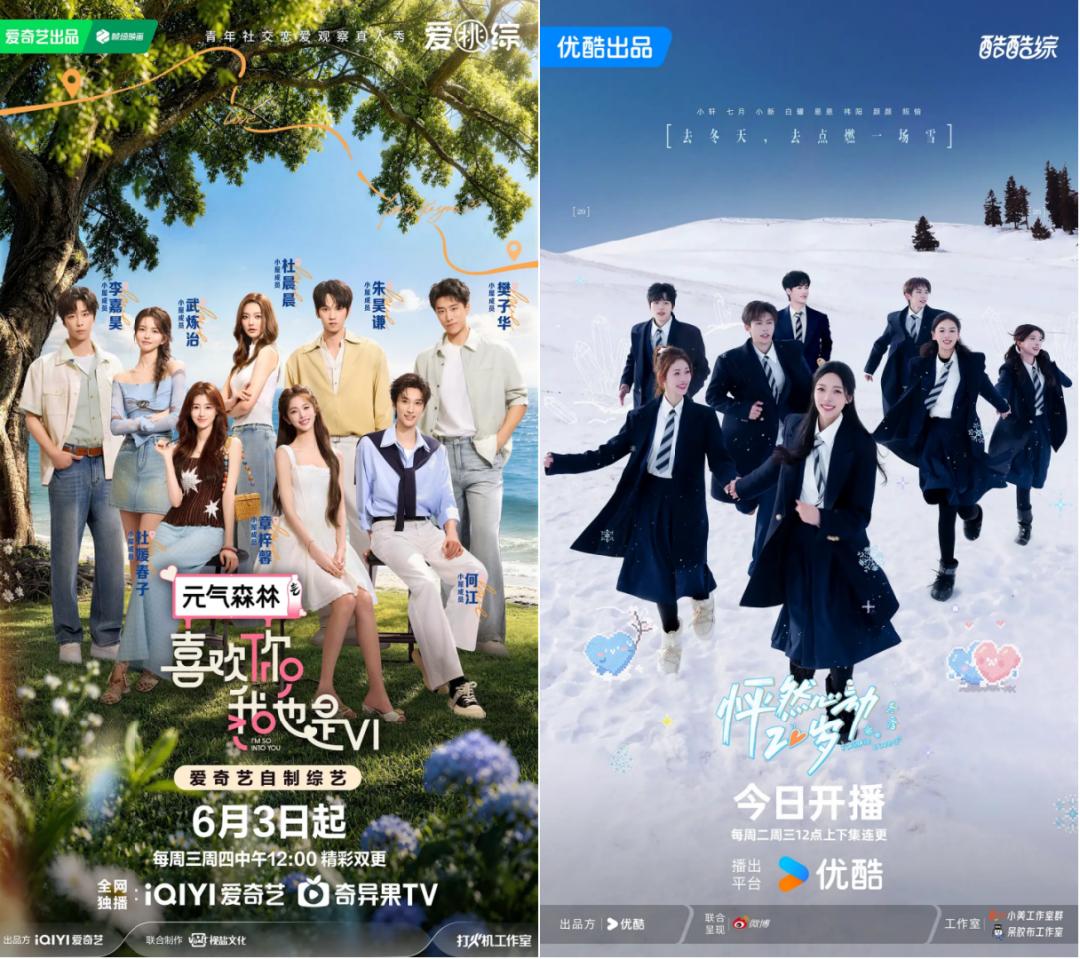
Image sourced from the internet
Specifically, Because I Want to See You S6 secured 5 brand partnerships with Genki Forest Sparkling Water as its exclusive title sponsor, plus Cemoy, Chocliz, Du Xiaoman Financial, and ChunYue Drinking Water; Love Actually S5, as a top-tier long-running variety series, also premiered without a title sponsor; Mango TV's The Distance Between Us and Love: Journey Season adopted a simultaneous broadcast and sponsorship recruitment model, securing scattered single-episode placements from brands including Arawana, Uni-President Beverages, Geely Auto, and Luyuan Electric Vehicles.
Large-spending advertisers that used to flood into romance variety shows, such as automotive brands, high-end beauty labels, large home appliance makers, and maternal & child product brands, have all exited the market. Currently, only three types of players remain in the game:
First, new consumer brands targeting young groups like Genki Forest and Cemoy, focusing on targeted product promotion among female audiences;
Second, internet utility apps such as Soul and Du Xiaoman, aiming for low-budget scenario-based exposure;
Third, traditional daily-necessity FMCG brands like Arawana and Uni-President, seeking fragmented brand visibility.
Brand placement logic has shifted from long-term IP binding to lightweight targeted product promotion. This means romance variety shows are no longer part of the mass marketing track.
Advertisers Abandon Investments While Platforms Ramp Up Against the Trend: Are Romance Variety Shows Becoming a Safe Bet for Cost Reduction and Efficiency Improvement?
Beyond the increase in quantity and scheduling density, romance variety shows are also continuously segmenting in terms of user demographics, covering age groups from Gen Z to 30+ and even 50+, spawning multiple differentiated themes including campus first love, mature-age dating, elite matchmaking, female-led romance, silver-hued love, and realistic romantic relationships.
Why are platforms ramping up investments even as advertisers withdraw? At the macro level, this stems from the practical pressure of cost reduction and efficiency improvement. As for the content model of romance variety shows themselves, they are highly compatible with the current operating strategies of long-video platforms, gradually transforming into low-risk, high-monetization-efficiency core content. Their advantages are reflected in three dimensions:
First, a standardized, low-cost production model. Non-celebrity contestants stay in a shared house for concentrated filming, with a production cycle of only half a month to one month. Compared to the 80 million to 200 million RMB investment per season for S+-grade music variety shows and outdoor reality shows, the cost of top-tier romance variety shows is only 20 million to 45 million RMB, and small-scale all-non-celebrity projects cost even less. In 2026, the industry is widely streamlining costs, with many romance variety shows directly cutting the celebrity observation room segment, saving on talent remuneration and studio filming expenses. The extremely low production threshold raises the project fault tolerance rate — even if a show launches with no sponsorship, it can basically recoup costs relying on platform membership revenue and traffic sharing, making it a low-risk category for long-video platforms during the cost-reduction period.
Second, the content easily generates viral heat and can produce dark horse hits. The emotional conflicts and interpersonal disputes among non-celebrity participants are highly suitable for secondary dissemination via short video clips. In the early broadcast stage of 2025's Secrets Between Us S2, it had no big-name sponsorship or celebrity endorsements, yet it went viral across the internet solely through its strong dramatic plot, achieving widespread reach with a small budget.

Image sourced from the internet
Third, outstanding audience stickiness and membership conversion capabilities. The core audience of romance variety shows is women aged 18-40, a key group for platforms to acquire new users and retain existing ones. Multiple platforms have developed exclusive paid content for members targeting romance variety shows — for example, Tencent's Love Actually S5 launched the member-exclusive "Encore Theater" customized extra episodes, paired with gameplay such as CP voting and co-branded SVIP gift packs to boost paid conversion; iQiyi's Because I Want to See You S6 launched an official CP ranking list, where members can obtain extra voting chances to unlock paid content; Youku's Heart Signal 20: Winter adopted a no-sponsorship revenue-sharing model to recoup costs relying on member viewing revenue; Mango TV's The Distance Between Us and Love: Journey Season designated derivative behind-the-scenes clips such as "Private Diary" as VIP-exclusive content, completing tiered content monetization via the membership system.
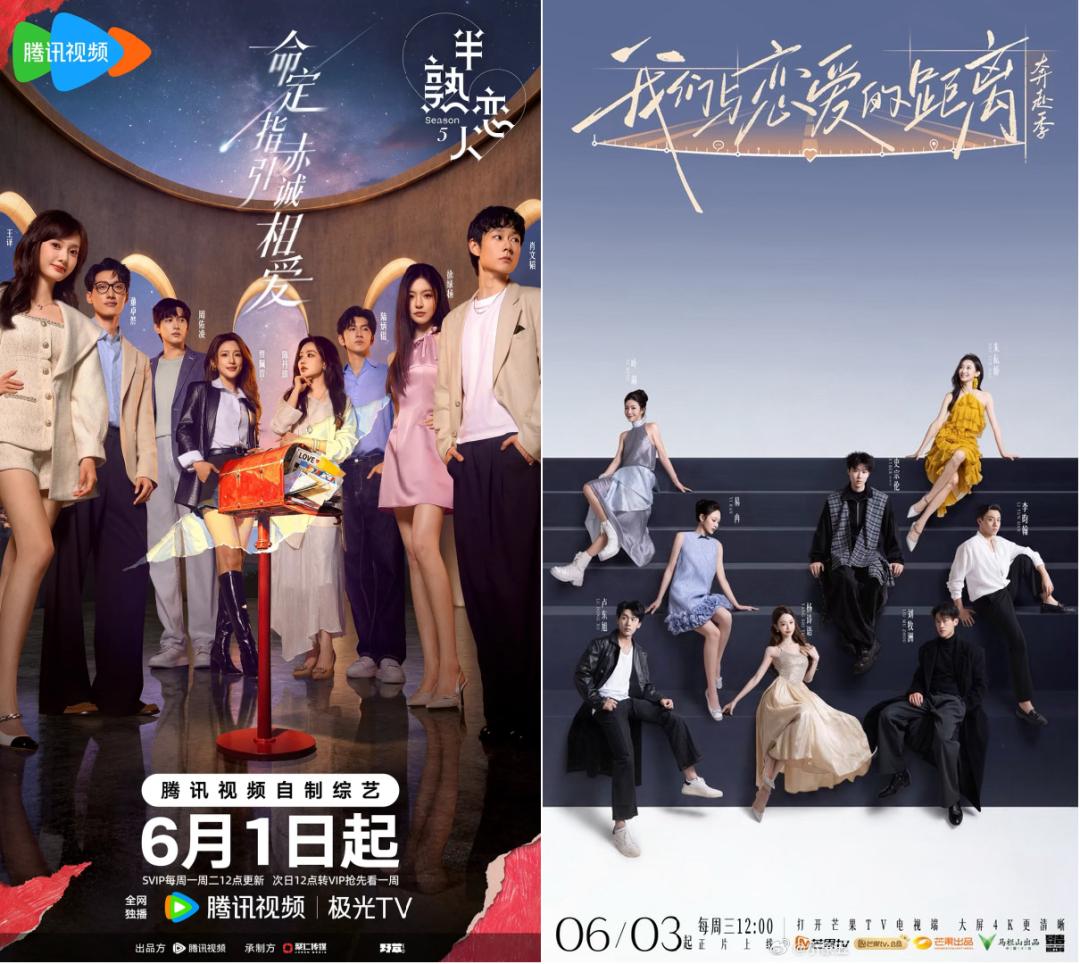
Image sourced from the internet
At the same time, the viewership and completion rate performance of high-quality romance variety shows can match that of medium-scale drama series. Top Marketing observes that most current romance variety shows release two main episodes per week, supplemented by staggered updates of pure-cut versions and behind-the-scenes content to continuously retain audience attention. On the basis of fixed two weekly episodes on Wednesdays and Thursdays, Because I Want to See You S6 releases its derivative materials gradually over multiple days, achieving non-stop content supply throughout the week.
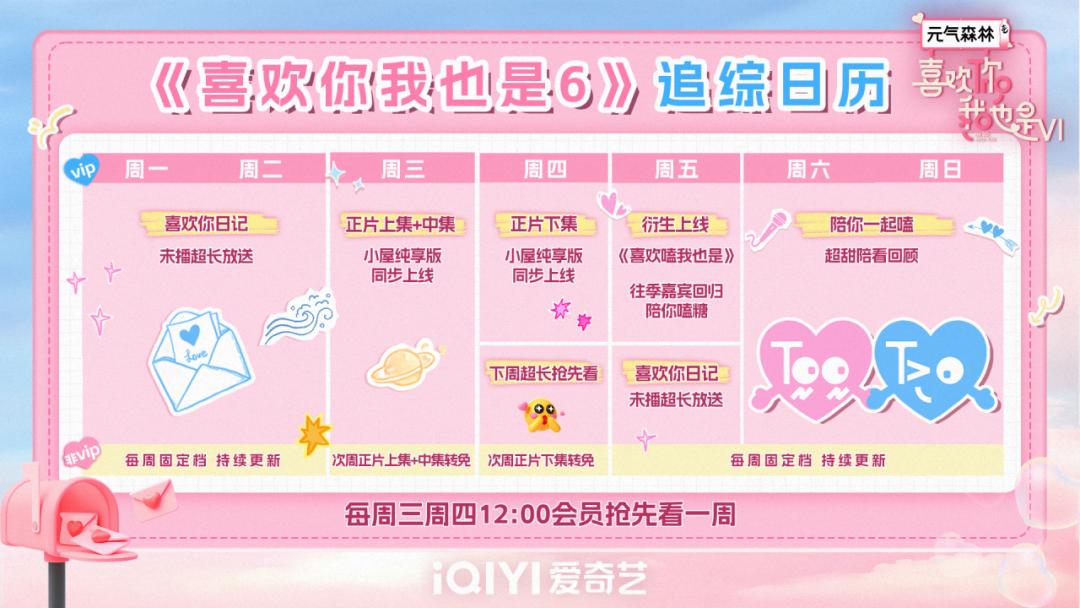
Image sourced from iQiyi
Fourth, romance variety shows can incubate non-celebrity influencers in batches, and platforms can achieve extra revenue beyond the shows via MCN-style operations. Youku, iQiyi, and Mango TV have established their own official MCNs to sign potential contestants and coordinate full-process commercial monetization. Although Tencent does not set up a direct MCN, it binds the IP rights of contestants through project agreements, and cooperates with talent agencies to undertake commercial projects and earn project shares.
Shi Dongchen, Head of Post-Content Commercialization at Youku Variety, stated in an interview that Youku's MCN business division has served more than 300 brands, achieving a growth rate of over 200% for two consecutive years, among which romance variety influencers contribute more than 50% of the revenue.
From Ad Sales to Platform Endogenous Assets: The Commercial Logic of Romance Variety Shows Has Completely Shifted Tracks
In the view of Top Marketing, the current sluggish sponsorship of romance variety shows is not a decline in content value, but a structural upgrade and iteration of the original commercial monetization model of romance variety shows under the platform's cost reduction and efficiency improvement operation guidance.
In the past, the industry's definition of the value of romance variety shows was entirely dependent on B-end brand advertising, with a simple and straightforward revenue formula: Romance Variety Revenue = Brand Title Sponsorship + Brand Placement. The value of romance variety shows was largely defined by advertising budgets.
In 2026, the valuation system of romance variety shows has also evolved from a single dimension to a multi-faceted model: Romance Variety Value = New Membership Acquisition & Retention + Public Domain Traffic Diversion + User Engagement Activation + Long-term Non-Celebrity MCN Monetization. This means that the role of romance variety shows within platforms has undergone a qualitative change — shifting from the core logic of "pleasing advertisers" to focusing on the refined growth of the platforms themselves.
According to public information, the romance variety show market has sufficient reserves in the second half of 2026, with major platforms continuing to ramp up their layout. In terms of top-tier IPs, Tencent Video's flagship Heart Signal S9 has been scheduled for August 3, continuing the urban youth social observation theme; iQiyi has launched the country's first pet-themed romance variety show Love Me, Love My Pet; Youku has laid out the wilderness survival romance reality show Preferential Love S2 and intergenerational observation programs. In addition, Mango TV also has multiple pending shows covering niche themes such as music and reorganized families, including Heart Duet.
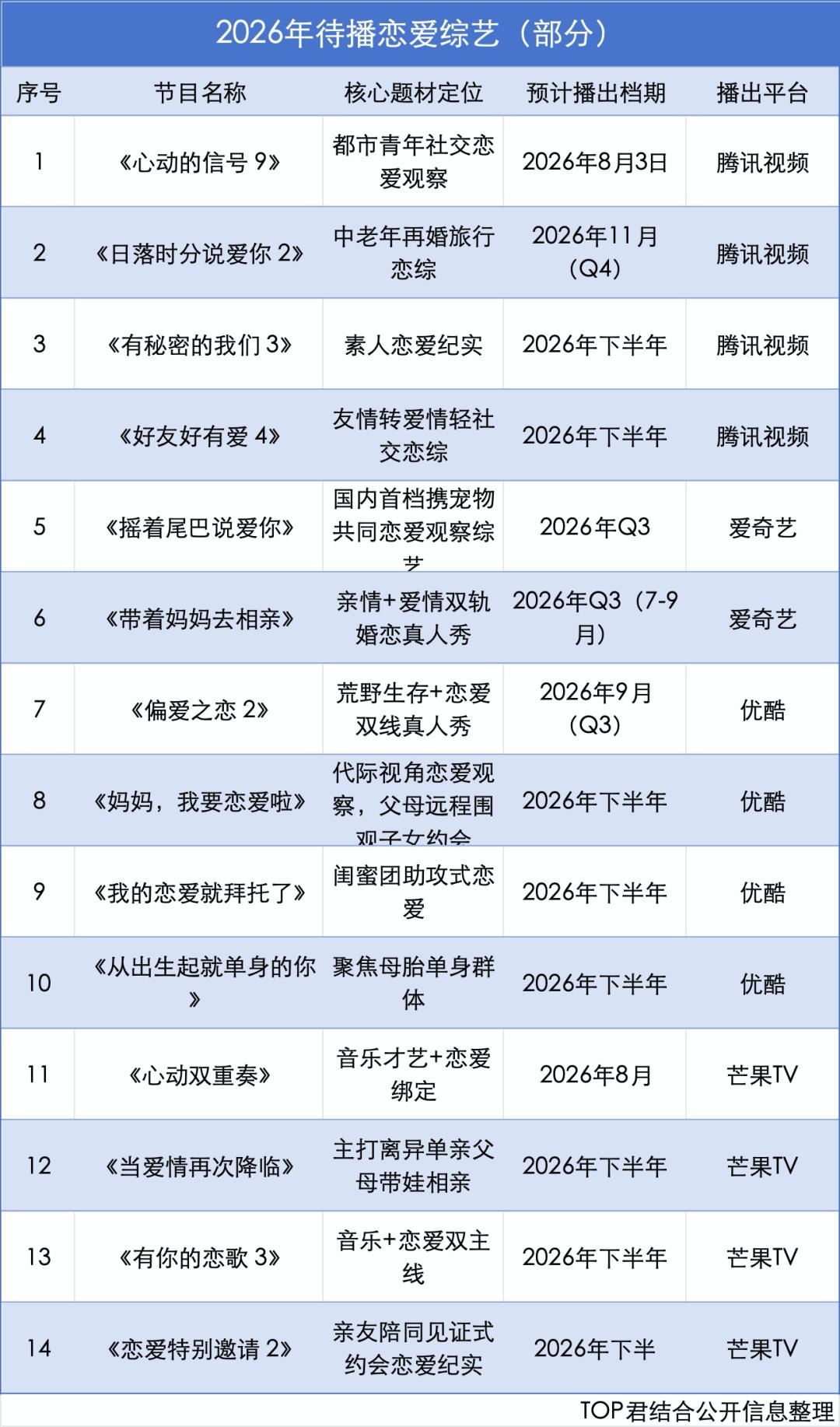
It can be said that the exit of brands has in turn accelerated the platforms' reshaping of the value system of romance variety shows. Romance variety shows are gradually becoming a low-risk, high-certainty endogenous cycle for long-video platforms.
This article is from the WeChat official account "TopMarketing" (ID: TMarketing), author: Top Jun, published with authorization from 36Kr.