It is not enough for Zhipu to benchmark against Anthropic
The AI wave is surging, and market enthusiasm continues to rise.
Leading companies in the sector are all under the spotlight. On July 10, 2026, OpenAI released GPT-5.6, sparking a new wave of public discussion.
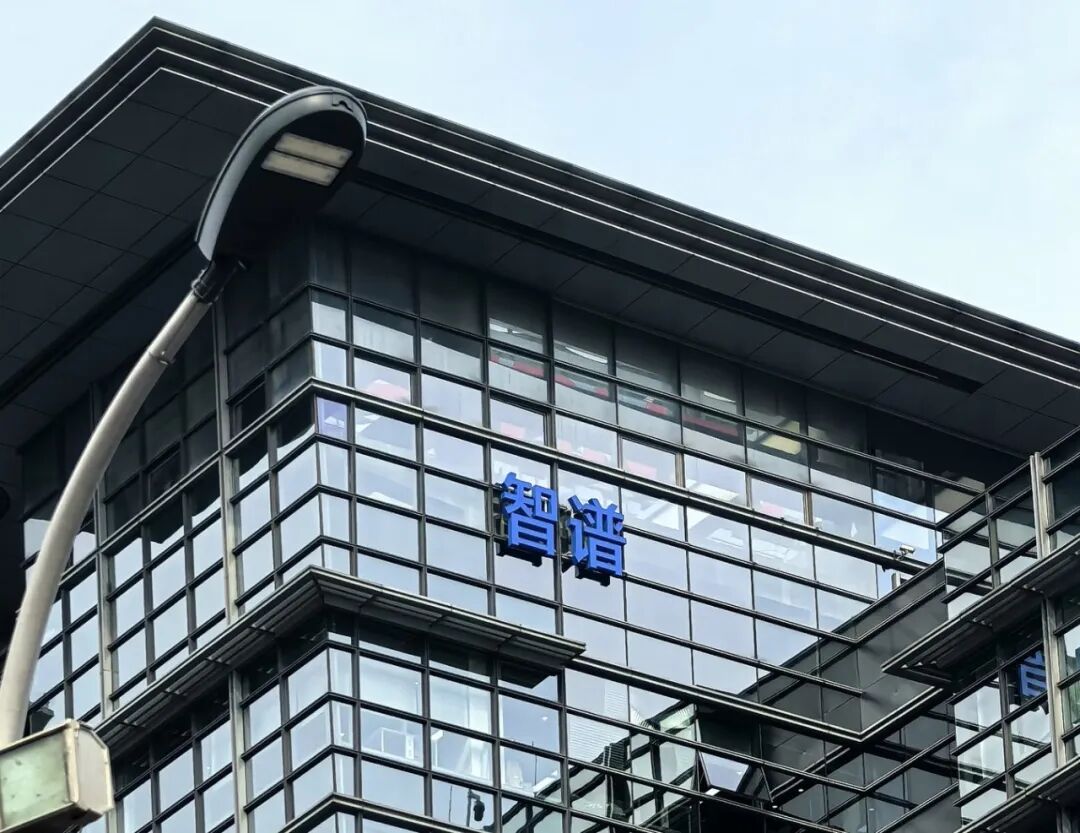
Zhipu AI, a leading domestic AI company, has also drawn widespread attention.
Zhipu AI has experienced a roller-coaster ride in its share price under the spotlight: after surging all the way from its IPO price of HK$116.2 per share (approximately RMB 100) when it listed on the Hong Kong Stock Exchange on January 8, 2026, it hit an intraday peak of HK$2980 (approximately RMB 2585) on June 22; on the morning of July 7, its share price dropped immediately after media reports claimed that Zhipu AI had withdrawn its proposed A-share IPO counseling filing; at noon the same day, Zhipu AI issued a clarification announcement on the Hong Kong Stock Exchange stating that the counseling work related to the proposed A-share issuance had been completed, after which its share price rebounded rapidly, closing at HK$1610 per share (approximately RMB 1396) that day; on July 9, Zhipu AI's share price continued to climb, closing at HK$2032 per share (approximately RMB 1762).
Calculated based on the highest share price to date, HK$2980 per share, Zhipu AI's corresponding market capitalization at that point reached HK$1.27 trillion (approximately RMB 1.1 trillion), surpassing a number of well-known domestic tech companies also listed on the Hong Kong Stock Exchange including Xiaomi, Meituan, JD.com, and BYD, second only to Tencent and Alibaba.
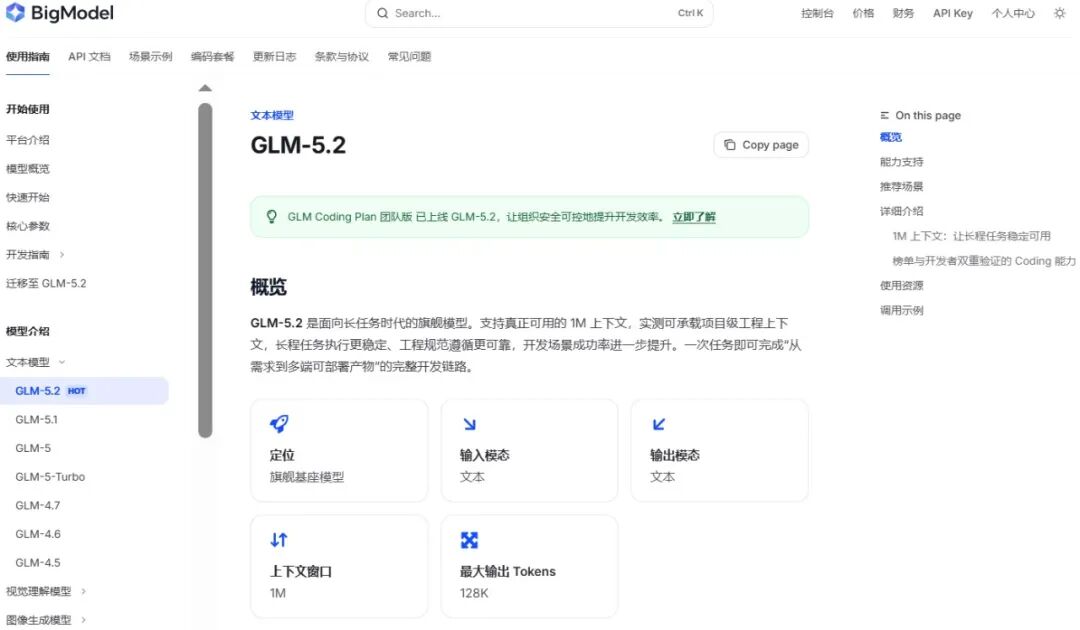
Zhipu AI originated from the industrialization of the Knowledge Engineering Lab in the Department of Computer Science at Tsinghua University, was founded in 2019, released GLM, China's first proprietary pre-trained large model framework, in 2021, completed training of the GLM-10B model with tens of billions of parameters the same year, and launched the MaaS (Model as a Service) product development and commercialization platform. Since then, GLM has continued to iterate: GLM-4 was released in January 2024, GLM-5 in February 2026, and GLM-5.2 in June of the same year.
The industry has recently frequently drawn parallels between Zhipu AI and leading US AI company Anthropic. Anthropic was founded in 2021 by former core OpenAI members Dario Amodei and Daniela Amodei. Its Claude series of large models, with powerful logical reasoning and code generation capabilities, is now the first choice for a large number of global enterprises deploying AI and engineers writing code. Official data shows that in May 2026, Anthropic's annualized revenue exceeded US$47 billion (approximately RMB 319.6 billion). On May 28, 2026, Anthropic announced the completion of its Series H financing, raising US$65 billion, with a post-money valuation of US$965 billion (approximately RMB 6.5 trillion). This made Anthropic surpass its peer OpenAI to top the global AI startup valuation rankings.
Similar to Anthropic, Zhipu AI also excels in code capabilities and follows a B2B-focused path. In its early days, Zhipu AI positioned itself as the Chinese version of OpenAI, but its public statements now frame it as the Chinese version of Anthropic. During Zhipu AI's full-year 2025 earnings call on March 31, 2026, Zhipu AI CEO Zhang Peng mentioned that taking intelligence upper limit as a barrier and APIs as the main product form is the business path that both Anthropic and Zhipu AI are practicing.
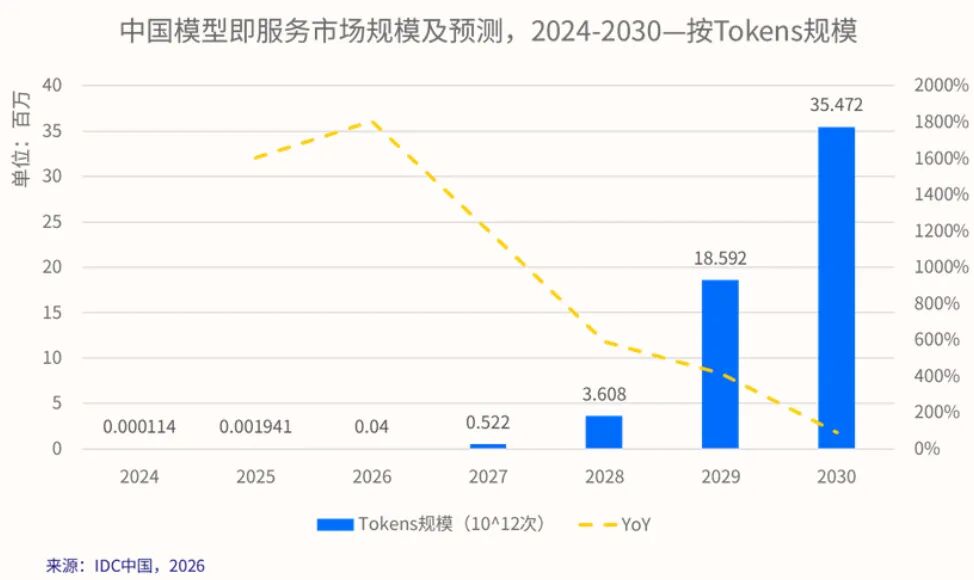
According to data from research firm IDC, global enterprise AI spending will reach US$940 billion (approximately RMB 6.3 trillion) in 2026, and is expected to grow to US$2.1 trillion (approximately RMB 14.2 trillion) by 2029, with China being one of the fastest-growing regions in the global AI market. Focusing specifically on the MaaS market, China's Token calls will reach 40,000 trillion times in 2026, generating revenue of RMB 18.6 billion, with a CAGR (Compound Annual Growth Rate) of 1154.9% from 2024 to 2030.
Whether it is APIs or MaaS, both are commercialization paths that Zhipu AI has long laid out, and their promising development prospects are the background for the market's optimism about Zhipu AI. However, benchmarking against the already massive Anthropic, Zhipu AI inevitably faces scrutiny in areas including technology, revenue, and future development space. At present, there is still a significant gap between the two companies.
01
Equal Emphasis on Open Source and B2B
Zhipu AI targeted the B2B market as its main battlefield from the very beginning.
Zhipu AI's products are based on large models, providing local deployment services for B2B and G2B customers, and cloud deployment services for B2B and C-end users. The prospectus shows that in 2022, 2023, and 2024, Zhipu AI's revenue reached RMB 57.4 million, RMB 124 million, and RMB 312 million respectively; among which revenue from local deployment business was RMB 54.81 million, RMB 112 million, and RMB 263 million respectively, accounting for 95.5%, 90.4%, and 84.5% of total revenue.
Although specific data on G2B users is not mentioned in the prospectus and financial reports, Zhang Peng has publicly stated that G2B customers account for less than 20%, and Zhipu AI is primarily focused on the B2B market.
In its first earnings report after listing, released on March 31, 2026, Zhipu AI's product lines became more segmented, including open platforms and APIs, enterprise-level agents, enterprise-level general large models, technical services, and others. The financial report shows that in 2025, Zhipu AI's revenue was RMB 724 million. Among this, the open platform and API business, which provides standardized cloud online services for developers and SMEs, generated revenue of RMB 190 million, accounting for 26.3% of total revenue; the enterprise-level agent business, which helps enterprises build autonomous intelligent systems that enable agents to independently understand instructions, break down tasks, and call external tools to complete business closed loops, generated revenue of RMB 165 million, accounting for 22.9%; the enterprise-level general large model business, delivered mainly through private local deployment, generated revenue of RMB 365 million, accounting for 50.4%; the technical services and other business, which provides specialized technical services for AI developers and enterprise clients, generated revenue of RMB 2.54 million, accounting for 0.4%.
According to the same financial report, corresponding to deployment methods, the open platform and API (cloud deployment) accounted for 26.3%; enterprise-level agents, enterprise-level general large models, technical services and others (local deployment) accounted for 73.7%.
The revenue doubling for four consecutive years demonstrates recognition from B2B users. The prospectus shows that as of September 30, 2025, Zhipu AI had more than 12,000 institutional customers across B2B and G2B segments. Zhipu AI's full-year 2025 earnings report did not provide updated institutional customer data, but only mentioned that within 24 hours of GLM-5's release, leading tech giants including ByteDance, Alibaba, and Tencent officially integrated it, and 9 of China's top 10 internet companies have deeply integrated GLM.
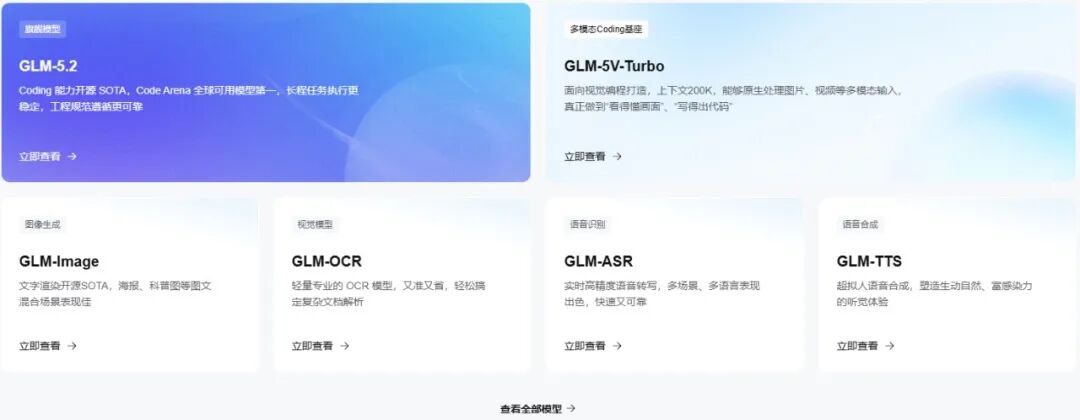
Betting on the open-source ecosystem is another key factor in Zhipu AI's rapid development.
Different from closed-source Anthropic, Zhipu AI chose the open-source path very early. In August 2022, before ChatGPT, which sparked the global AI wave, was launched, Zhipu AI open-sourced GLM-130B, the world's first open-source Chinese-English bilingual hundred-billion-parameter model. Later, Zhipu AI designated 2025 as its "Open Source Year", fully open-sourcing a series of flagship models including GLM-4.5 and GLM-4.5V.
Zhipu AI adopts the MIT open-source license, with extremely permissive authorization that allows users to use, copy, and modify the model without restrictions, even for commercial and private deployment. This open attitude quickly gathered global developers. The financial report shows that in 2025, Zhipu AI's products covered 218 countries and regions worldwide, co-building the ecosystem with more than 4 million SMEs and developers.
When developers get accustomed to GLM's high performance and ease of use, and deeply integrate it into their workflows, they will naturally pay for intelligent needs via API calls on the Zhipu AI MaaS platform in production environments. This is also the reason why the proportion of Zhipu AI's cloud deployment business rose from 4.5% in 2022 to 26.3% in 2025. According to the financial report, after launching GLM Coding Plan, a paid subscription service dedicated to AI programming, in 2025, Zhipu AI had more than 242,000 paying developers.
Zhang Peng mentioned on the earnings call that in the first quarter of 2026, Zhipu AI's API call pricing increased by 83% compared to the end of 2025, but market demand remained strong, showing a supply shortage situation, with call volume growing 400% year-on-year.
A research report released by China Merchants Securities on June 15, 2026, noted that Zhipu AI's foundational large model capabilities continue to improve, and its products have strong competitive advantages in foundational large models and related fields such as coding and agents. It predicts that Zhipu AI's 2026 revenue will reach RMB 3.54 billion, a year-on-year increase of 389%; 2027 revenue will reach RMB 8.11 billion, a year-on-year increase of 129%; 2028 revenue will reach RMB 15.02 billion, a year-on-year increase of 85%.
02
Cost-Effectiveness Wins Favor
Zhipu AI's valuation logic is directly related to its business model.
In overseas markets where C-end users are relatively willing to pay, Anthropic's valuation has surpassed that of OpenAI, which focuses on the C-end business. OpenAI announced on March 31, 2026, the completion of its latest round of financing totaling US$122 billion, with a post-money valuation of US$852 billion.
Domestic C-end users in China have still not formed the habit of paying subscriptions for AI products. The standard versions of leading models such as DeepSeek, Doubao, and Qianwen all operate on a free model. Even leading models need to calculate ROI (Return on Investment). According to reports from media including LatePost, as of the first half of 2026, Doubao, which has over 200 million DAU (Daily Active Users), actually generates less than RMB 1 million in daily revenue, mainly from e-commerce commissions. However, as of May 2026, Doubao's daily computing power costs reached tens of millions of RMB.
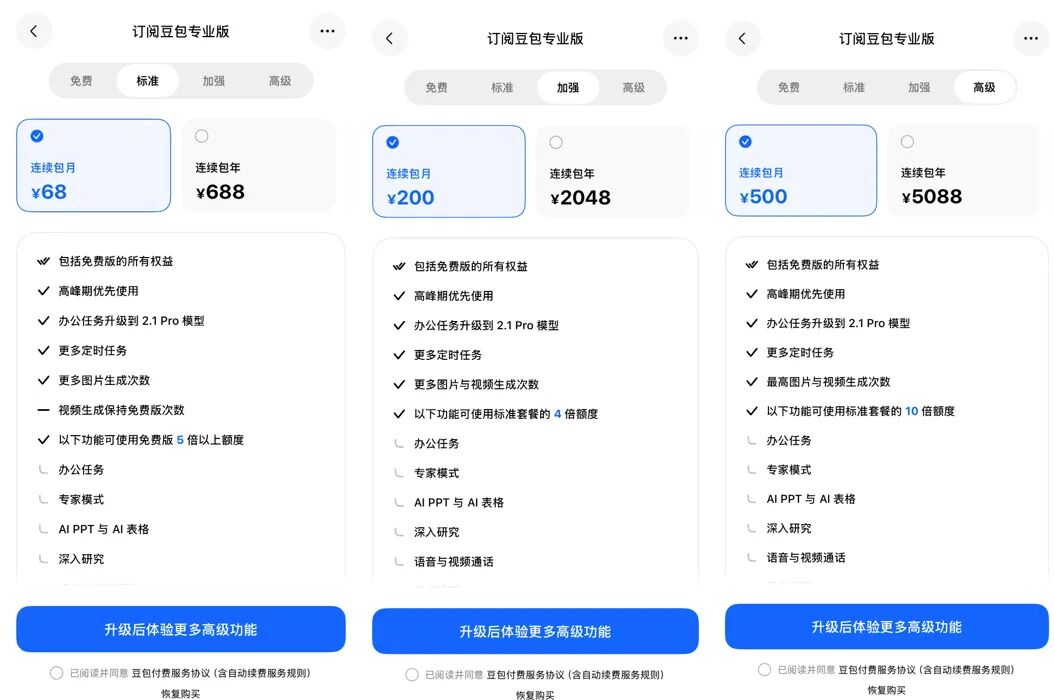
Currently, Doubao launched its paid subscription service on June 24, 2026, with the standard version priced at RMB 68 per month, the enhanced version at RMB 200 per month, and the premium version at RMB 500 per month. Data related to user payments remains to be further disclosed.
Focusing on the B2B segment means being closer to revenue, where AI can more directly transform into productivity, especially productivity tools like coding. A global developer survey released by code analysis platform Sonar in January 2026 shows that in 2025, among developers who have experienced AI programming tools, 72% use AI to write code every day, with 42% using it multiple times daily; 42% of the code submitted by developers was generated or AI-assisted, a figure that was only 6% in 2023, rose to 19% in 2024, and is expected to reach 65% in 2027.
The core driving force behind Zhipu AI's revenue growth is precisely GLM's code capabilities. Since the launch of GLM-4 in January 2024, the GLM model's code generation capabilities have improved significantly. On June 17, 2026, on the Arena large model evaluation platform's Code Arena programming evaluation system, the newly released GLM-5.2 ranked second globally, second only to Anthropic's Claude Fable 5 released in June 2026, followed by models including Claude Opus 4.8, Claude Opus 4.7, Alibaba's Qwen-3.7 Max, Moonshot AI's Kimi-K2.6, and MiniMax-M3.
Cost-effectiveness is an important factor for Zhipu AI to win user recognition.
According to data from research firm Artificial Analysis, on July 9, 2026, calculating the comprehensive cost per million Tokens using a mixed pricing model of cache, input, and output at a ratio of 7:2:1, GLM-5.2 (max) costs US$0.9 (approximately RMB 6.6), far lower than Claude Fable 5 (with fallback) at US$7.7 (approximately RMB 56.6), GPT-5.5 (xhigh) at US$3.85 (approximately RMB 28.3), and Gemini 3.1 Pro Preview at US$1.74 (approximately RMB 12.8), and higher than Kimi K2.6 at US$0.7 (approximately RMB 5.1), MiniMax-M3 at US$0.22 (approximately RMB 1.6), and DeepSeek V4 Pro (max) at US$0.18