Xiaomi has finally built cars for the middle-aged people.
Once, Lei Jun built cars for the young. Now, he is building cars for the middle-aged.
On July 9, Lei Jun officially unveiled Xiaomi Auto's new product line "Pengcheng" (SkyNomad in English, literally meaning "sky nomad"), which focuses on the extended-range electric vehicle (EREV) segment, distinguishing itself from the all-electric SU7 and YU7 models.
He stated that this represents two distinct answers Xiaomi has delivered to address varied user needs over its five-plus years in the automotive industry.
In the context of Xiaomi Auto, the SU7/YU7 series launched over the past two years is defined as a "driver's car"; while the Xiaomi SkyNomad series is positioned as a "smart, adaptable large-space SUV".
But stripping away marketing rhetoric, the biggest feature of SkyNomad is that it has made a series of trade-offs skewed toward the middle-aged demographic.
Replacing all-electric drive with an extended-range system can certainly deliver longer range and a more convenient energy replenishment experience, but it may also reduce the vehicle's acceleration and handling performance.
Behind this trade-off is SkyNomad's pre-screening of potential buyers — the former are metrics that middle-aged people pay more attention to, while the latter are topics that concern the young.
Similar trade-offs are also reflected in the exterior design. Judging from official images, the new SkyNomad model has a boxy, imposing and upright silhouette, and does not carry over the fastback styling of the SU7 and YU7, making it look very un-"Xiaomi".
Among fan communities, the Xiaomi SU7 was once playfully nicknamed "Mi-Porsche" for its striking resemblance to the Porsche 911. Now the rugged styling of SkyNomad has earned it the moniker "Mi-Escalade" (a nod to the Cadillac Escalade).
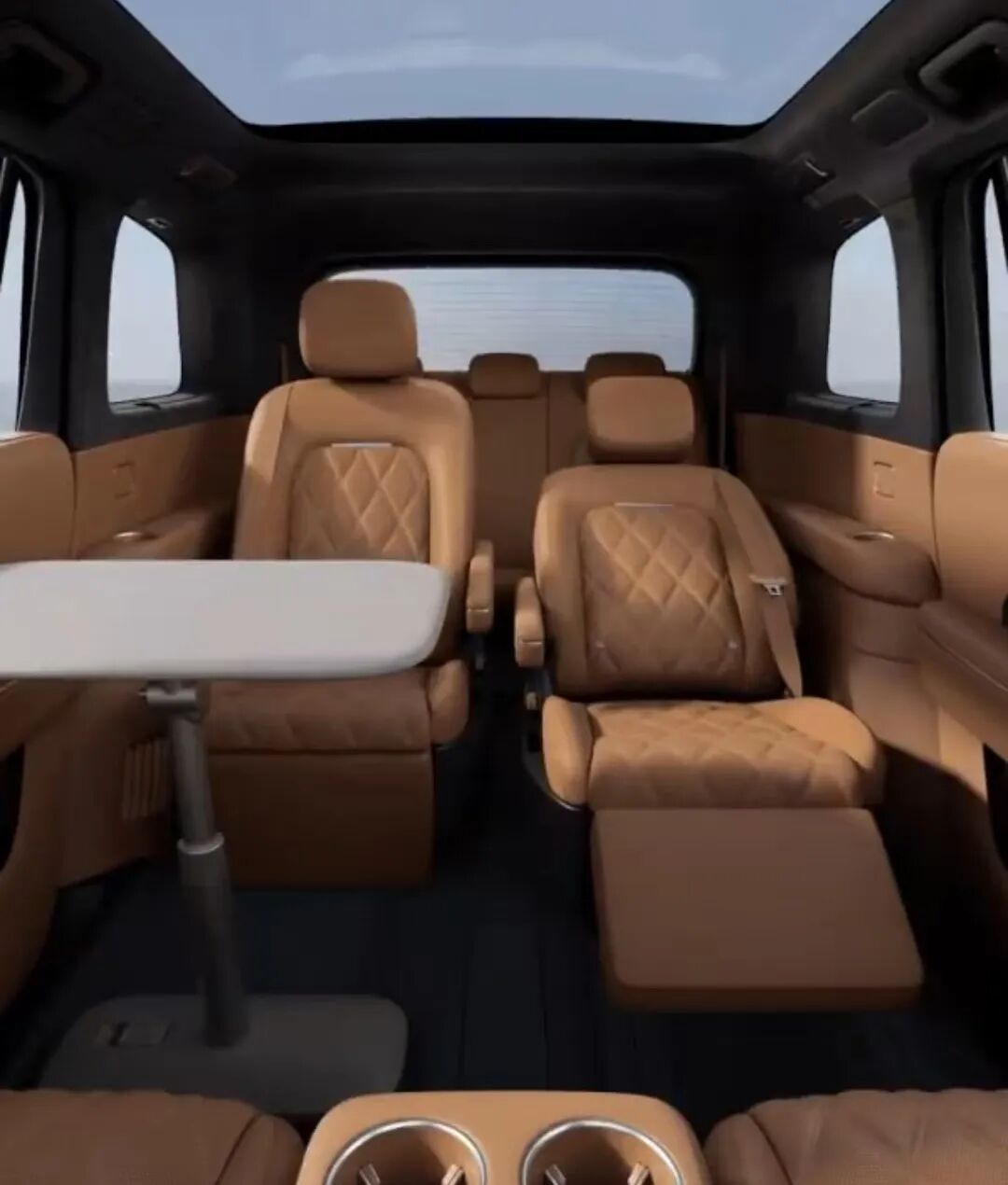
In addition, SkyNomad places exceptional emphasis on interior space, which is uncommon in Xiaomi Auto's marketing narrative. Its official Weibo account also released a set of animated graphics demonstrating different usage scenarios of the adaptable space.
Lei Jun himself outlined the user profile for SkyNomad.
In his view, it is built not just for dads and moms, nor only for business elites or geek creators, but for the people behind all these labels who live with clarity and lead rich lives.
Lei Jun further explained that they could be civil servants, engineers, or entrepreneurs — they have careers but are not overwhelmed by them; they have families but are not defined solely by them — from Monday to Friday, they are workplace elites; on weekends, they are their children's playmates; on holidays, they are spontaneous explorers ready to set off at any moment.
In short, this is a group of "socially successful people" in the traditional sense, who fit mainstream aesthetic standards. And such people are generally not youngsters.
Targeting the group that "balances career in one hand and family in the other", SkyNomad is clearly built for the middle-aged.
Xiaomi Auto has always taken young people as its core user base, and in just two years has become one of the best-selling new EV manufacturers in China. The aesthetics, interests, and even purchasing power of young people have in turn guided Xiaomi Auto to move forward along a youth-focused path.
This path has made Xiaomi Auto what it is today, but it has also brought hidden risks. For example, while competitors launch new models almost every month, Xiaomi is at a significant disadvantage relying on just two models to compete in the market.
Furthermore, in the face of fierce competition and internal and external pressures, Xiaomi Auto needs not only to increase sales volume but also to boost profitability. However, the price bands of the SU7 and YU7 are already largely fixed, making it difficult to substantially increase profit per vehicle.
Beyond consolidating its young user base, Xiaomi needs even more a new car that middle-aged people are willing to buy. SkyNomad, which has been in planning for three years, arrives a bit late, yet it represents another opportunity for Xiaomi Auto to embark on a new journey.
1
Although Xiaomi has just made the official announcement, the outside world has long anticipated the new model. Since the end of 2024, spy shots and information about Xiaomi's extended-range model have emerged from time to time.
What is currently known is that this vehicle has the internal codename "Kunlun", is positioned as a full-size extended-range SUV, measures over 5.3 meters in length, has a wheelbase of approximately 3.1 meters, and is available in six-seater and seven-seater variants.
Previously leaked spy shots show that the seven-seater version of the new model is equipped with a retractable roof that can further expand interior space — a configuration very rare among similar products.
In terms of power, the entire new model lineup is equipped with a 1.5T four-cylinder range extender with a thermal efficiency exceeding 44%, significantly higher than the 41% of the AITO M9, which theoretically reduces fuel consumption and increases range. According to reports from "Smart EV Reference", this range extender is very likely supplied by Dong'an Power, which is also a supplier for Li Auto and Leapmotor.
The new energy vehicle is equipped with a 70kWh battery, exceeding the mainstream industry level. Its CLTC pure electric range can reach 400~500 kilometers, equivalent to the mid-tier level of all-electric vehicles; the combined range exceeds 1500 kilometers.
Regarding power, there are rumors that the new model adopts a dual-motor four-wheel drive layout with a combined power output of over 400 horsepower. But for Xiaomi Auto, which favors high horsepower, this figure seems rather low.
In terms of chassis, the entire new model lineup comes standard with air suspension, though it remains unclear whether it is a single-chamber or dual-chamber system.
On the intelligence front, the new model is expected to continue using NVIDIA's autonomous driving chips, paired with Xiaomi's self-developed Xuanjie series cockpit chips. The software will run on Xiaomi HyperOS. Additional spy shots show that the new model is equipped with a LiDAR on the roof, and is expected to adopt a perception fusion solution combining "LiDAR + cameras + radars".
Finally, there is the pricing. Previous leaks suggest that the main variant of the new model will be priced at around 350,000 to 450,000 RMB, targeting the AITO M9 and Li Auto L9. Lower price segments will be covered by mid-range and entry-level models in the future.
When officially announcing SkyNomad, Xiaomi did not discuss the aforementioned information, only mentioning that the new model will adopt an all-new Kunlun architecture.
This comes as no surprise — the need to accommodate the range extender, combined with the large body and boxy design, means the vehicle cannot directly reuse Xiaomi's all-electric vehicle platform.
Lei Jun did reveal a few details about the new model's interior design.
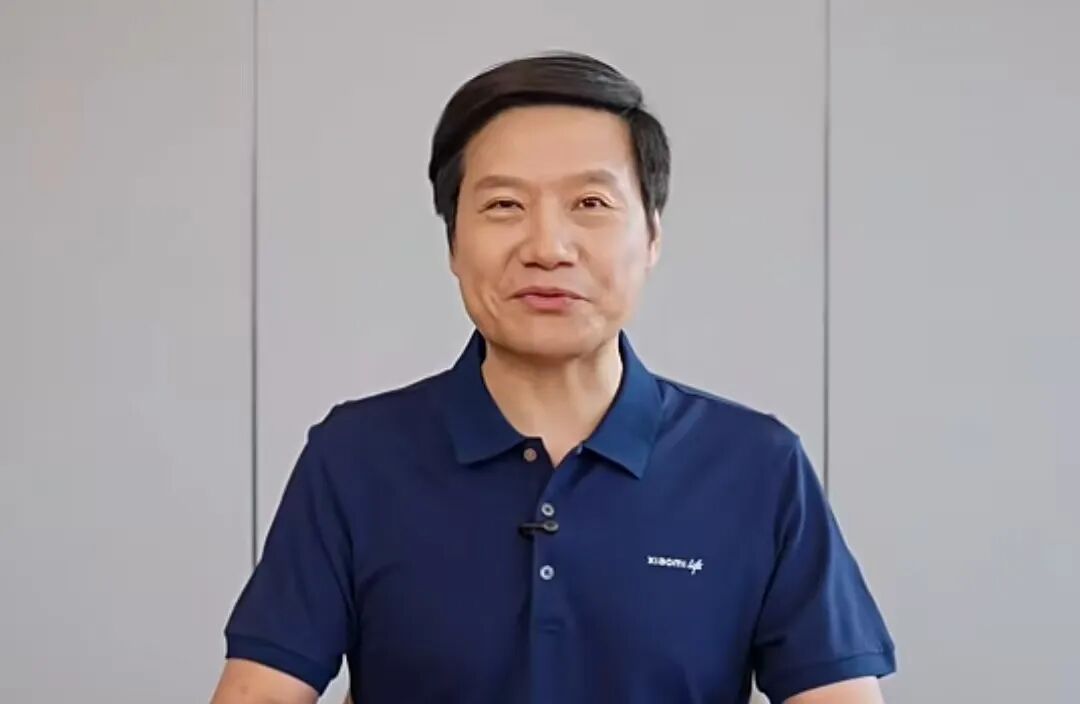
He stated that the new model features a fully flat interior floor and long slide rail design; target users will say "this is interesting" when they see the rotating seats and one-click face-to-face seating mode. It is not hard to see that both features will be present on the new SkyNomad model.
In the extended-range segment, SkyNomad's first model will face off mainly against the AITO M9 and Li Auto L9.
Both vehicles also target the high-end market; the former sold over 120,000 units last year, while the latter sold approximately 45,000 units. The slightly smaller AITO M8 sold over 150,000 units last year and is also a strong competitor for SkyNomad.
On the other hand, as battery capacities continue to grow, the range limitations of all-electric SUVs have been gradually eliminated. Many new models already achieve a CLTC range of over 700 kilometers, with real-world performance exceeding 500 kilometers. This means SkyNomad will also have to compete with all-electric SUVs.
In this segment, NIO — which excels at building large vehicles and has a proprietary battery swap system — is SkyNomad's biggest rival. The NIO ES8, ES9, along with the LeDao L90, all boast strong competitiveness as large vehicles.
The fledgling SkyNomad has not yet announced detailed configuration information. But judging from Lei Jun's statements, it aims to highlight the "adaptable interior space" — a feature none of its competitors can offer. Coupled with Xiaomi's strength in "stacking configurations", SkyNomad still has strong product competitiveness.
Overall, SkyNomad's first model has distinctive features and its configurations belong to the top tier. However, compared to the stunning first impression made by the Xiaomi SU7, SkyNomad's debut feels somewhat underwhelming.
2
Xiaomi's move into extended-range vehicles and large models represents a contrast to its previous strategies.
Xiaomi Auto has repeatedly denied plans to enter the extended-range vehicle segment before. Especially around the March 2024 launch of the SU7, Xiaomi explicitly stated that it had no plans to develop extended-range models for the coming years.
The reason was that Xiaomi's first two cars were youth-focused and performance-oriented, so the natural choice of energy form was pure electric. Compared to internal combustion engines, electric motors can deliver higher power and instant high torque, creating a strong pushback sensation and providing better handling performance.
In contrast, the extended-range solution is essentially half a gasoline car: the vehicle carries a gasoline-powered generator, plus a fuel tank and oil lines, which increases the overall vehicle weight, squeezes battery space, and adds noise. Aside from longer range, it offers almost no advantages over pure electric vehicles.
As for large vehicles, they were never Xiaomi's preferred choice either.
Similar to extended-range vehicles, making new energy vehicles larger leads to a higher center of gravity, longer body, and increased air resistance. The entire vehicle feels less agile, and its sporty performance declines significantly.
Therefore, when developing the SU7 and YU7, Xiaomi's strategy was to sacrifice some interior space rather than make the cars boxy, keeping their length, width, and height at moderate levels.
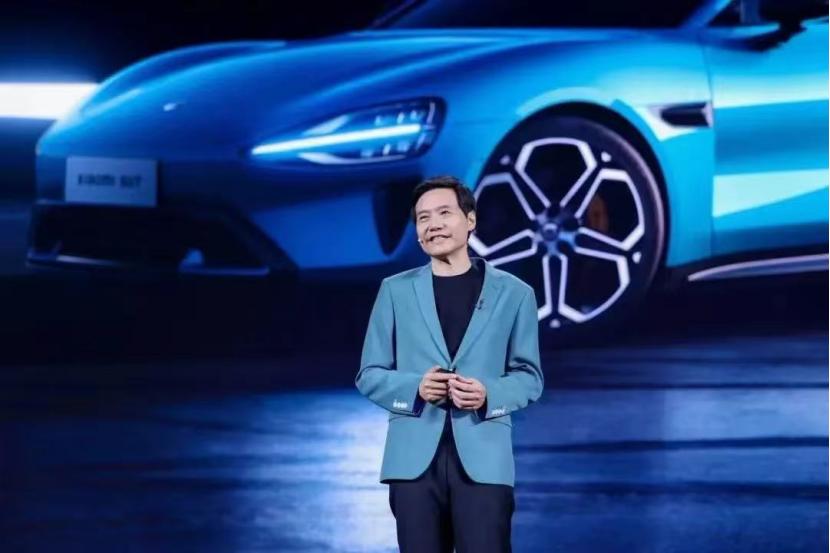
In comparison, other manufacturers either develop pure electric and extended-range vehicles in parallel, or keep making their cars larger to highlight "beyond-class space". This trade-off in energy type and vehicle design made Xiaomi appear somewhat "maverick". The SU7 and YU7's immense popularity among young consumers is closely tied to Xiaomi's commitment to driving pleasure.
But the problem is that the SU7 and YU7 can only reach a limited audience. At the same time, the two models have relatively low prices and limited profit margins, while facing extremely fierce competition. Focusing solely on young people's business does not align with Xiaomi's long-term interests.
To further expand its horizons, Xiaomi needs to tap into the middle-aged consumer market.
Middle-aged people are the real main force in big-ticket consumption like automobiles. They not only have stronger willingness to buy cars, but also more sufficient budgets. Taking NIO as an example, its average transaction price reached as high as 443,000 RMB in June this year.
Such a consumer group is what Xiaomi is eager to reach. It is therefore logical to create a new model that is drastically different from the SU7 and YU7 and better caters to the tastes of middle-aged people.
In fact, Xiaomi has faced the problem of having too few models over the past two years.
By comparison, the "NIO-Xpeng-Li Auto" trio all have around 10 vehicle lines, covering the sedan, SUV, MPV, and sports car markets, and have established multiple sub-brands. Xiaomi only has two models. While both sell very well, they cannot cover more consumers or reach more price segments.
Xiaomi may have long recognized this problem — while publicly insisting on pure electric, it has been secretly advancing extended-range vehicle development.
According to Lei Jun, SkyNomad was planned and launched as early as the beginning of 2023. The outside world also caught early clues, such as Xiaomi applying for the "SKYNOMAD" and "Xuntian" trademarks, and recruiting engineers related to extended-range technology.
By the end of 2024, spy shots of Xiaomi's new extended-range car began to leak, gradually outlining the overall appearance of the vehicle. Entering 2026, Xiaomi's management admitted during the Q1 earnings call that it would launch an all-new mid-to-large size vehicle in the second half of the year, built on a new platform, essentially confirming the outside rumors.
3
Will Lei Jun lead Xiaomi Auto to win again by targeting the middle-aged?
His most powerful "weapon" is undoubtedly his ever-popular personal IP. "Thunder God" not only commands widespread support among young people, but also holds strong persuasiveness and appeal in the eyes of the middle-aged.
On the other hand, the combat capability of Xiaomi Auto is now vastly different from what it used to be.
One of the most criticized issues with Xiaomi's automotive venture was production capacity. But after the refinement of the SU7 and YU7, Xiaomi's large-scale manufacturing and supply chain management capabilities have seen qualitative leaps. Rumors of stocking tens of thousands of ready vehicles in a short period of time are a testament to this capability.
But Lei Jun also faces a major challenge: what exactly are the selling points of SkyNomad?
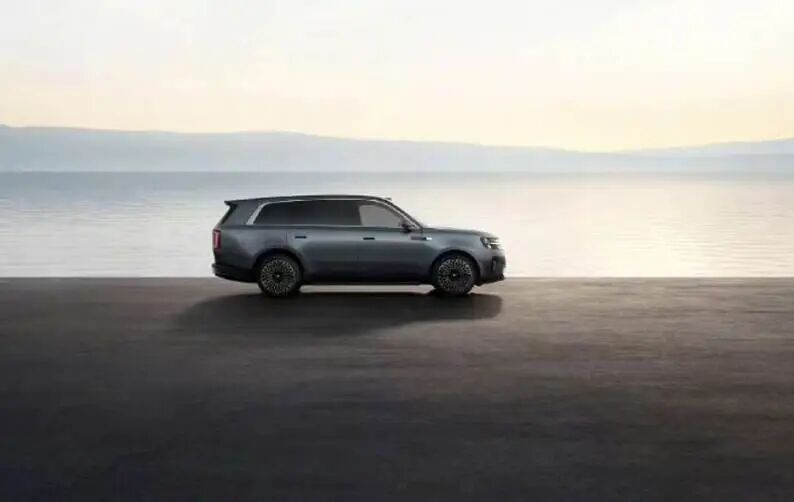
The biggest selling point of Xiaomi's first two cars is their exterior design. Compared to peers, the SU7 and YU7 boast a top-tier appearance that can rival that of foreign luxury cars. But SkyNomad's first model does not deliver that stunning first impression.
When promoting SkyNomad, Lei Jun has been emphasizing the word "at ease".
He explained: The interior space should not be fixed, but should be able to adapt flexibly according to the user's needs and preferences. "When parked, it can easily transform into one person's studio, two people's café, three people's meeting lounge, or the whole family's playground."
This statement sounds somewhat "artistic", but essentially it means "large interior space + adjustable seat position/orientation".
This configuration involves considerable technical content and has strong practicality. But for middle-aged people who are used to careful budgeting, such a cool new feature is not the decisive factor in buying a car.
After all, large space has long been standard for domestic SUVs, and the competition in this area is so fierce that the space is now approaching that of MPVs. As for the versatile seat layout, while it is cool, it is not a family necessity — a car is ultimately a means of transportation, and no one will play with the seats for no reason.
What middle-aged people truly value are still those elements that have been proven countless times in the domestic automotive industry: whether the price is appropriate, whether the configurations are generous, whether the