A 40-Trillion-Yen Lesson: Toshiba, How It Threw Away Its Own Future
This is a story of a massive business failure.
The first protagonist is Japan's Toshiba (TOSHIBA). It is a household name, and most people have likely heard of it.
The second protagonist is Kioxia.
Fewer people may be familiar with this name.
Let me briefly introduce two key points about it: First, it ranks first in Japan's stock market capitalization (42.61 trillion yen, approximately 1.78 trillion yuan).
Second, it invented the world's first NAND flash memory.
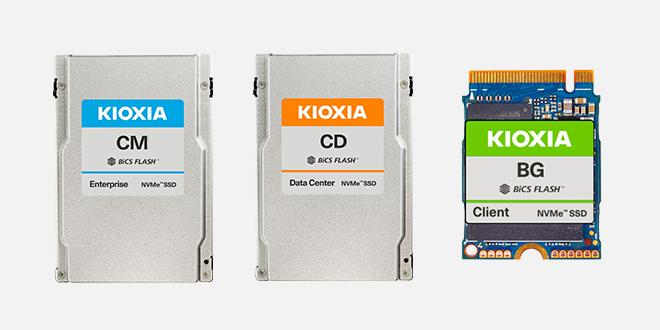
Today, Kioxia, alongside SK Hynix and Samsung, is one of the most critical flash memory manufacturers, deeply involved in the booming AI industry.
What is the relationship between Toshiba and Kioxia?
Toshiba was originally Kioxia's "parent company," and Kioxia was a division within Toshiba focused on memory technology.
However, in 2018, Toshiba sold off Kioxia.
Today, let's talk about this most costly mistake in Toshiba's history, which can also be regarded as one of the most typical cases in business history.
Regret to the Core
Since Kioxia went public in December 2024, its stock price has skyrocketed by 53 times! Its market value has even surpassed Toyota.
In the first quarter of this year, Kioxia's revenue surged by 459.2% quarter-on-quarter, and its operating profit jumped by 454% quarter-on-quarter.
Yet, Toshiba sold off this highly profitable business back in 2018.
Even with just a 16% stake remaining in Kioxia, Toshiba gained 2.27 trillion yen in special profits, equivalent to 60% of its annual total revenue.
Kioxia is now the company with the highest market value in Japan.
Toshiba, on the other hand, was delisted in 2023.
It is somewhat ironic.
Let's briefly review the history here.
Toshiba was a giant Japanese conglomerate with a wide range of business operations.
In 1987, Toshiba invented NAND flash memory, which later evolved into "Toshiba Memory."
But in 2018, a corporate alliance led by U.S. private equity firm Bain Capital, including its South Korean competitor SK Hynix, acquired Toshiba Memory.
The acquisition cost was $18 billion.
In 2019, the company was renamed Kioxia.
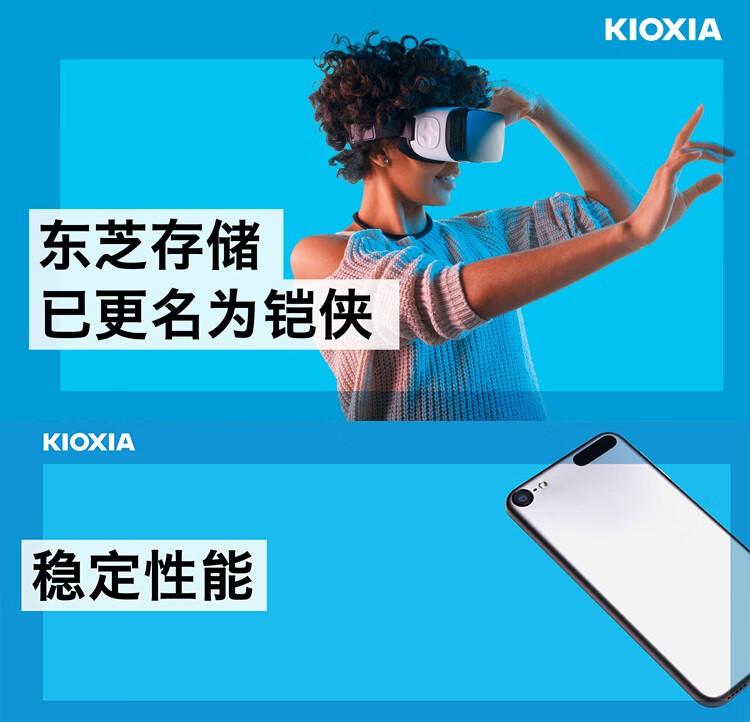
Back then, the most direct reason for selling the memory business was:
To sacrifice a pawn to save the king.
Let's go back 20 years.
In 2006, Toshiba acquired U.S.-based Westinghouse Electric, a manufacturer of electrical equipment and nuclear reactors, for a high price of $5.4 billion.
Unfortunately, Toshiba's home appliance business continued to shrink, and it was hit by the 2008 economic crisis.
The most fatal blow came after the Great East Japan Earthquake on March 11, 2011, when the nuclear power industry fell into a severe downturn.
By 2017, Westinghouse Electric had accumulated $9.8 billion in debt and was forced to file for bankruptcy, causing Toshiba to lose up to 1 trillion yen.
To save itself, Toshiba began selling off its assets.
Among them was its memory division, which is now Kioxia.
However, the most ridiculous thing is that even after selling off many assets, Toshiba only prolonged its survival temporarily.
In 2023, it was taken private and delisted, ultimately failing to maintain its status as a publicly listed company.
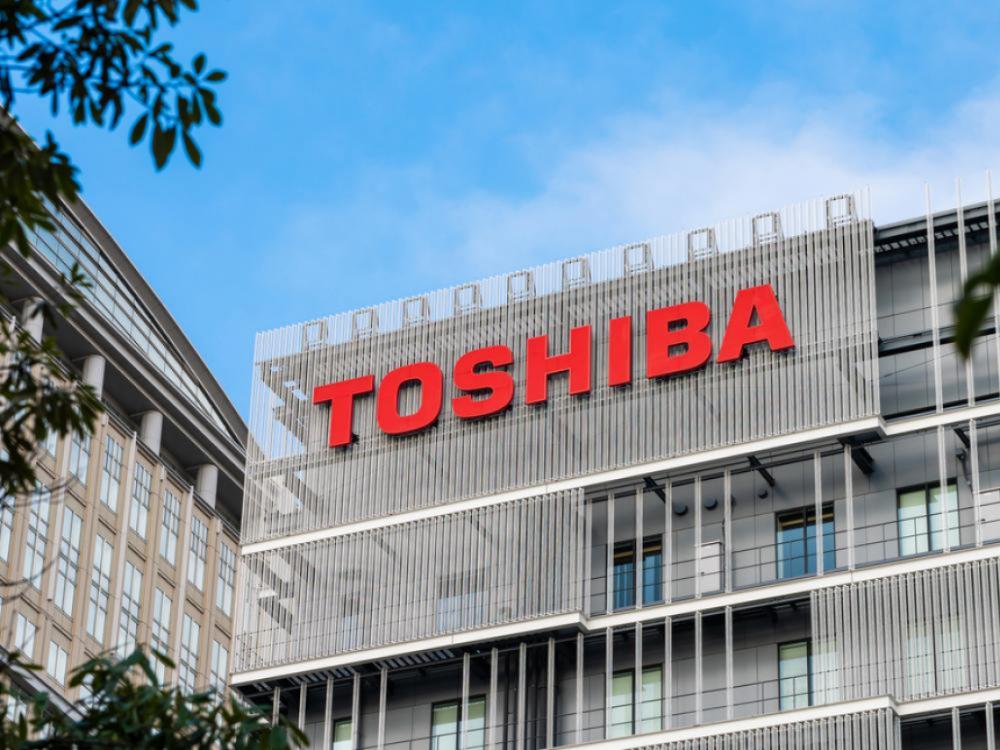
Strategic Short-Sightedness
People are used to looking backward.
In reality, even in the 2017 fiscal year, when Toshiba was already mired in deep trouble, its semiconductor memory business generated 500 billion yen in operating profit.
Why did Toshiba decide to sell the memory business?
On the surface, it seemed that Toshiba was just unlucky, with fate working against it.
The root cause of Toshiba's desperate situation back then was the massive losses from its nuclear power business (Westinghouse Electric). But now, with the arrival of the AI era, both nuclear power and semiconductors are experiencing explosive growth.
The semiconductor memory industry has entered a "super cycle," sending Kioxia's performance and stock price soaring.
As for nuclear power, Westinghouse Electric, which once dragged Toshiba down, was acquired by a Canadian company. Now, driven by the insatiable demand for power from AI data centers, it has secured a large number of orders from the U.S.'s $80 billion nuclear power plant expansion projects, thriving in the market.
Yet just a decade ago, Toshiba abandoned these two core businesses one after another.
Today, these two industries stand right at the center of the AI era.
Westinghouse Electric
The deeper problem was that Toshiba's entire decision-making system completely misjudged the trends of the era.
Norio Sasaki, who served as Toshiba's CEO from 2005 to 2014, put forward a business philosophy of "achieving growth through two wheels: nuclear power and semiconductors."
It's hard to say he foresaw today's situation, but if Toshiba had maintained its strategic focus, it could have perfectly capitalized on the AI era.
However, with changes in leadership, coupled with severe debt pressure and the urgent threat of delisting,
the subsequent management completely overturned the company's previous development strategy within a few years.
They only saw the losses on their balance sheets and the urgency of maintaining the company's listing status, completely failing to foresee how dramatically the world would change due to AI a decade later.
If Toshiba hadn't sold off its memory and nuclear power businesses back then, it would have perfectly seized the opportunities of the AI era, and it might be the top Japanese company by market value today.
A Tragedy Beyond Toshiba
If Toshiba had never sold Kioxia, could it have become the "top stock" today?
History is hard to hypothesize.
But digging deeper, you might find that perhaps it couldn't.
Because Toshiba was already suffering from severe "big corporation disease."
We are all familiar with the classic case: Kodak was the first to invent the digital camera. But Kodak's main business was highly profitable back then, generating easy revenue.
As a result, the digital camera business did not receive sufficient attention within Kodak, and was even suppressed.
Kioxia was no different.
Toshiba's core business was heavy electrical equipment (power generation facilities, power transmission and distribution systems, elevators, etc.). The characteristics of these businesses are large investment requirements, long cycles, and slow decision-making processes—a single power plant project could take a decade to plan.
However, the semiconductor industry is a typical "cyclical industry"—prices fluctuate slightly every three months and dramatically every year. During downturns, you must grit your teeth and make massive investments against the trend to reap the rewards in the next boom period.
As a result, very few senior executives within Toshiba truly understood the semiconductor business back then.
In management meetings, applying for massive equipment investment for the semiconductor division was harder than achieving technological innovation breakthroughs.
Especially during industry downturns when the entire company was losing money, the semiconductor division, which "couldn't even predict market conditions three months ahead," could almost never secure investment budgets.
So back then, the semiconductor business department often complained that "Hamamatsucho (the location of Toshiba's headquarters) would only become a shackle."
In terms of its institutional structure, Toshiba was inherently incapable of making those risky yet correct investment decisions.
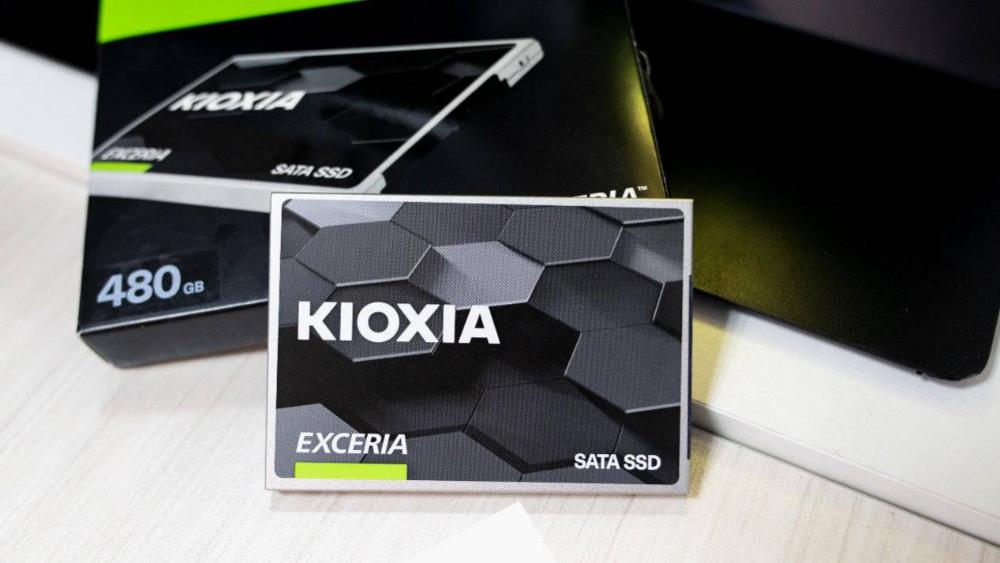
In this sense, Kioxia was fortunate.
After Bain Capital led the acquisition, it broke free from the constraints of Toshiba's massive corporate structure, allowing it to respond to market changes more flexibly.
During this period, despite several years of industry downturns, Kioxia finally saw its performance explode as demand for high-performance storage (especially enterprise-grade SSDs) from AI servers skyrocketed.
Just imagine: if Kioxia had remained within Toshiba, would it have achieved what it has today?
Toshiba completely missed out on Kioxia, and missed an entire era.
But Kioxia gained a new lease on life.
Toshiba's story is a classic case of "short-term survival priorities overriding long-term principles" and "bureaucratic systems stifling innovative businesses."
In reality, when a company is facing its most difficult operational challenges, selling off its most core and future-oriented assets is often the easiest decision to make—but it can also be the most fatal one.
This is also the moment that truly tests the vision of a company's leader: at a critical moment of life and death, will you sell off your "future" to preserve your "present"?
Finally, imagine that you were the president of Toshiba a decade ago—what would you have done?
This article originates from the WeChat Official Account "Zhengjieju" (ID: zhengjieclub), authored by Zhengjieju, and published with authorization from 36Kr.