How overhyped is the 990,000-yuan bionic companion robot?
Recently, bionic companion robots have stepped into the spotlight. Unlike the "utility-focused" humanoid robots in factories that handle box-moving and inspection tasks, this new category of machines does not perform household chores—they exist solely for emotional connection. Their core function is to chat with users and deliver emotional value, with designs crafted to mimic human appearance as closely as possible, so users never feel like they are issuing commands to a cold machine.
UBTech was the first to break into the public eye. On June 30, it launched the U1 series ultra-bionic robot, with three price tiers starting at 119,800 yuan for the half-body U1 Lite, 169,800 yuan for the full-body U1 Pro, and reaching 990,000 yuan for the male flagship U1 Ultra and 880,000 yuan for the female flagship U1 Ultra.
Founder Zhou Jian announced on the spot that total pre-orders across the entire series had reached 13,361 units. However, the true weight of this order figure requires careful scrutiny: most reservations were placed before prices were officially revealed. Under the pre-sale rules, users only needed to pay a 3,000-yuan deposit to secure their spot, with the remaining balance due after July 16—and full, no-questions-asked refunds were available before final payment.
Two days later on July 2, adult product brand Chunshuitang released its realistic humanoid companion robot, opening pre-sales on Tmall and JD with a price range of 15,800 to 16,800 yuan, and scheduled mass deliveries starting August 1. This sparked a new wave of public debate. With earlier entrants including Songyan Dynamics, EX Robots, Zhuoyide, Realbotix, and Shouxing Technology, both domestic and international robotics firms and adult product manufacturers have flooded into this market. Current known product prices span from 15,800 yuan to 990,000 yuan—a gap of over 60 times.
Alongside soaring popularity, negative feedback has also piled up: average battery life lasts only 2-4 hours, facial emotional expressions appear stiff and mechanical, and dialogue responses suffer from noticeable delays. Even products priced near a million yuan have yet to achieve fully natural, fluid interaction.
Between the explosive pre-order figures announced at launch events and user complaints that "the robot breaks immersion after a couple of chats, and the build quality falls short of expectations," just how large is the bubble in this emerging market?
01. Three Development Paths, Prices Differ by 60x
Bionic companion robots on the current market come in diverse forms, but they can be broadly categorized into three main types.
The first type: Full-body mobility, fully human-like appearance.
Representative products include UBTech's U1 Ultra, Shanghai Zhuoyide's Moya, and the full-body Harmony model from overseas firm Realbotix. These robots are priced around the million-yuan mark, with Realbotix's full-body Melody model even reaching $175,000 (approximately 1.25 million yuan).

UBTech's Bionic Robot
This high price point correlates directly with the degree of human likeness. The biggest feature of this category of companion robots is their ability to independently perform a wide range of movements, with facial expressions and skin texture that closely mimic real humans.
For example, UBTech's U1 Ultra has 88 movable joints across its body, 33 facial actuation points for generating expressions, and is entirely covered in platinum silicone skin—designed to feel human from the fingertips to the gaze. The official emotional interaction specifications are equally impressive: its emotional large model can recognize over 20 subtle human emotions with a lab recognition accuracy exceeding 90%. Its computing system features both "fast thinking" and "slow thinking" modules, capable of delivering intuitive responses within 500 milliseconds while also running trillion-level deep reasoning. Lip movements sync perfectly with speech, with latency suppressed below 20 milliseconds.
This configuration has one clear goal: eliminate the "robotic" feel as much as possible. But no matter how impressive the specs are, most of these results are achieved under ideal lab conditions. "It remains to be seen whether these robots can withstand complex lighting, background noise, and unexpected commands in real household environments," notes Qian Gong, an embodied intelligence industry practitioner.
The second type: Human-like key features, cost-saving elsewhere.
Representative products include UBTech's U1 Lite, U1 Pro, and Songyan Dynamics' "Xiaoyue," priced from tens of thousands to hundreds of thousands of yuan. These products typically remove or simplify lower limb structures, focusing resources on the head and face. The U1 Lite, for instance, only includes an upper body, but retains 19 independent micro-actuators on its face to generate over 30 complex micro-expressions. Songyan Dynamics' "Xiaoyue" is equipped with 30 miniature movable joints and 11 drive motors in its head, designed to perfectly sync lip movements with speech for greater realism.
The third type: Full body, no walking capability.
Represented by Chunshuitang's realistic humanoid companion robot with a starting price of 15,800 yuan. While this product has a complete physical form, it lacks active walking functionality. Its core selling point is the silicone body refined over decades of development in the adult products industry, paired with a large model dialogue system. Chunshuitang founder Chunshu has deep roots in the adult products sector, and his mass production experience with silicone dolls has allowed the company to reduce full-body silicone skin costs to the thousands of yuan level, creating a significant price gap with competing products.

Chunshuitang's Bionic Robot
Qian Gong points out that the current core user demand for "companionship" is the feeling of "being understood," while "looking exactly like a human" is a secondary priority. A chat-enabled silicone body could deliver more actual companion value than a non-conversational full-body robot.
But a new cohort of players in the industry is attempting to strike a middle path.
Ava, Head of Strategy at bionic companion robot firm Delight Tech, told *Dingjiao One*: "There is no unified standard playbook for realistic companion robots right now. Every company is experimenting with different combinations based on their own vision." Delight Tech, for example, has opted for a bipedal design paired with full-body silicone realistic skin. Its first model, the E1, is priced at the ten-thousand-dollar level, dramatically lowering the entry barrier compared to high-end realistic robots like UBTech's 990,000-yuan U1 Ultra, making bionic robots more accessible to mass consumers and commercial use cases.
Ava explains: "From the very beginning, we positioned our product as a consumer-grade offering, so we prioritized low-cost hardware. Premium components do deliver more stable walking performance, stronger motion capabilities, and lower algorithm requirements—but our overall costs remain fully controlled."
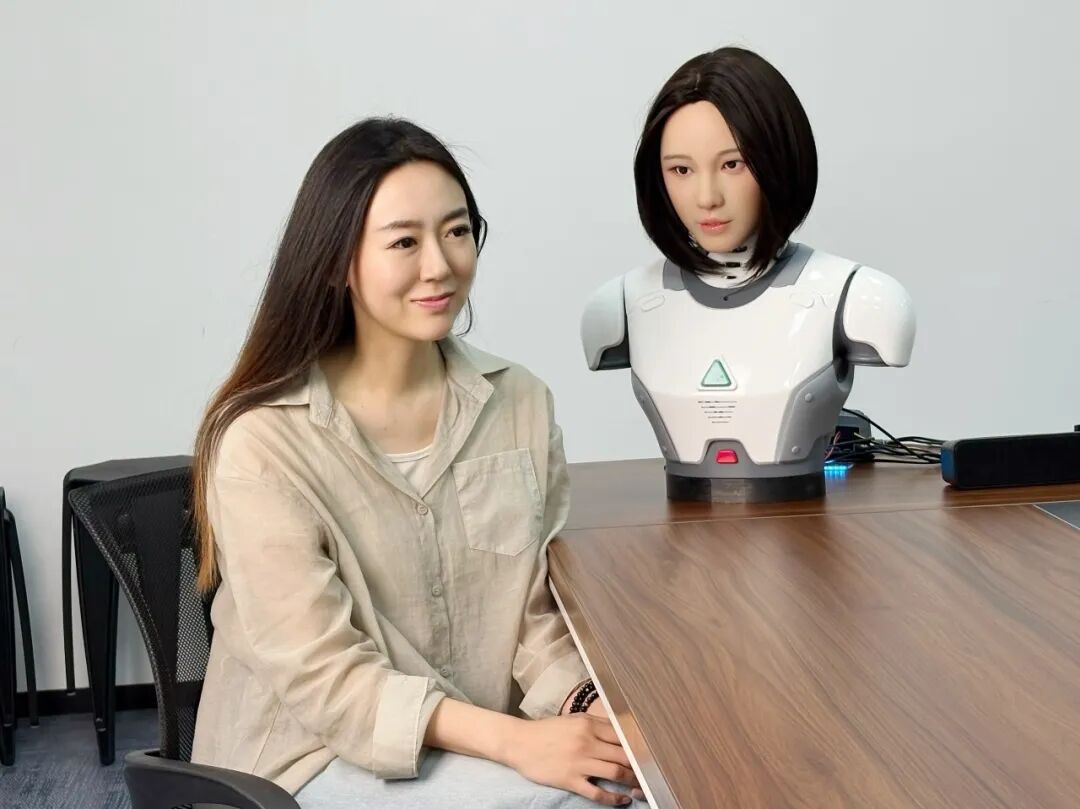
Ava with Delight Tech's Realistic Robot
The company is targeting the emotional companionship needs of Gen Z and anime subculture communities. "This demographic does not need a million-yuan full bionic robot, but they also refuse to accept a completely static, non-interactive model," Ava says. "A robot that can stand, interact, and stay affordably priced is exactly what they want."
It's clear that differences across product lines extend far beyond cost—they reflect distinct bets on "who the target user is" and "how much they are willing to pay for human-like features."
That said, user demographics for this emerging bionic companion robot category are still being explored.
Zhou Jian has publicly stated that the emotional companionship market has a huge untapped consumer base of 400 to 500 million people, a broad group that ranges from elderly individuals living alone to Gen Z young adults. Ava also acknowledges that her team is still conducting user research, believing that the current stage is better spent building user awareness rather than rigidly defining target boundaries. This means most industry practitioners are still searching for the actual paying customers of realistic companion robots.
02. Are Bionic Companion Robots Worth Their High Price?
Currently, bionic companion robots have an extremely wide price range.
Among "humanoid robots," UBTech's dance-capable Unitree G1 base model starts at 99,000 yuan, while the "chat-only" UBTech U1 Ultra sells for as high as 990,000 yuan—a tenfold price difference. Within the "companionship" track, Chunshuitang's 160cm realistic humanoid companion is priced at just 15,800 yuan, over 60 times cheaper than the U1 Ultra.
Where does this massive price gap originate? We break it down using the UBTech U1 Ultra, which sits at the very top of the price ceiling.
It should be noted that UBTech has not released the full BOM (bill of materials) details for the U1 series, only stating that "this price point allows for a reasonable profit margin." Our estimates are based on the industry's general cost structure for full-size humanoid robots. (Note: On one hand, the construction of bionic robots varies widely across manufacturers, and most companies do not disclose detailed BOM data, making precise figures unavailable. On the other hand, there is no existing comparable BOM precedent for purely bionic companion robots, while the cost structure of full-size general-purpose humanoids is a relatively transparent industry reference point.)
According to Ava, all visible and tangible physical components of a bionic companion robot, plus the on-board end-side chips deployed inside the robot body, count as hardware costs. The allocated development costs for the overall algorithm software, as well as later cloud server computing power and system upgrade service fees, are classified as software costs.
The first major cost component: Joints.
Ava explains that the internal structures of bionic companion robots vary dramatically across manufacturers, leading to uneven cost levels—but current costs are overwhelmingly concentrated in hardware. Among all hardware expenses, joint modules represent the most rigid cost, as the number of degrees of freedom directly determines overall expenditure.
For comparison, the cost structure of the Unitree G1 base model is more transparent. According to a breakdown report from China Post Securities, the total BOM cost of the G1 base model is approximately 41,600 yuan. Its 14 small joints (each with a BOM of ~1,000 yuan, including motors, reducers, encoders, structural parts, and drive boards) and 9 large joints (each with a BOM of ~1,500 yuan, same component makeup) account for a combined 27,500 yuan. This calculation shows that joint costs make up roughly 66% of the total BOM.
Using the G1's average per-joint cost (~1,200 yuan) as a rough estimate, the 88 degrees of freedom advertised for UBTech's U1 series would translate to joint costs of around 100,000 to 150,000 yuan. But this figure only serves as an order-of-magnitude reference—actual costs are significantly higher.
First, the G1's joints are industrial-grade general-purpose components, designed primarily for walking and load-bearing. In contrast, the U1 Ultra extensively uses facial micro-joints that must simultaneously meet multiple strict requirements: high-precision positioning, low-latency response, and low noise, all within an extremely confined space. Individual units typically cost an order of magnitude more than standard industrial joints.
Second, not all 88 degrees of freedom in the U1 series are motor-driven active joints. Some are passive degrees of freedom (no motor, moved by gravity or external force). This means the advertised "degrees of freedom" do not perfectly align with the industry's standard definition of "motor-driven joints." The actual number of active joints is less than 88, so hardware costs will be correspondingly lower than the rough upper limit of "88 × G1 average price." Even so, because the U1 Ultra's active joints have far higher specifications than the G1, total joint costs still greatly exceed the 100,000 to 150,000 yuan range.
Ava explains that to replicate a 1:1 slender human physique (for example, compressing hip width to around 30cm), motors and reducers must be miniaturized to the extreme—but miniaturization directly leads to a sharp drop in output torque. Most general-purpose humanoid robots must use wider hips and thicker bodies to guarantee walking and load-bearing capabilities. When bionic robots strictly adhere to human body proportions, the narrow internal space cannot easily accommodate high-power drive units. With hardware constraints in place, the robot must rely on algorithm models to achieve stable walking, standing posture maintenance, and fine limb movements. The combined challenges of structural integration and motion control inevitably drive costs upward.
The second major cost component: Bionic craftsmanship.
While joints determine how well the robot can move, skin technology determines how human-like it appears.
Thanks to its in-house factory and large-scale mass production experience, Chunshuitang controls the full-body skin cost of its silicone dolls at the thousands of yuan level. EX Robot's bionic head uses 3D printing plus medical-grade polymer skin, keeping costs manageable but limiting precision. Products at the U1 Ultra tier, however, require facial precision at the micro-expression level, full platinum silicone coverage, small-batch custom production, plus manual implantation of details like eyebrows and eyelashes. According to industry insiders, these two elements alone—silicone skin and bionic craftsmanship—could cost tens of thousands to over 100,000 yuan.
But even with massive investment in skin technology, bionic companion robots still face unavoidable inherent design limitations.
Realistic artificial skin is typically made of liquid silicone. After prolonged use, silicone oil easily precipitates out, staining clothing, attracting dust, and leaving a greasy, unpleasant feel that severely undermines the "human-like" tactile experience. "This is a universal problem that mass-produced bionic skin has yet to perfectly resolve, requiring continuous material modification and iterative improvement," Ava notes.
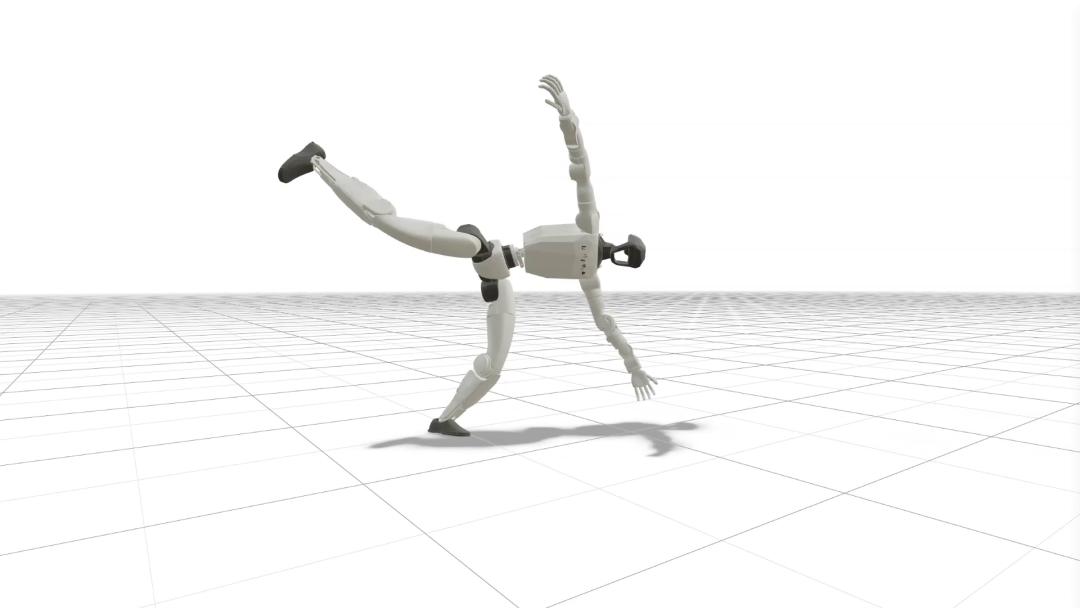
Image Source / Unitree Application Platform
The third major cost component: Other hardware and R&D amortization.
Beyond the two major cost categories of joints and skin, the U1 Ultra's hardware costs also include custom components like computing chips, sensors, and batteries. None of these currently have public price quotes, and most are purchased in small batches, making precise calculations difficult. Add to this R&D amortization (including per-unit allocation of development costs for self-developed emotional large models like Resonance-LM), and the total amortization amount depends entirely on actual sales volume. All factors considered, the manufacturing cost of a full-size high-bionic robot can indeed reach the hundreds of thousands of yuan level.
The core problem now is that the heavy investment in premium hardware has not delivered a corresponding level of intelligence.
Virtually all bionic companion robots on the market today can only stably process basic emotions like happiness and surprise. When faced with complex emotional states, their recognition and response capabilities decline sharply, making it difficult to generate natural, coherent replies.
Where does the issue lie? First, the industry's technical paths have become stratified.
Leading manufacturers like UBTech follow the path of self-developed emotional large models. The U1 series is equipped with the self-developed Resonance-LM emotional large model