The most viral city in Tibet is crowded with young people on their gap break.
Departing from Lhasa Station, the train travels eastward along the Yarlung Tsangpo River, with the scenery outside the window swiftly receding. What began as barren, rocky hills devoid of any vegetation gradually transforms into stretches of dense forests after passing through several long tunnels. At every station stop, the humid air surging in the moment the doors open announces to all passengers: you have entered the hidden wonderland of southeastern Tibet.
This is Nyingchi. Spanning 114,870 square kilometers, this region administers 6 counties (districts) — Bayi, Gongbo'gyamda, Nang, Bomi, Zayü, and Motuo — while overseeing the county-level city of Milin. It is home to iconic attractions such as the Yarlung Tsangpo Grand Canyon, Mount Namcha Barwa, the Lulang Forest Sea, and Basong Tso.
Here, many long-held assumptions about Tibet no longer hold true. With an average elevation of 3,100 meters, Nyingchi defies the common image of a frigid, arid, oxygen-scarce Tibetan city. The Yarlung Tsangpo Grand Canyon allows warm, moist air currents from the Indian Ocean to travel unimpeded northward, giving Nyingchi annual precipitation levels comparable to regions south of the Yangtze River. Lush forests continuously generate abundant oxygen, and the confluence of the Yarlung Tsangpo and Nyang rivers makes Nyingchi the wettest and greenest area in Tibet.
Since 2006, from the Qinghai-Tibet Railway to the Lhasa-Nyingchi Railway, the plateau's rail network has continued to expand, ensuring that travelers entering Tibet never miss Nyingchi. The railway has not altered Nyingchi's snow-capped mountains or peach blossoms, but as this hidden paradise becomes easily accessible, the city is forging new narratives.
Nyingchi: The Flowing DNA
In the late 1990s, 6-year-old Xiao Ye, a native of Haidong, Qinghai, first traveled to Nyingchi with his parents. The family took a train from Xining to Golmud, then endured several bumpy days on a long-distance bus before finally catching their first glimpse of Nyingchi — known as "Jiangnan of Tibet."
From then on, Xiao Ye settled in Nyingchi with his parents, where he studied, made friends, and learned the local dialect. His family ran a mountain products business, and growing up, he watched his parents purchase matsutake, cordyceps, and walnut oil from local residents. He often ventured into the mountains to harvest these products himself, becoming intimately familiar with every corner of Nyingchi and proudly calling himself "half Tibetan."
The land of Qinghai nurtured his ancestors, but Nyingchi's humid air shaped his youth. Xiao Ye still recalls returning to his hometown at 15 to renew his ID card, only to feel unwell after a few days, constantly longing to return to Nyingchi. After graduating, he tried working in Zhongshan, but even with the vast world outside, he never felt at ease — it was only when he came back to Nyingchi that his heart found true peace.
"New Nyingchi residents" like Xiao Ye are far from rare. Since ancient times, Nyingchi has stood as a frontier for exchanges between Tibet and inland China. The Ancient Tea Horse Road once passed through present-day Zayü and Nyingchi's urban area; the Tang-Tibet Ancient Road and the ancient town of Taizhao in Gongbo'gyamda served as vital thoroughfares for connections between Qinghai-Tibet and Sichuan-Tibet. Meanwhile, its diverse landscape allows visitors to witness vegetation ranging from Hainan Island to the Arctic within a single day — a short walk into the hills brings glaciers within reach. Nyingchi's snow peaks, peach blossoms, canyons, and meadows regularly go viral on social media, drawing travelers from across the globe. In this sense, Nyingchi is inherently imbued with a dynamic, flowing spirit.
In 2021, the Lhasa-Nyingchi Railway opened, cutting travel time between Lhasa and Nyingchi to 3 hours and 49 minutes, and bringing ever more people to the region. Shortly after, while helping with his family's business, a fellow Qinghai-born friend introduced Xiao Ye to working as a private car charter driver.
Perhaps because Guangdong has paired up to support Nyingchi since 1994, many of Xiao Ye's early tourists hailed from Guangdong. For those living in low-altitude regions, the experience of being surrounded by snow-capped mountains is a rare novelty. In his vehicle, the most frequent question was: "What mountain is that?" Xiao Ye would patiently explain: this is Mount Gyala Peri, the sacred Mount Bonri, the Kangri Garpo Range, Mount Namcha Barwa... and there are even more mountains whose names Xiao Ye himself does not know.
The snow-capped mountains silently receive pilgrimages from travelers, seemingly untouched by the passage of time, but at their foothills, life in Nyingchi is evolving at a remarkable pace.
When Xiao Ye and his parents first moved to Nyingchi, the main road stretched only 5 to 6 kilometers, lined entirely with small wooden houses. Nearly 30 years later, the urban area has seen countless new buildings, wider roads, and in peak tourist seasons, hotel parking lots are packed with tour buses. The growing number of visitors has transformed the cityscape: chain milk tea shops and cafes now dot Nyingchi's streets, coexisting with Tibetan restaurants and lounges to serve guests from all corners of the world.
Ah Ning, a native of Guangdong, has also witnessed these profound changes. In 2013, right after graduating from university, he joined the Guangdong Aid-Tibet Work Team to Nyingchi, taking charge of documentary videography and logistical support.
During his three-year tenure, Ah Ning admired Nyingchi's year-round beauty and watched new residential complexes and buildings rise from the ground. "I always felt an indescribable sense of closeness to Nyingchi, as if my body and soul had merged with the local customs and culture." Even today, his WeChat profile still lists Nyingchi as his location — this place has become his second home.
Ah Ning once dreamed of putting down roots here. "Many people opened homestays and youth hostels, and quite a few were run by backpackers from Guangdong." In 2015, he and several friends pooled together over 100,000 yuan to open a youth hostel in Nyingchi's urban area in their spare time.
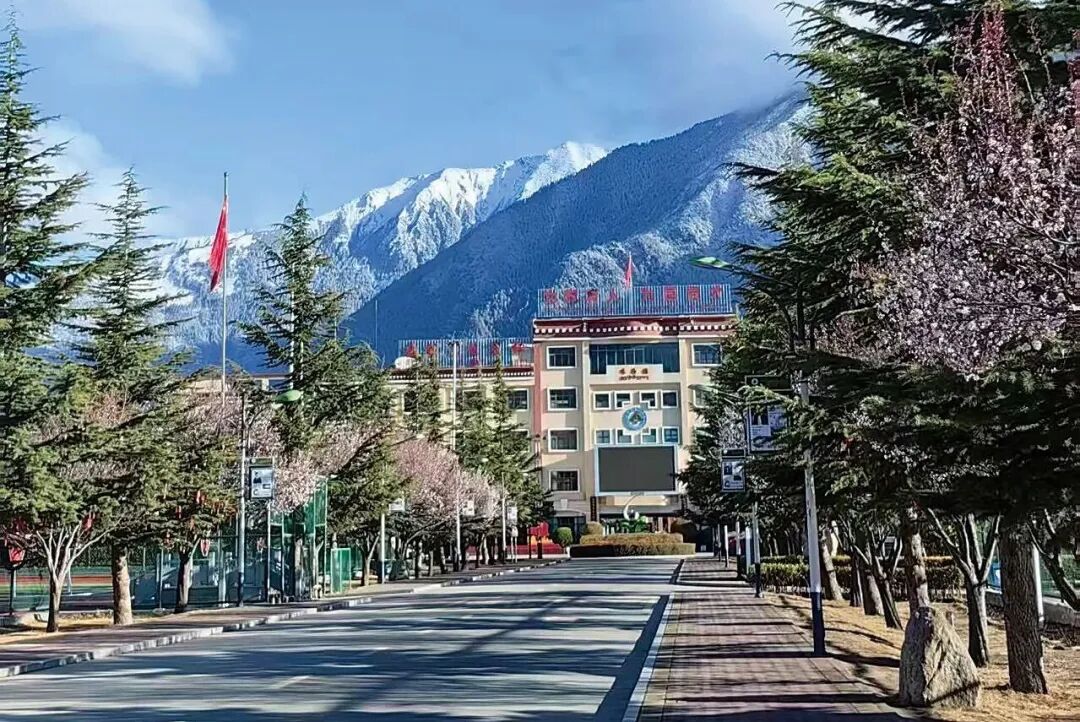
Photo provided by the interviewee
In the era of poor transportation, "entering Tibet" was often an arduous journey. Many traveled on foot, by motorcycle, or hitchhiked along National Highway 318 toward Lhasa, making Nyingchi an essential transit point with huge accommodation demand. Although Ah Ning's youth hostel was not particularly luxurious, it was fully booked every peak season, with the front desk phone ringing nonstop from dawn to dusk. Unfortunately, despite operating from the start of the year through the National Day holiday and experiencing several peak seasons, the hostel ultimately closed due to low-end positioning and the operators' inexperience, leaving them with little profit.
While Ah Ning's plan to settle down did not succeed, Nyingchi's tourism boom never ebbed — it only grew stronger. In 2025, Nyingchi received over 17 million visitors, nearly a fourfold increase from the 3.5172 million recorded a decade earlier.
In the years that followed, Ah Ning returned to Nyingchi every few years, noticing subtle yet consistent changes each time. For instance, the viewing platform at the Shergyla Mountain Pass has become standardized with a parking lot, and once street vendors selling bracelets, tapestries, and Tibetan knives have moved their stalls into the visitor center; the picturesque Nyang River Scenic Area has been developed into a formal tourist attraction; and the hiking route he and his friends once took to Motuo has disappeared from maps as transportation infrastructure improves.
When the Lhasa-Nyingchi Railway opened in 2021, an excited Ah Ning specifically took the Fuxing bullet train from Lhasa back to Nyingchi. "Before the high-grade highway opened, the 400-kilometer trip between Lhasa and Nyingchi took nearly 8 hours by car." Now, the 3+ hour journey treats passengers to unobstructed views of the mountains and rivers that lie between the two cities.
The convenience brought by the improved plateau rail network has not only shortened spatial-temporal distances but also quietly reshaped the relationship between people and the land. Among Nyingchi's many attractions, nowhere has changed more dramatically than Suosong Village.
Borrowing a Lifestyle from Nyingchi
Nestled within the Yarlung Tsangpo Grand Canyon Scenic Area, Suosong Village is hailed as the best vantage point to admire Mount Namcha Barwa up close. Ten years ago, when Ah Ning traveled to Suosong Village, he stayed in a family-run hostel owned by Tibetan friends, eating and living alongside the family. Although the hostel was not luxurious, opening its wooden windows revealed a direct view of Mount Namcha Barwa, and the quiet village exuded a pristine, untouched charm.
Around the same time, Hui Ge, a native of Taizhou, was also captivated by this tiny village beneath Mount Namcha Barwa on his first visit. Having lived in places like Xinjiang and Ningxia for several years during his travels, he eventually returned to Suosong Village and became a homestay manager. In his memory, this was once an ordinary village without even paved asphalt roads. Over time, photographers began arriving to shoot Mount Namcha Barwa, variety shows came to film on location, and as Nyingchi's Peach Blossom Festival gained fame, more and more people flocked here, guided by social media.
Today, this village, whose main road stretches barely 3 kilometers, boasts over 30 homestays, all advertising "unobstructed views of Mount Namcha Barwa." Standing by the floor-to-ceiling windows in their rooms, guests can gaze out at the sacred mountain. Some high-end hotels with prime locations charge up to 5,000 yuan per night during peak seasons. Construction is ongoing, and the sound of power drills for renovations fills the air during the day. With the launch of the Yarlung Tsangpo downstream hydropower project last year, new buildings are also rising in nearby Tunbai Village and the more remote Dalin Village. "Chatting with Tibetan friends, you'll find they have little interest in running businesses — harvesting cordyceps and matsutake already provides a self-sufficient living, and now they can earn extra income by renting out their homes. That's why almost everyone involved in tourism here is from out of town," Hui Ge explains.
Once, Suosong Village only had simple photo spots, but now a growing number of photographers offer professional travel photography services with increasingly advanced equipment. Some even use drones to shoot 80-yuan "leaping from the ground" videos. At night, newly opened bars in the village light bonfires, singers perform, and young people dance hand in hand, toasting late into the night.
It can be said that Suosong Village has no shortage of young people — or rather, young outsiders. Like Hui Ge, they were drawn to Suosong, decided to stay, and now collectively run the village's tourism operations. The receptionist at the homestay where I stayed is a Guangdong woman under 30 who traveled through Gansu last year, worked in Nyingchi for six months this year, and will soon head to the Ngari region. The 24-year-old housekeeping staff member comes from Yunnan; after leaving Suosong Village, she plans to go hiking in Nepal and learn to make coffee next year. Wherever she finds beautiful scenery, she stays to work for a while before moving on to her next destination.
The owner of the coffee shop halfway up the village's hillside also found the courage to quit her job after arriving in Suosong. She resigned from her job in Shenzhen, bought a small courtyard in the village, and personally designed and renovated 6 unique cabins to house both a coffee shop and a homestay, even adopting a stray white puppy. After years of careful management, the spot has become a popular social media check-in location.
The receptionist at another homestay also comes from Guangdong. Three years ago, she took a 60+ hour hard-seat train from Guangdong to Lhasa, and a fellow traveler suggested they go to Suosong to watch the "sunlit golden mountain" (the snow peak glowing at sunrise). She casually asked the owner of the homestay where she was staying for a job, and ended up living there for over five months. This year, she returned to Suosong Village and joined her current homestay. As for the future, she says, "We'll see."
For those accustomed to urban life, this lifestyle might seem unimaginable, but as railways blur the absolute distance of faraway places, Nyingchi has become a low-stakes, forgiving haven.
Hui Ge has seen countless people come here hoping to heal themselves or find answers. "Many think Tibet can offer some kind of 'redemption,' but in reality, Tibet can't 'save' anyone," he says. "When someone steps away from their familiar routine and embraces a completely different life thousands of miles away, they naturally find peace. Whether in Lhasa, Nyingchi, or Taizhou, the only person who can truly rescue you is yourself."
Young people choose Nyingchi mostly for its unrushed, laid-back pace. In Suosong Village, Lulang Town, or elsewhere, you can always find notices from Nyingchi's bars and homestays recruiting volunteer workers — in exchange for help, you can stay for months. Strangers easily share their stories, and regardless of where they come from or where they are going, everyone treats each other with the utmost kindness.
That's why so many people return again and again: not to turn this place into another standardized, assembly-line tourist spot, but to borrow a lighter, more unburdened way of life from Nyingchi.
The growth of cultural tourism has transformed Nyingchi's streets and scenic areas, even affecting local property prices, as commercial logic from outside Tibet rapidly reshapes this land. Yet at the same time, peach blossoms still only bloom in March and April; catching a full view of Mount Namcha Barwa still requires a lucky, clear day; visiting Motuo still means following the "enter two ways, exit one way" traffic rule that slows down itineraries... Even the rapid heartbeat that often comes with high altitudes calms down in Nyingchi's humid air.
The question lingers: "What's next?" But there is no anxiety in the asking, only a shared sense of rhythm. Nyingchi does not claim to solve all dilemmas, but it always allows every visitor to take their time before finding their own answers.
This article is from the WeChat public account "New Weekly" (ID: new-weekly), written by Mu Yang, and published with authorization from 36Kr.