Chinese caviar, taking over first-class cabins
Author | Xie Yunzi
Editor | Zhang Fan
On June 30, 2026, Hangzhou Qiandao Lake Xunlong Technology officially listed on the Hong Kong Stock Exchange. Despite carrying the "technology" label, this company is actually in the "fish farming" business, and is the well-deserved "world's largest caviar enterprise".
The capital market has given this traditional track a warm response.
On its listing day, Xunlong Technology opened at HKD 103, up 36.42% from its issue price of HKD 75.5, with a total market value of about HKD 11.215 billion. By market close, the share price further climbed to HKD 114, representing a 50.99% increase.
During the preceding public offering phase, the company even secured an oversubscription of 2,134.81 times. Eight cornerstone investors including BlackRock, Baring, Taikang Life, and Jinglin collectively subscribed for approximately HKD 615 million, accounting for nearly 50% of the offered shares. Based on the data, this was a near-perfect IPO.
The question is: Why is a "fish farming company" with annual revenue of less than 800 million yuan so sought after by the market? Has Xunlong Technology really enabled Chinese people to achieve "caviar freedom"? Beneath the water surface, how many unseen reefs are hidden?
The Chinese Chapter of the "Black Gold" Business
Caviar is a seasoned fish egg side dish, rich in protein, unsaturated fatty acids, and various trace elements, known as "black gold". Due to its complex production process and scarce yield, it was once regarded as a symbol of status and class in Europe and America.
But the emergence of Xunlong Technology rewrote this narrative.
In 2003, 33-year-old Wang Bin resigned from the "iron rice bowl" at the Chinese Academy of Fishery Sciences, raised 6.6 million yuan, and founded Xunlong Technology at Qiandao Lake in Hangzhou. Three years later, Xunlong Technology produced China's first can of farmed caviar that met international standards — its own brand "KALUGA QUEEN" was officially established.
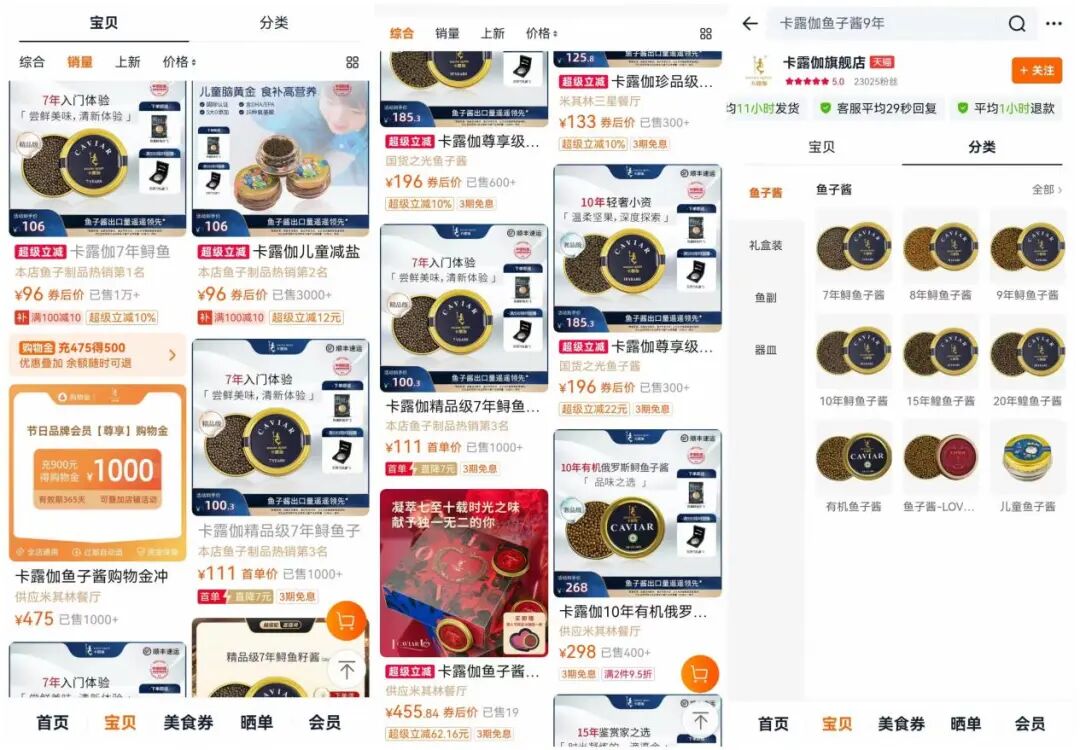
Kaluga pricing, image screenshot from Tmall APP
Thereafter, driven by overseas exports and OEM business, Xunlong Technology's revenue rose year after year. More impressively, by greatly improving farming and production efficiency, Xunlong Technology successfully "brought down" the price of entry-level caviar.
With the implementation of the Convention on International Trade in Endangered Species of Wild Fauna and Flora, global trade in wild caviar has been completely banned since 2010. In 2015, Xunlong Technology achieved a breakthrough in large-scale artificial breeding technology. For the 11 years that followed, the company's sales volume ranked first globally consecutively.
According to the prospectus, one out of every three bottles of caviar worldwide comes from Xunlong Technology.
As of now, the company operates 8 major breeding bases, with a sturgeon farming volume of 14,900 tons, a farming utilization rate of 90.9%, and the largest sturgeon reserve in the world.
On the technical front, Xunlong Technology has shortened the age for identifying sturgeon gender from 2-3 years to 6 months, increased the egg-bearing rate from 8% in 2006 to the current 18% — far exceeding the industry average of 10% — and raised the survival rate to 97%.
It is worth noting that despite the realization of large-scale breeding, the supply speed still cannot keep up with the explosive growth of demand. Global caviar has long remained in a state where supply cannot meet demand.
Coupled with rising feed costs, increased demand for high-end products, and enhanced brand premium capabilities, China's caviar export prices have been rising year after year. However, the price of entry-level caviar for the general public has plummeted. In the domestic market, 10g entry-level caviar products sell for less than 100 yuan.
In 2025, Xunlong Technology's annual caviar sales volume reached 292 tons, with a global market share of 36.1%. It was also in this year that China's annual caviar output reached 436.8 tons, accounting for 54% of the global total. Xunlong Technology has undoubtedly become the main force supporting China's leading position in the industry.
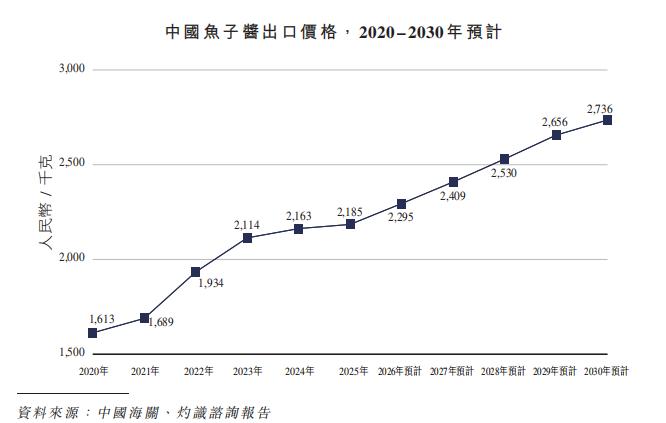
Image screenshot from the prospectus
Underwater Crisis: Three Under Currents
From a financial perspective, caviar is indeed a lucrative business.
From 2023 to 2025, Xunlong Technology's revenue increased from 577 million yuan to 769 million yuan, representing a compound annual growth rate of 15.4%; its net profit rose from 273 million yuan to 365 million yuan, with a net profit margin consistently maintained above 47%. In 2025, the company's net profit margin reached 47.46%, exceeding the vast majority of food companies listed on A-shares — second only to Kweichow Moutai.
However, beneath the impressive book figures, there are also structural crises.
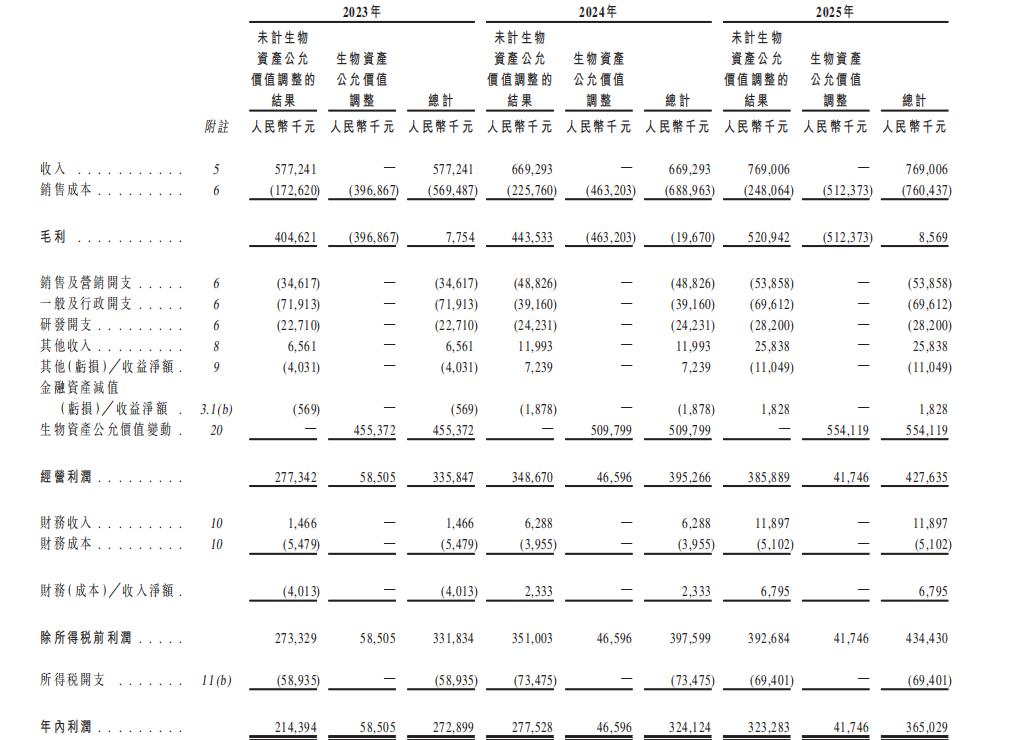
Image screenshot from the IPO prospectus
Crisis 1: Overly concentrated main business.
Breaking down revenue by business segment, caviar products contribute over 90% of Xunlong Technology's total revenue — with the proportion remaining as high as 90.8% in 2025. Within this single caviar category, production is heavily concentrated on two sturgeon species: Russian sturgeon and hybrid sturgeon, which together account for over 80% of total output. Other businesses such as sturgeon products make up less than 10%, and no second growth curve has yet been formed.
This means that once the caviar market experiences demand fluctuations, the company will face a predicament with no fallback options.
Crisis 2: Dependence on overseas OEM business, lack of brand premium.
In 2025, the company's overseas revenue reached 644 million yuan, with its proportion in total revenue climbing from 76.7% in 2023 to 83.8%. Its products are sold to 46 countries and regions. Among them, Europe is the largest market, accounting for 43.4% of total revenue; the United States is the largest single market, generating about 216 million yuan in revenue, accounting for 28.8%.
However, breaking down the composition of overseas revenue, Xunlong Technology is mostly engaged in B2B business.
Of the 644 million yuan in overseas revenue in 2025, third-party brand OEM business contributed 527 million yuan, accounting for 68.6% of total revenue. Globally, around 60% of caviar consumption scenarios are concentrated in the catering sector. Xunlong Technology's top five customers are all caviar companies located in Europe and Russia.
In contrast, Xunlong Technology's own brand "Kaluga" appears more frequently in domestic e-commerce channels, as well as in first-class cabin meals of airlines including Air China, Singapore Airlines, and Lufthansa.
In other words, nearly 70% of the products sold by Xunlong Technology bear other companies' brands, resulting in low consumer awareness worldwide. The prospectus also shows that in 2025, total revenue from the company's own brands was only 242 million yuan, accounting for 31.4% of total revenue.
This positioning as the "OEM king" implies weak brand premium capabilities. Combined with factors such as trade frictions, tariff adjustments, and exchange rate fluctuations, the impact on profits cannot be ignored.
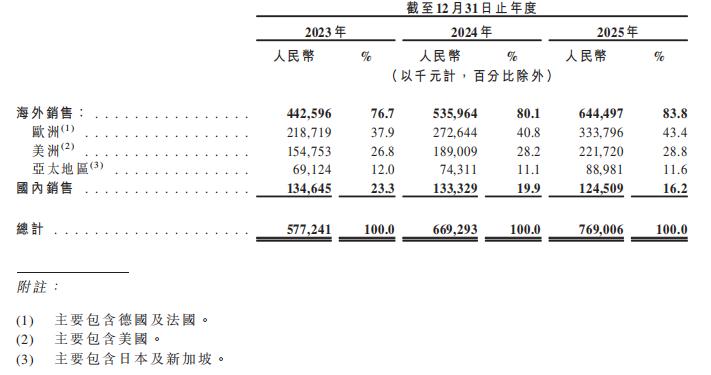
Image screenshot from the IPO prospectus
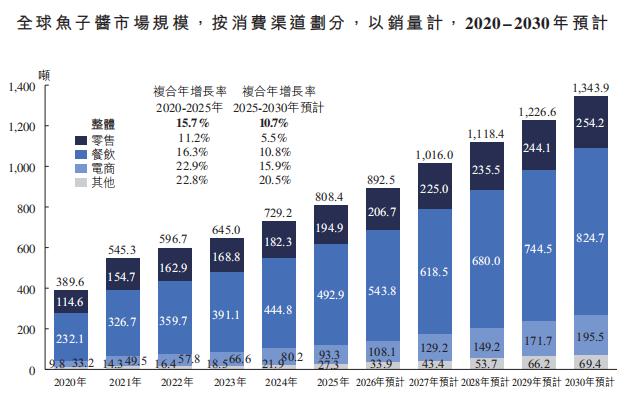
Image screenshot from the IPO prospectus
What deserves more attention is the slowdown in the domestic market.
In 2025, Xunlong Technology's domestic revenue was only 125 million yuan, a decrease from 135 million yuan in 2023 instead of an increase. Caviar acceptance among domestic consumers remains limited.
In the Chinese market, caviar is not an essential food in daily diets, and some people even tease it as "expensive pickles".
In 2025, global total caviar sales reached 808.4 tons. Although the Chinese market achieved a compound annual growth rate as high as 47.5%, its sales share was only 9.2%. In more Chinese dining scenarios, the application of caviar is still in the early exploration stage, and consumer education is far from complete.

In the movie, the nouveau riche played by Andy Lau is dissatisfied with the restaurant weighing caviar by the gram; image screenshot from iQiyi
Crisis 3: Biological assets are full of uncertainties, which is also Xunlong Technology's deepest "underwater" risk.
By the end of 2025, the book value of the company's biological assets reached 1.749 billion yuan, accounting for over 57% of total assets. These assets exist in the form of sturgeon under waters such as Qiandao Lake. The company uses a fair value cash flow model to measure these assets, and the valuation relies on a large number of subjective parameters including mortality rate, future selling price, and discount rate.
In Xunlong Technology's "financial language", sturgeon grow and their value increases. Changes in the value of these biological assets directly boost gross profit, but do not bring actual cash flow. In 2025, this figure contributed a 42 million yuan increase to gross profit, accounting for 11.4% of total profit. Although this represents a significant drop from the 21.4% share in 2023, the core issue has not disappeared.
In July 2024, abnormal sturgeon deaths caused by summer floods reduced the book value of biological assets by 25 million yuan, which in turn caused the gross profit margin to plummet to -2.9%. A clear fact is that biological assets are more like "paper assets" that are difficult for external parties to verify, which inevitably brings to mind the negative case of Zhangzidao.
Epilogue: Xunlong Technology Is Not Zhangzidao Yet
Zhangzidao is an A-share listed company, once known as the "blue-chip stock at sea", and was an early large-scale premium seafood farming enterprise in China. From 2014 to 2019, Zhangzidao's scallops "escaped" four times in total, and the company used this excuse to manipulate profits and cover up fraud.
Objectively speaking, there are essential differences between Xunlong Technology and Zhangzidao.
Zhangzidao used "non-existent scallops" to falsely reduce harvesting areas and operating costs. In contrast, the sturgeon that Xunlong Technology mainly farms has a production cycle of 7-15 years, meaning any new entrant must first go through a nearly 10-year loss-making period, which results in very few players with real scale in the global farmed caviar market.
From the perspective of the balance sheet, Xunlong Technology is also relatively stable. By the end of 2025, the company's asset-liability ratio was only 30.8%, with current liabilities of 460 million yuan and cash and equivalents on the books reaching 784 million yuan, resulting in low debt repayment pressure. Of course, this does not mean that risks can be ignored.
How to make domestic consumers accept caviar, and how to transform from an "OEM" to a retail enterprise with greater brand premium — these issues are far more thought-provoking than figuring out how much the sturgeon under the water are actually worth.
*Disclaimer:
The content of this article only represents the author's opinion.
The market carries risks, and investment requires caution. Under no circumstances do the information or opinions expressed in this article constitute investment advice to any person. Before making any investment decision, investors must consult professional advisors if necessary and make decisions prudently. We do not intend to provide underwriting services or any services that require specific qualifications or licenses to engage in for all trading parties.

Follow for more information
This article is from the WeChat official account "36Kr Finance", authors: Xie Yunzi and Zhang Fan, published by 36Kr with authorization.