After Tencent moved out of the "No.1 Overwork Building", the rent of Kexing Science Park dropped by 40%
In the summer of 2022, Amah Handmade, a wildly popular bubble tea chain, opened its doors at the Kexing Science Park in Nanshan, Shenzhen.
At 2 p.m. on the opening day, when Duoduo, an office worker at Kexing Science Park, opened the ordering page, the screen showed "145 orders / 313 drinks in preparation." On Xiaohongshu, many people shared similar experiences: ordering a cup of viral bubble tea at Kexing at noon might not get you your drink even by the end of the workday.
At that time, Kexing Science Park housed multiple core business divisions of Tencent, including Magic Cube and Photon, with tens of thousands of employees working on-site. Around 1-2 p.m., corporate afternoon tea orders starting at dozens of cups were a daily norm.
Four years later, at the same time of day, the number of drinks being prepared at the Amah Handmade Kexing store has dropped to around 180 cups.
The fading novelty of bubble tea consumption is part of the reason, but a far more significant change has taken place: Tencent, the major tenant upstairs, has moved out.
Over the past year, Tencent initiated a relocation, gradually moving its Magic Cube, Photon, and other business divisions to its new headquarters, Penguin Island. The four office towers at Kexing Science Park, covering approximately 150,000 square meters of office space, have been steadily vacated. Kexing Science Park, once known as "China's No.1 Overwork Office Building," has grown quiet.
The first to notice the shift were the bubble tea shops, pork knuckle rice restaurants, and DiDi drivers; soon after, office rental rates softened, and more units became available for lease.
And this change has spread from a single industrial park to the entire Grade A office market in Shenzhen.
Over the past decade, tech giants including Tencent, OPPO, vivo, and DJI drove the most prosperous cycle in Shenzhen's Grade A office market. Now, as these large corporations move into their own headquarters buildings, a new question faces the market: after the super tenants vacate their spaces one after another, who will fill Shenzhen's Grade A offices?
1
Tencent Vacates 4 Office Towers, Kexing Rents Correct by 40%
Starting in the second half of 2025, moving trucks have been a frequent sight at Kexing Science Park. Tencent employees packed their belongings on Fridays and started working at their new workstations on Penguin Island the following Monday.
At present, Tencent's new headquarters on Penguin Island in Dachanwan, Shenzhen, is 30% complete, with the capacity to accommodate around 80,000 employees in the future. According to Tencent's plans, by the end of June this year, 28,000 employees will be working at the new site.
Meanwhile, Tencent has successively vacated four office towers at Kexing Science Park — Buildings C1, C2, C3, and D1 — releasing approximately 150,000 square meters of office space back to the market.
The dynamics of the office leasing market have shifted.
Xie Chao, a commercial district manager at Lianjia's Nantou flagship store who is familiar with the tech park area, told Time Finance that before Tencent's relocation in October 2025, rents in the park generally ranged from 160 to 180 yuan per square meter per month.
Currently, the listed rental price for office units over 1,000 square meters at Kexing Science Park starts as low as 94 yuan per square meter per month, with most properties priced between 100 and 128 yuan per square meter per month, and top-tier units reaching a maximum of around 150 yuan per square meter per month. "The price difference depends on the size of the unit; larger spaces often have lower unit rates," Xie explained.
For comparison, according to data monitored by the Shenzhen Centaline Research Center, peak rents at Kexing Science Park once reached 220 yuan per square meter per month.
On the Beke real estate platform, 124 office units are listed for rent at Kexing Science Park, ranging from 40 to 6,240 square meters, and many listings are marked with "owner pays commission."
Beyond rent cuts, tenant incentives have also been significantly relaxed.
Xie Chao noted that landlords are now commonly offering 3 to 6 months of free rent alongside renovation subsidies; for tenants signing long-term leases, the free-rent period can extend up to one year. "Overall, rents at Kexing Science Park have dropped 30% to 40%, and landlords now prioritize reducing vacancy over maximizing high rates."
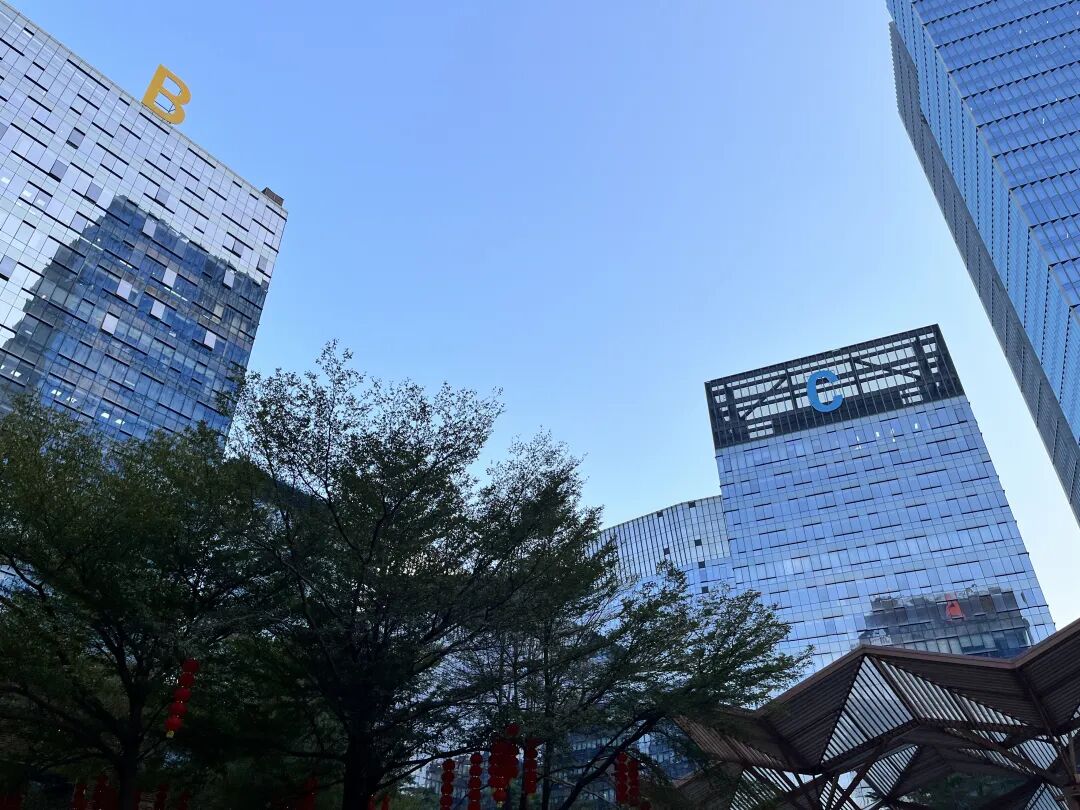
Kexing Science Park, photographed by Time Finance
The changes brought by Tencent's relocation quickly rippled down to the ground-floor businesses.
The Amah Handmade Kexing store is located in Building D1 of Kexing Science Park. Kelly (pseudonym), a store employee, said, "Back then, every afternoon around 1-2 p.m. was packed with corporate afternoon tea orders, dozens of cups at a time, and we were so busy making drinks we felt overwhelmed."
Now, peak-hour orders have diminished. At 2 p.m. on July 8, the store had 180 drinks in preparation, and by 3:30 p.m., that number had fallen to 62.
The impact is even more pronounced for food and beverage businesses that rely on office foot traffic. Tan Yu (pseudonym), who has long delivered boxed meals at Kexing Science Park, said that after Tencent moved out, foot traffic in the park dropped sharply, "I barely have any business now."
Xie Chao shares the same observation: "I talked to several Tencent clients, and after they moved away, the commercial shops at Kexing Science Park were heavily affected — foot traffic is way down, and the area is far less bustling."
In contrast, the residential rental market has seen limited impact.
Xie Chao explained that with the graduation season underway, demand for residential properties in the tech park area remains strong, with some units even seeing modest rent hikes of 100 to 300 yuan.
Wan Feitao (pseudonym), a real estate agent at Centaline Property covering the tech park area, said Tencent's relocation has little effect on the local residential rental market. Commercial districts like MixC World remain attractive to young tenants, and many white-collar workers employed in Futian choose to live in the tech park area. However, a small number of units have seen price corrections — for example, a 50-square-meter studio apartment in Phase 3 of China Resources City Runfu has seen its rent drop from 8,000 yuan per month to around 7,000 yuan per month.
2
Large Corporates Move to Own Headquarters, Shenzhen's Rising Tech Firms Aggressively Expand Leases
Tencent is not the only large enterprise in Shenzhen that has relocated to a custom-built new headquarters.
In 2018, OPPO leased approximately 30,000 square meters of office space at the China Resources Tower in Houhai, Shenzhen. This April, the company vacated that space in stages, with employees moving to the Chow Tai Fook Tower in Qianhai and its Binhai Bay headquarters in Dongguan.
Earlier, Shenzhen's Grade A office market had long relied on expansion by tech companies to drive demand.
In 2018, the Shenzhen market recorded several large-scale leasing transactions, including vivo leasing around 12,000 square meters at Bao'an One Center, OPPO leasing about 30,000 square meters at China Resources Tower, and DJI leasing roughly 30,000 square meters at Rongchao Houhai Tower.
Now, as more and more large corporations complete their own headquarters buildings, that portion of leasing demand is being released back to the market.
According to data from JLL, over 1 million square meters of new Grade A office space will enter the Shenzhen market in the second half of this year, all located in Nanshan District. Approximately 35% of this new supply is expected to be absorbed by corporate headquarters self-use demand, meaning the previously leased office spaces of these companies will return to the market.
From the perspective of Li Wenjie, Managing Director of JLL South China, headquarters relocations do put pressure on existing office stock, but new leasing demand is simultaneously emerging.
Statistics show that in the first quarter of this year, the net absorption of Grade A office space in Shenzhen increased by 74% year-on-year, 2% higher than the average of the past five years; in the second quarter, it rose by 119% year-on-year, 48% above the five-year average. By the end of the second quarter, the city's Grade A office vacancy rate had fallen to 24.9%, declining for three consecutive quarters.
New demand primarily stems from emerging industries, with sectors including smart hardware, AI applications, and cross-border e-commerce collectively contributing nearly 30% of the total leased transaction area.
Li Wenjie explained that in the first quarter of this year, consumer electronics firms such as Anker Innovations and Insta360 completed large-scale lease expansions. Consumer electronics and overseas-oriented businesses are still maintaining rapid growth momentum, "This rapid, even explosive growth has brought substantial incremental demand to the leasing market."
Another fast-growing category of tenants is third-party office operators, commonly known as "sub-landlords" in the market. In the first half of this year, transactions from this sector accounted for 23% of total leasing volume, second only to the 31% share of the tech and internet industry, making it the second-largest source of leasing demand in Shenzhen's office market.
Zeng Li, Senior Director of JLL Research, said that a recent third-party office operator took over three office projects at once, covering a total area of about 40,000 square meters. After renovation, the occupancy rate reached 90% within roughly half a year. The best-performing areas are emerging industry clusters such as the Tech Park and Liuxian Cave, with tenants mainly consisting of new entrepreneurs, solo ventures, and service providers across the tech industry supply chain.
This shift is also unfolding at Kexing Science Park.
Xie Chao told Time Finance that the new tenants moving into Kexing Science Park are mostly mid-sized enterprises with annual revenues ranging from 20 million to 500 million yuan, concentrated in sectors like new energy, cross-border e-commerce, and AI, alongside newly founded startup teams. "Kexing Science Park is evolving from a single-giant corporate ecosystem into a diverse cluster of small and medium-sized innovative enterprises. The rational correction in rents has also created a more friendly growth environment for SMEs."
Around 2-3 p.m., the hottest time of the day, Amah Handmade still enters its busiest peak hours.
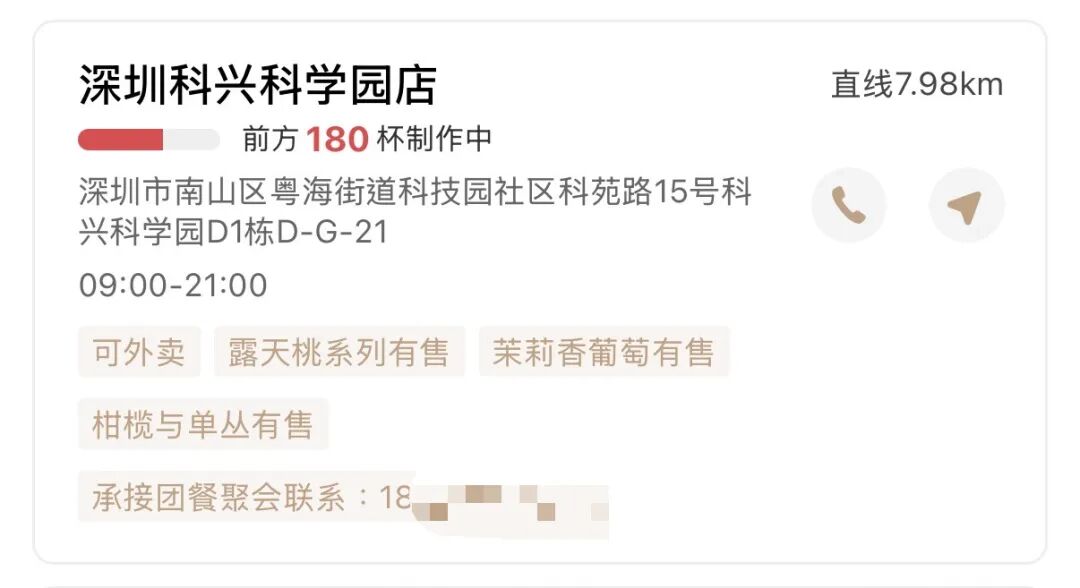
Viral bubble tea, peak orders continue
The names on the order receipts, however, now belong to a growing list of new companies.
This article is from the WeChat public account "Time Finance APP" (ID: tf-app), written by Liang Zhenyu, edited by Li Qian, and republished by 36Kr with authorization.