As the energy storage pre-IPO window opens, what kind of enterprises are more favored by the market behind Star New Energy's nearly 500 million yuan financing?
The energy storage IPO window opens: the best technical and operational models will prevail.
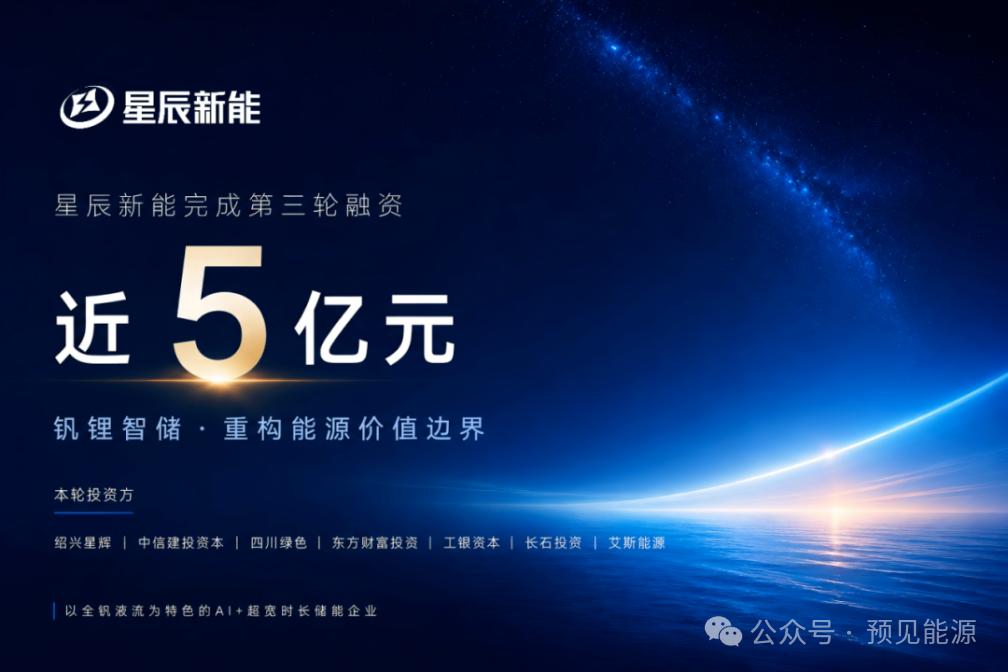
As Foresee Energy exclusively learned, on July 8, 2026, Star New Energy announced the completion of its nearly RMB 500 million Series C financing round, with investors including CITIC Securities Investment, ICBC Capital, Eastmoney Investment and other institutions. Founded in 2021, the company has simultaneously launched its Pre-IPO financing process.
In the same month, Maitian Energy updated its IPO prospectus for the ChiNext board, reporting 2025 revenue of RMB 6.531 billion and non-recurring net profit of RMB 1.13 billion. After withdrawing its Sci-Tech Innovation Board IPO application in 2024, Wotai Energy completed a Pre-IPO financing of several hundred million yuan in April 2026. Daqin Digital Energy concluded nearly three years of A-share listing guidance and shifted its listing plans to the Hong Kong Stock Exchange. Kubo Energy also submitted its Hong Kong stock prospectus in June.
The energy storage industry's IPO window is opening, but this window does not guarantee passage for every enterprise. Identifying which energy storage companies can stand out has become a core screening priority for the capital market.
01
Star New Energy's "Speed"
Building the full industrial chain within five years
Star New Energy was founded in October 2021 through a collaboration between Professor Liu Suqin's team from Central South University and an experienced energy storage industry team. In its early days, the company focused on R&D and manufacturing of all-vanadium redox flow batteries.
In 2022, Star New Energy secured the exploitation rights to Asia's highest-quality vanadium mine. This was a critical strategic move — vanadium is the core raw material for all-vanadium redox flow batteries, and control over upstream resources laid a solid foundation for long-term cost control and supply chain security.
In 2023, the company completed construction of the world's first fully automated all-vanadium redox flow battery production line in Changzhou, with independent R&D and manufacturing capabilities for high-power stacks. In the same year, it closed its Pre-Series A financing, introducing industrial investors including SPIC Industrial Fund, CRRC Capital, China Minmetals Venture Capital, and PetroChina Kunlun Capital.
In 2024, Star New Energy delivered the 75MW/300MWh all-vanadium redox flow energy storage equipment for the 500MW/2000MWh grid-forming hybrid energy storage station in Wushi, Xinjiang. This is one of China's leading large-scale grid-connected hybrid demonstration projects combining flow batteries and lithium batteries, which has now achieved nearly 12 months of uninterrupted operation with a daily operating cycle of "two charges and two discharges".
In November 2025, the company completed Series A financing exceeding RMB 300 million.
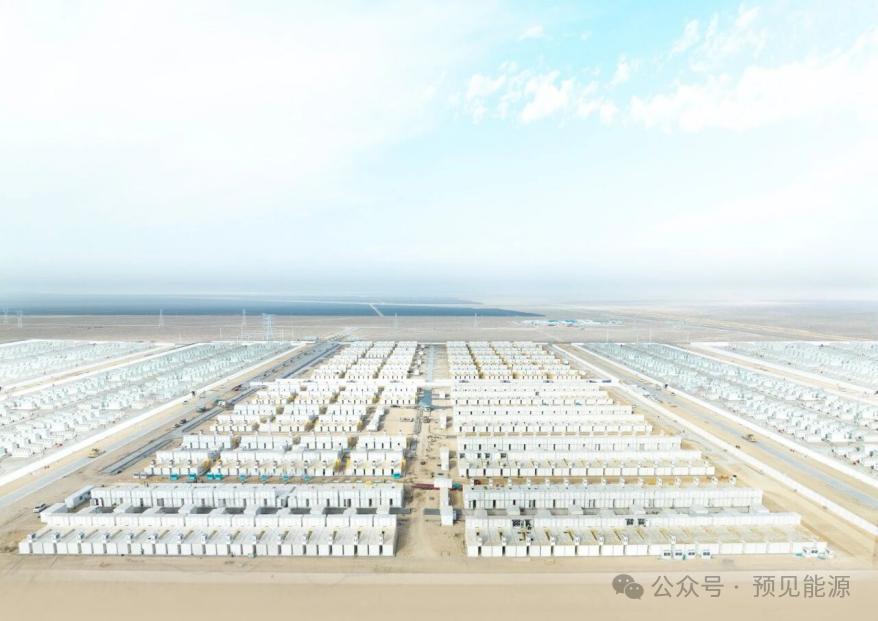
In the same month, China's National Development and Reform Commission released a policy that for the first time explicitly allowed independent energy storage facilities to participate in power market transactions as independent market entities. One month later, Star New Energy connected three independent energy storage stations in western Inner Mongolia to the grid, with a total capacity of 0.75GW/3GWh. Among them, the 200MW/800MWh station located in Qiaoyouhou Banner, Ulanqab, only took about 6 months from groundbreaking to full grid connection.
In June 2026, the fully automated "lights-out factory" for all-vanadium redox flow batteries at the Shaoxing headquarters base was officially put into operation. When operating at full capacity, it will reach an annual production capacity of 2GW/8GWh for all-vanadium redox flow energy storage systems. One month later, the nearly RMB 500 million Series C financing was successfully closed, marking the official launch of its Pre-IPO phase.
In just five years, Star New Energy has completed the full industrial chain layout covering technological R&D, upstream resource control, intelligent production line construction, benchmark project delivery, large-scale commercial replication and Pre-IPO preparation. This growth pace is extremely rare in the global energy storage industry.
02
Wotai Energy's "Slow Paced Growth" and Daqin Digital Energy's "Strategic Adjustment Challenges"
In comparison, Wotai Energy was founded in 2012, nine years earlier than Star New Energy.
Wotai's founding core team came from Siemens' German headquarters, and the company directly targeted overseas high-end markets at the initial stage of entrepreneurship. The company has mastered core energy storage control technologies including BMS, EMS, PCS, system integration and cloud intelligent management platforms, established subsidiaries in more than 30 countries such as Italy, the United Kingdom, South Korea and the United States, with business coverage across more than 100 countries and regions worldwide.
However, its Sci-Tech Innovation Board IPO process was eventually terminated. The core reasons included unsatisfactory 2023 financial performance, market doubts about its technological innovation capabilities, and excessive concentration of top customers.
Some industry analysis pointed out that as a professional energy storage system integrator, Wotai Energy almost completely relies on external procurement for core components, and its products lack clear differentiated competitive advantages. After withdrawing its IPO application in 2024, Wotai spent two full years adjusting its business operation system. Its 2026 Pre-IPO financing was led by key banking AIC funds and central state-owned capital, indicating that capital market recognition of its business model is gradually recovering.
The development path of Daqin Digital Energy shows a completely different scenario. It recorded consecutive net losses in 2023 and 2024, but its 2025 revenue surged 244% to RMB 2.525 billion, turning around to achieve a net profit of RMB 125 million. The proportion of overseas sales revenue rocketed from 43.1% in 2023 to 95.1% in 2025.
However, this rapid growth also brought hidden risks: 98.2% of Daqin Digital Energy's total revenue comes from channel distributors. The average selling price of residential energy storage systems dropped from RMB 1.3/Wh to RMB 0.8/Wh, and the price of commercial and industrial energy storage systems fell from RMB 1.2/Wh to RMB 1/Wh. Excessive reliance on distributor channels leads to extremely limited bargaining power, and the company faces continuous pressure on product price reductions.
Foresee Energy believes that Daqin Digital Energy's decision to shift its listing target to the Hong Kong Stock Exchange after nearly three years of A-share listing guidance essentially reflects that the company is seeking a more lenient listing channel under the background that A-share market's review standards for "technological innovation attributes" are becoming increasingly strict.
Overall, enterprises that are highly dependent on overseas markets face inherent operational risks, but this is still an inevitable strategic choice for many players. Kubo Energy derived 87.9% of its 2025 total revenue from overseas markets. More challenging, the price of battery cells has risen by a cumulative 32.4% since October 2025, while the export tax rebate rate for related products was reduced to 6% in April 2026 and will be completely abolished in January 2027. Kubo Energy explicitly stated in its submitted Hong Kong stock prospectus that its 2026 net profit may decline significantly year-on-year.
03
Three categories of enterprises, three completely different development trajectories
What core factors determine which company can ultimately succeed in listing?
Foresee Energy conducts a comprehensive comparative analysis of these representative enterprises:
Category 1: Star New Energy — Deep technological accumulation + project-driven high growth.
All-vanadium redox flow batteries serve as its underlying technological foundation, hybrid energy storage as its core product form, and large-scale energy storage station operations as its long-term stable profit source. The company has achieved vertical coverage of key industrial chain links including vanadium resource development, electrolyte production, stack manufacturing, energy storage system integration and intelligent energy management platforms.
This highly integrated vertical layout ensures that the profits of each industrial chain link are retained within its own business system, while giving the company stronger independent control over its long-term technological development roadmap.
More importantly, its project implementation rhythm is highly aligned with the policy opening window — it completed the delivery of the benchmark demonstration project in Wushi, Xinjiang in 2024. After the 2025 national policy clearly allowed independent energy storage to participate in power market transactions, three of its self-operated energy storage stations were connected to the grid in a concentrated manner. This benign development rhythm of "project verification — policy implementation — large-scale commercial replication" has provided Star New Energy with solid performance support during its Pre-IPO stage.
Category 2: Wotai Energy — Global overseas market layout + energy storage system integration. Its core strengths lie in mature overseas distribution networks and independent R&D capabilities for EMS/BMS software. However, as a system integrator that relies on external procurement for most core components, this structural shortcoming was fully amplified under the Sci-Tech Innovation Board's strict review standards for "technological innovation attributes". The company spent two full years adjusting its business model to regain full recognition from the capital market.
Category 3: Daqin Digital Energy and Kubo Energy — Overseas channel distribution + low-price competitive strategy. They achieved rapid revenue growth in a short period, but their business models are highly dependent on overseas distributor channels and rely on price wars to expand market share. 98.2% of Daqin Digital Energy's total revenue comes from distributors, while 87.9% of Kubo Energy's 2025 revenue comes from overseas markets.
Under this operation model, gross profit margins are extremely vulnerable to raw material price fluctuations and exchange rate changes, resulting in weak anti-risk capabilities. Daqin Digital Energy's shift from A-share listing to Hong Kong stock listing and Kubo Energy's explicit profit warning in its prospectus essentially reflect that the long-term sustainability of their business models has been questioned by the market.
04
Common core traits of outstanding energy storage enterprises that are successfully moving towards listing
From the comparative analysis of these representative enterprises, we can summarize several key development rules that the energy storage industry must follow during the Pre-IPO stage.
First, the technological roadmap cannot stay at the conceptual "storytelling" stage — verifiable large-scale engineering operation achievements must be presented.
Star New Energy's all-vanadium redox flow batteries achieved 12 months of stable uninterrupted operation in the Xinjiang Wushi project, which is far more convincing than any laboratory test data. The capital market is increasingly losing tolerance for so-called "PPT demonstration technologies" that lack actual landing verification.
Second, the business model must clearly answer the core question of "how to achieve sustainable profitability" — rather than relying on one-time non-recursive income.
Star New Energy's innovative "flow battery + lithium battery" hybrid energy storage model can increase the overall equipment utilization rate by 15% compared with the pure lithium battery solution, while reducing the full lifecycle levelized cost of electricity by more than 20%. This economic operation model has been fully verified to be financially sustainable.
In contrast, the business models that rely heavily on distributor channels and drive revenue growth through continuous price cuts can hardly support long-term stable market valuations.
Third, the large-scale project delivery capability has become a key watershed for enterprises during the Pre-IPO review stage.
According to industry statistics, 128 energy storage projects across China were officially cancelled in 2025. Projects that cannot be completed as scheduled and energy storage stations that cannot be connected to the grid are regarded as negative assets in the capital market review. Star New Energy's ability to connect three large-scale energy storage stations to the grid in a concentrated manner and deliver a complete project from groundbreaking to full operation within 8 months is far more persuasive than any beautifully written business plan during the Pre-IPO due diligence process.
Foresee Energy believes that the energy storage industry's IPO window is officially opening. In just two months since the beginning of 2026, more than 17 energy storage-related enterprises have updated their IPO progress announcements.
But this open IPO window does not guarantee that all enterprises can successfully pass the listing review. Enterprises with fully verified core technologies, commercially sustainable business models, proven large-scale project delivery capabilities, and deep high-quality shareholder resources are becoming the preferred investment targets of the capital market.
Among the four key representative enterprises highlighted in this in-depth report — Star New Energy, Wotai Energy, Daqin Digital Energy, and Kubo Energy — the one that will first successfully land on the capital market will definitely be the enterprise that has fully realized commercial operation in every key link of the entire energy storage industrial chain.
This article is originated from the WeChat official account "Foresee Energy", written by Wang Mengjiao, and officially authorized for release by 36Kr.