Memory prices are spiraling out of control, and budget smartphones priced around 1,000 yuan are no longer the "youth version" of flagship devices.
The continuous rise in memory prices is pushing budget smartphones into an unprecedented cost dilemma.
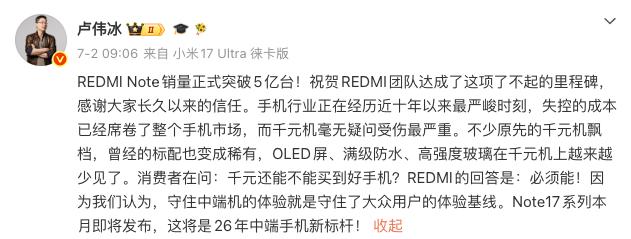
On July 2, 2026, Lu Weibing, Partner and President of Xiaomi Group, posted on social media platforms that the mobile phone industry is going through its most severe moment in a decade. Uncontrollable costs have swept across the entire market, with budget smartphones being the hardest hit.
Source: Weibo
Lu Weibing pointed out that, "Many former budget smartphones have drifted out of their original price range, and once-standard features have become rare. OLED displays, full-level water resistance, and high-strength glass are increasingly uncommon on budget phones."
As is known to all, since 2026, to offset the cost pressure brought by the skyrocketing memory prices, numerous smartphone manufacturers have raised the selling prices of their products.
The awkwardness of budget phones lies in that once the overall product price increases, a gap will appear in the original price band, which needs to be filled by new low-cost products. Therefore, compared with mid-to-high-end products, budget phones face more obvious cost pressure.
To maintain a lower price point, budget smartphones have become a compromise outcome under the cost game. The reduction of hardware configurations not only affects user experience but also limits the release of AI capabilities.
As the AI era gradually approaches, budget smartphones may gradually diverge from mid-to-high-end mobile phones.
01
Rising memory costs push mobile phone products into higher price segments
Since 2026, the memory price surge triggered by the explosive growth of AI computing power demand has brought unprecedented downward pressure to the global consumer electronics industry.
Data disclosed by TrendForce shows that in Q1 2026, the DRAM contract price increased by 90%-95% quarter-on-quarter, and the NAND flash contract price rose by 55%-60% quarter-on-quarter; in Q2 2026, the DRAM contract price increased by another 58%-63% quarter-on-quarter, and the NAND flash contract price grew by 70%-75% quarter-on-quarter.
In response, Apple CEO Tim Cook said that this supply crisis is like a "once-in-a-century flood", and that in his "more than 40 years of professional experience, he has never seen a similar situation".
Facing the intensifying memory price surge, a large number of smartphone manufacturers have passed on the pressure from the supply chain to the consumer market by increasing the selling prices of their products.
On March 10, 2026, Oppo fired the "first shot" of price increases, raising the prices of some of its mobile phone products by 300 yuan to 500 yuan. Subsequently, smartphone manufacturers including vivo, Xiaomi, and Honor followed suit. Mid-range models generally saw a price hike of 300-800 yuan, and the price increase of flagship products even exceeded 1,000 yuan.
Overall, compared with previous years, the pricing of smartphones in all segments this year has generally shifted up one price tier.
Source: Honor
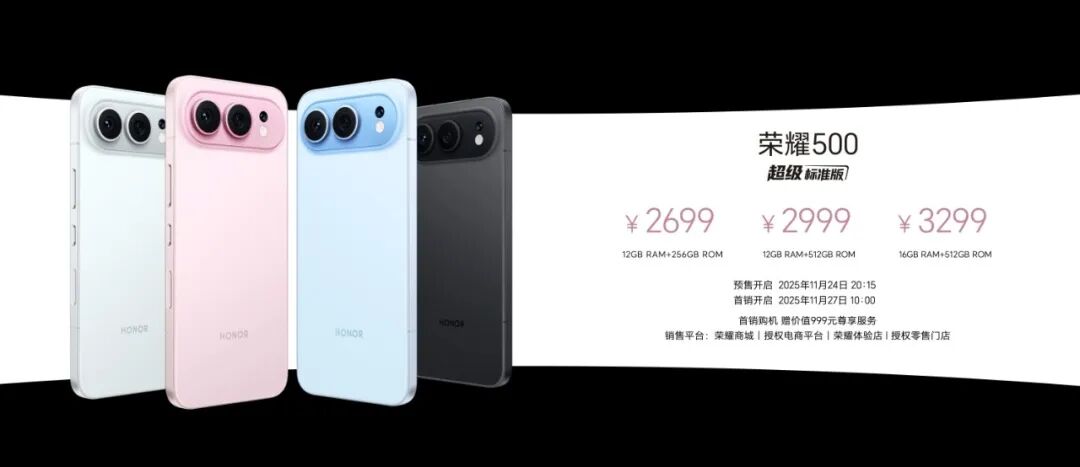
For example, the Honor 500 standard version (12GB+256GB) is priced at 2,699 yuan; the corresponding Honor 600 Ultra version with the same storage specification is priced at 3,299 yuan. This product series has jumped from the 2,000-yuan price tier to the 3,000-yuan price tier.
Source: OnePlus
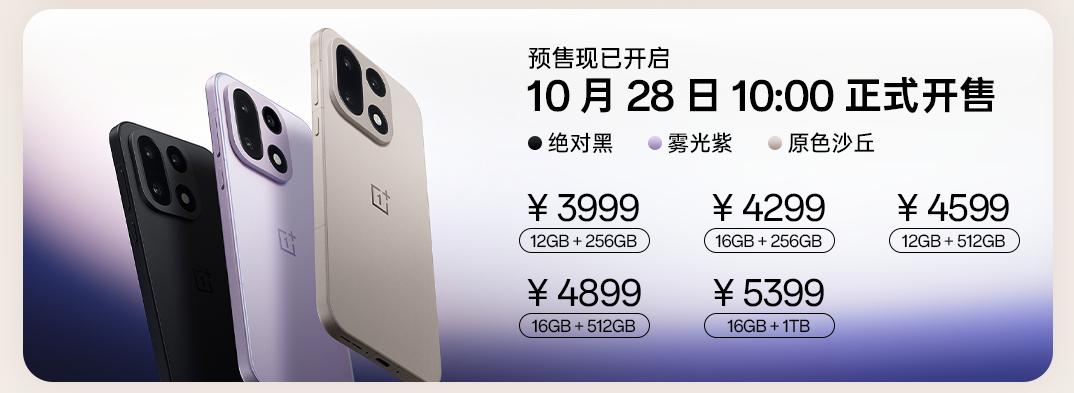
Similarly, after two price increases, the OnePlus 15 (12GB+256GB) version is priced as high as 5,099 yuan, which is 1,100 yuan higher than the 3,999 yuan at its initial launch.
On the whole, the memory price surge does not show significant differences due to different product positioning, and all smartphone manufacturers are facing similar supply chain cost pressures. Against this background, manufacturers generally choose to shift their products at all price points up one tier to hedge against cost pressures.
However, it should be noted that due to the difference in the price base of products at different price points, the terminal price increase corresponding to a similar cost increment is not consistent.
Due to the higher price base, the proportion of the price increase of flagship models in the selling price is relatively limited, making it more acceptable to consumers.
For budget smartphones with a low selling price base, there is hardly any room to maneuver against rising costs: either maintain the existing configurations and accept a larger price increase, or keep a lower price at the cost of reduced hardware configurations.
02
Budget smartphone configurations "go backward", Huawei seizes market share
At the beginning of 2026, IDC pointed out in a research report that the proportion of memory in the total cost of smartphones has risen from the previous 10%-15% to over 20%. Among them, the storage cost proportion of mid-to-low-end mobile phones is close to 30%, and some budget smartphones are already mired in losses.
Facing such huge cost pressure, new budget smartphones have also seen substantial price increases. For example, the Honor X80i (8GB+128GB) version released in April 2026 is priced at 1,999 yuan, 600 yuan higher than the 1,399 yuan of the Honor X70i, with a growth rate of 42.89%, stepping into the 2,000-yuan price segment.
Source: QuestMobile
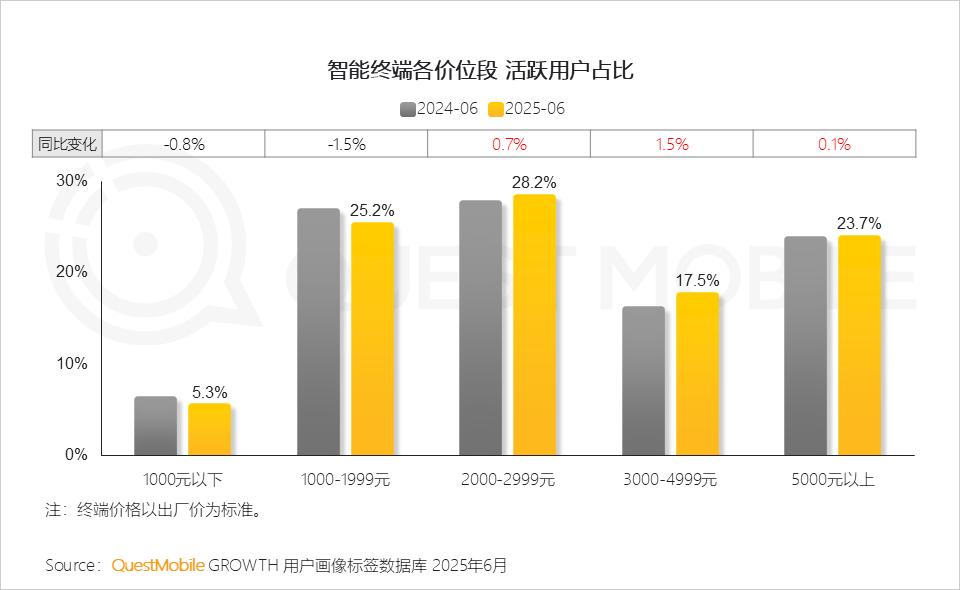
While budget smartphones have sufficient reasons to raise prices, they have also left a huge market gap. Data disclosed by QuestMobile shows that in June 2025, active users of terminals priced below 1,999 yuan accounted for as high as 30.5% in China's smartphone market.
To retain the huge consumer base in the budget phone market, smartphone manufacturers have to carefully weigh within the limited cost space, and fill the price band gap by reducing product configurations.
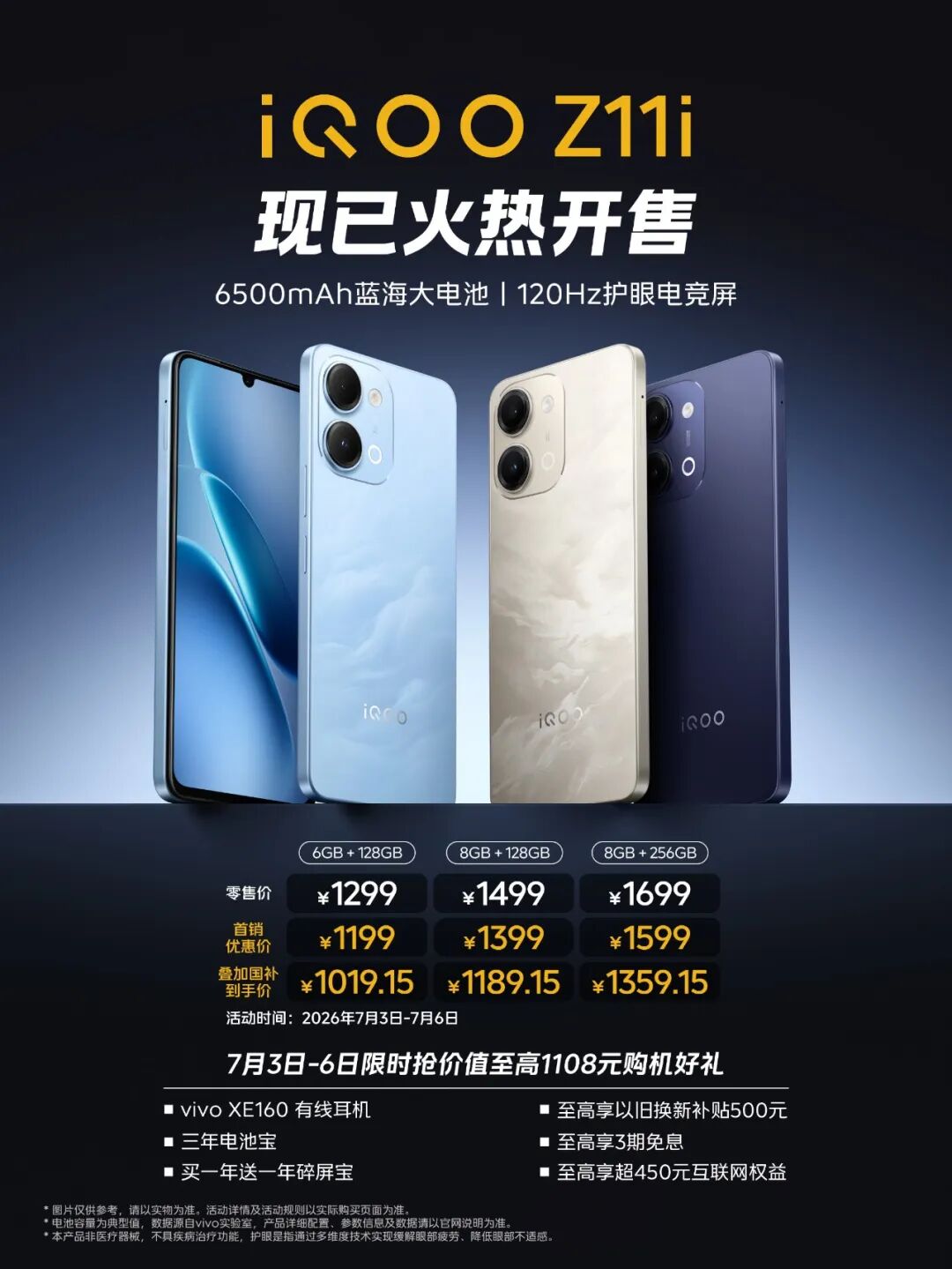
Source: iQOO
For example, recently iQOO restarted its Zi series, which had been suspended for three years, and launched the iQOO Z11i. Its 6GB+128GB version is priced at 1,299 yuan, equipped with "ancient" configurations such as the 2nd-generation Snapdragon 4 mobile platform, a 720P LCD waterdrop display, and side fingerprint recognition.
In response, digital blogger "Digital Chat Station" stated on social media platforms that, "This year, the sub-series are all targeting the lower-end budget smartphone market, with classic 1080P LCD and waterdrop screen designs, and the impressive return of 6GB+128GB and 8GB+512GB memory configurations..."
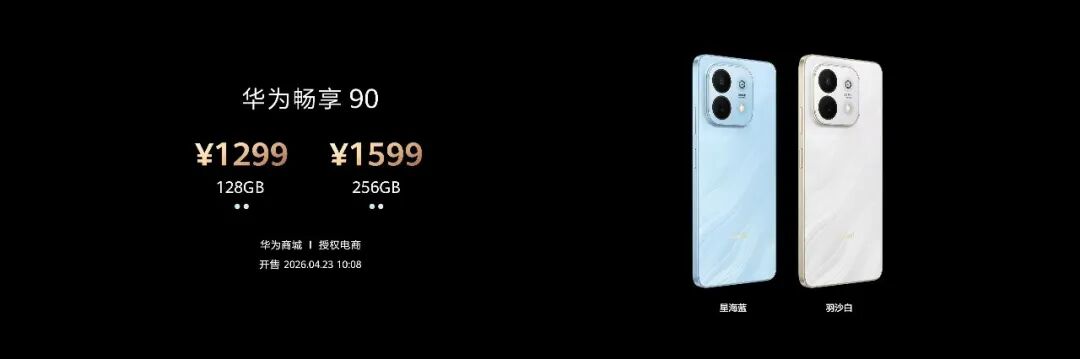
Source: Huawei
However, not all mobile phone manufacturers have drastically cut the configurations of budget smartphones. In March 2026, Huawei launched the Enjoy 90 series of mobile phones, equipped with the Kirin 8000A processor, running the HarmonyOS 6 system, and featuring a 120Hz punch-hole display. The 8GB+128GB version is priced at only 1,299 yuan.
With configurations significantly better than models in the same price segment, the Huawei Enjoy 90 series has become a hit. BCI data shows that from W14 to W23, with the help of the Enjoy 90 series, Huawei ranked first in the 1,000-2,500-yuan price segment of China's mobile phone market for 10 consecutive weeks.
The reason behind this is that Huawei regards the memory price surge crisis as a strategic opportunity to expand the market influence of its smartphone business.
Different from most Android smartphone manufacturers that mainly generate revenue through hardware, Huawei has its self-developed HarmonyOS, and is committed to getting this system to capture more users.
As an entry-level product with a lower consumption threshold, the core strategic demand of the Huawei Enjoy 90 series is not to make substantial profits, but to increase the penetration rate of the HarmonyOS. Therefore, Huawei has set a highly competitive price for this product.
In fact, as Guo Mingchi, an analyst from Tianfeng International Securities, said, "Apple is committed to using its strong bargaining power to ensure chip supply, taking on cost pressures to seize market share, and then making up for the losses through its service business." Up to now, the price of the iPhone 17 series of mobile phones has not increased.
As the only two manufacturers in the mobile phone industry with core software and hardware self-development capabilities, Apple and Huawei have quite consistent strategic ideas, both committed to absorbing memory costs internally, enhancing product competitiveness, and taking the opportunity to expand market influence.
However, since Apple has never been involved in the budget smartphone market, Huawei is currently the only manufacturer in the budget phone track that chooses to use profit margins to hedge against cost pressures and maintain product competitiveness.
03
When configuration reduction meets AI, budget smartphones and flagship phones begin to diverge
Although Huawei is currently seizing market share in the budget smartphone market through strategic profit concessions, memory prices will continue to rise in the future, which will further intensify the cost pressure it faces, making the strategy of sacrificing profits for market share unsustainable.
Analysts from Jefferies Investment Bank predict that memory prices will increase by 40%-50% quarter-on-quarter in Q3 2026, and continue to rise by 30%-40% quarter-on-quarter in Q4, "As time goes by, more and more manufacturers will not be able to hold on."
In response to the above trend, Wang Xudong, a semiconductor analyst at CINNO Research, believes that the increment in storage cost of budget smartphones has eaten up all the profits of the entire device. It is expected that mobile phone manufacturers will cut the shipment of models priced below 1,500 yuan, and smartphones priced under 1,500 yuan may be hard to find in 2027.
In response, Yu Chengdong, Executive Director of Huawei, Director of the Product Investment Review Committee, and Chairman of the Terminal BG, also issued a warning that, "The pricing pressure on new phones is very high now, with costs rising significantly. If we can't hold on later, prices may also increase."
From this perspective, the budget smartphone market may fully enter the era of "configuration reduction" in the future.
Nowadays, catalyzed by AI technology, the technology industry has reached a critical point of qualitative change. A substantial reduction in hardware configurations will not only affect user experience, but also may limit the implementation of edge AI capabilities, creating a huge capability gap between budget smartphones and mid-to-high-end models.
In the mobile Internet era, although the performance of budget smartphones was generally lower than that of mid-to-high-end mobile phones, their basic configurations were identical, all equipped with modules such as cameras, gyroscopes, and GPS sensors. Due to the same hardware capabilities, smartphones in all price segments supported functions such as scan-to-pay, navigation, and video playback.
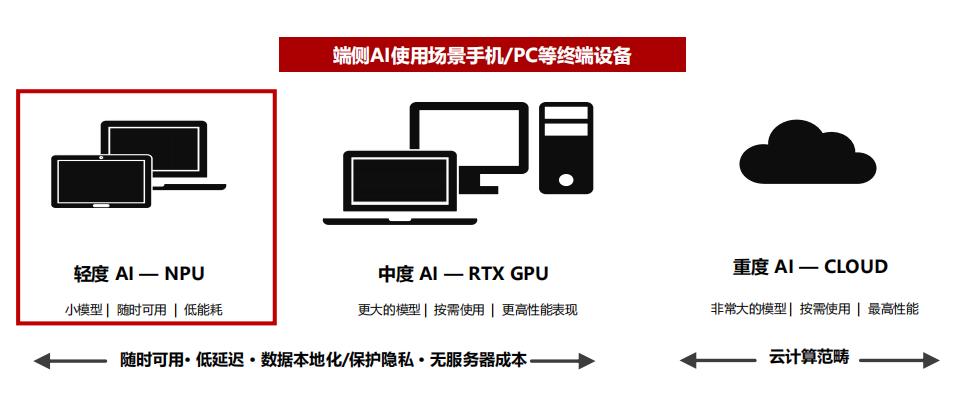
Source: Zheshang Securities
Today, the technology industry is about to enter the AI era, and new application scenarios have put forward higher requirements for the underlying configurations of smartphones. As a mass computing platform, mobile phones store massive amounts of users' private data. When deploying AI functions, they cannot fully rely on cloud large model inference, and also need to have certain edge-side computing power.
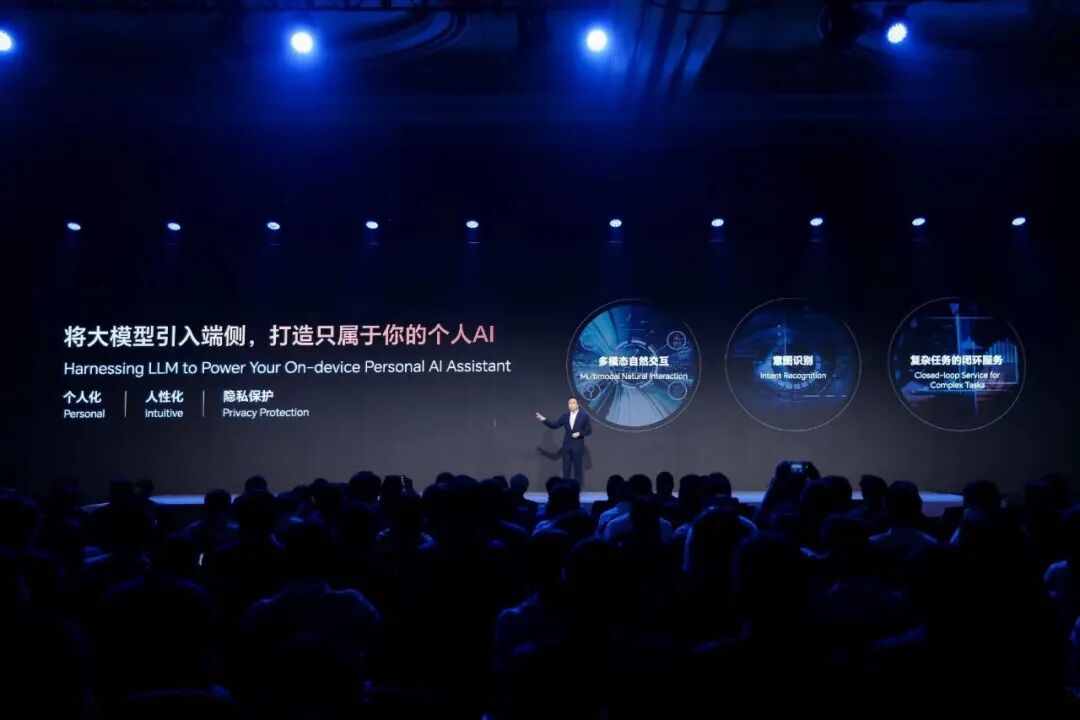
Source: Honor
In response, in June 2024, Zhao Ming, then CEO of Honor, stated that, "Many capabilities of edge AI are not available in cloud AI. Its advantages are mainly reflected in the learning of users' personal data and the protection of personal privacy. The future development of edge AI will definitely better empower consumers and coexist more harmoniously with cloud AI."
At this stage, Android flagship models such as the Xiaomi 17 Ultra, Oppo Find X9 Ultra, and vivo X300 Ultra are equipped with the 5th-generation Snapdragon 8 Elite processor, which has excellent edge-side computing power. According to official information, the 5th-generation Snapdragon 8 Elite is built on TSMC's N3P process, equipped with a Hexagon NPU, and its AI computing power reaches up to 80 TOPS.
In comparison, most of the entry-level processors currently developed by Qualcomm and MediaTek for budget smartphones are not equipped with independent NPUs, making it difficult to provide sufficient edge-side computing power.
It should be noted that as AI technology matures, smartphone manufacturers are currently stepping up efforts to develop Agents, enabling mobile phones to execute tasks with a single sentence. Limited by edge-side computing power, future budget smartphones may see a significant gap with flagship phones in AI experiences such as Agent execution and multi-modal understanding.