Indonesia Invites India to Take Over Nickel Mines: When the "Pig Butchering Scam" Apprentice Meets the Grandmaster, Who Will Outwhom?
Right after slashing three major policies targeting Chinese capital—cutting quotas by 70%, doubling ore prices, and imposing strict equity requirements, which left Chinese enterprises in a lurch—Indonesia rolled out the red carpet for Modi, expecting India to step into the breach. The two sides agreed to set up a joint venture in Indonesia to process critical minerals including nickel, and export the products to the Indian market in succession.
China is the world's largest producer of stainless steel and power batteries, with huge demand for nickel, while Indonesia is its major supplier. But what Indonesia is also implying is that it has plenty of backup options: India, with its 1.4-billion population market, also needs stainless steel and electric vehicles, and it can easily take over its nickel ore.
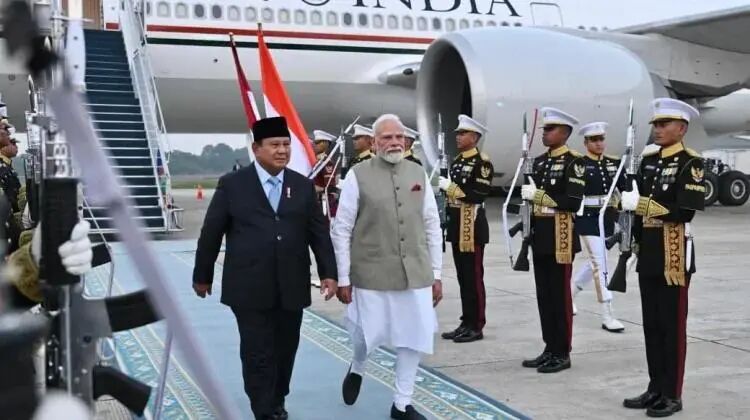
Many people can't help but laugh at this point: Indonesia seems to have learned its "pig butchering scam" tactics from India, and now the apprentice has invited the grandmaster through the door. Is this a premeditated counterattack, or a voluntary self-sabotage?
Without Chinese capital, Indonesia would still be nothing more than a laterite ore seller
Indonesia's current dominant position in the global nickel ore market is entirely nurtured by Chinese enterprises. Back in 2014, Indonesian nickel ore was barely sought after by anyone. It had nothing but ore—no technology, no capital, no industrial chain at all.
For decades, Western mining enterprises studied low-grade laterite ore but never found a profitable way to process it.
It was only after the Indonesian government began seeking cooperation with Chinese enterprises that everything changed. Back then, Indonesia offered highly sincere terms including tax reductions, land concessions, and long-term valid mining quotas, which attracted Tsingshan Holding, Huayou Cobalt, and Brunp Recycling to settle in the country one after another.
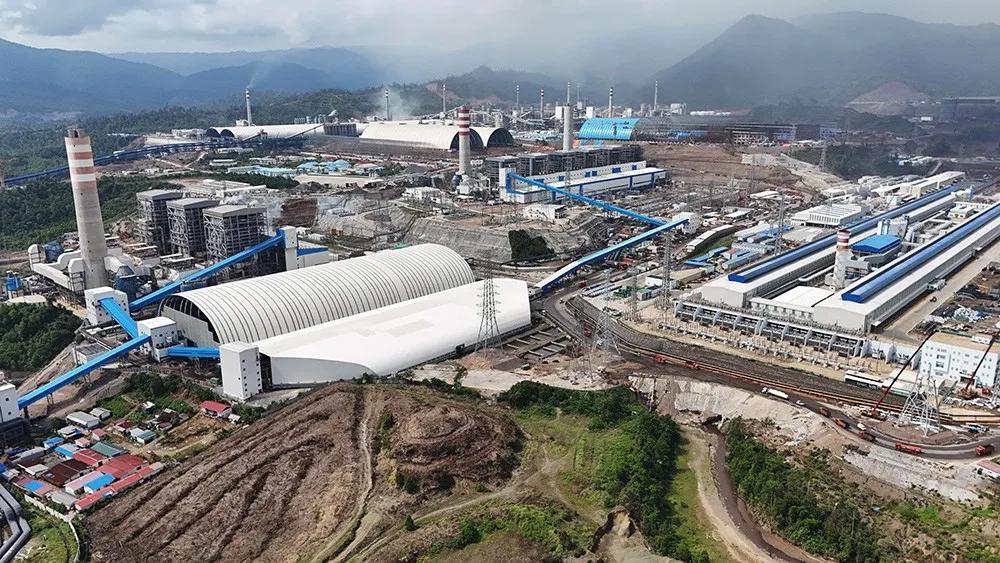
Over ten years, Chinese capital has invested a total of over 14 billion US dollars in Indonesia. All supporting facilities including power plants, ports, highways, and sewage treatment plants were built by Chinese enterprises. From Morowali to Weda Bay, from ferronickel smelting to high-grade nickel matte, and then to battery-grade precursors, the entire industrial chain has been fully established for Indonesia.
Indonesia's "pig butchering scam": Three-step strategy of nurturing, trapping, and slaughtering
With the industrial chain fully built, Indonesia's ambitions started to swell, and it launched a standard "nurture, trap, slaughter" pig butchering scam.
The first step is "nurturing": In the early days, it offered various tax breaks, land preferences, and raw material guarantees, waiting until you had built the factory, ignited the blast furnace, and poured huge amounts of money into the project.
The second step is to start cutting quotas and slow down approval processes. Want to withdraw? No one would be willing to abandon billions or even tens of billions of dollars in fixed assets that have already been invested.
Once you are completely trapped, the third step "slaughter" begins. In 2026, the new president took office and directly overturned all previous agreements.
First, it imposed restrictions on nickel ore quotas, directly slashing 70% of the quota for the Chinese core Weda Bay mining area.
Next, associated minerals were also required to be priced separately: associated metals such as cobalt and chromium, which used to be provided for free, now all need to be paid at a high price, pushing the ore price up by 221%.
Following that, it raised mineral taxes and export tariffs, forced Chinese enterprises to transfer equity, and even demanded that Chinese companies hand over their core technologies.
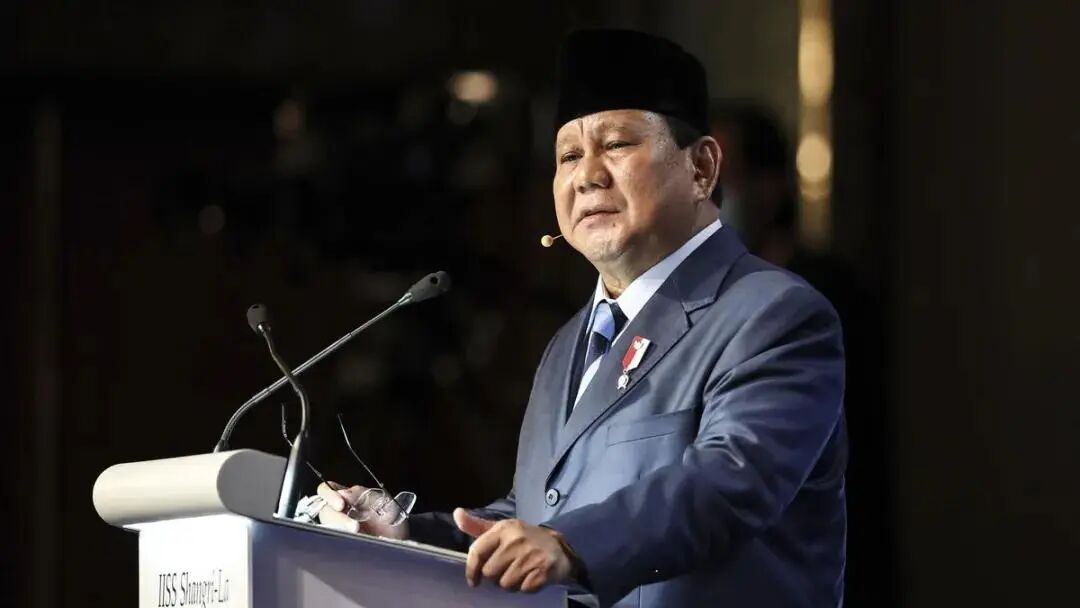
They were convinced that Chinese capital would compromise. After all, with such huge heavy asset investments, no one would be willing to abandon everything easily.
Chinese capital's tough counterattack
Starting from May, the Indonesian smelting industry was hit by one shock after another.
Huayou Cobalt's Huafei project directly cut production by 50%, GEM suspended all new investments, and some of Tsingshan's mining areas ceased operations.
Local Indonesian industries have neither skilled workers who can operate this set of equipment, nor supporting spare parts and maintenance industrial chains. If Chinese enterprises are really pushed to the wall, they can relocate their assets to other regions and rebuild the industrial chain anywhere else.
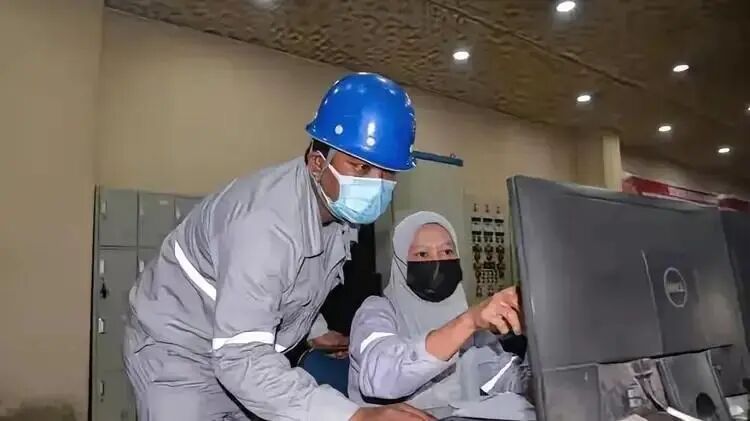
Without smelting technology, low-grade laterite nickel ore in Indonesia is nothing but a pile of useless dirt. The only process in the world that can process this type of ore at low cost is China's technology. If Indonesia really drives Chinese enterprises away, who will buy the ore mined from its mines?
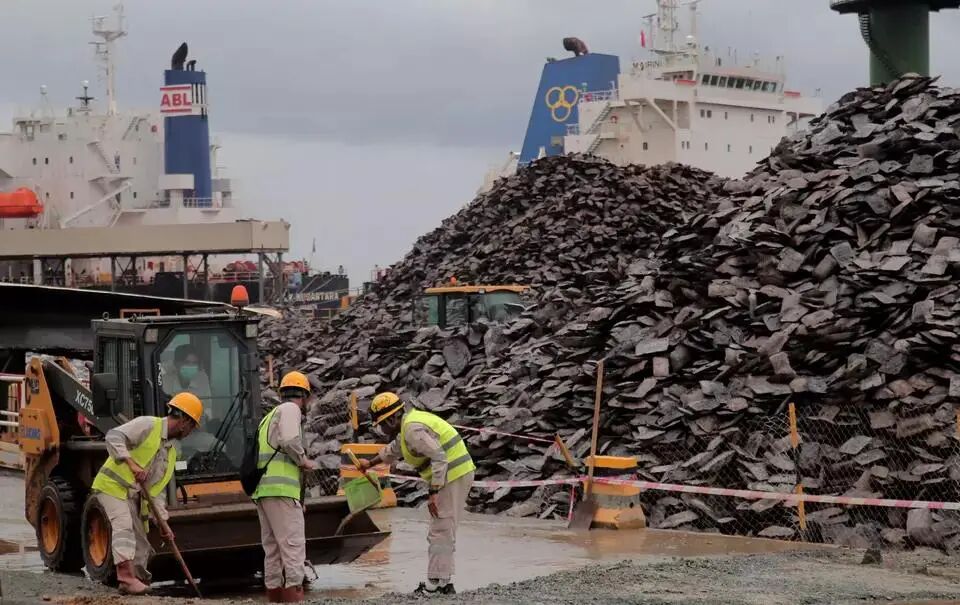
Facts soon proved Indonesia's mistake. Shortly after the quota cut, local smelters in Indonesia began to face ore shortages. The country's full-load smelting capacity requires 340 million tons of ore per year, but the government only approved 250 million tons, creating a direct gap of 90 million tons. The operating rate of a large number of factories was halved, and many small and medium-sized plants shut down completely.
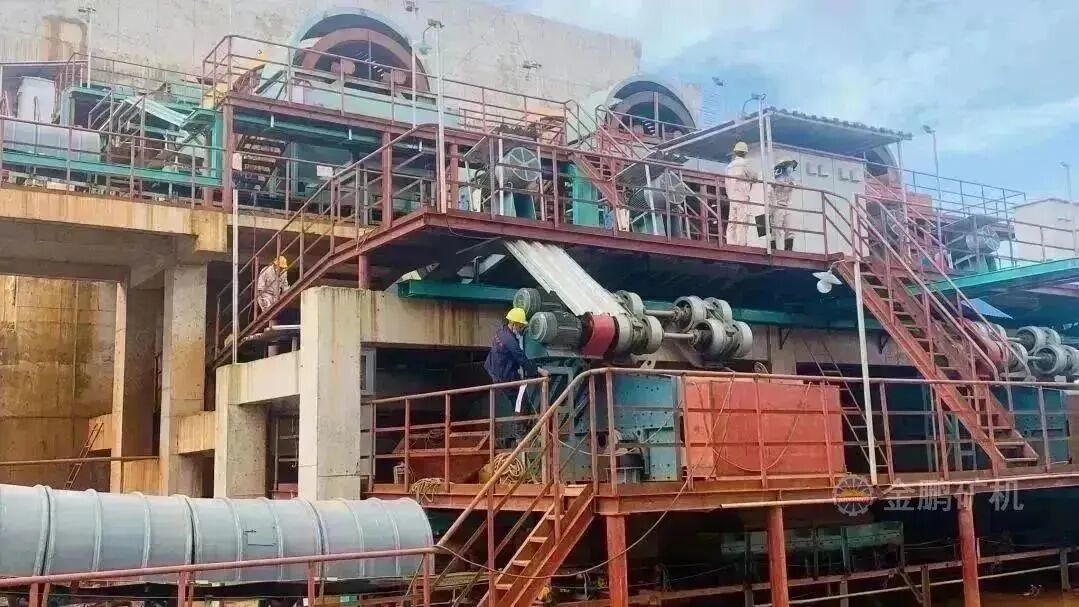
It was at this point that Indonesia realized it could not push Chinese capital too far. But it could not afford to lose face, so what could it do? Find a backup option to prop up its facade.
That's how India stepped onto the stage.
What is Indonesia's real intention in inviting India to take over?
Modi's visit to Indonesia was given grand treatment, with 16 agreements signed in one go. The most notable one was a memorandum of cooperation on critical mineral processing, under which the two sides will build a nickel smelting plant and a stainless steel slab plant in Indonesia, with products mainly supplied to the Indian market.
Indonesia's official statements on this matter were vague, but the implication was clear to all: Look, we are not entirely dependent on China.
First, India is a major stainless steel producer that consumes a large amount of nickel every year. Now it is also developing electric vehicles, so its demand for battery-grade nickel will only rise in the future, not fall. With such a big buyer, it seems that India can replace China's market position.
Second, India has abundant capital and a huge population. As a major country with 1.4 billion people, India is home to industrial giants such as Tata and Vedanta, which seemingly have the capacity to develop manufacturing industries.
The plan sounds perfect, but it ignores a core problem: India is the very originator of the "pig butchering scam".
When it comes to the "art of exploiting foreign capital", Indonesia should really call India its master.
India's business environment is notoriously unpredictable. Tax inspections can be launched without warning, fines can be increased arbitrarily, and policies can change overnight. You might finish investing in a factory today, and tomorrow a new tax will be introduced. International giants that have suffered setbacks in India can line up all the way from New Delhi to Mumbai.
Vodafone was fined billions of dollars, Nokia's assets were seized, billions of yuan of Xiaomi's funds were frozen and confiscated, and Apple was fined 38 billion US dollars. Indonesia has not even mastered such level of operations yet.
Now Indonesia wants to invite India to take over its nickel industry and play the "pig butchering scam" on India, which is like wielding an axe in front of Guan Gong, or showing off carpentry skills in front of Master Lu Ban—overreaching oneself in front of a true expert.
Putting aside the question of mutual exploitation for now, let's look at the most practical issue: Can India really take over this business?
First of all, what India lacks is not a nickel ore procurement channel, but smelting and processing technology. India itself has nickel ore, but its grade is low and mining costs are high. Its local smelting technology is very mediocre, and up to now it still mainly obtains nickel by recycling scrap stainless steel.
If it really wants to build a large-scale smelting plant in Indonesia, where will the technology come from? China's HPAL hydrometallurgy technology can refine low-grade ore with a grade below 1.5% into battery-grade nickel products. India does not have HPAL technology itself—does it plan to buy it from China?
Secondly, India's industrial efficiency is on par with Indonesia's—both are notoriously inefficient. Indonesians are known for their slow work pace, and Indians' low efficiency is also well-known. When two countries with such worrying work efficiency team up to build a heavy chemical project, it's like two underachievers teaming up to ace an exam—doomed to fail.
Chinese enterprises invest with real technology and capital to focus on production; Indian enterprises come to Indonesia for resources and preferential policies. You want to extract their technology? They are eyeing your ore and subsidies, and it's hard to say who will outmaneuver whom.
When two masters compete, who will exploit whom in this game?
Indonesia's move to approach India is sending a signal: against the backdrop of growing nickel demand, Indonesia may use the industrial chain previously built by Chinese enterprises to directly carry out new cooperation with India.
It mistakenly believes that once the industrial chain is built, it belongs to itself, failing to realize that the core of an industrial chain is not factories and blast furnaces, but technologies, processes, engineers, and supply chain systems.
All these elements are tied to people, and only people can determine the efficiency of the industrial chain.
It also thinks India can replace China, not realizing that India's manufacturing industry is also built on China's industrial chain—its spare parts and core equipment all need to be imported from China, let alone technology-intensive heavy chemical industries like nickel processing.
Indonesia's seemingly shrewd actions are actually eroding its national credibility. Today it can tear up investment agreements with China, and tomorrow it can do the same to India. Once this reputation spreads, who will dare to make long-term investments in the country in the future?
Chinese enterprises have been operating globally for many years, encountering countless pitfalls and paying enough tuition fees. If you abide by the rules, we can cooperate for mutual benefit; if you play the "pig butchering scam", we also have ways to stop losses and respond.
In ten years, the global nickel market landscape will have long changed. China's layouts in Africa and South America will have matured, and by then it's uncertain whether Indonesian ore will still be valuable.
The real winners are always those who hold core technologies, control the market, and have forward-looking layouts. No matter how important mineral resources are, they can only be monetized with the support of technology.
As for India and Indonesia, this pair of "underachievers", one tried to learn the "pig butchering scam" but never mastered the tricks, while the other has turned the scam into a national instinct. The two sides may soon compete in their "pig butchering" skills, most likely ending up with mutual scheming, endless haggling, and nothing but a mess in the end.
After all, when the tide recedes, we will find out who has been swimming naked. And these two, probably didn't even plan to wear swimming trunks at all.
This article is from WeChat Official Account "Hotspot Micro Review" (ID: redianweiping), written by Wang Xinxi, and republished by 36Kr with authorization.