The largest IPO on the Hong Kong Stock Exchange today is here
The Hong Kong Stock Exchange remains a bustling hub.
Today (July 8), Momenta successfully debuted on the Hong Kong stock market, earning the title of "the first Physical AI stock". The IPO was priced at HK$295.6 per share, with its share price edging up slightly at opening, pushing its market value beyond HK$70 billion and making it the largest-capitalization enterprise among the five companies that rang the listing bell on the Hong Kong Stock Exchange today. Notably, assuming the full exercise of the "Green Shoe" (over-allotment option), this global offering comprises approximately 22.93 million shares, raising a total of around HK$68 billion amid strong market enthusiasm. Momenta assembled an ultra-luxurious lineup of 14 cornerstone investors: top-tier international long-term funds and sovereign funds, industry-leading strategic investors, as well as top Chinese long-term private equity, public offering funds, and insurance capital, making cornerstone allocations highly sought-after.
Headquartered in Suzhou, Momenta is led by Cao Xudong, a post-85s alumnus of Tsinghua University. He completed his undergraduate studies at Tsinghua in his early years, then gave up the opportunity for a direct doctoral program to dive into the artificial intelligence sector. He previously worked at Microsoft Research Asia and SenseTime, before founding Momenta in 2016 to explore Physical AI through autonomous driving.
Over its 10-year journey, Momenta has for the first time brought the concept of "Physical AI" onto the global capital market stage.
Admitted to Tsinghua at 18, Gave Up Doctoral Studies
Built the First Physical AI Stock
The story of Momenta begins with a non-conformist Tsinghua alumnus.
Born in Gansu in 1986, Cao Xudong was admitted to the Engineering Mechanics program at Tsinghua University at the age of 18. After graduating with his bachelor's degree, he secured a spot in the direct doctoral program, where his research initially leaned toward physics, but he developed a strong passion for artificial intelligence.
Thus, Cao Xudong made an unexpected decision: to drop out of the doctoral program and embark on a path of artificial intelligence research. He first joined Microsoft Research Asia as a researcher in 2010, then moved to SenseTime. During this period, the idea of starting his own business gradually took root.
Until September 2016, Cao Xudong and a group of like-minded partners officially established Momenta. Explaining the meaning of the company's name, he once stated that "Momenta" is the plural form of "Momentum", which refers to the physical concept of momentum. "Each of us is a 'Momentum'. When we all come together, working in the same direction to tackle tough challenges and secure victories, we believe this team is exactly what 'Momenta' represents."
As is widely known, the artificial intelligence industry has a vast array of segmented tracks, and Momenta set its sights on autonomous driving. At that time, Cao Xudong believed, "Many problems in autonomous driving do not have ready-made solutions. We hope to start from first principles, solve problems creatively, and continuously push the boundaries of the artificial intelligence field."
However, autonomous driving was just emerging in China back then, with unclear standards, inconsistent technologies, and a mix of genuine progress and market hype. The industry was polarized: most startup teams either poured resources into heavy-asset L4 high-level autonomous driving R&D, or focused solely on the mass production of L2-level assisted driving.
Cao Xudong took a unique approach, formulating a strategic vision for Momenta that stood out from peers — "One Flywheel, Two Legs": a data-driven "flywheel" technical insight, paired with a product strategy that combines mass-produced business operations and large-scale unmanned services. In other words, the "two legs" share the same algorithm architecture: every kilometer driven by mass-produced assisted driving vehicles accumulates data for L4 development, and technological advancements in L4 in turn empower the mass-produced solutions.
The prerequisite for this flywheel to operate smoothly is a sufficiently large fleet of vehicles on the road, and Momenta has delivered an impressive result in this regard: currently, more than 1 million mass-produced vehicles are equipped with Momenta's systems, over 100 mass-produced vehicle models have been successfully delivered, the total number of designated models exceeds 210, and the company has achieved efficient deployment of 100,000 units in as little as 40 days.
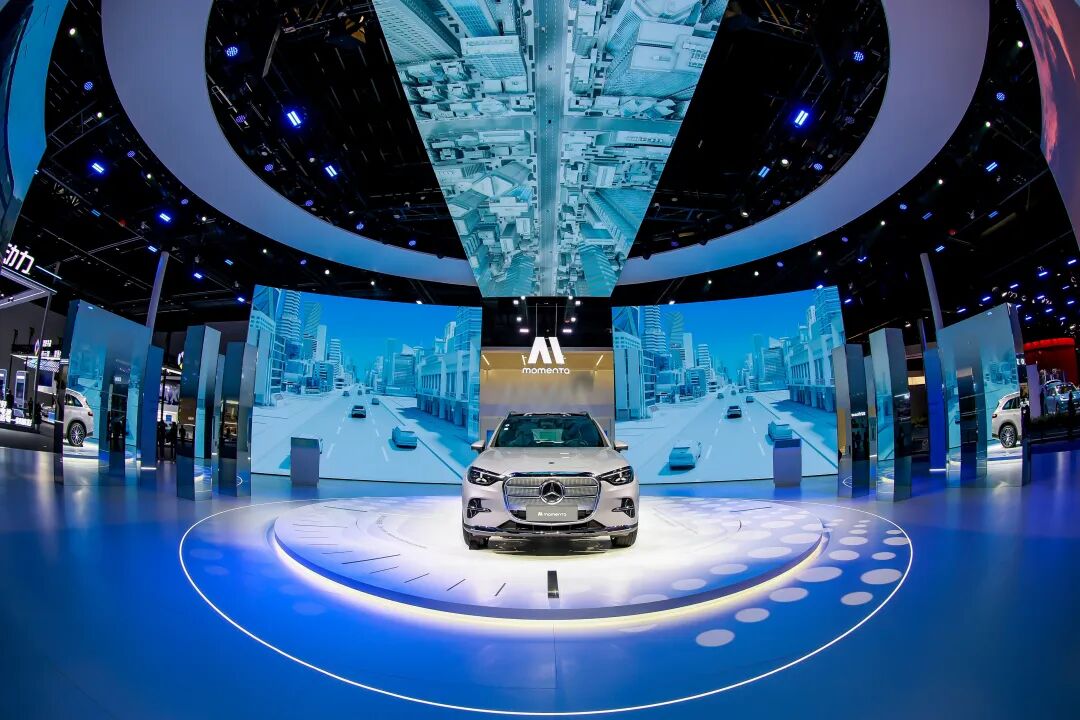
These 1 million vehicles represent far more than just installation volume — they function as mobile data collectors, generating massive volumes of real road condition data every day. This is a source of physical world perception material that no laboratory or simulation environment can replicate.
For this reason, Cao Xudong boldly concluded that autonomous driving is the prologue to Physical AI. "The core of Physical AI lies in data scaling and business scaling, which form a positive feedback loop. At present, autonomous driving is the only field that has achieved both simultaneously."
It is worth noting that traditional technical approaches cannot truly understand the operating rules of the physical world. To address this, Momenta took the lead in proposing a core Physical AI technology system, thereby restructuring the underlying logic of the industry.
A highly landmark event unfolded — in April this year, Momenta's self-developed R7 World Model was announced for its mass production debut, marking the official transition of Physical AI from a technical concept to large-scale commercial implementation.
This is a foundational model capable of understanding physical laws and simulating the evolution of the world. It supports Momenta's large-scale deployment across passenger vehicles, Robotaxis, and Robovans, and is expected to expand to fields such as autonomous trucks (Robotrucks) and embodied intelligence in the future. In other words, Momenta is not content with merely providing technology; it aims to build a Physical AI platform that covers all scenarios.
In Cao Xudong's vision, Physical AI represents a cognitive-level artificial intelligence revolution. Its core goal is to enable AI to deeply learn, understand, and deduce all the rules of the real physical world — including vehicle motion inertia, road interaction logic, game relationships among traffic participants, and dynamic environmental changes — achieving a leapfrog upgrade from "passive perception and execution" to "active thinking, predictive deduction, and autonomous evolution".
This is also the core distinction between Momenta and other industry players. By comparison, the vast majority of autonomous driving companies in the market are essentially "automotive intelligent service providers", with core products focused on in-vehicle algorithms and mobility services. Ordinary large model enterprises are essentially "digital content service providers", whose core capability lies in processing virtual data.
It seems that only Momenta has completed the leap from digital intelligence to physical intelligence. With the world model as its core foundation, it has opened up the critical channel for AI to connect with the physical world, elevating itself to a platform-level Physical AI company. This is precisely the key reason why it has become the "first Physical AI stock" on the Hong Kong Stock Exchange.
VC/PE Investors Gather
Why Are They All Betting Big Together?
Undoubtedly, Physical AI is a marathon-style technological competition.
This means that Physical AI R&D is bound to require substantial investment and a long cycle. Cao Xudong once proposed a "ticket theory": Physical AI has an entry ticket, which requires enterprises to have cash-generating business operations. Because in the long run, it is unrealistic to develop a general Physical AI, or AGI for the physical world, solely through financing.
This judgment conveys a clear signal: the investment required to train a general Physical AI could reach the level of tens of billions or even hundreds of billions of US dollars. Without stable cash flow, no enterprise can persist until the technology delivers returns. Therefore, commercialization has become the first critical battle for Physical AI enterprises to break through.
Let's look at a set of data — according to a report released by CIC, from March 2025 to February 2026, Momenta held a 65% market share by sales volume in China's third-party urban NOA supplier market. This indicates that Momenta has established an undisputed leading position in this segmented track. For any automaker looking to launch urban NOA features in the Chinese market, if they choose a third-party supplier, Momenta is almost an unavoidable option.
The prospectus also shows that Momenta has established cooperative relationships with 24 global automakers, covering all mainstream domestic passenger vehicle manufacturers. Nine of the world's top 10 automakers are already its partners, making it "the common choice of global automotive brands".
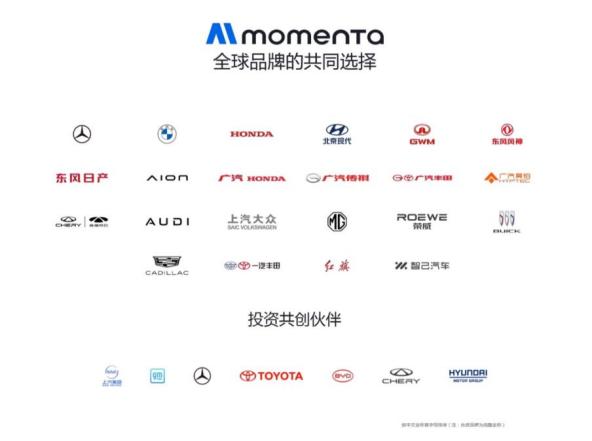
But this achievement did not come easily, and required enterprises to possess strong first-mover advantages. Cao Xudong once admitted that securing many business partnerships with automakers takes as long as three years of effort — from the first meeting with the client to signing the contract; for international OEMs, this process can take 5 to 7 years. "For example, Mercedes-Benz invested in us back in 2017, but the first mass-produced project between the two parties only launched in the second half of 2025, after a full 8 years of collaboration."
This case fully demonstrates that from POC to Pre-SOP, then to small-batch mass production development, and finally to formal mass delivery, every stage presents a new, increasingly difficult threshold. It is precisely because Momenta has navigated all these challenges that it has achieved extremely high customer stickiness, which strongly supports its medium- and long-term performance growth and stable cash flow.
The prospectus reveals that from 2023 to 2025, Momenta's operating revenue grew from 743 million yuan to 2.413 billion yuan, with an average annual compound growth rate exceeding 80%. Notably, Momenta's revenue mainly consists of technology development income and licensing income. The growth rate of licensing income is particularly outstanding, surging from 23 million yuan in 2023 to 968 million yuan in 2025, a 42-fold increase in three years.
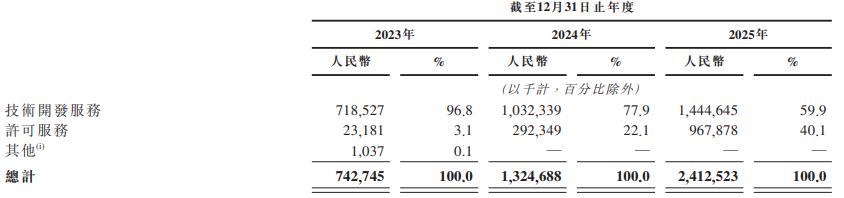
Admittedly, Momenta still has phased R&D losses at present. However, thanks to the continuous growth of revenue and gross margin, its adjusted annual loss has rapidly narrowed to 303 million yuan, bringing it very close to break-even. It is predictable that with the advancement of large-scale deployment, Momenta's profit inflection point is already approaching.
Due to these strengths, Momenta caught the attention of VC/PE investors early on.
The prospectus discloses that right after its founding in 2016, Momenta secured a $5 million Series A financing. After that, investors queued up to participate, and Momenta completed as many as 20 financing rounds in succession.
Today, behind Momenta stand the world's most core industrial and technological strategic investors, as well as top global financial investors. A detailed breakdown shows that industrial capital includes key players in the global automotive industry chain: 7 leading global automakers such as SAIC, General Motors, Mercedes-Benz, Toyota, BYD, Hyundai, and Chery; top industry chain enterprises like Bosch, Desay SV, and Luxshare Precision; and robotaxi partners including Uber, Grab, and Stone Venture.
Technology giants among its backers include Tencent, Alibaba Cloud, Ant Group, and JD.com. Financial investors cover top global investment institutions such as Temasek, IDG Capital, Oman Investment Authority, Yizhuang State Investment, Granite Asia, Shunwei Capital, NIO Capital, Cathay Capital, Yunfeng Fund, Blue Lake Capital, Sinovation Ventures, ZhenFund, CDH Investments, Gaorong Capital, Gac Capital, Zhongwei Capital, Joy Capital, Zhongding Capital, Infore Capital, China Merchants Capital, Huatai Innovation Capital, Hundun Capital, Chunhua Capital, Greater Bay Area Fund, GaoDa Investment, China New Venture Capital, Lightspeed China Partners, and Matrix Partners China.
If the financing journey testifies to Momenta's strong appeal in the primary market, this IPO represents a "public vote" by the secondary market on its commercial value.
Looking at Momenta's anchor subscription this time, participants include the Government of Singapore Investment Corporation (GIC), Fidelity International, BlackRock, Franklin Templeton, China Investment Corporation (CIC), Abu Dhabi Investment Authority (ADIA), Canada Pension Plan Investment Board (CPPIB), Wellington, Schroders, Temasek, JPMorgan Asset Management (JPMAM), T. Rowe Price, Barings, Pictet, Goldman Sachs Asset Management (GSAM), UBS Global Asset Management (UBS GAM), Aberdeen, Oman Investment Authority (OIA), Dragoneer, Janus Henderson, Amundi, Deka Investment, DWS Group, and Union Investment — a very rare scenario where global long-term investors collectively increase their stakes. It is reported that the subscription amount from long-term investors alone is more than 15 times the offering size.
At the same time, Momenta has introduced 14 cornerstone investors, with the total cornerstone subscription amount reaching approximately HK$3 billion (about $376 million), nearly half of the total issuance size. According to insiders, the popularity of Momenta's cornerstone allocations was so high that "a single allocation was hard to secure", comparable to the cornerstone lineup of CATL.
Specifically, the Government of Singapore Investment Corporation (GIC) and Fidelity International took the lead with $1 million each in subscriptions; BlackRock invested $250 million, Oaktree Capital $200 million, and Franklin Templeton $100 million. Industry-leading strategic investors include leading international and Chinese automakers — Mercedes-Benz and BYD, which invested $250 million and $150 million respectively; industry chain partner GigaDevice invested $60 million. Top Chinese long-term private equity, public offering funds, and insurance capital include leading Chinese private equity firms Hillhouse Capital and Boyu Capital, top public offering funds China Asset Management and GF Fund, and leading long-term insurance company China Pacific Insurance, each investing $100 million. In addition, cornerstone investors also include Suzhou Mosu.
This scene is the most direct reflection of Momenta's huge and robust ecosystem. The "all-star" cornerstone lineup has built a complete ecological barrier covering technology R&D, complete vehicle mass production, supply chain support, global market expansion, and capital operations — a rarity across the entire industry, and a critical core support for Momenta to solidify its position as the "first Physical AI stock".
Furthermore, Momenta's listing marks that the capital market has finally welcomed the first listed company focused on Physical AI as its core business, with a mature commercial system and continuous iteration capabilities. Investors have cast their valuable votes with real money.
Welcoming the "GPT Moment" of Physical AI
The Era of Value Reassessment
As you can see, a watershed moment for the AI era is arriving.
It is worth recalling that in July 2025, Jensen Huang first clearly proposed that the next wave of artificial intelligence would be "Physical AI". At the CES 2026 exhibition, he delivered a 90-minute speech once again, declaring that the "ChatGPT moment" of Physical AI is approaching.
At the same time, a wave of world models is sweeping across the globe.
In March this year, world model company AMI officially completed a $1.03 billion seed round financing, with a post-investment valuation exceeding $4.5 billion, breaking the all-time record for the largest seed round financing in European history. The leader behind the company is none other than Yann LeCun, the globally renowned "Godfather of AI". Looking back further, World Labs, founded by the distinguished scientist Li Fei-Fei, also completed a new $1 billion (about 7 billion yuan) financing in early February.
The reason why world models are so popular is that they are regarded as the core engine of Physical AI. They fill in the critical missing link for AI to "understand reality and interact with reality", thus enabling AI to evolve from "generating content" to "understanding, deducing, and taking action". This is the key breakthrough to trigger the "GPT moment" of Physical AI.
Cao Xudong once stated that prediction is the cornerstone of intelligent evolution, and the core of Physical AI lies in the in-depth understanding of