Raised tens of millions in financing, targeting 3,000 outlets in a year — why are investors betting on this niche business in the middle-aged and elderly market?
The competitive landscape of the middle-aged and elderly scalp care track is undergoing an upgrade.
In June 2026, scalp care brand Keshilifu announced the completion of tens of millions of yuan in financing, with Tian Tu Capital as the investor.
What deserves more attention than the financing amount is Keshilifu's "aggressive" store expansion plan — officially launching its sub-brand "Letan" to deploy offline locations in the form of in-store shops, with a target of 3,000 outlets. This figure means that scalp care brands are no longer satisfied with just selling products, but aim to bring services directly to consumers' doorsteps. This will break the traditional pattern of offline business formats in the industry.
In recent years, the middle-aged and elderly scalp care track has seen a growing trend of deep integration of products and services, with a focus shifting back to offline channels. The core logic behind this is: the efficiency bottleneck of traditional solutions has become increasingly prominent, and brands are transitioning from one-time product and service delivery to long-term user lifecycle management. Offline channels inherently offer experiential advantages, making it easier to build brand recognition and trust.
PART 01
From Selling Products and Services to Delivering Solutions
In the scalp care industry, the middle-aged and elderly market is a popular niche segment.
Against the backdrop of social aging, the population of middle-aged and elderly people continues to expand. At the same time, due to the natural aging process of the body, scalp problems are prevalent among this demographic.
The middle-aged and elderly population mainly relies on two approaches for scalp care:
The first is routine maintenance using daily chemical products in home settings. Currently, this scenario already has a relatively complete product system, including essential oils, shampoos, and other items.
Key players in this space include international brands represented by L'Oréal's Kerastase, Procter & Gamble's Pantene, and Unilever's Clear; local brands represented by Shanghai Jahwa, Feng Hua, and Keshilifu.
The second approach is obtaining professional care services at physical stores. These outlets are primarily various chain hair care salons and beauty and hairdressing institutions, such as Siyu Hair Care and Zhangguang 101.
The two approaches cover the basic needs of middle-aged and elderly scalp care. However, as the consumption demands and spending power of the new generation of elderly consumers upgrade, they are putting forward higher requirements for care solutions.
With increased spending power, the elderly no longer only want dandruff and oil control, but also personalized and refined demands, such as anti-aging, nourishment, and reversing gray hair to natural color.
Taking scalp care products as an example, the scalp problems of the middle-aged and elderly often have complex causes involving factors such as hair follicle aging and scalp degeneration, presenting highly individualized characteristics. This requires the intervention of professional diagnosis and customized solutions. Using products simply at home cannot help users accurately identify scalp problems, and results are greatly affected by daily washing habits, ultimately leading to inconsistent product effectiveness.
For traditional offline service models, service cost is one of the restraining factors. A single offline care session costs at least 100 yuan, a price close to that of a regular bottle of shampoo, making it difficult to become a solution that the middle-aged and elderly can use on a long-term daily basis. Without regular care, it is difficult to address users' pain points.
These two shortcomings have led brands to think: Can we bundle products and services together, and find a more lightweight offline way to deliver them?
PART 02
Offline Stores Take the Lead in Transformation
In the scalp care track, offline chain brands are the pioneers in deploying the integrated "product + service" model.
Jennifer, founder of Keshilifu, believes that solving scalp problems involves two key points: high-frequency care and customized solutions. Simply selling products cannot achieve these two goals, and brands need to get closer to consumers offline.
The value of offline stores lies in building trust through services. Only after experiencing services in the store, having face-to-face communication, and long-term offline interactions, will elderly consumers be willing to continuously repurchase products.
However, this business model of driving product growth through services faces two major challenges when it comes to full implementation and large-scale development.
1. Difficulty in service standardization. Traditional scalp care highly depends on technicians' personal skills, work experience, and professional knowledge. There are obvious gaps in service quality between different stores and different technicians. Unstable in-store experiences will directly damage product reputation, making it difficult for brands to create hit products with industry influence and broad appeal.
2. Higher operational thresholds. Scalp problems vary greatly among individuals, and brands must be equipped with refined scalp diagnosis processes and customized solutions. The implementation of the entire system tests the overall operational capabilities of enterprises.
Taking Siyu Hair Care, a leading chain brand in the industry, as an example. Up to now, Siyu Hair Care has more than 2,600 stores nationwide. In 2024, its maintenance product sales revenue reached about 417 million yuan, accounting for 57.76% of total revenue, while service revenue only accounted for about 34%. This means that Siyu Hair Care's core profit no longer relies on single in-store care sessions, but has shifted to long-term monetization through product retail.
A core customer group of Siyu Hair Care is the middle-aged and elderly — statistics show that among its 2 million members, those aged 41-50 account for 19%, and those aged 51-60 account for 17%.
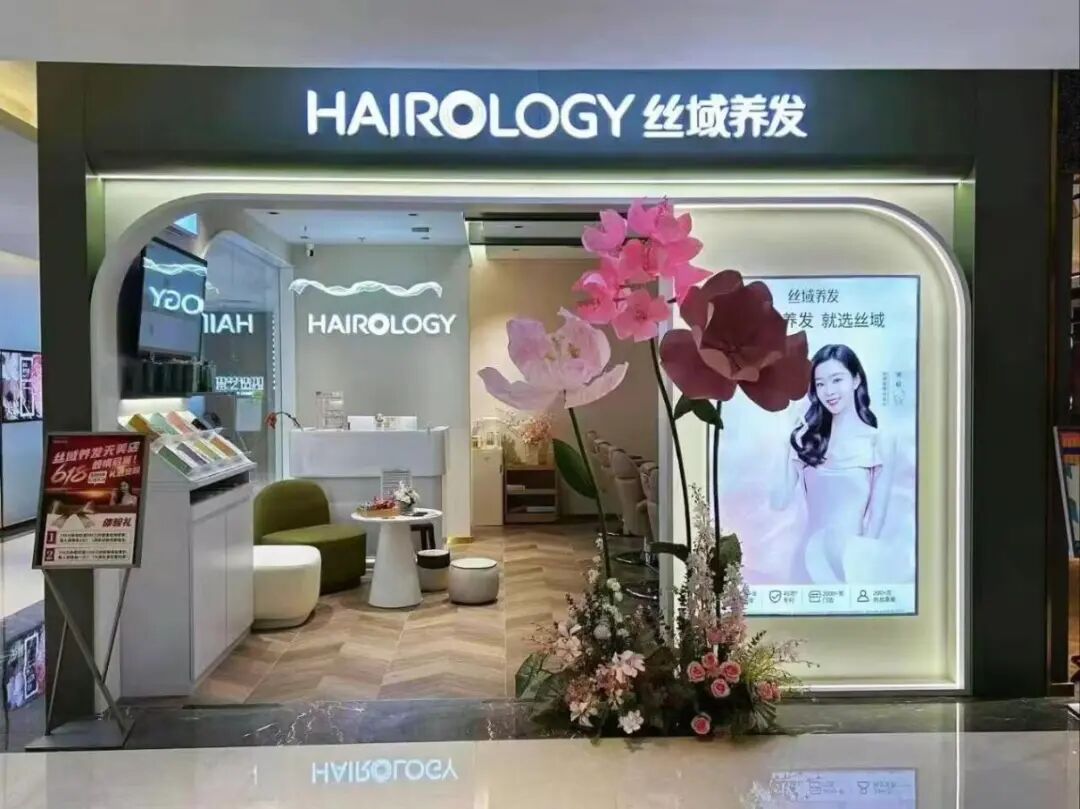
(Image source: Siyu Hair Care)
In terms of service standardization, to bridge the experience gaps between stores and technicians, Siyu Hair Care has chosen to use digital tools to connect the entire service process.
Consumers' core demands are clear: use professional equipment to accurately identify scalp problems, obtain data-backed care plans, and clarify the usage order of different functional products in various scenarios.
To meet this demand, Siyu has built a complete standardized service system. During the testing phase, high-definition scalp detectors are uniformly equipped to issue professional scalp test reports containing 12 detailed indicators for each in-store user; smart care devices are installed in stores to control key parameters such as care duration and product dosage through equipment, reducing experience deviations caused by manual operations.
The stable and standardized offline experience has completed scenario education and product promotion for the middle-aged and elderly customer group, encouraging users to try, recognize, and purchase products in stores.
On the product side, Siyu Hair Care has deployed a product matrix to provide customized solutions for the middle-aged and elderly. According to its WeChat mall, it has launched 5 major product series, including hair care, cleansing milk, and scalp care products.
In terms of pricing, Siyu Hair Care follows a mid-to-high-end product strategy. A 300ml conditioner has a customer unit price of 158 yuan, which is 3-4 times that of mass-market affordable products; the customer unit price of scalp care serums ranges from 368 yuan to 960 yuan. However, the trust barrier accumulated by offline stores over a long period enables the brand to support the sales of high-unit-price products and achieve a differentiated monetization path.
PART 03
Three Major Opportunities to Tap Into
Nowadays, an increasing number of daily chemical consumer enterprises are shifting their focus to offline channels.
There are two core logics behind this industry trend: First, mass-produced standardized hair care products cannot adapt to the personalized scalp problems of different people; second, offline physical service scenarios can directly accumulate user data, which in turn empowers product iteration, creates long-term maintenance solutions, and ultimately builds a professional brand trust barrier that is difficult to replicate online.
There are precedents overseas.
In 2026, Japan's Kao launched a monthly subscription service for mature scalp care, and focused its customer acquisition efforts on offline hair salon channels. In addition, giants such as Unilever and L'Oréal have also acquired scalp care technologies one after another, and then deployed a large number of offline salons and care stores.
This trend is also accelerating in the domestic market. In addition to Keshilifu, overseas brands and local enterprises such as L'Oréal, Estée Lauder, and Shibiman are also gradually expanding their offline presence.
AgeClub believes that against the backdrop of the silver-haired consumption upgrade, there are three accessible opportunity points in this track.
1. Cater to the diverse life scenarios of the middle-aged and elderly
In terms of the duration of a single experience, the traditional offline scalp care process takes about 60 minutes, including multiple steps such as cleansing and manual massage. Considering possible situations like appointment queuing, the middle-aged and elderly even have to set aside half a day specifically. If a scalp care service can be compressed to fit into the gaps between activities like grocery shopping and picking up grandchildren, higher-frequency repurchases can be achieved.
In terms of store location and size, traditional offline scalp care stores are mostly large outlets with an area of at least 40-50 square meters. Restricted by costs, these stores must prioritize foot traffic in site selection, locating near large commercial districts and communities. For other middle-aged and elderly people scattered in small and medium-sized communities, the demand for daily nearby care requires more small stores at their doorsteps to meet.
2. Improve service delivery quality with traceable care effects
Most brands focus on indicators such as user retention, conversion, and sales, but neglect the implementation of follow-up services. Scalp care is a long-term process; a single service or one-time product sale cannot achieve long-term improvement. However, brands generally lack user data tracking and effect monitoring, leading to incomplete service delivery, unresolved user pain points, and failure to accumulate user trust and cultivate long-term loyalty.
3. Develop a cost-effectiveness strategy that adapts to the consumption habits of the middle-aged and elderly
Middle-aged and elderly users pay high attention to product effectiveness and safety. Taking gray-hair-reversing products as an example, users will worry about whether the products have health risks such as carcinogenicity. On the premise of ensuring health, brands need to provide users with a higher cost-effective experience.
At present, many brands in the industry have targeted the pain points of the track, and are making efforts in consumption scenarios and service delivery.
Some brands focus on differentiated store scenarios. In 2025, Estée Lauder's hair care brand Aveda opened its first offline store in Shanghai, combining hair care with emotional healing — designing an aromatherapy area to turn the offline terminal into a comprehensive scene of "professional scalp care + product sales + lifestyle experience".
Keshilifu, which recently completed financing, has carried out various deployments with "lightweight" as the core.
In terms of channels, it abandons large stores and opens outlets within pharmacies, beauty salons, and other channels that have a high proportion of middle-aged and elderly customers. Founder Jennifer said that high-quality care products need to penetrate every corner of the city through channels like capillaries. The best way to build self-owned channels is to turn competitors into partners.
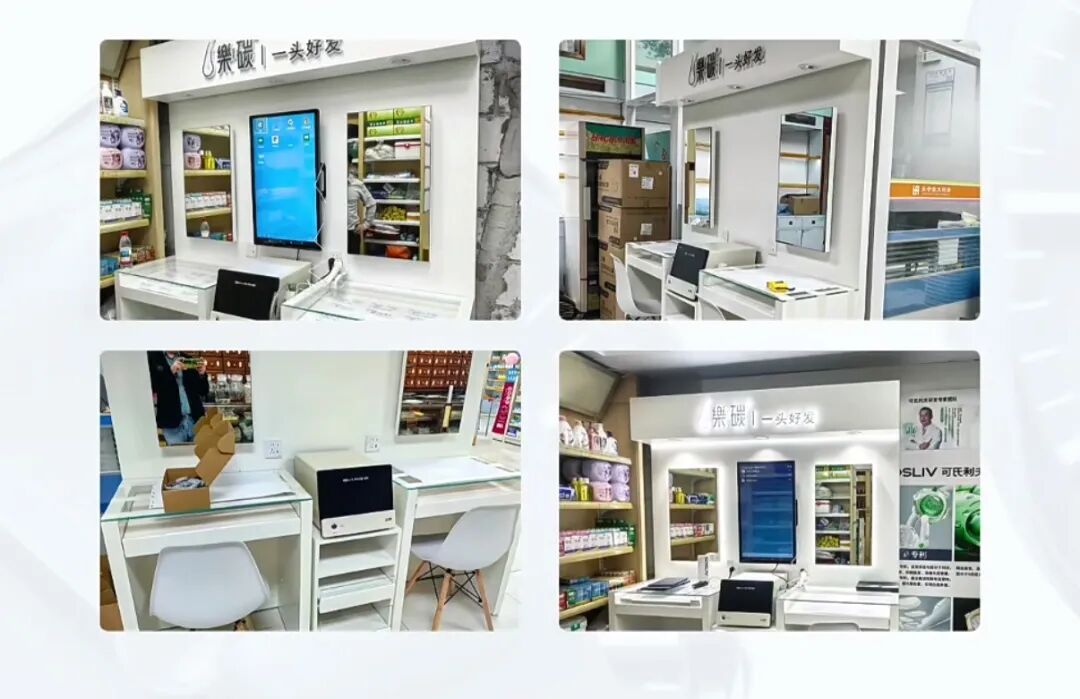
(Image source: Letan)
In terms of services, it improves efficiency by shortening the service process to 8 minutes, allowing the middle-aged and elderly to arrange scalp care around their fragmented time. For example, using questionnaires to understand users' pain points in advance, and then conducting targeted tests, reducing the overall duration of the testing phase to about 2 minutes.
It is worth noting that Keshilifu does not provide stored-value card services, and offers users a "refund for ineffective results" guarantee based on test results. This brand strategy encourages consumers to experience the care plan as soon as possible, understand product effectiveness, and accumulate trust in services among middle-aged and elderly users. At the same time, all order transactions are completed through mini-programs, making it convenient for the brand to accumulate private domain users and support subsequent product development.
Conclusion
Currently, the scalp care track has bid farewell to the extensive product sales and single-service model. The comprehensive solution of "standardized products + refined services + lightweight scenarios" has become the core logic for the industry to achieve breakthroughs. Especially for the middle-aged and elderly population, offline channels are not just sales channels, but important infrastructure for building trust.
Brands that integrate online private domain accumulation and offline scenario penetration, achieving traceable effects and sustainable services, will seize the opportunities in the silver economy dividend.
This article is from WeChat official account "mx814765531" (ID: AgeClub), written by Ren Zixun, and published with authorization from 36Kr.