A well-known luxury brand ends its 11-year history of local production in China, with its new cars once sold at a clearance price as low as 180,000 yuan
Overseas luxury brands that once thrived in the Chinese market are now experiencing an unprecedented ebb tide.
CheDongShi July 7 news, recently, according to multiple media reports, Jaguar Land Rover's Chinese dealers have officially stopped purchasing all domestically produced models. And four months ago, all Jaguar Land Rover domestic models had already ceased production.
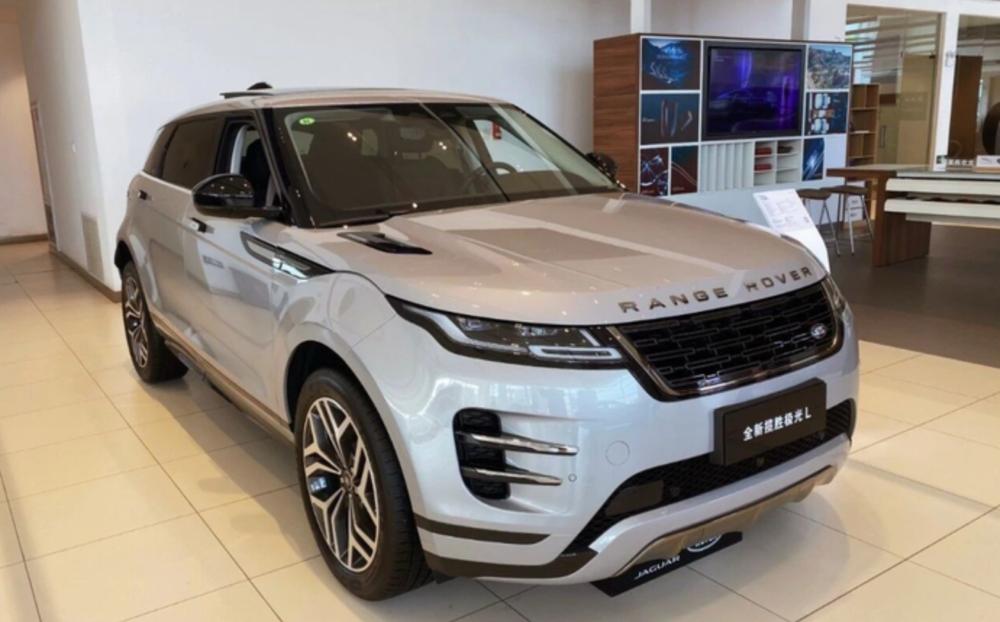
▲ Chery Jaguar Land Rover Range Rover Evoque L (Image sourced from the internet)
Almost at the same time, multiple media outlets reported that Porsche has now fully suspended accepting new personalized configuration orders for its two pure electric models, the Taycan and Macan EV, in mainland China. Consumers can only purchase existing inventory vehicles or units already in transit.
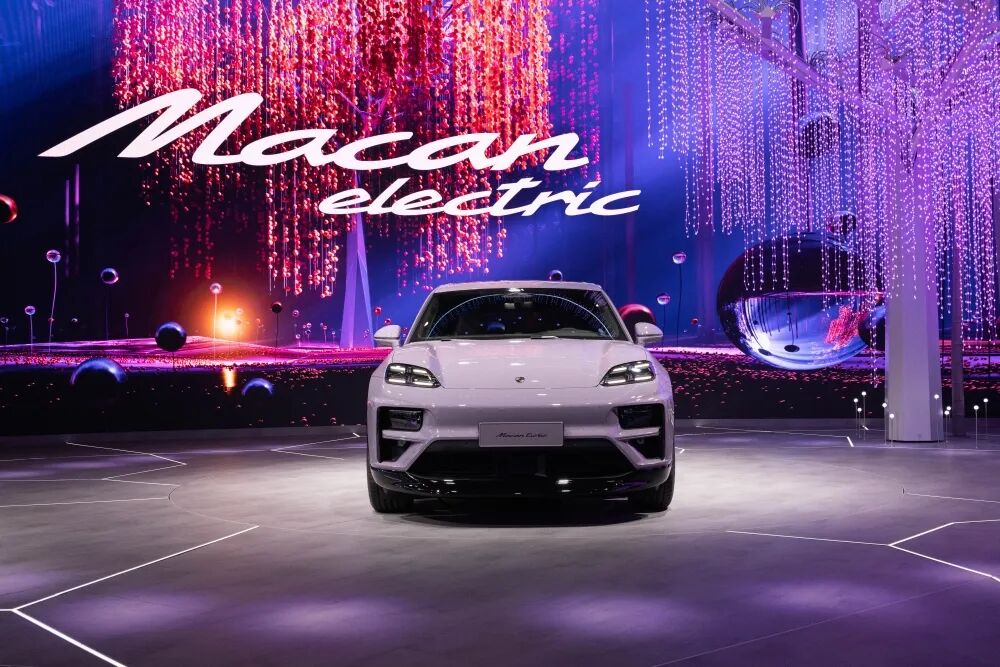
▲ Porsche Macan EV
Overall, whether it is the exit of fuel-powered joint-venture models or the temporary suspension of sales of electric products, it reflects that the once-popular foreign luxury brands are rapidly losing recognition from Chinese consumers.
01.
Jaguar Land Rover Dealers Stop Purchasing All Domestic Models
Porsche's Two Pure Electric Models Are Only Available as Stock Vehicles
According to reports from Finance and Automotive, in July 2026, Jaguar Land Rover's Chinese dealers officially stopped purchasing all domestically produced models.
Four months ago, the Range Rover Evoque L ceased production. Coupled with the earlier discontinuation of four other domestic models — the Discovery Sport, Jaguar XEL, XFL, and E-PACE — which were phased out of production one after another in 2025, Chery Jaguar Land Rover, the joint venture that has operated in China for 14 years, has now halted production of all its domestic vehicle lines.
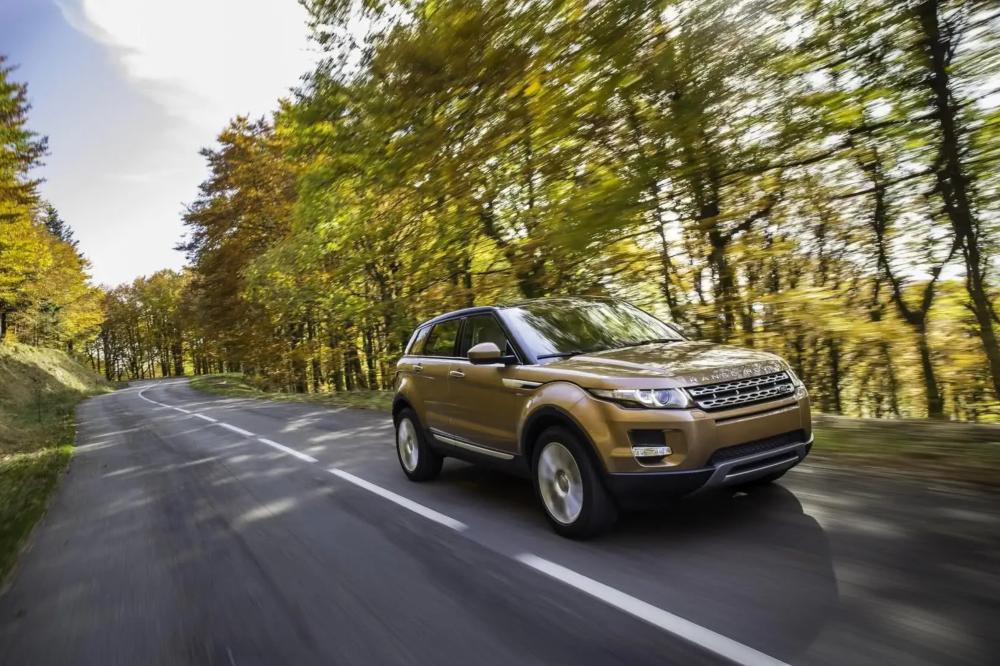
▲ Range Rover Evoque L
Chery Jaguar Land Rover's Changshu plant is currently responsible for manufacturing vehicles under the FREELANDER brand, which is led by Chery. These vehicles no longer carry Jaguar Land Rover branding, and the Changshu factory has essentially transformed into an OEM contract manufacturing facility.
Meanwhile, all new energy products currently planned by Jaguar Land Rover, including the all-electric Range Rover, electric Defender, and Jaguar's new energy models, will be imported vehicles.
Almost simultaneously, as reported by Beijing Business Today, Porsche has now fully suspended accepting new personalized configuration orders for its two pure electric models, the Taycan and Macan EV, in mainland China, and consumers can only choose to purchase existing stock vehicles or units in transit.
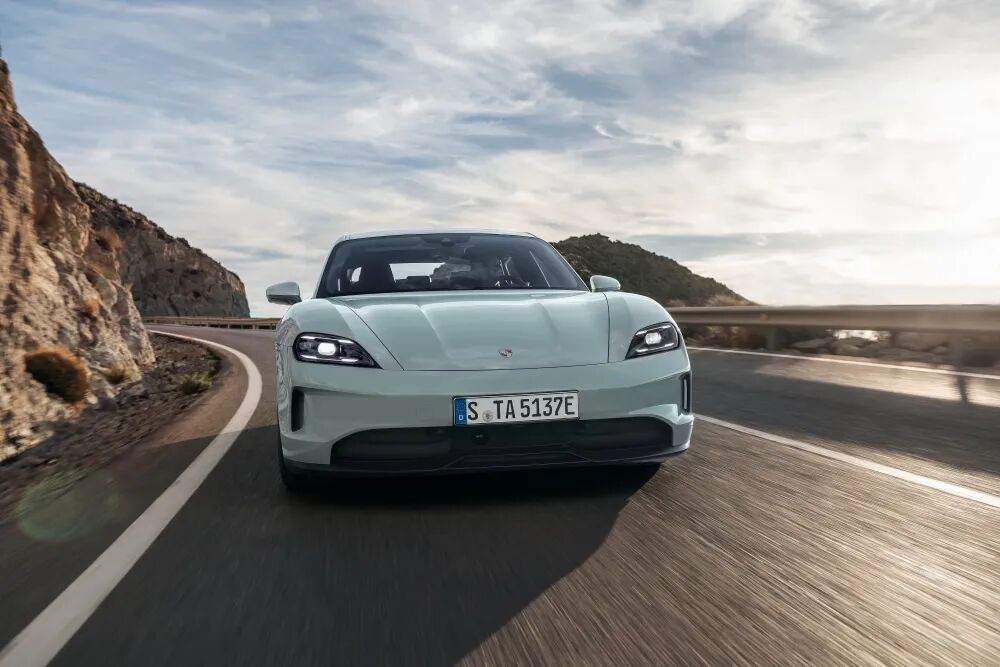
▲ Porsche Taycan
The report mentions that these two models are scheduled to cease production in September 2026. As for the all-electric Porsche Cayenne Turbo and Cayenne Turbo Coupé, which were just launched in April this year, allocations will not be available for ordering until October, with the first batch of deliveries expected between the end of 2026 and the first quarter of 2027.
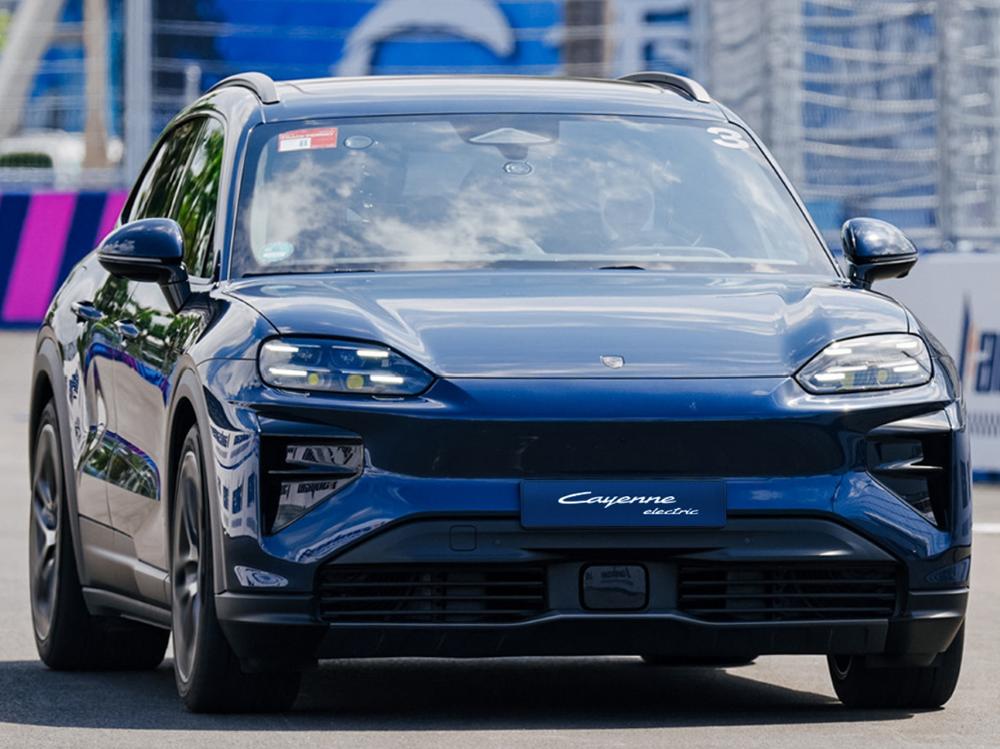
▲ All-electric Porsche Cayenne
This means that from July 2026 to the end of the year, Porsche's pure electric product line will face a six-month-long delivery gap for new electric vehicles.
02.
Jaguar Land Rover's Sales Plummet Over 50% in Eight Years
Porsche Delivered Only 7,519 Vehicles in China in Q1
The moves by Land Rover and Porsche appear independent, but they are microcosms of overseas luxury car brands faltering in the Chinese market. The collapse in sales is the first domino that topples everything else.
According to third-party data, Jaguar Land Rover's sales in China fell from a peak of 146,400 units in 2017 to approximately 67,600 units in 2025, representing a decline of over 50% in eight years. In May 2026, the monthly sales of the Range Rover Evoque L reached only 997 units.

▲ Range Rover Evoque sales figures for May 2026
Porsche's situation is equally unoptimistic. According to official released data, Porsche's global new car deliveries in the first quarter of 2026 reached 61,000 units, a year-on-year decrease of 14.7%. Among all Porsche's regional markets worldwide, the Chinese market recorded the largest sales decline. In the first quarter, Porsche delivered only 7,519 vehicles in China, a 21% year-on-year drop.
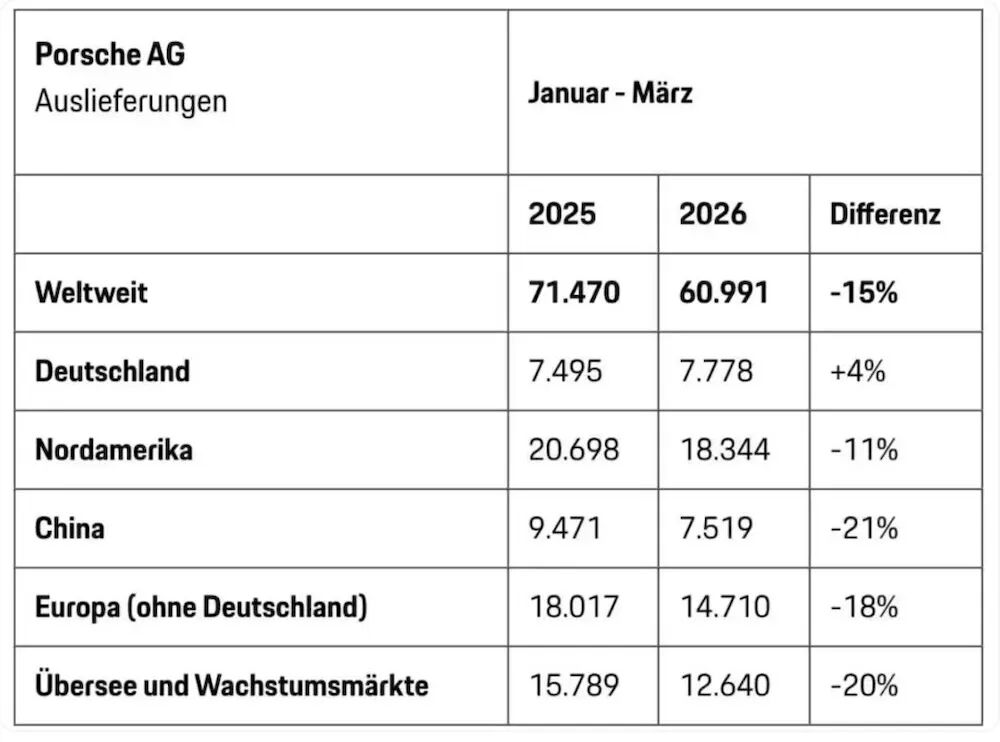
▲ Porsche China's Q1 sales decline hits as high as 21%
The sharp drop in sales has caused continuous "blood loss" for dealers. According to Finance and Automotive reports, since Jaguar Land Rover's domestic models launched in 2015, almost all dealers have operated at a loss, with an average loss of approximately 30,000 yuan per vehicle over ten years.
The report also notes that from the Changshu Jaguar Land Rover plant's launch in 2014 to 2025, cumulative production exceeded 560,000 units. The losses borne solely by the dealer network reached around 17 billion yuan. The manufacturer used quota bundling policies for imported vehicles like the Range Rover to pass losses from domestic models onto dealers, ultimately leading to a total collapse of the terminal pricing system.
In June this year, trending topics such as "Buy a Land Rover Evoque for 180,000 yuan" and "Land Rover Baby Range Rover price cut in half" became viral hits on social media platforms. At this point, the new car price of the Land Rover Evoque L had dropped to the 180,000-yuan range, even creating a price inversion where "used cars are more expensive than new cars".

▲ The topic "Land Rover Baby Range Rover price cut in half" trended on social media platforms
Electrification transformation has also become the biggest "trap" for overseas luxury brands. In the first quarter of 2026, the proportion of Porsche's global pure electric vehicle deliveries dropped to 19.8% from 25.9% in the same period last year. The technological moat accumulated during the fuel vehicle era has almost vanished on the electrification track.
Although Jaguar Land Rover has launched a five-year electrification investment plan of 18 billion pounds (approximately 163.573 billion yuan), the all-electric Range Rover is not expected to launch in China until 2027. The development of its brand-new electrical and electronic architecture has been delayed, leaving the brand facing a multi-year gap in China's new energy vehicle market.
The broader context is that China's entire luxury car market is being reshaped. Taking the traditional top three German luxury brands BBA (Mercedes-Benz, BMW, Audi) as an example, in 2025, their combined sales in the Chinese market decreased by 260,000 units year-on-year, representing a 12.3% decline.
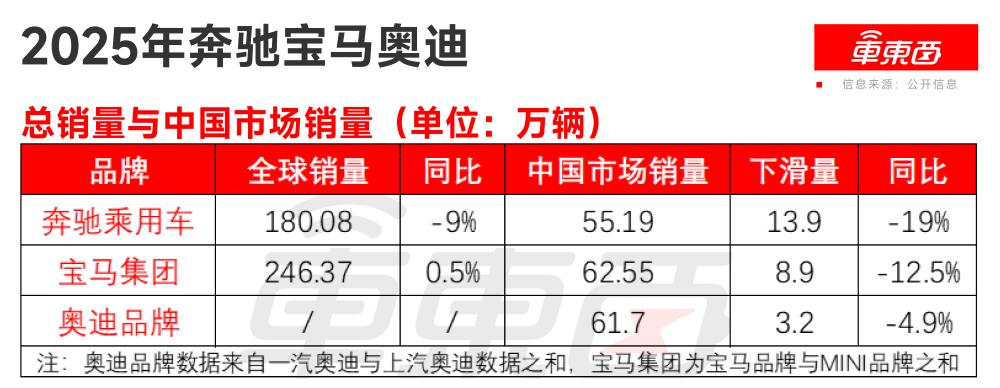
▲ 2025 total sales and China market sales figures for Mercedes-Benz, BMW, and Audi
Meanwhile, according to data from the China Passenger Car Association (CPCA), in the passenger vehicle market segment priced above 300,000 yuan, the share of domestic independent brands surged from 24.9% in 2023 to 40.97% in 2025, and is expected to exceed 50% for the first time in 2026.
In addition, according to data from the China Association of Automobile Manufacturers (CAAM), in April 2026, the market share of Chinese-brand passenger vehicles reached 75%, setting a new all-time record.
03.
Conclusion: Luxury Brands Collectively Falter in the Chinese Market
Jaguar Land Rover ending domestic production and Porsche temporarily suspending sales of pure electric models appear on the surface as independent decisions by the two companies, but in reality, they are microcosms of the collective ebb of traditional luxury brands in the Chinese market.
Jaguar Land Rover's choice represents pragmatic loss control, while Porsche's move is a passive response to product gaps compounded by declining sales, forcing it to scale back its electric product line. The common point between the two is that the once-glowing brand halo is losing its effect.
When the power to define "luxury" shifts from the brand to the product, many brands may have to face a reality: in the Chinese market, perhaps no brand is truly irreplaceable.
This article is from the WeChat official account "CheDongShi", author: R, editor: Zhihao, published with authorization from 36Kr.