UNIQLO loses another key piece
The recent Lemaire runway show was staged in an unfinished concert hall at the Opéra Bastille, and behind the scenes, a shift poised to reshape the design landscape of another fashion company was quietly brewing.
Veteran fashion journalist Lauren Sherman recently revealed in industry outlet PUCK that Christophe Lemaire and Sarah-Linh Tran plan to step back from Uniqlo's Uniqlo U line, with the 2026 Fall/Winter collection likely marking the final chapter of their decade-long collaboration with the brand.
She also disclosed that Fast Retailing has reduced its stake in the namesake Lemaire brand. Internal discussions at Fast Retailing once explored whether the U line could continue independently without the two designers, but the proposal was personally vetoed by Tadashi Yanai. As of press time, both Lemaire and Fast Retailing have declined to comment. Sherman also noted, "The situation may evolve in the coming months."
The +J collection, Uniqlo's earlier collaboration with German designer Jil Sander, failed to extend long-term, a fact Yanai once described as a "huge regret." While the curtain has not fully closed on the U line, industry insiders widely expect the partnership to reach its end — a full decade-long relationship that industry observers have characterized as "steadfast and mutually beneficial."
A Decade-Long Marriage of Mutual Convenience
The precursor to Uniqlo U was the 2015 collaborative project "Uniqlo and Lemaire." The debut trial was an instant success, and the partnership upgraded in 2016: Lemaire was appointed artistic director of Uniqlo's Paris R&D center, giving birth to the U line.
The French designer, with nearly 40 years of industry experience, began his career in the studios of Christian Lacroix and Yves Saint Laurent, led Lacoste from 2000 to 2010, and succeeded Jean Paul Gaultier as artistic director of Hermès women's wear in 2010. It was this Hermès tenure that earned the U line the nickname "affordable Hermès" on Chinese social media — at the time, few people paid attention to the then-obscure Lemaire brand itself.
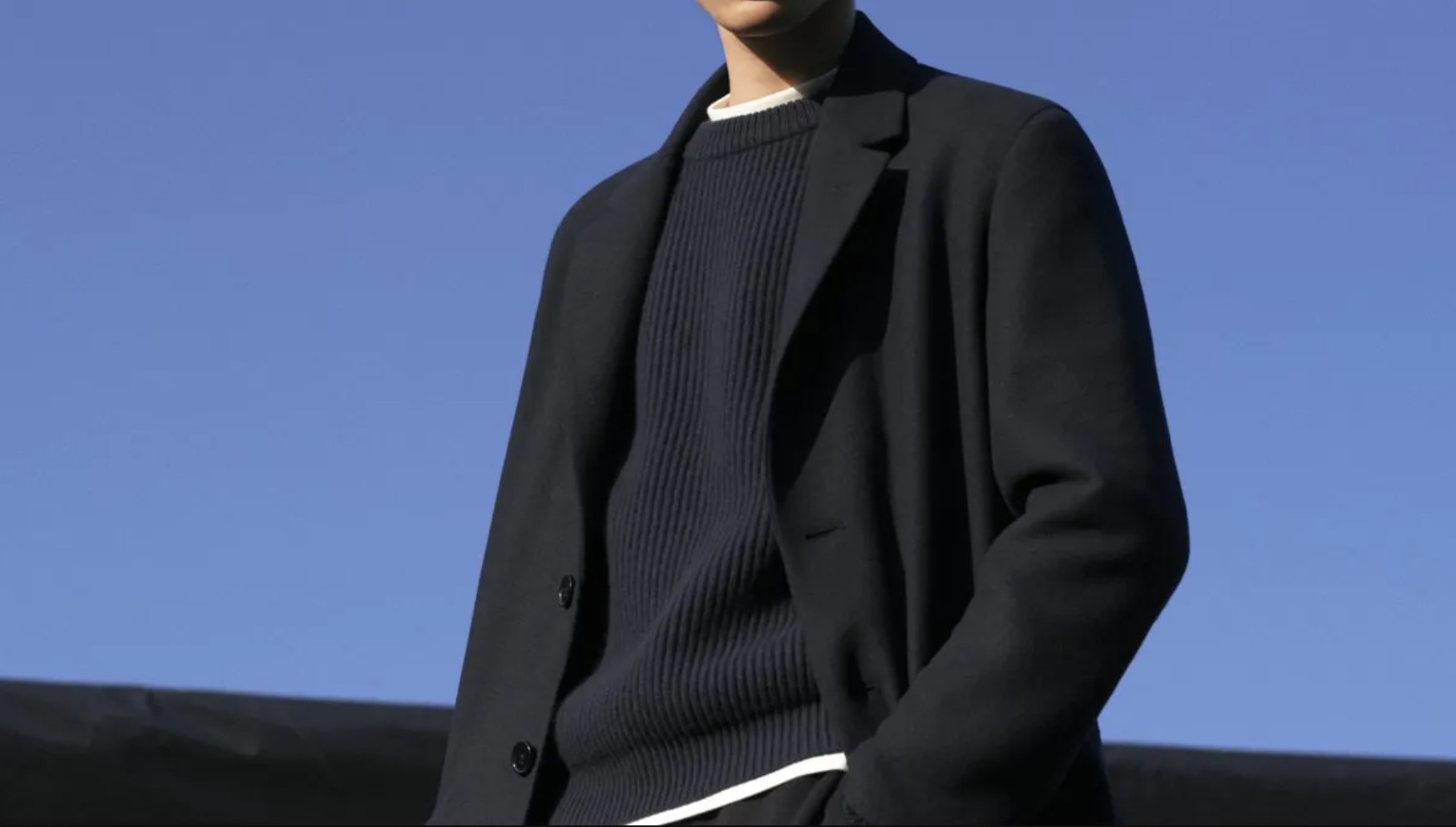
Uniqlo U 2016 F/W
Erasing his name from the label was precisely Lemaire's own insistence. He recalled in a 2016 interview with *Interview* magazine: "They said, 'Why not put your name on the label, call it Christophe Lemaire for Uniqlo?' I said no. Fashion insiders would care, but Uniqlo's consumers wouldn't... This isn't a fleeting designer collaboration. The idea was to create another layer of permanent products — one that is inherently Uniqlo, complementary to the main line."
This statement would go on to nearly define Uniqlo U. Unlike most collaborations that rely on a designer's star power, it gradually became an integral part of Uniqlo's product ecosystem.
Ten years on, this partnership has almost achieved the original goals of both parties.
For Uniqlo, it gained a more modern, restrained design language with European aesthetic sensibilities; for Lemaire, Uniqlo became the most critical springboard in the brand's growth trajectory.
According to *Business of Fashion*, Lemaire's sales grew tenfold between 2019 and 2024, exceeding 100 million euros; the *South China Morning Post* put the figure at around 116 million U.S. dollars, compared to just 10 million euros before the pandemic.
Since 2023, Lemaire has successively opened directly operated stores in mainland China, Japan, and South Korea. In 2024, the brand's first mainland China store launched in Chengdu Sino-Ocean Taikoo Li. Local business media reported that the store averaged around 7 million RMB in monthly sales after opening, with its signature croissant bags consistently selling out.
Lauren Sherman also cited a source familiar with the matter stating that Lemaire's 2026 sales are projected to reach 160 million euros. More crucially, this growth has been achieved without compromising the brand's unique identity — making Lemaire a prime target for private equity and strategic investors. In Sherman's words, it is on the shortlist of "independent luxury brands that every strategic buyer is quietly tracking."
Meanwhile, Lemaire is undergoing internal personnel shifts: Laetitia Mergui, who led the Asian expansion, stepped down as CEO earlier this year, succeeded by Clarisse Godbillon, a long-time Lemaire employee and former Chief Operating Officer of Jacquemus. All signs point in one direction — the brand is gearing up to forge fully ahead on its own.
The Worst Timing
For Uniqlo, this is certainly not welcome news.
Over the past decade, the U line, with its muted color palettes, relaxed cuts, and functional silhouettes, has established itself as one of the most recognizable product lines in the Uniqlo system. Uniqlo has never disclosed U line sales figures, but estimates based on its full-distribution model across all stores put its annual retail revenue at 900 million to 1 billion U.S. dollars — roughly 5% of Uniqlo's total revenue for the 2025 fiscal year.
Even more notable are its blockbuster hits that rival mainstay products. For example, the U line crew-neck T-shirt claimed the top spot in Uniqlo's global T-shirt sales for 17 consecutive months from May 2024 to September 2025, a feat Uniqlo explicitly highlights on its product page.
Sales are the easiest metric to quantify. What is truly immeasurable is that the U line has effectively served as the "design lab" for Uniqlo's entire product system: any design, cut, or material validated as successful in the U line is often adapted into the main line, a practice Uniqlo internally calls the "ripple effect."
This effect usually goes unnoticed, but as early as 2016, Shu Hung, then Uniqlo's Global Brand Experience Creative Director, admitted in an interview with VICE: "Over time, this collection will grow larger and start influencing the rest of Uniqlo's product lines. Everything Christophe created for the U line created a ripple effect across Uniqlo. His real goal was to invent new basics."
When pressed on exactly what was "rippling out," she pointed to silhouettes: "Oversized tops. Structured A-line dresses. And whole-garment knitting."
Seamless 3D knitting was once the U line's signature technique. Shu Hung emphasized at the time: "You don't usually see this in mass retail — it's typically very expensive and produced in limited quantities." Today, 3D-knit dresses and sweaters are standard offerings in Uniqlo's main line.
In other words, the U line, using a relatively niche test ground, took on the aesthetic risks that the bulky, established main brand should have assumed itself. The U line was Uniqlo's lowest-cost innovation lab, and losing it means Uniqlo loses more than sales — it loses the engine of product iteration.
The timing of Lemaire's potential departure coincides perfectly with a new phase of Uniqlo's globalization. For two decades, China was Fast Retailing's fastest-growing overseas market. In recent years, however, the group's growth focus has clearly shifted to Europe and North America.
Since 2022, Greater China's share of Uniqlo's overseas business has continued to decline, from nearly half (48.1%) to 34% in the last fiscal year; conversely, the share of Europe and North America has risen year by year: from fiscal 2022 to 2025, Europe's share of total group revenue nearly doubled from 5.6% to 10.9%, while North America's grew from 5% to 8%.
Store expansion strategies have also shifted accordingly.
Unlike the dense store networks in China and Japan, the European and North American markets prioritize a flagship store model, rolling out large-format locations in core cities like London, Paris, and New York, aiming to boost per-store efficiency through brand influence rather than sheer numbers.
Goldman Sachs analyst Sho Kawano's assessment of this westward push is: "Over the past decade, the industry has flooded into fast fashion, which has instead solidified Uniqlo's position." Uniqlo Global Creative President John Jay put it more bluntly: "We are exactly where the zeitgeist should be. Because for us, quality is non-negotiable."
In a sense, Uniqlo can be described as a "diet version" of fast fashion — data from retail analytics firm Edited shows that roughly one-third of Uniqlo's products stay on shelves for six to nine months, while 66% of Zara's items are removed in less than three months. Yanai said: "We don't chase trends. People mistakenly think Uniqlo is a fast fashion brand, but we are not."
In this transatlantic adventure, Uniqlo needs a modern, Western aesthetic language like Lemaire's more than ever. The end of the U line will undoubtedly put the brakes on this progress.
Of course, Yanai has not been caught completely off guard by Lemaire's potential exit. The Uniqlo:C collection, launched in 2023, is widely seen as a "stand-in" for the U line — its design logic, naming convention, and even price range almost perfectly replicate the template pioneered by U. The mastermind behind the C line, Clare Waight Keller, former creative director of Givenchy and Chloé, was officially promoted to Uniqlo's Global Creative Director in fall 2024, overseeing all mainline products from HEATTECH to menswear. Fast Retailing Head of R&D Yukihiro Katsuta explained: "She is one of the few creators in the world who can strike a perfect balance between creative vision and product operations."
This promotion path itself is the most lasting legacy of the U line for Uniqlo: first run a "lab" to prove that design can sell, then take over the entire store. Now that the successor is in place, the founders of the lab no longer need to stay — a mountain cannot serve two tigers.
Ten years ago, Christophe Lemaire did not aim to create a temporary collaborative line, but "another layer of permanent products." Today, that goal has been achieved. Even if Uniqlo U eventually disappears, the methodology it established — testing with an independent design team, then diffuring successful concepts into the main line — has been deeply embedded in Uniqlo's product development system.
For Lemaire, Uniqlo helped the brand mature; for Uniqlo, the real challenge is to prove something far more difficult: after the designers leave, can this innovation system continue to function effectively?