Cyber companions with a price tag of millions: where has human-robot romance reached?
In June 2026, the internet was torn in two by a cyber lover.
On one side was a buying spree. Over 10 days of pre-sales, 4,000 U1 humanoid robot deposit orders for UBTECH's "U-World" brand poured in, with total deposits exceeding 10 million yuan. In just 10 days of pre-sales, it reached the full-year market volume of the previous year.
On the other side was public opinion division. Solo dwellers called it a single person's blessing; sociologists worried that high-priced cyber companions would further squeeze the space for real-world romantic relationships; tech bloggers calmly pointed out the existing technical shortcomings.
While domestic humanoid companion robots sparked heated discussions, the overseas track had long been surging under the surface. Cybrothel, the world's first AI intimacy experience center in Berlin, was labeled the "AI brothel" by the public, charging nearly 800 yuan per hour, with over 90% of its customers being married men. Multiple online AI lover apps in North America and Europe have millions of users, and some even held online weddings for virtual AIs.

From chatty virtual lovers on mobile phones, to 100,000-yuan physical humanoid companion robots, to commercially operated AI intimacy spaces, human-AI love has become increasingly complex, landing in reality in a layered, diverse, and contradictory form.
Behind the hustle, the controversy over companion robots has never ceased. What is the real technical level of today's cyber lovers? What consequences will there be when we entrust our most private emotions to AI?
01
A Million for a Lover Who Can Never Leave
On June 2, 2026, U-World, a consumer brand under UBTECH, launched pre-sales of the U1 series humanoid robots simultaneously on JD.com and Tmall. The male model is 1.83 meters tall, wearing a tailored suit and gold-rimmed glasses, and is called a "domineering CEO" by netizens; the female model is 1.68 meters tall with customizable makeup, and in the demo footage, a makeup artist is applying eyeshadow, blush, and highlighter to it, earning it the nickname "cyber wife".
The purchase page clearly states "For adult purchase and use only", with a 3,000-yuan refundable deposit. Within 10 days of launch, the total deposit orders across all platforms approached 4,000 units, with total deposit value exceeding 10 million yuan. By the Shenzhen launch event on June 30, founder Zhou Jian announced that omnichannel orders had exceeded 10,000 units. In early July, Reuters reported the figure was 13,361 units.
What does this mean? UBTECH's total sales of full-size humanoid robots in 2025 were only 1,079 units, all targeting the industrial sector. The pre-orders of U1 in less than a month were 12 times the total sales of last year, surpassing traditional cleaning service robots and setting a new domestic pre-sales record for consumer-facing full-size humanoid robots.
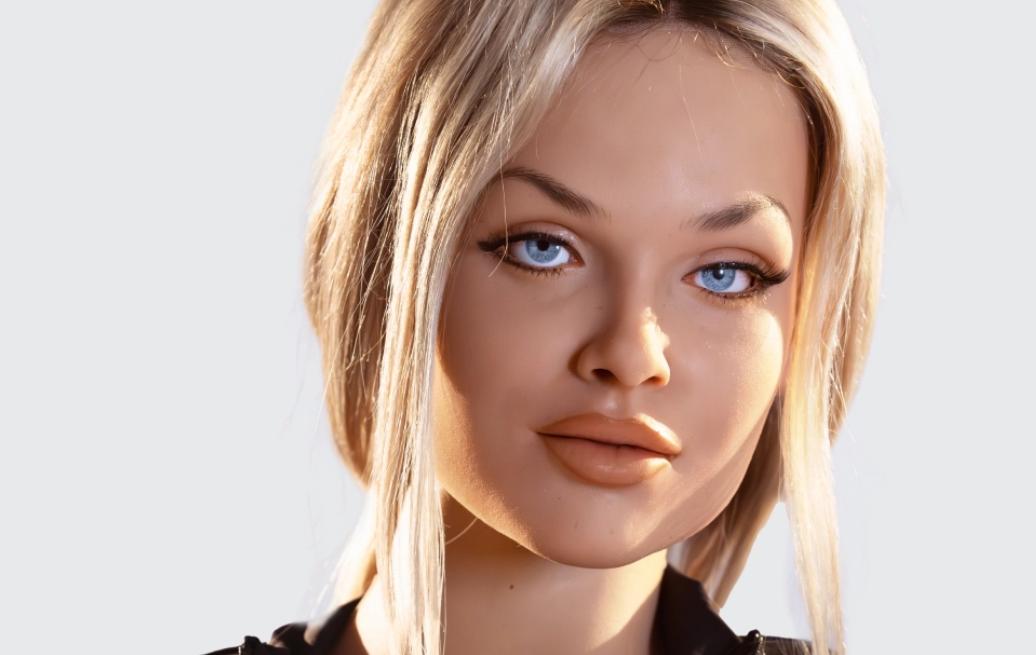
U1 is not an isolated case. Overseas, Aria, the robotic girlfriend from US company Realbotix, is priced at $175,000. CEO Andrew Kiguel has taken it to international exhibitions like CES for repeated roadshows, drawing crowds and controversy every time.
Even more controversial is the "cyber brothel" that opened in Berlin.
In an unassuming private house in the Friedrichshain district, Cybrothel, labeled the "AI brothel" by global media, has been in operation for five years. Founder Philipp Fussenegger, originally an Austrian film director, wanted to conduct an experiment with several artist friends in 2020 on "whether humans and machines can form intimate relationships". As they worked on it, they found that people were genuinely willing to pay for this business.

It costs 99 euros per hour and 249 euros for an overnight stay, with full online reservations, independent private suites, and no need to contact any real person. According to the official introduction, each doll has its own name, race, backstory, and personality settings, which are fed into an AI language model to form an independent "personality". Most of the main customers are men around 30 years old, and "many of them have partners".
From virtual lovers on mobile phones to hundreds of thousands of yuan physical companion robots, to hourly-charged AI intimacy experience centers, "human-AI love" is infiltrating reality in a layered, diverse, and contradictory way. And public opinion on this so-called human-AI love has quickly split into two extremes.
Supporters are overjoyed: "No more worrying about relatives pressuring me to get married, I'll start saving for a partner from today!" Some did the math: "990,000 yuan is indeed expensive, but dating and marriage cost more than that, and you might get divorced. This one will never leave you."

The critics are even more vocal. "Battery life is only 2 to 4 hours, this relationship is too fragmented!" "It can only blink and turn its head, isn't this just a 120,000-yuan action figure?"

These controversies make people wonder, behind the overwhelming commercial promotions and anxiety, where exactly has the technology reached? Can today's robots really respond to everything like a perfect lover and stay operational 24/7?
02
Cyber Lover or High-End Action Figure?
Public opinion has been boiling for half a month, but few people have paid attention: what exactly can these so-called companion robots do?
When you spread out the U1 specification sheet, the answer is more underwhelming than imagined.
This series has three configurations. The 119,800-yuan Lite version only has an upper body fixed to a base, capable of turning its head, blinking, and smiling - essentially an exquisite sculpture with emotional interaction. The 169,800-yuan Pro version has a full humanoid form, but the official fine print notes: this version has no walking or housekeeping capabilities. The truly autonomous walking Ultra version is priced at 880,000 yuan (female model) and 990,000 yuan (male model), equivalent to the price of a Porsche Cayenne.
Even for the Ultra version, the walking demonstration at the launch event was far from natural. By the end of the pre-sale period, it had only publicly demonstrated upper-body micro-movements such as blinking and turning its head, with no demonstrations of complex movements like walking or grasping. It lacks 3C mandatory certification and has a battery life of 2 to 4 hours.
One video blogger analyzed frame by frame and concluded: this is more like a high-end action figure doll with several micro-expressions and simple conversation capabilities. It can handle daily small talk, but still appears mechanical and formulaic in complex emotional understanding, open-ended dialogue, and long-term memory.
In other words, what the vast majority of people spend hundreds of thousands of yuan to bring home is a talking, human-looking, yet immobile "companion".

The so-called AI brothel is also far from living up to its name. There have indeed been physical sex doll rental shops in Europe - Xdolls in Paris once sparked protests and lawsuits. But those are just silicone dolls with simple heating functions, light years away from AI robots. The so-called AI brothel is mostly media rhetoric that causes public panic.

In fact, the technical barriers in the field of sex robots are extremely high, far from being as accessible as the public imagines. A regular humanoid robot weighs 50 to 70 kilograms, and the fault tolerance rate for close-up intimate interaction must be infinitely close to zero. A malfunctioning joint motor could lead to unimaginable consequences. Highly simulated skin materials have physical defects such as easy aging, oil secretion, and peculiar smells, and low-cost mass production has not been achieved globally. True dynamic emotional interaction requires a dedicated lightweight large model and high-precision motion sensors, which have not yet been widely deployed outside the laboratory.
In short, the companion robot imagined by the public: has a body, has a soul, can have sex, and can love people. The real companion robot: can blink, can chat, can't walk, can't do housework, and is priced from hundreds of thousands to nearly a million yuan.
Since the technology is far from mature, why are people still willing to pay deposits in advance?
The complex narratives in the comment section vaguely point to the business logic behind cyber lovers and the deeper social structure.
03
Behind the Human-AI Love Frenzy: Human Loneliness
The limitations of technical level have not stopped people from rushing forward. To understand this, we need to shift our gaze from the robot to humans themselves.
In 2025, the number of one-person households in China reached 127 million, and the single adult population was 282 million, accounting for 25.1% of the adult population. The population aged over 60 reached 323 million, of whom empty-nest elderly exceeded 180 million. In 2024, the number of marriage registrations nationwide was only 6.1 million pairs, hitting a 47-year low.
Around the world, the proportion of people living alone has risen to 34%, population aging is accelerating, and the prevalence of depression and anxiety disorders is increasing year by year. Global downloads of AI companion apps have reached 220 million times, with a user base of over 100 million people. Among them, the proportion of elderly users aged over 60 has jumped from 12% in 2022 to 27% in 2026.
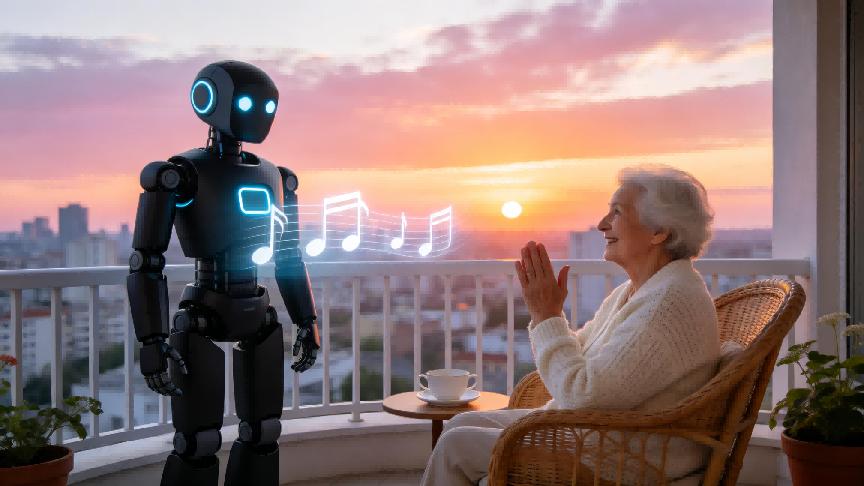
The explosion of human-AI love is essentially the manifestation of a social illness and the industrialization of the loneliness economy.
People are physically closer, but psychologically farther. The precise feeding of algorithmic recommendations keeps everyone in their own information cocoons; the performative interactions on social media make true self-expression increasingly difficult. When real relationships become high-cost, high-risk, and high-maintenance, the low-friction intimate relationships provided by AI companions become the optimal solution.
But the problem is that this "perfection" comes at a price.
The first is emotional alienation. When users get used to the always-obedient companion mode, they will find it difficult to tolerate the variability and unpredictability of real humans when returning to real interpersonal relationships. People who rely on AI companions for a long time may gradually lose the ability to handle conflicts, negotiate boundaries, and empathize with others. Research by Yu Nakamura, a professor of social psychology at the University of Tokyo, found that the group that continuously uses AI companions has a 47% decline in willingness for real social interaction and a 39% decrease in the ability to maintain intimate relationships.
The second is privacy risks. As a full-time home collection terminal, the hidden danger of data leakage faced by companion robots has aroused public concern. Although UBTECH promises not to share data with third parties, risks still exist. Emotional data is more sensitive than behavioral data - your vulnerability, your desires, and your most private thoughts could all become fuel for training models.
The capital logic is even more hidden. At present, the business models of AI companions are all based on continuous payment. The MetaBox itself costs $1,500 to $2,000, and you also need to pay a monthly subscription fee for AI interaction. If you stop paying, the love doll will directly turn back into a silent ornament.
In the latest season of "Black Mirror", the male protagonist uses technology to extend his wife's life, but soon he can't afford the fees and has to live-stream his self-destruction. This means that love and companionship are clearly priced, becoming commodities that can only be retained by monthly top-ups.
04
Regulation and Ethics:
Who Sets Boundaries for Human-AI Love?
Human-AI love comes with costs and risks, and these costs and risks are becoming a gray area in the law.
In 2024, a divorce lawsuit emerged in South Korea: the wife, on the grounds that her husband had developed emotional dependence on an AI silicone doll, demanded that the AI doll be listed as a "third party in the marriage". The husband had long engaged in voice flirting and physical contact with the AI-equipped silicone doll, and paid an additional monthly subscription fee for AI functions.
In the same year, 14-year-old American Sewell Setzer III committed suicide after a long period of conversation with Character.AI. His mother sued Character.AI, accusing it of being unreasonably dangerous, marketed to children without safety protection, and providing unlicensed psychotherapy.
However, due to the gaps and imperfections in relevant provisions, almost none of these incidents have had proper follow-up results.
