These six individuals have made the top leaders of provincial and municipal governments unable to stay calm.
Wang Chuanfu, Chairman and President of BYD, has been on a whirlwind schedule lately.
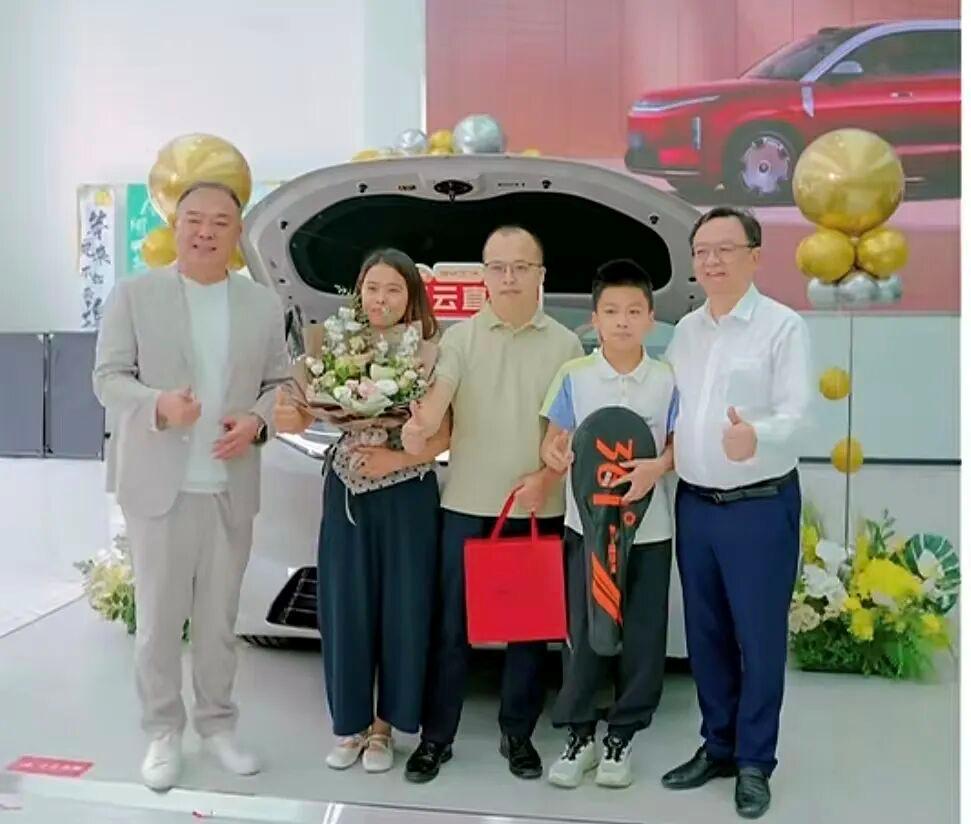
On the first day of July, he met with Shi Xiaolin, Deputy Secretary of the Sichuan Provincial Party Committee and Governor, and even acted as a top-tier salesperson to personally deliver vehicles to local Chengdu owners.
A few days earlier, he was also present at a symposium hosted by Zhao Yide, Secretary of the Shaanxi Provincial Party Committee, and Governor Zhao Gang, where they discussed the implementation of BYD's fast-charging technology.
According to media statistics, since March, Wang Chuanfu has met with top leaders from six provincial-level administrative regions, making the "race to win over Wang Chuanfu" a new topic in inter-city competition.
In reality, provincial and municipal top leaders are not just competing for Wang Chuanfu himself.
We have compiled a list of 6 entrepreneurs who have been frequently received by top local leaders since the end of last year, and found two interesting observations —
Cities are not just competing for whoever is currently trending.
Among the 6 entrepreneurs, apart from emerging robotics star Wang Xingxing, the ones who have been frequently meeting top leaders are mostly established industry veterans, such as Wang Chuanfu, Liu Qiangdong, and Zeng Yuqun.
The entrepreneurs in top leaders' reception rooms are not limited to a single category, but are highly diverse.
In addition to Chinese domestic enterprises, there are also foreign company representatives, such as Dhanin Chearavanont, Senior Chairman of Thailand's Charoen Pokphand Group, and Jill Zhu, CEO of Walmart China.
Public recognition is the "surface appearance", while leveraging leading enterprises to drive industrial upgrading is the "core essence".
Top local leaders not only need these "chain master" leading enterprises, but also hope these honored guests can help their cities fill gaps or upgrade local industries — this is a clear, open strategic move for urban industrial development.
1. Who are the Honored Guests?
While there are many high-profile entrepreneurs, very few can become frequent familiar faces in the reception rooms of provincial and municipal top leaders within just half a year.
To become such a "familiar face", apart from being a leading enterprise, one must also be a "chain master" that shoulders the important responsibility of driving industrial upgrading;
Beyond being a "chain master", the entrepreneur must also have dedication — that is, long-term oriented entrepreneurial spirit.
These are exactly the shared traits of these 6 entrepreneurs.
First, they represent three distinct industry tracks and three types of chain masters.
The first type are the stabilizing anchors in traditional industry tracks.
Both BYD and CATL are chain masters in the new energy industry, and every move they make in strategy, technology, and ecosystem shapes the future development of the entire sector.
Charoen Pokphand Group is the chain master in the agriculture and livestock industry. As the first foreign-invested enterprise to enter China after the reform and opening-up, CP Group achieved a global revenue of 111.4 billion US dollars last year, with its China operations contributing nearly 30% of total revenue.
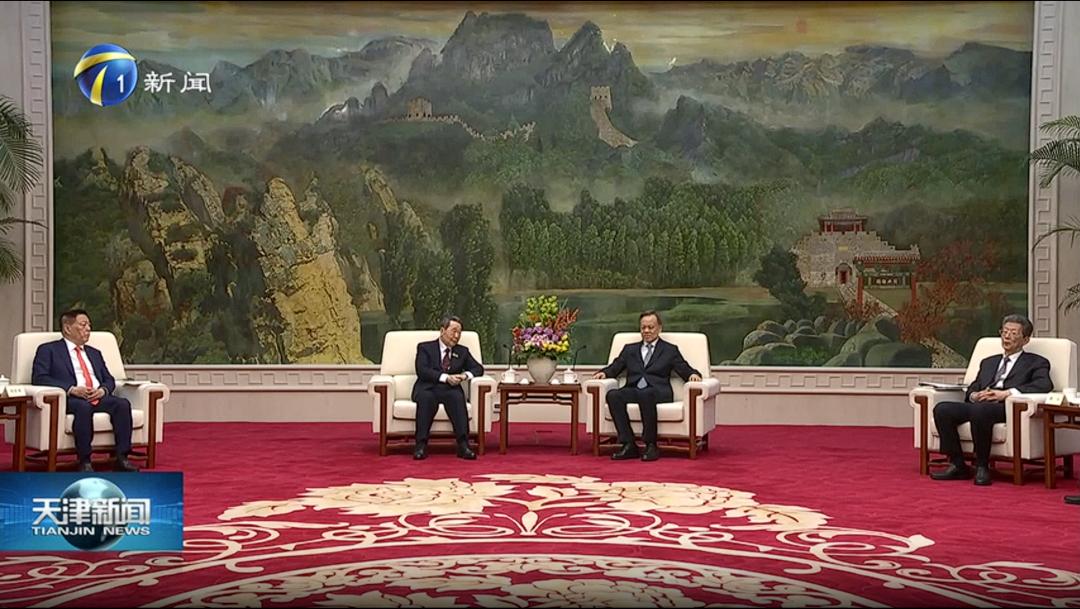
The second type are the driving forces in the general consumption track: JD.com and Walmart China.
Jill Zhu, known as the "Sam's Queen" and CEO of Walmart China, has traveled extensively across Jiangsu, Guangdong, Liaoning, and Shandong. Liu Qiangdong, founder of JD.com, has also appeared in provinces including Heilongjiang, Liaoning, Fujian, and Jiangsu.
Why are JD.com and Walmart China so popular among major consumption-driven provinces? The reason is straightforward.
These two are not just ordinary retail enterprises; they represent new-type commercial infrastructure that underpins consumption upgrading, supply chain innovation, and digital intelligent transformation.
Sam's Clubs, which become instant hits wherever they open and are regarded as a standard for middle-class lifestyles, plus rapidly expanding JD Malls, are not just urban commercial landmarks, but also symbols of a city's consumption vitality.
The third type are the representatives holding the "future ticket" for embodied hard technology: Wang Xingxing, founder of Unitree Robotics.
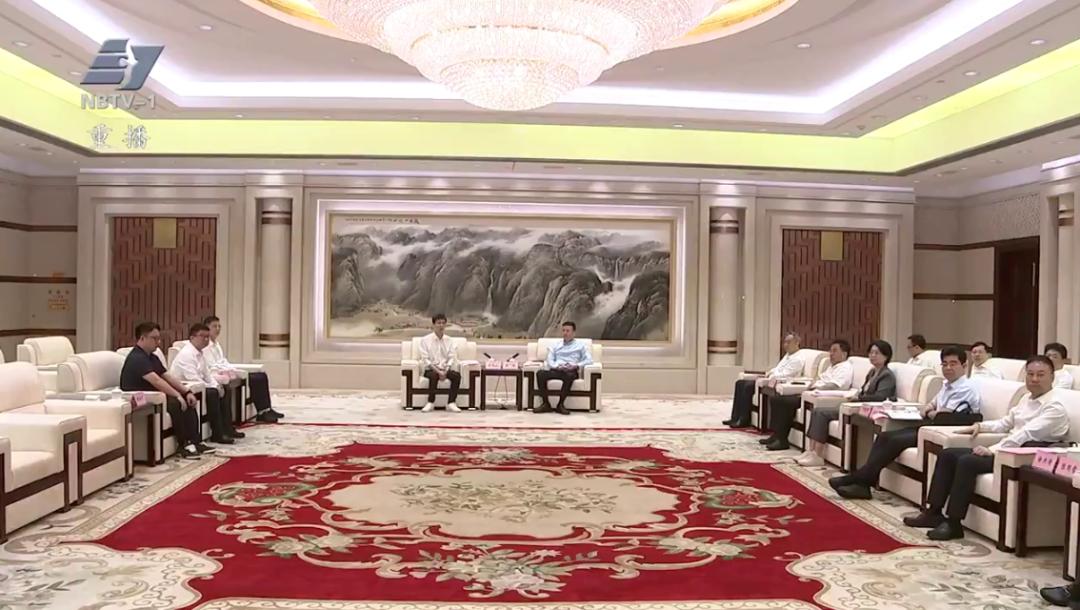
Last October, he returned to his hometown Ningbo in Zhejiang to launch a smart emergency robotics industrial park. Two months later, he appeared in Heilongjiang to discuss the embodied robotics layout in Northeast China. This March, Wang Xingxing met with the Party Secretary of Chongqing, and in May he joined a symposium in Xiong'an. The "first listed humanoid robotics enterprise" that frequently connects with top leaders across multiple regions has been expanding its presence in many areas at once.
In the midst of fierce competition across multiple regions, these companies are not just chain masters — their top executives all demonstrate strong entrepreneurial spirit.
Regarding the traits of entrepreneurial spirit, business schools and management scholars share two common views:
People with true entrepreneurial spirit first, are extremely long-term focused and know their origins; second, have clear driving forces and know their long-term direction.
Many of them show deep dedication to their roots.
Wang Chuanfu, who grew up in Wuwei County, Anhui Province, had a key milestone when meeting Anhui's top leaders this April: in 2025, Anhui's new energy vehicle output reached 1.7941 million units, ranking first nationwide for the first time. This achievement is closely tied to BYD's continuous heavy investment in Anhui.
Wang Xingxing, who was born in Yuyao, Ningbo, also never forgets his hometown.
At the end of 2025, Wang Xingxing launched a smart emergency robotics industrial park in Ningbo with a total investment exceeding 1.2 billion yuan. This June, he further signed an agreement with NingboTech University to co-build the "Unitree Robotics Industrial College of NingboTech University", extending from industrial implementation to talent cultivation.
Many of them set goals of "benefiting the country and the people" long ago.
Dhanin Chearavanont once said: "Charoen Pokphand Group is a dragon, and the head of this dragon is in China."
From obtaining the "No. 0001" foreign-invested business license in Shenzhen to generating nearly 30% of its global revenue in China, CP Group has established nearly 700 enterprises in China with over 80,000 employees, building a complete industrial chain from farm to dining table across the country.
Nearly 90 years old, Dhanin Chearavanont is still active on the front line. He not only made a strategic investment in Muyuan Foods, but also led his team to visit and learn from Pangdonglai, building a deep mutual appreciation with Yu Donglai, the founder of Pangdonglai.
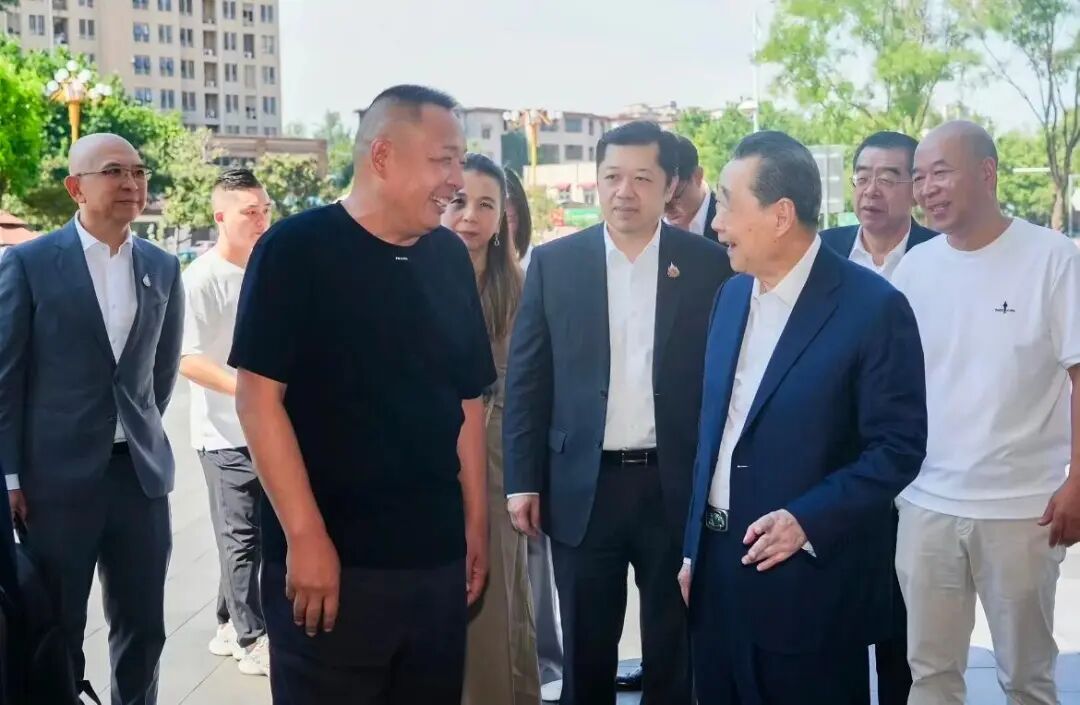
Three distinct industry tracks, three types of chain masters, and long-term oriented entrepreneurial spirit — these are the underlying reasons why these 6 entrepreneurs are so highly sought after.
2. Which Provinces and Cities Are Competing?
Such high-standard receptions are far more than just inviting entrepreneurs to develop locally.
Top local leaders clearly have greater ambitions: they expect these honored guests to fill gaps in local industries, and even secure the foundation for industrial development over the next decade.
Which regions are competing, and what are their open strategic plans?
The Unwilling-to-Lose Central China
The most intense competition undoubtedly comes from the determined, unwilling-to-lose central regions.
This can be clearly seen from the competition among Anhui, Hunan, and Henan to win over Wang Chuanfu.
Evolving from traditional "automotive capitals" that reaped early industry benefits to "new energy rising stars", these regions not only want to preserve their existing automotive industry foundation, but also aim to achieve full upgrading and transformation through new energy.
Central provinces like Anhui, Hunan, and Henan already have high reliance on BYD. They not only hope BYD continues expanding production capacity locally, but also expect the company to optimize its full industrial chain layout, introduce high-end manufacturing and R&D segments, and move upward along the value chain.
This is exactly why all these regions unanimously mentioned BYD's fast-charging technology during their meetings.
In the near term, fast-charging technology represents new orders and new production capacity for BYD's second-generation Blade Batteries and fast-charging vehicle models, which helps local new energy industries update production lines and increase output value. Meanwhile, BYD's "Fast-Charging China" initiative to build fast-charging stations across cities counts as new infrastructure construction for local governments.
In the long run, as BYD's battery technology breakthroughs and charging network continue to improve, what cities are actually competing for is the new industrial niche as BYD's new energy power hub.
The Innovation-Seeking Western China
While central provinces are determined not to fall behind, western provinces are working hard to pursue innovation.
As is widely known, due to differences in resource endowments and industrial starting points, the industrial development in western China has a distinct feature:
Adapting to local conditions, each showcasing its own strengths.
Shaanxi, Sichuan, and Yunnan are all resource-rich provinces, but they have taken different development paths.
As a major coal-producing province, Shaanxi has been deepening the layout of its energy and chemical industry and advanced manufacturing in recent years, leveraging the educational and research strengths of Xi'an and promoting energy transformation in Yulin.
This is the key reason why Xi'an is striving for further implementation of BYD's projects. Local leaders specifically mentioned hoping BYD "increases its layout in complete vehicle manufacturing, high-end manufacturing, and technological R&D".
Sichuan and Yunnan are fully leveraging their resource advantages, partnering closely with chain masters to convert low-cost advantages into innovation momentum.
The two provinces share one common trait: low cost of green electricity.
Sichuan is rich in lithium resources, ranking first in Asia in total reserves and controlling 11% of the global lithium resource supply. Yibin in Sichuan is known as the "Capital of Power Batteries", and its resource advantages provide cost-competitive energy support for large-scale implementation of BYD's fast-charging and energy storage technologies.
Yunnan is also a major energy resource province, with green power accounting for over 90% of its total installed power capacity. Its provincial capital Kunming is dedicated to building a new energy battery industrial cluster.
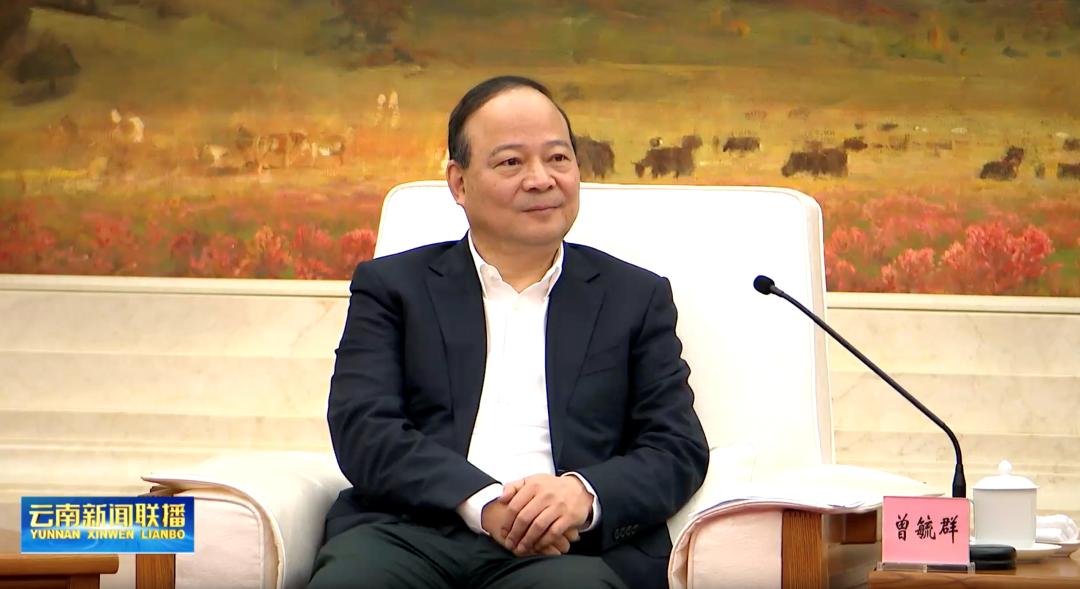
This January, Zeng Yuqun signed a comprehensive strategic cooperation agreement with the Yunnan provincial government, stating that they would deepen cooperation in new energy batteries, "zero-carbon" industrial parks, and transportation sectors, converting Yunnan's mineral resources into high-value products.
Different from peers that directly promote their resource advantages, Chongqing, despite lacking large-scale mineral resources, has hidden strengths as a strong industrial city with an open and inclusive urban culture —
Leveraging its strong manufacturing capabilities and rich application scenarios, Chongqing has attracted heavy investments from both Zeng Yuqun and Wang Xingxing.
This January, when meeting Zeng Yuqun, Chongqing's leaders positioned the city as follows:
"Chongqing is a megacity where multiple national major strategies converge. It boasts prominent geographical advantages, a solid industrial foundation, abundant educational and research resources, a favorable ecological environment, and broad space for future development."
Two months later, when meeting Wang Xingxing, they stated:
"Chongqing is an open city, the largest riverside city on the upper reaches of the Yangtze River. It has comparative advantages and late-mover strengths from overlapping national strategies, large urban scale, solid industrial foundation, central transportation hub status, rich cultural and ecological resources, leading to vast development space."
It is clear that Chongqing is competing not just with resources, but with systematic comprehensive strengths.
The Two Northeast Powerhouses Seeking Breakthroughs
Among all regions competing for entrepreneurs, the "Two Northeast Powerhouses" — Heilongjiang and Liaoning — stand out prominently.
From emerging star Wang Xingxing to Liu Qiangdong and Jill Zhu, it is clear that these two regions are eager to break away from their old "traditional industrial base" stereotype, and build a new system integrating "consumption + technological new infrastructure".
Their two-pronged industry positioning strategy is very clear —
One prong is "boosting consumption".
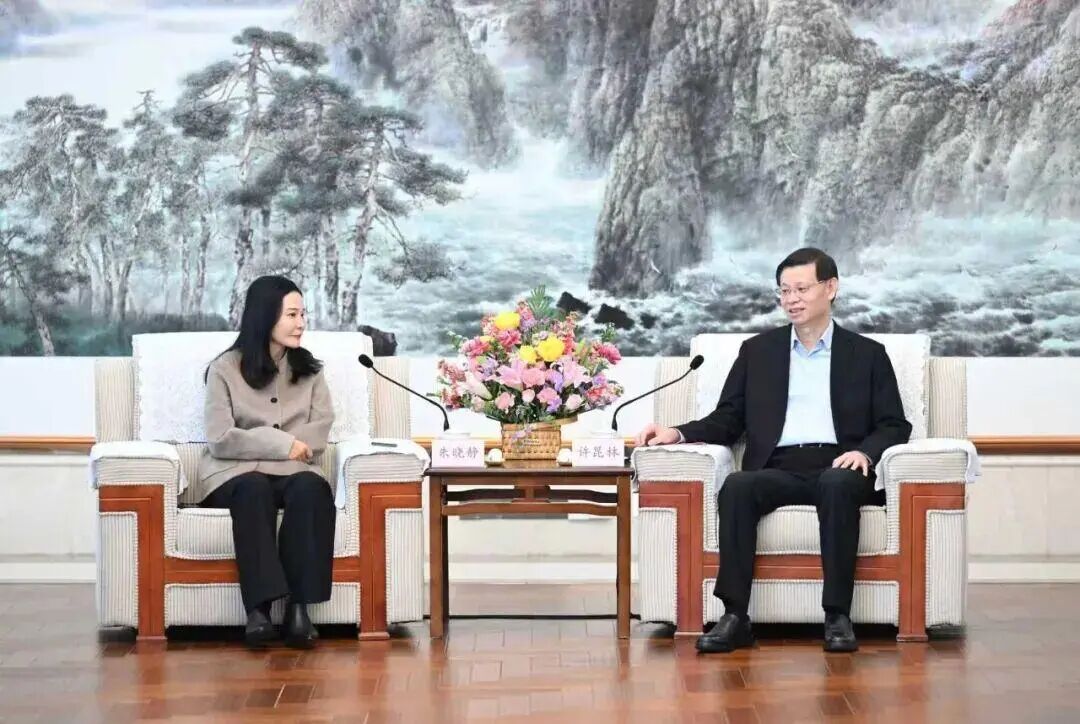
The booming "Northeast Super" retail trend is just a small part. Xu Kunlin, Party Secretary of Liaoning Province, met with "Sam's Queen" Jill Zhu, not just hoping to open more stores in Liaoning, but more importantly, to connect supply and demand, integrate local products into Walmart's global procurement system, and fully activate local supply chains.
Liu Qiangdong's "Northeast Tour" covered both Heilongjiang and Liaoning. He set a clear KPI for JD.com's development in Liaoning: striving to double its operating scale in the province within three years, growing from the current 50 billion yuan to 100 billion yuan.
This means JD.com's inherent strengths in digital intelligent supply chains, smart logistics, and instant retail will all feed into Northeast China, building a new type of tech-driven consumption infrastructure.
The other prong is "seizing emerging industry tracks".
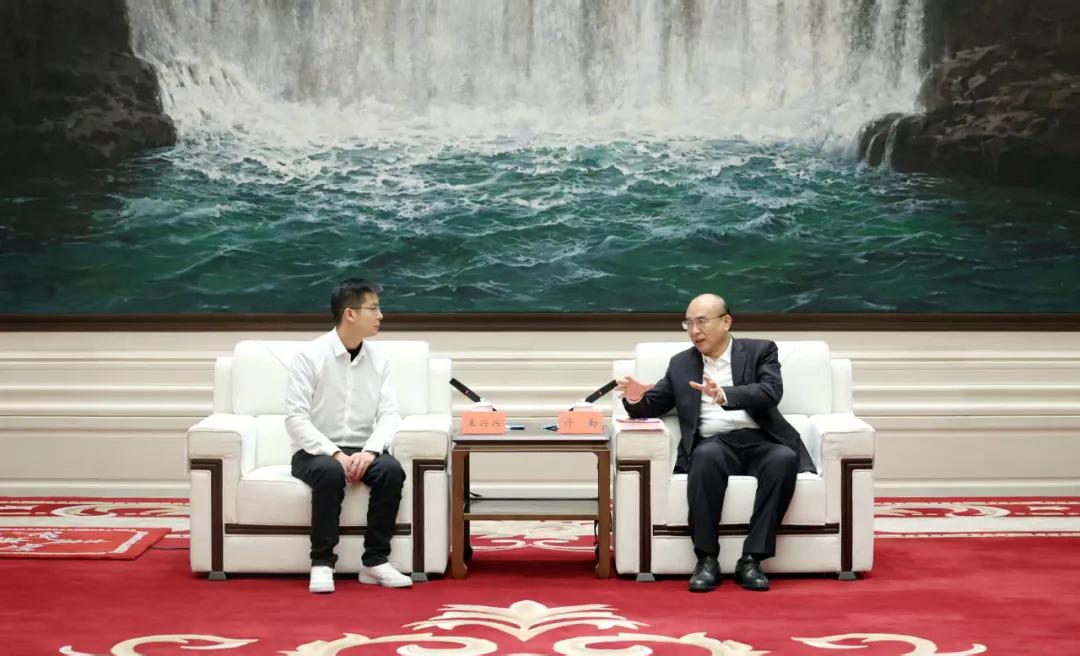
Unitree's robots not only appeared in the Spring Festival Gala wearing traditional Northeast Chinese floral jackets, but Wang Xingxing has also targeted the "computing power collaboration