Leading Humanoid Robot Joint Manufacturer Secures New Funding Round in Half a Year, Led by Cowin Capital with Hundreds of Millions of Yuan | Hard Core Exclusive
Author | Huang Nan
Editor | Yuan Silai
36Kr learned that Lingcha Cloud Control (Shenzhen) Technology Co., Ltd. (hereinafter referred to as "Lingcha Cloud Control") has recently completed a C+ round of financing worth hundreds of millions of yuan. This round was led by Tongchuang Weiye, followed by Guotai Junan Innovation Investment, with additional investment from existing shareholder Huakong Fund. The funds from this round will be used for production capacity expansion and global market layout. Yuanshi Capital served as the exclusive financial advisor for this round, while Yuanshi Capital and Yiyi Capital will jointly act as financial advisors for subsequent financing.
After the humanoid robot track experienced the boom of concepts and the frenzy of capital, the industry's key phrases are quietly shifting. The production capacity and reliability of the supply chain have become the real bottlenecks. As robot body manufacturers face the pressure of mass production, the choices and judgments of upstream core component companies may better reflect the actual market temperature of the track.
Lingcha Cloud Control is an enterprise that 36Kr has long focused on. Founded in 2016, the company has long been dedicated to the R&D and manufacturing of highly reliable, high-precision, standardized key core components for robots, serving the global robotics and automation industry, and focusing on high-reliability application scenarios that originally relied on manual labor.
Official data shows that in 2025, Lingcha Cloud Control's revenue increased by more than 100% year-on-year, and it is expected to maintain a doubling growth rate in 2026. Among them, orders from the humanoid and embodied intelligent robot sectors have initially expanded, contributing about 65% of the growth rate.
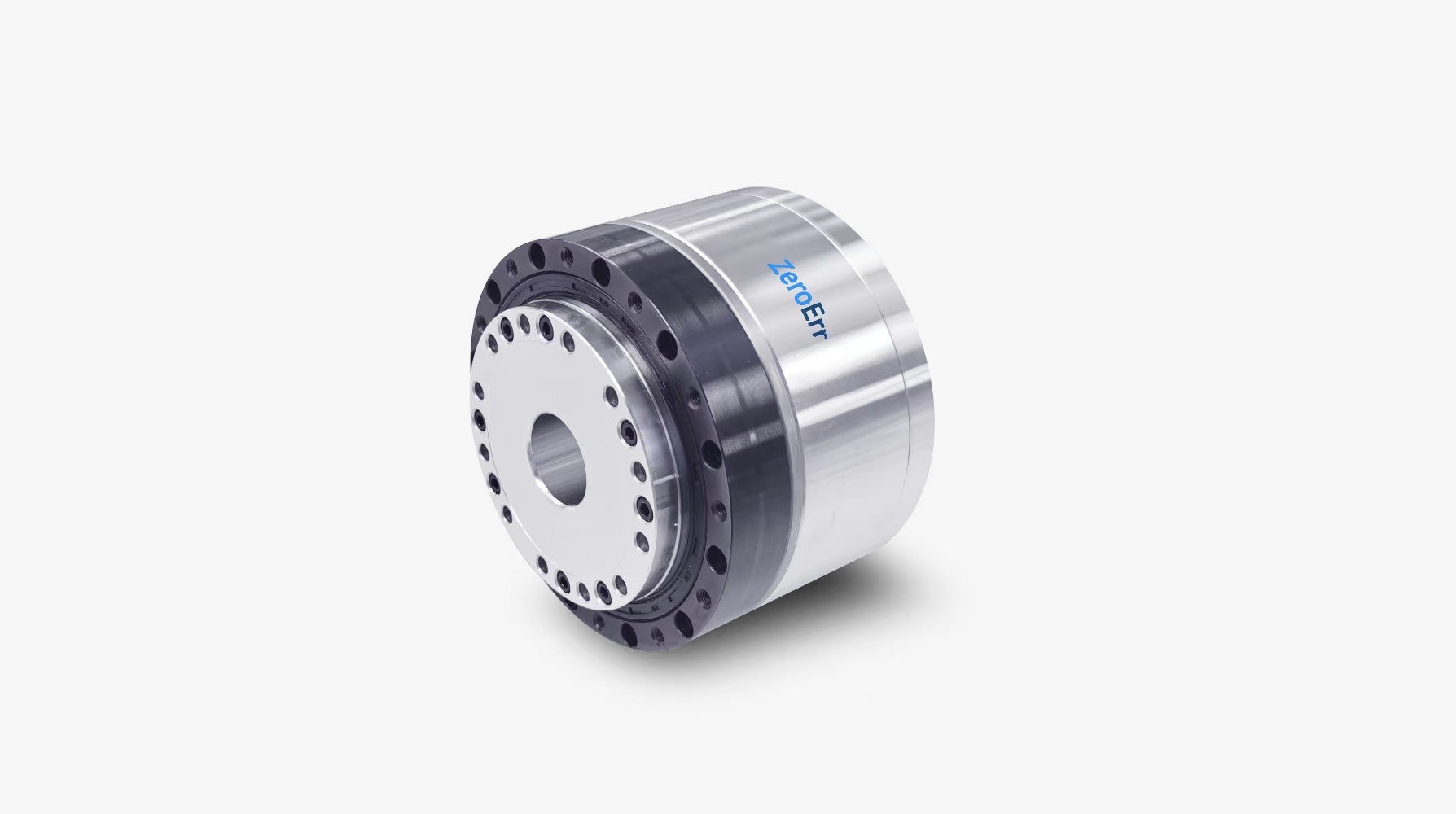
Lingcha Cloud Control integrated joint (Source / Enterprise)
"Downstream customers' demands have rapidly shifted from 'whether there are mature products' to 'whether you can supply goods in time'," Jia Xiqing, founder of Lingcha Cloud Control, told 36Kr. "The orders from top customers are almost open-ended — I will take as many as you can produce. So not only are we desperately increasing our own production capacity, but our upstream suppliers of motors and reducers are also being pushed to expand production together."
Production capacity is only one side of the coin. At a more fundamental level, an increasingly sharp design paradox is emerging: under the current technical framework, it is almost impossible to simultaneously achieve the three goals of anthropomorphic dexterity, human-comparable load capacity, and compact human-like size without breaking through physical limits. Lingcha Cloud Control sums this up as the "Impossible Triangle of Humanoid Robot Design".
"This is not because people are unwilling to do it, but because it is determined by objective laws," Jia Xiqing explained. "If we require the joint degrees of freedom and load capacity to be comparable to humans, the volume will definitely be larger, which will inevitably exceed the size of the human body; if we limit the volume and pursue high load, we cannot accommodate enough joints, and the dexterity will inevitably be compromised; if we then take into account both dexterity and compact size, the load capacity of the robot will be greatly reduced in the end."
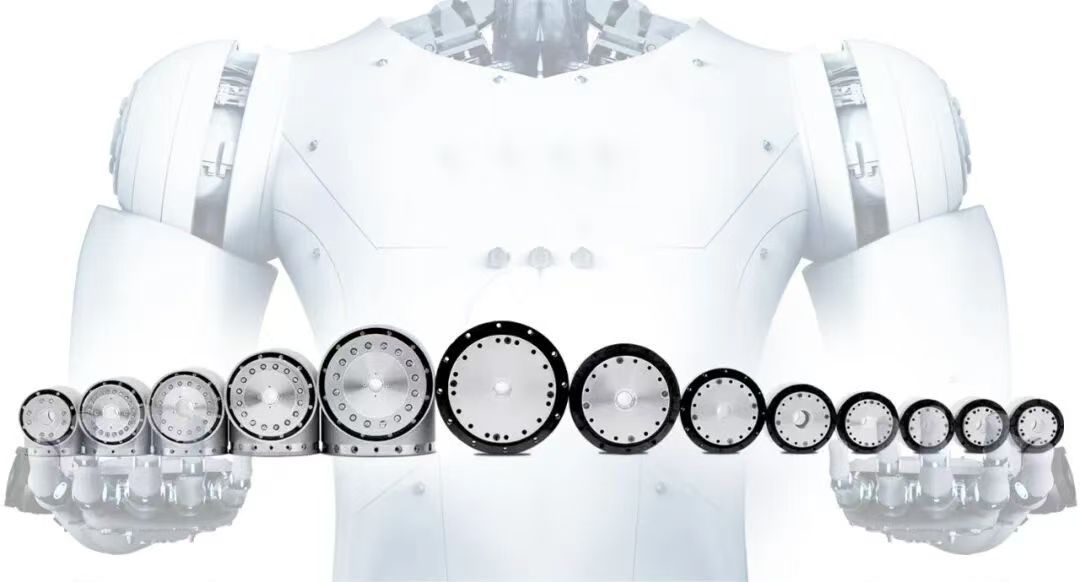
eRob series robot joints (Source / Enterprise)
Each side of the "Impossible Triangle" corresponds to a series of practical compromises. In order to fit enough joints into a limited size, many manufacturers have to make the joints "protrude" or "bend", which ultimately leads to the robot's kinematic model being different from that of humans. This also means that it is impossible to directly use massive human motion videos for model training, and a separate training environment and dataset must be built for it.
Lingcha Cloud Control's differentiated strategy is not to try to subvert the laws of physics, but to focus on mature paths that have been verified by large-scale consistent manufacturing without sacrificing core indicators. It does not participate in the reconstruction of underlying materials, tooth profiles, and processes, but pushes the integration efficiency of existing solutions to the extreme.
In Jia Xiqing's view, the "customization" mentioned by corporate customers at present has highly consistent demands. "It is nothing more than lighter, stronger, smaller, more precise, and cheaper. This is not individuality, this is commonality," he added. "Customers just use the word 'customization' to express the universal performance demands that existing products have not yet met."
This judgment has directly influenced Lingcha Cloud Control's product strategy, transforming those seemingly individual but actually common demands into a multi-model, standardized product matrix. Its eRob series covers various forms such as straight Type I and corner Type T, with the minimum module diameter being only 70mm and the maximum allowable torque reaching 1180Nm; relying on the self-developed advantages of encoders and drivers, under the same load specification, the axial length of the product is reduced by 44% compared with the industry's general solution, and the overall weight is reduced by more than 20%, which can cover a wide range of scenarios from logistics storage to heavy-duty industry.
Different from the complete machine assembly of traditional 5-degree-of-freedom manipulators, which usually requires 30 to 40 independent parts, Lingcha Cloud Control has reduced the number of parts of the same configuration to 7 after structural optimization, greatly reducing assembly difficulty and failure rate.

Lingcha Cloud Control's own production workshop (Source / Enterprise)
This "Lego-style" modular design perfectly fits the design idea of humanoid robots that reference the human anatomical structure. Standardized modules for key joints such as shoulders, elbows, and hips can be directly snap-fitted without additional processing parts. At the same time, the forearm space is fully reserved, which can be allocated to tendon-driven component layouts for cable-driven dexterous hand manufacturers, compatible with mainstream five-finger dexterous hand solutions on the market, achieving full-link adaptation from joints to end effectors.
The ultimate goal of modularization is to make joints a standard product. For downstream body manufacturers, the advantages of product standardization go far beyond structural simplicity: predictable delivery cycles, consistent quality control, and cost optimization under economies of scale are the more core industrial values. Lingcha Cloud Control does not provide an engineering sample that requires repeated verification, but an out-of-the-box power unit, which compresses the selection, design, procurement, and assembly of hundreds of mechatronic devices into simple module splicing.
The difficulties in prototype R&D have been gradually overcome, but the core contradiction of large-scale implementation is concentrated on the supply chain end. In the manufacturing industry, the gap between "being able to make one prototype" and "being able to make it stably, in large quantities, and consistently" has not been eliminated.
By building self-owned five-axis precision machining, testing, and assembly workshops, and conducting full inspection and working condition simulation for each joint module, Lingcha Cloud Control has completed the full leap from product certification, large-scale consistent mass production to commercial-scale implementation.
At present, its products have covered industrial applications such as humanoid robots, industrial robots, surgical robots, collaborative robots, logistics, and transportation, with more than 2,000 downstream customers, and long-term customers cover leading enterprises in the global consumer electronics, robotics, automation, and automotive sectors.
The explosion of demand is forcing the upstream component industry to accelerate iteration. Humanoid robots have entered the stage of small-scale implementation, and the entire industrial chain is facing a unified proposition: to maintain reliability while expanding production capacity and reducing costs. There are no shortcuts on this industrialization path.
The following is an excerpt from the interview between 36Kr and Jia Xiqing, founder of Lingcha Cloud Control (slightly edited):
36Kr: The humanoid robot design faces an impossible triangle where dexterity, load, and human-like size cannot be achieved simultaneously. Lingcha achieves size reduction and weight loss through integration optimization. What cascading industrial values can this design logic bring?
Jia Xiqing: Constrained by physical limits, most manufacturers have to make the structure convex or bent in order to fit a large number of components such as motors, reducers, encoders, and drivers into the joints. As a result, the kinematic model of the complete machine has a huge deviation from the physiological structure of the human body, and it is impossible to directly use massive public human motion videos for AI training, because the "skeleton" of the robot is different from that of humans. Complete machine manufacturers have to additionally build dedicated motion capture equipment and datasets, which raises the threshold and cost of algorithm R&D.
In contrast, Lingcha Cloud Control is doing the opposite: first define the anatomical space boundary of the human body — what is the maximum allowable envelope size for shoulder joints, elbow joints, hips, and knees, and then perform extreme integration within this "cage". Under the same load specification, the axial length of the joint is reduced and its self-weight is lowered. Moreover, key joints such as shoulders, elbows, and hips realize snap-fit assembly, and the forearm space is fully reserved, which can be compatible with various cable-driven and tendon-driven dexterous hand solutions on the market.
The greatest industrial value of this design is that once the joint outline size and kinematic pair relationship are close to the native human structure, body manufacturers can directly use mature human motion databases, such as the public CMU MoCap, AMASS, etc., for model training, fundamentally alleviating the problem of excessively high dataset customization costs that the industry has long faced.
36Kr: Combined with the current divergent state of industry routes, how to understand the phenomenon of "pseudo-customization, real standardization"?
Jia Xiqing: At present, the technical routes of robot joints are far from converging, and even continue to diverge, making it difficult for downstream body manufacturers to find an "exactly right" off-the-shelf product. The interfaces, sizes, and performance parameters defined by different manufacturers are all different. Therefore, customers can only come to us in the name of "customization", but their actual demands are just those repeated points: lighter, stronger, smaller, more precise, and cheaper.
This is not individuality, this is commonality. They just use the word "customization" to express the universal performance demands that existing products have not yet met. There is no real personalized development that needs to be developed from scratch.
Based on this judgment, we abandoned the old path of non-standard customized development, and precipitated these universal performance demands into a multi-model, standardized product matrix. Only for a very small number of specific working conditions, such as explosion-proof and IP67 waterproof, will we make differentiated configurations.
The value of this strategy is twofold: for customers, the selection, design, procurement, and assembly are compressed from hundreds of components to several modules, greatly shortening the R&D trial and error cycle; for us, the unit cost is reduced through mass production, and the delivery cycle and quality control are predictable.
36Kr: Top customers place large locked orders for procurement. What are the main bottlenecks in production capacity ramp-up?
Jia Xiqing: The production capacity bottleneck of the entire industrial chain is a systematic problem.
On the one hand, what we produce are highly reliable products, whose foundation lies in scenarios that "cannot fail" such as medical surgery, industrial automation, and power operations. The implementation of new production lines, recruitment and skill training of operators, and construction of the full-process quality inspection system all require a certain cycle. Blindly speeding up, with untrained new employees and an incomplete inspection mechanism, will easily lead to a decline in product consistency and problems with the factory yield. For a company like ours that relies on reliability for survival, this is non-negotiable.
On the other hand, upstream motor suppliers and reducer outsourcing factories are also being forced to expand production by the strong downstream orders. They need to purchase equipment, transform production lines, and train personnel, which also takes a cycle of at least several months.
At present, the demand in the humanoid robot industry has rapidly shifted from "verifying whether the sample works well" in 2024 and 2025 to "large-scale, consistent and stable supply". From materials, processing, components to the complete assembly, the entire supply chain is in a stage of passively catching up with demand. This is also the most distinctive industrial feature of the 2026 mass production year: technical problems are gradually being narrowed down, but the supply chain's delivery capacity has become the core variable that affects the pace of the industry.
Whoever can run up production capacity while maintaining reliability can seize this wave of dividends.