AI computing power heads to space, and the hundred-billion aerospace industry targets next-generation orbital infrastructure
After decades of development in the commercial aerospace sector, the role of satellites is undergoing a profound transformation.
In the past, the value of commercial aerospace was primarily reflected in applications such as communications, navigation, and remote sensing. Now, as we enter the AI era, a new realm of industrial possibilities is unfolding: can computing power be brought into space?
This shift is rooted in tangible realities. The demand for computing power in AI training and inference continues to surge. Data from JPMorgan shows that in June 2026, Token calls for Large Language Models (LLMs) saw a year-on-year increase of 20 times. Goldman Sachs predicts that by 2030, global monthly average Token consumption will reach 120 quadrillion, a 24-fold increase from 2026. However, ground-based data centers are increasingly constrained by power supply, heat dissipation capacity, and land resources. Finding new hosting space for the ever-growing demand for AI computing power has become a common challenge for global tech giants.
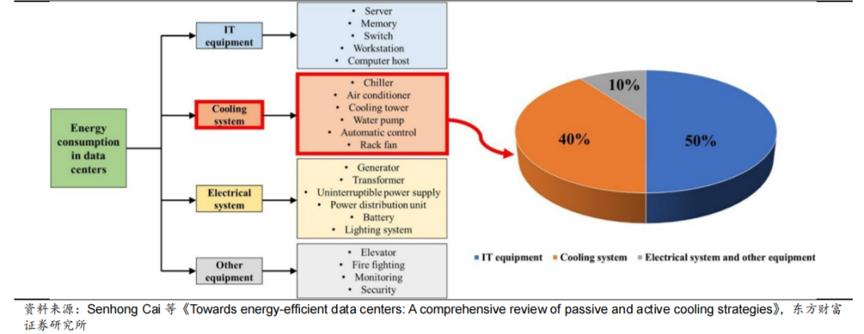
Caption: According to statistics from the International Energy Agency (IEA), 40% of global data center energy consumption is used for heat dissipation
As a result, attention has turned to space. The Sun-Synchronous Orbit (SSO), a special type of orbit where satellites travel along the Earth's day-night dividing line, only enters the Earth's shadow for extremely short periods throughout the year. This allows for nearly uninterrupted solar energy reception, perfectly supporting the high power consumption requirements of AI inference. At the same time, the extremely low-temperature environment in orbit provides new engineering ideas for the thermal design of high-density computing equipment.
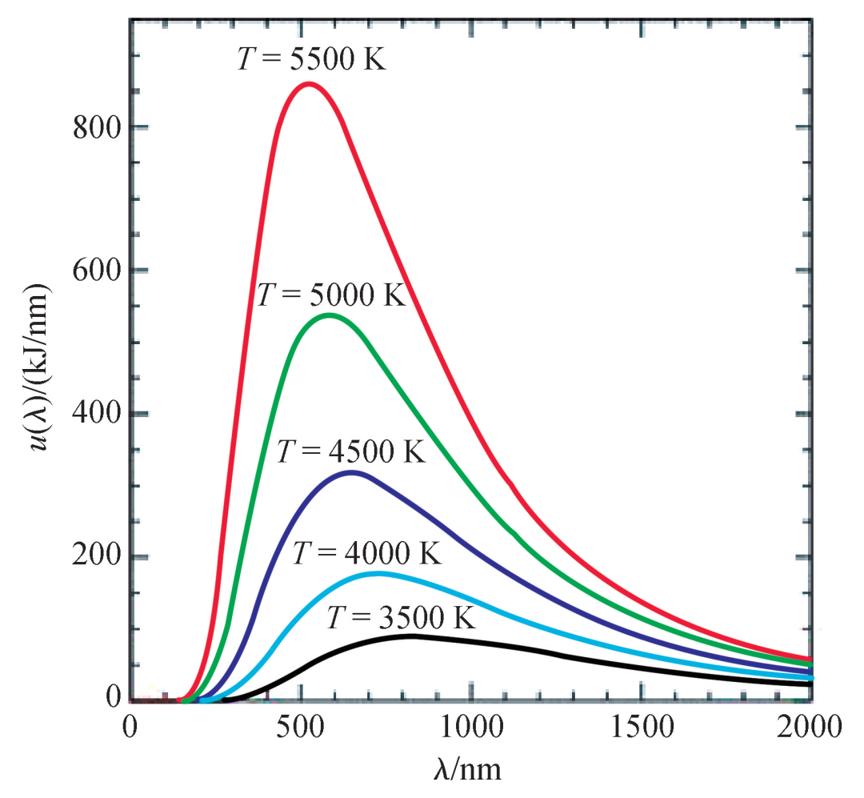
Caption: In the extremely low-temperature environment of space, heat dissipation follows the Stefan-Boltzmann Law: the power of an object's radiative heat dissipation is proportional to the fourth power of its absolute temperature. As long as the operating temperature of the equipment rises, heat dissipation efficiency will increase significantly
Tech giants are entering this field one after another. In January 2026, SpaceX submitted the Starmind plan to the FCC, proposing to launch a million-level orbital data center satellites. Blue Origin simultaneously launched Project Sunrise, planning to deploy 51,600 data center satellites. Google announced the "Sun Catcher Project" to send its self-developed TPU chips into space for verification, and NVIDIA released the Space-1 Vera Rubin space computing module. It is widely believed in the industry that as launch costs continue to decline and the demand for computing power explodes, space computing power and space energy will become the key growth drivers for the next phase of commercial aerospace.
The trend has arrived, and China's commercial aerospace is not absent. In June 2026, 100 Billion Aerospace NAYUTA SPACE unveiled China's domestically developed star-rocket integrated GW-level supercomputing constellation — "ALAYA" — at the Global Digital Economy Conference. This plan intends to rely on 100 Billion Aerospace's self-developed "Xuan Niao-R" reusable rocket to deploy 12,500 computing satellites in Sun-Synchronous Orbit, building a future-oriented orbital computing network.
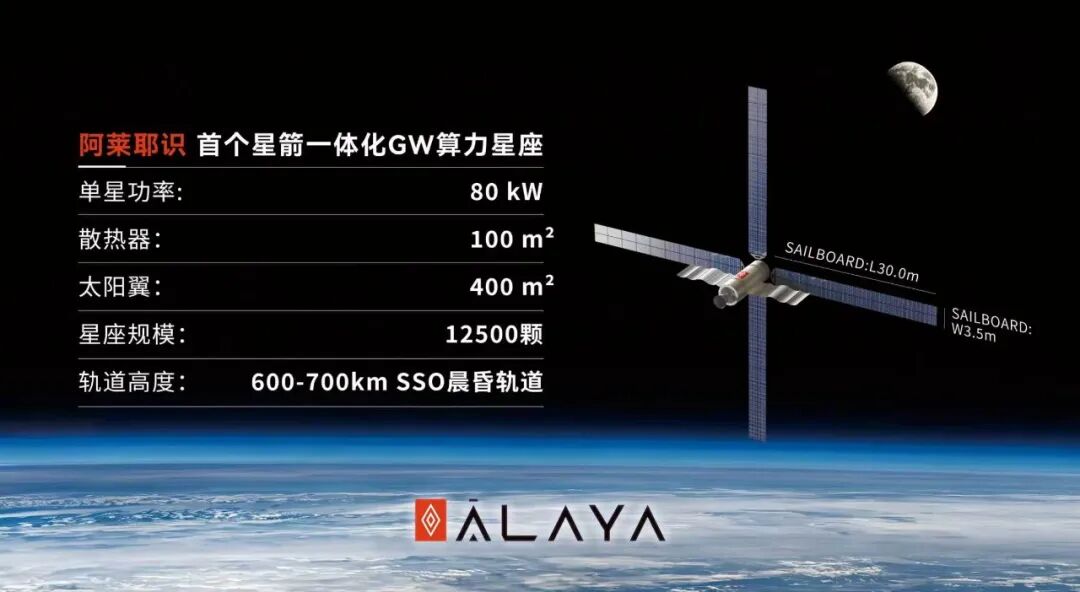
01. Low-Cost Orbit Access: A New Reusability Path
After computing power is placed in orbit, what truly determines its commercial value is not the capability of a single satellite. Imagine an on-orbit computing network composed of tens of thousands of satellites, capable of providing global coverage, all-weather low-latency real-time computing and inference capabilities — its commercial value will expand exponentially. High scalability and synergy are the core characteristics of a computing constellation.
Once deployment reaches the level of thousands or even tens of thousands of satellites, the system cost structure will scale rapidly. Every 10% reduction in the cost of a single satellite translates into billions of yuan in system cost savings. Therefore, the commercial model of space computing power is extremely sensitive to the scale effect brought by mass satellite production and the cost of batch rocket launches. To balance the books, the focus returns to two core issues in commercial aerospace: how to reduce manufacturing costs through large-scale production, and how to lower the cost of accessing space through technological innovation?
For the former, changes are taking place on the supply chain side. In the past, the aerospace industry long relied on a closed, low-volume "aerospace-grade" supply system. Now, as satellite deployment scales up to tens of thousands of units, the industry needs to actively introduce mature manufacturing capabilities from the industrial system. 100 Billion Aerospace is conducting in-depth cooperation with leading enterprises across multiple upstream and downstream sectors: It is integrating Ningbo KBE, a leading company in automotive-grade high-speed cables, into the relevant supply chain for the rocket's electrical system, introducing the mature large-scale manufacturing capabilities of the automotive industry into rocket production. Compared to traditional aerospace supply chains, this type of industrialized supply system has advantages in cost control and supply capacity, as long as aerospace quality management requirements are met. 100 Billion Aerospace is not the only commercial aerospace company trying to replace components with high-spec civilian alternatives. This reflects a fundamental logic of commercial aerospace: transforming aerospace from a "national project" to a "large-scale industry" to achieve continuous cost reduction.
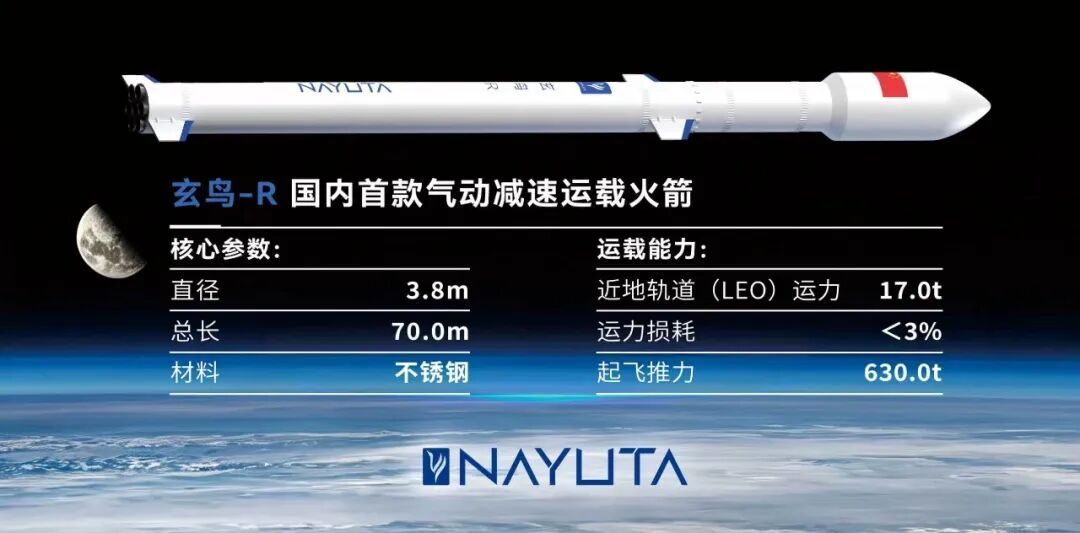
In terms of launch costs, 100 Billion Aerospace has even more aggressive goals. The company believes that relying on its self-developed "Aerodynamic Deceleration–Horizontal Landing (ADHL)" rocket recovery technology, it is expected to reduce launch costs to the thousand-yuan-per-kilogram level in the future. This is a technical route that makes full use of atmospheric drag to achieve deceleration, allowing the rocket to glide back and land horizontally, significantly reducing the amount of fuel needed for the return phase. This frees up more payload capacity, further lowering the unit launch cost.
More critically, aerodynamic deceleration technology is a key technology for high-orbit spacecraft recovery at present. Higher orbits and reentry speeds make it impossible for second-stage rockets to decelerate by carrying fuel and performing retrograde thrust. 100 Billion Aerospace has set the goal of achieving full rocket recovery with ADHL technology from the design stage. Once the "Xuan Niao-R" achieves stable first-stage recovery, the subsequent heavy-lift liquid rocket "Xuan Niao-FR" will further develop second-stage rocket recovery, ultimately achieving full rocket recovery. This will bring launch costs down to the hundred-yuan-per-kilogram level, truly making space travel accessible to the public.
Currently, the mainstream recovery route represented by SpaceX's Falcon 9 involves re-igniting the engine after the first stage re-enters the atmosphere, using retrograde thrust to decelerate and complete a vertical landing. The downside of this approach is that extra fuel must be reserved for the return phase, which to some extent reduces the payload capacity — known as the "payload penalty."
The ADHL concept is that after the first stage of the rocket separates and re-enters the atmosphere, it adjusts its angle of attack through attitude control, using aerodynamic drag to complete deceleration. This shifts the deceleration process from "fuel consumption-dominated" to "aerodynamic drag-dominated," eliminating the need for the rocket to carry extra propellant for the return, thus freeing up more payload capacity.
Calculations show that this unpowered aerodynamic deceleration method can increase overall payload capacity by 30%, with payload loss controlled below 3%. For large launch vehicles, this means adding approximately 4 to 6 tons of payload per launch.
Aerodynamic deceleration recovery is not a new concept. SpaceX's Starship has used the "Belly Flop" high-angle-of-attack attitude control for recovery deceleration in multiple tests, verifying its engineering feasibility.
From a deeper perspective of industrial competition, the aerodynamic deceleration technical path is also more aligned with China's manufacturing strengths. Objectively speaking, in the field of rocket engines, domestic private rocket engines not only have a certain generational gap in thrust performance compared to SpaceX, but also lag further behind in the engine thrust-to-weight ratio and deep throttling capability that truly determine the performance of vertical recovery rockets. SpaceX's two engines, Raptor 3 and Merlin 1D, have not publicly disclosed their performance data, but industry estimates put their thrust-to-weight ratio above 180:1, while most domestic commercial engines hover around 100:1. In terms of deep throttling capability, Raptor and Merlin can achieve approximately 40%-110% thrust regulation, while most domestic models have not undergone actual flight verification. These two indicators directly determine the hover correction and landing fault tolerance during rocket recovery, and the gap cannot be bridged in a short time.
However, in areas such as aerodynamic shape design, flight control, and hypersonic engineering experience, based on in-depth development in national-level system projects such as new fighter jets and hypersonic vehicles, China has a relatively complete talent pool and accumulated experience. This means that the high-angle-of-attack aerodynamic deceleration recovery technology, with aerodynamic design as its core, can more easily integrate with China's existing aerospace engineering system, creating a new path that reduces reliance on a single engine technology and achieves "overtaking on a curve."
Large-scale production and new reusable paths have reduced the cost of bringing computing satellites into space, but for constellations that require tens of thousands of satellites, rocket launch frequency and satellite construction efficiency are also critical.
02. Vertical Integration: Customizing a Rocket for the Computing Constellation
Continuing to deduce along this line of thinking, another moat of 100 Billion Aerospace lies in its vertical integration capability of "self-developed rockets + self-owned constellation."
The reason why SpaceX was the first to achieve a profitable closed loop in commercial aerospace is precisely that SpaceX can launch its self-developed satellites with its own rockets, retaining the layers of premium and profits from the external supply chain internally, and then using operational revenue to feed technological iteration and further constellation deployment. 100 Billion Aerospace's path extends further on this basis, re-customizing a rocket with "satellite-rocket integration" based on the functional requirements of computing satellites.
In traditional reusable rocket launches, satellites are "passengers" of the rocket. After the second stage sends the satellite to the intended orbit, it separates from the payload, and the first stage is recovered. This process requires structures such as separation mechanisms, support systems, and fairings.
But 100 Billion Aerospace's solution is to make the second stage of the rocket directly serve as the satellite's main body.
In the design of its self-developed "Xuan Niao-R" model, the second stage will not separate after being sent to the intended orbit. The large cabin section originally intended to accommodate the satellite will be directly transformed into a "space computing module" integrated with high-performance computing hardware.
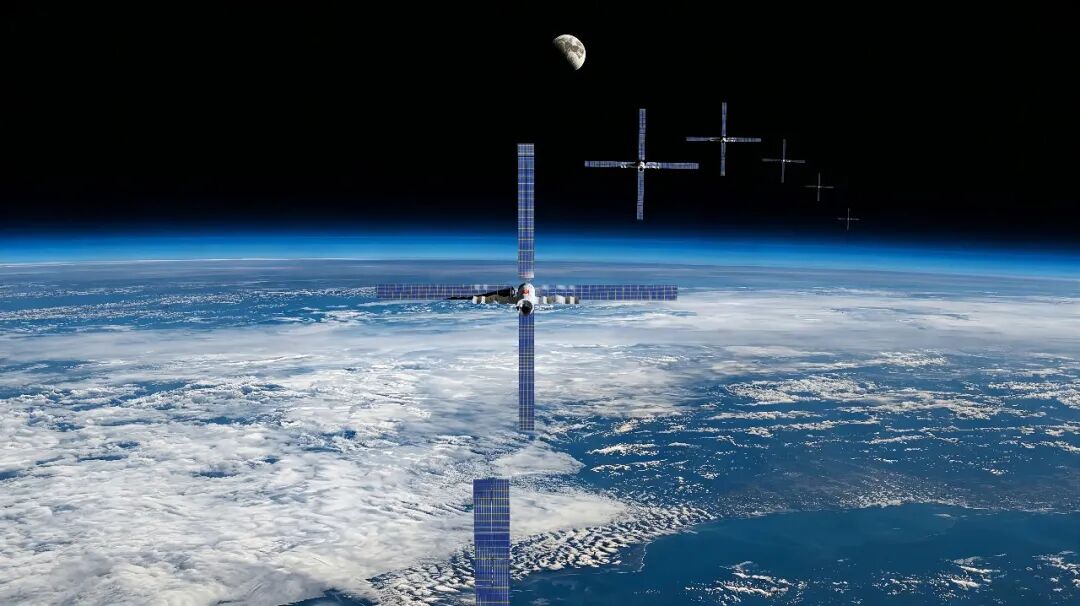
Concept art of the "ALAYA" computing satellite
This design redistributes the internal space and mass redundancy of the rocket. The structural weight originally used for separation, adaptation, and protection is now used to carry computing units, solar panels, and heat dissipation systems, effectively increasing the payload utilization rate of a single launch.
Secondly, this technical route also better meets the high power demand of computing satellites. Space AI computing centers are notoriously power-hungry, and computing satellites rely on large-area solar panels to provide continuous power. The second stage of the rocket naturally has more ample envelope space, which can accommodate a 400-square-meter rollable flexible solar panel, providing more sufficient energy for the on-board computing units.
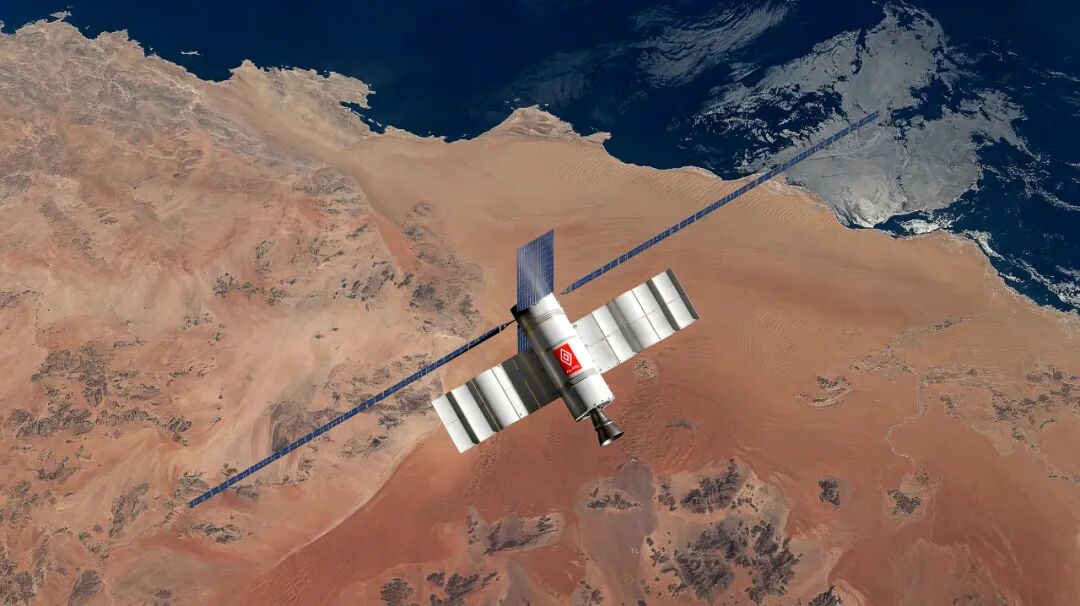
In addition to design adaptation, the vertically integrated satellite-rocket integration model also improves manufacturing and deployment efficiency. The "self-developed rockets, self-owned constellation" model can make 100 Billion Aerospace's production process closer to the modern industrial assembly line of "car manufacturing." Satellite-rocket integration and joint testing are carried out simultaneously during the production