Education in the AI era should enable people to truly possess the ability to perceive happiness.
Planning thoroughly for their children's future is an instinct deeply ingrained in Chinese parents. Over the past few years, the non-linear, explosive growth of AI has disrupted many long-established paths and methods in traditional education, pushing the transformation anxiety of parents, students, and schools to a new level. What kind of education do children born and raised in the AI era need? Does offering AI courses alone mean education in the AI era? What changes should parents and schools make in this process?
The book "The Evolution of Learning", recently published by CITIC Press, provides in-depth interpretations of the above questions. The author is Xie Kang, principal of Beijing Boya Mingyue School. The book compiles her 12 years of experience and reflections on practicing holistic education for the AI era, and is regarded as an "education guide for Chinese parents in the AI era".
Recently, CITIC Press invited Principal Xie Kang to have a dialogue with Qiao Xiaochun, professor at the Institute of Population Research of Peking University, to jointly discuss the changes in the underlying logic of education under the information wave of the AI era, how parents and schools can transform in the AI era, and which aspects of children deserve more attention.
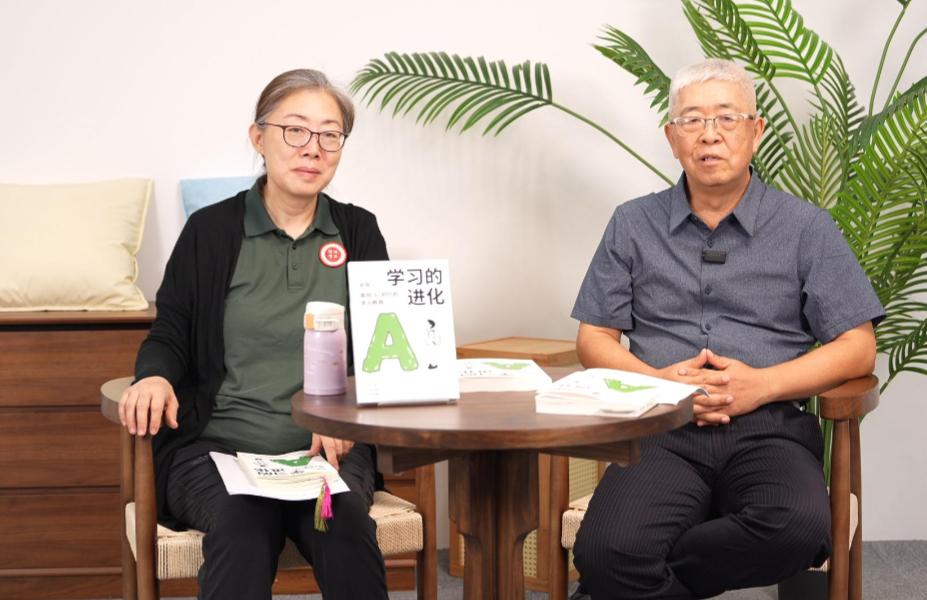
Left: Xie Kang; Right: Qiao Xiaochun
The AI Era: Shifting from "Mastering Knowledge" to "Becoming a Well-Rounded Person"
Qiao Xiaochun:
When you were engaged in big data analysis in the early stage, did you already realize that artificial intelligence would have a profound impact on related work? In the field of data analysis and statistical research we are engaged in, before ChatGPT was widely used in 2023, data processing, analysis, and modeling were mainly completed by statistical software.
Xie Kang:
In 2008, I was in charge of Dell's global big data business analysis work. One of the core tasks of the team was to improve the efficiency of business analysis with the help of data, algorithms, and computing power. At that time, this task could partially replace the work of traditional Business Analysts in enterprises, and practitioners in such positions usually had strong educational backgrounds and professional training.
That experience allowed me to get in touch with the underlying logic of artificial intelligence at an early stage, and also made me clearly see that in tasks such as capturing known information and quickly integrating materials, the capability of AI far exceeds that of ordinary people, and it can even process massive amounts of data in a very short time. Our databases often conduct analysis based on hundreds of millions of data rows.
Qiao Xiaochun:
Many people did not clearly feel the impact of artificial intelligence on knowledge production and traditional learning methods until after the popularity of ChatGPT. But from the development context of big data and intelligent analysis you shared, this change has already begun. Moreover, you not only realized that technology would change the way of working, but also further realized that it would profoundly affect the education of the next generation, and thus devoted yourself to educational practice.
Xie Kang:
My child was born in 2008, so combined with my work experience at that time, when thinking about my child's education, I did not focus on "how to make my child do better in the existing education system". Instead, I wondered: should children born in the era of artificial intelligence still follow the path of recitation, memorization, and doing endless exercises formed in the industrial age, just to obtain a diploma that proves their learning experience but may not necessarily reflect their real abilities? This thinking also became an important starting point for my 12 years of continuous educational practice later on.
The industrial society we experienced had an increasing demand for standardized, disciplined, and professional talents. Therefore, after the modern school system was gradually popularized, more emphasis was placed on unified curricula, age-based grouping, and standardized evaluation. However, with the development of artificial intelligence and robot technology, more and more repetitive and standardized work will be undertaken by technical systems. Therefore, education needs to return more to the cultivation of people's vitality, sense of value, and ability to be happy, rather than just serving production efficiency.
Qiao Xiaochun:
Chinese education has indeed undergone various changes in different historical stages. During my growth period, society emphasized the importance of labor and practice. In school, we were exposed to basic production skills such as operating lathes, fitter work, and agricultural labor. Therefore, our generation generally had strong hands-on abilities. Taking myself as an example, when I was in middle school, I was responsible for some of the school's electrical equipment. I also learned music, made radios, and tried to assemble televisions out of interest. At that time, these practices were part of daily life, not separate "quality activities".
Of course, our generation also had obvious shortcomings: we had strong practical abilities, but our systematic learning of cultural knowledge was not sufficient. My foundation at that time might be weaker than many students today, but for the educated youth at that time, whether one could pass the college entrance examination meant whether their life trajectory would change. Therefore, our motivation to learn was extremely strong. The year I decided to take the 1978 college entrance examination, I searched everywhere for review materials, mainly relied on self-study, and watched the college entrance examination tutoring courses on TV through a nine-inch black-and-white TV I assembled myself.
Today, after entering the era of artificial intelligence, people are starting to discuss again: If textbook knowledge is no longer the only core, should education pay more attention to people's interests, practical abilities, and individual strengths? Instead of letting all children receive homogeneous training in the same set of classroom and examination systems, it is better to think about how to help children discover the direction they are truly willing to devote themselves to.
Xie Kang:
Professor Qiao's experience will be very inspiring to parents. If a child is not in a good learning state at a certain stage or lacks motivation temporarily, it does not mean that their life has lost all possibilities. What is really important is that when a person regains their learning motivation, they can still start over. Parents do not need to be overly anxious because of their child's temporary stagnation or burnout.
In the era when Professor Qiao grew up, "Knowledge is power" had distinct practical significance. Knowledge could be transformed into productivity, and then affect a person's social status and life opportunities. "Knowledge changes fate" was not an abstract slogan. But today's environment has changed: people can almost instantly obtain a large amount of knowledge and answers through mobile phones and AI tools; even if they are not good at text input, they can interact with tools through voice. In a sense, knowledge acquisition is becoming more universal and equal, which is also called knowledge democratization. Therefore, we must ask: When knowledge is no longer inherently scarce, what exactly is the core strength of human beings?
That is what I want to discuss in the book "The Evolution of Learning": in the irreversible process of human evolution into the AI era, what kind of preparations we need to make for children. Future children will not necessarily learn just to "live a better life". Technological progress may continuously reduce material scarcity, and society will have richer productivity. Therefore, it is more worthwhile to think about how they can live a more fulfilling, meaningful, and happier life.

Qiao Xiaochun:
Sense of happiness should not be built on the endless involution that makes many parents anxious now. Results are temporary, but the process constitutes a person's entire life. If you are not happy in the process, you will not be happy with the result. If a person feels pain for a long time in the process of pursuing a result, even if they occasionally achieve it, it will be difficult to obtain lasting happiness. Education itself is a process.
Many goals seem extremely important before they are achieved; once they are truly realized, the sense of excitement often fades quickly. Whether it is a high score, an admission letter, or a career achievement at a certain stage, the happiness it brings may only last for a short time. What truly forms memories and shapes personality is often the process of effort, choice, frustration, and growth.
Xie Kang:
This is also the viewpoint that this book emphasizes repeatedly: Education cannot only be understood as a result; what is more important is the process itself. This does not mean denying scores or further education. Instead, in this era of rapid development, we should think about whether we can grasp the unchanging things that can go through cycles, make these things the focus of children's growth, and avoid leaving regrets.
In the book, I wrote about my experience of going to the Peach Blossom Festival in Tibet with my daughter. We found that people traveled there in various ways: some by plane, some by self-driving, some by jeep; some took the Sichuan-Tibet line, some the Yunnan-Tibet line, and some the Xinjiang-Tibet line. Everyone finally arrived in Nyingchi. The result was the same—everyone reached the destination, but different paths brought different experiences, understandings, and gains.
If education only pursues a diploma, it only grasps one result. What is more alarming is that if children are under excessive pressure for a long time in the process of chasing results, and even suffer from serious physical and mental problems, then education deviates from its due meaning. Education should help children become people who can feel life, build relationships with others, and be valuable to society.
Qiao Xiaochun:
Taking further education as an example, the release of grades, the filling of applications, and being admitted to a prestigious school may all bring strong joy. But after entering a new environment, individuals will also face new competition, comparison, and pressure. Students who originally performed well in a familiar environment may find it difficult to keep up, feel anxious, or even doubt themselves after entering a group of outstanding people.
When my child received the admission letter from Harvard, the whole family was very excited. But looking back many years later, the school is just part of life. After completing their studies and entering society, what truly determines a person's quality of life is still their abilities, relationships, and inner state formed over a long process. When a person moves from one goal to another, even if every step goes smoothly, looking back, they will find that the most precious thing is not the goal itself, but the process of moving towards it. Especially those processes that require more effort and go through more difficulties often leave the most profound memories.
When life is relatively smooth, time often passes quickly, and it is not easy to leave a deep impression. Many years later, what people can most recall is often the stage that felt difficult at that time, but where they invested the most and had the richest experiences. Difficulties themselves are not worthy of being romanticized, but under the conditions of having support and boundaries, the experience of overcoming difficulties can become a resource for understanding life and enhancing resilience.
Education should not let children completely avoid all discomfort and setbacks. Instead, it should provide moderate, bearable, and supported challenges, so that children can build tolerance and confidence in the process of completing tasks, taking responsibilities, and solving problems. This is not advocating "seeking unnecessary hardship", nor is it taking suffering itself as a way to prevent psychological problems. Instead, it emphasizes that children need to gradually develop the ability to face difficulties, recover from setbacks, and move forward.
The AI Era: Evolving the Underlying Logic of Learning Starting from the Individual
Xie Kang:
From the perspective of the basic structure of human society, the real society is often a community where people of different ages and roles cooperate together. However, from kindergarten to university, children are in a peer competition environment for a long time, which makes it easy for them to understand the world as constant comparison and mutual competition. This environment is not completely consistent with the real society. After entering society, adults need to face cross-age, cross-professional, and cross-role cooperation, understand others, take responsibilities, and build mutual assistance relationships. These abilities are precisely difficult to cultivate only through exams and scores.
Qiao Xiaochun:
True socialization means that a group of people collaborate to complete a task around a common goal. Group learning is an example: everyone contributes in the same direction, and members need to support each other and take responsibilities together. Such a process can train communication, negotiation, responsibility distribution, and sense of cooperation. If a person lacks socialization training during the entire learning process, they may not know how to get along with others and how to cooperate to complete tasks after entering society. Education should not only impart knowledge, but also undertake the function of socialization training. Excessive comparison and competition may sometimes weaken the trust and mutual assistance among students.
Nowadays, many standardized knowledge and procedural tasks can be completed more efficiently by AI. If education still follows the old path, students will not fully develop their abilities to interact with others and cooperate, nor will they form irreplaceable creativity, judgment, and sense of responsibility in the AI era. Then they may fall into new difficulties after graduation. Therefore, the most important educational issue in the AI era is: what kind of people do we want to cultivate?

Xie Kang:
That is why learning needs to evolve, and education also needs to evolve. We cannot just let children go through a long process of being educated, without truly preparing them for entering society and living a happy life in the future. One idea this book wants to dedicate to everyone is which dimensions are the most important in children's growth, and why parents who want to plan thoroughly for their children in the AI era should pay more attention to children's physical and mental resilience, cultural critical thinking, pluralistic understanding, aesthetic perception, systematic thinking, practical life skills, sustainable action ability, and humanistic care.
There is a view that "children nowadays get too much attention". Yes, we pay more attention to them, but the question is whether we are paying attention to the right things. As educators, I think this is not only something for parents, but also for school principals and teachers to think about together. We are reshaping learning and reshaping education.
Qiao Xiaochun:
A school is a big ship, and it takes more strength and time for a big ship to achieve transformation. The difference is that we individuals, as small boats, can start more easily and a little earlier. This is my suggestion to parents who are relatively anxious now: we can start from our own perspective to think about how children should be cultivated in the future. This book provides some directions and ideas in this regard.
Xie Kang:
After ChatGPT came out, all schools realized that education has entered a new era. Luo Zhenyu said that schools all over the world are only three years old now. But we are very lucky to have spent 12 years doing some practice based on our educational thinking. Our starting point for thinking is not in schools, but the changes of the AI era we saw in the real workplace and the real world.
In the AI era, the goal of cultivating people and the fundamental underlying logic need to be re-evolved. It cannot be simply equated with offering AI courses, and then the school becomes a school in the AI era. That would turn it back into knowledge-based learning again.
When I started my educational practice in 2011, I paid attention to the status of high school students in various different schools. At that time, the trend of involution had already appeared. At that time, I