The ambition of an "AI Application Factory": Not betting on technology, but betting on demand
In the AI startup track crowded with algorithm PhDs and large model scientists, Zhao Chong stands out as an outlier.
With no technical background and no experience writing model code, he spent over a decade working in internet product development and user growth, becoming a familiar face in the marketing circle. It was not until 2023 that he entered the AI arena with a product called AiPPT.com, amassing 30 million registered users in over two years and exceeding 100 million yuan in revenue from this single product last year.
What makes him even more "unconventional" is his attitude toward technology.
"Nobody talks about developing models anymore; everyone just uses them directly," Zhao Chong says matter-of-factly. "Large models are like utilities—water, electricity, and gas. They account for a very small portion of my cost structure." He notes that any of the mainstream large models on the market will work fine, and "the results won't differ much." At a time when many AI entrepreneurs constantly tout "self-developed" and "underlying large models," this statement sounds almost provocative.
But Zhao Chong has the confidence to say so. He has thoroughly thought through this approach: the real deciding factor in the AI application layer has never been technology. Large model companies focus on scientific research, while for application development, the real competition lies elsewhere—the insight into user demands. In his view, this is the home turf for founders with non-technical backgrounds like himself. "The more powerful the models become, the more prominent our advantages as people with industrial experience will be."
Zhao Chong counted on his fingers for "Dingjiao One" the founders of AI application companies that have truly achieved over 100 million yuan in revenue in the past two years, and reached a conclusion: almost none of them have a purely technical background.
01. PPT is not just a tool, but the entry point to a business
To understand why Zhao Chong dares to describe large models as "utilities," we must first look at how he views his own products.
The public mostly knows Pixel Bloom through AiPPT—a tool that "generates a PPT with one sentence, in one minute, with one click." In Zhao Chong's eyes, the general PPT market is a 100-billion-yuan stock market. Microsoft alone takes in about 10 billion US dollars from it, and "20% of Kingsoft Office's revenue comes from PPT-related businesses." "This market is already huge," he says.
But what Zhao Chong is planning for is a market 100 times larger than that.
"Generally speaking, PPT is a tool," he says, "but once it enters specific professional fields, it needs to directly deliver usable results."
He casually lists a series of scenarios: when generating a document with pages, for marketers, it's called a marketing plan; for doctors, it's a case analysis; for teachers, it's a teaching plan; for graduates in June, it's a thesis defense material...
A general PPT tool solves the problem of "how fast you can make it," and users value efficiency. But for a marketing plan or a teaching plan, users want "a directly usable result delivered to me." The latter is far more valuable.
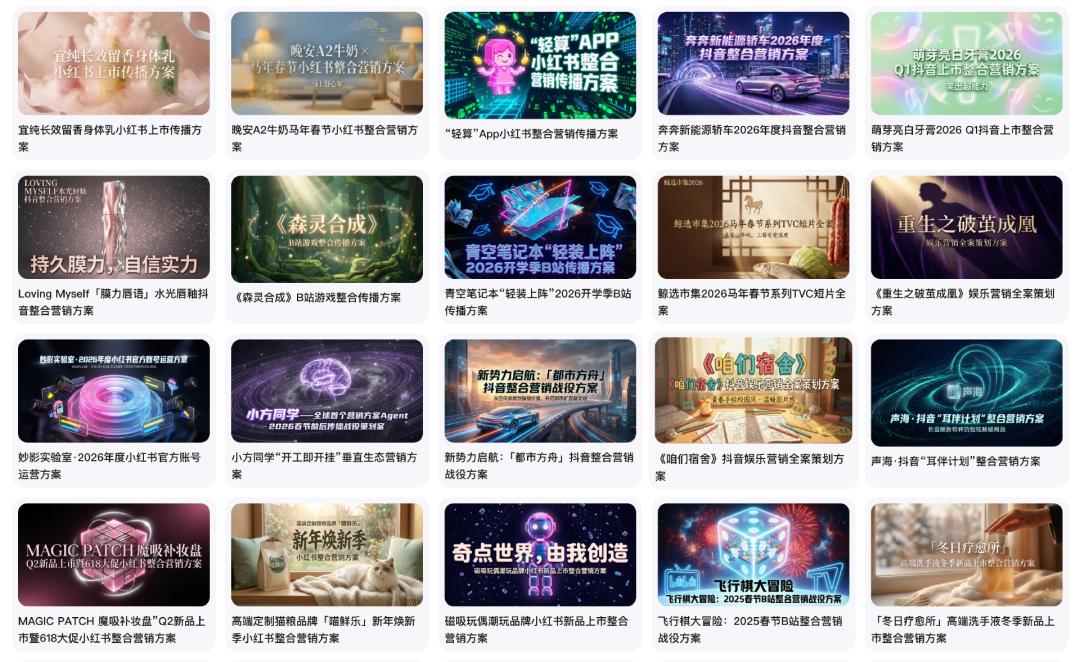
Following this logic, in early 2026, Pixel Bloom launched a product called "Xiao Fang Tong Xue" (Little Buddy Fang). The character "Fang" in the name comes from the Chinese word for "plan." It is no longer targeted at the general public who make PPTs, but directly at marketing professionals, positioned as a "marketing plan Agent." You give it a brief, and it will break down the requirements, retrieve information, generate strategies, write drafts, match images, and finally deliver a complete plan that can be directly used for client pitches or internal reports.
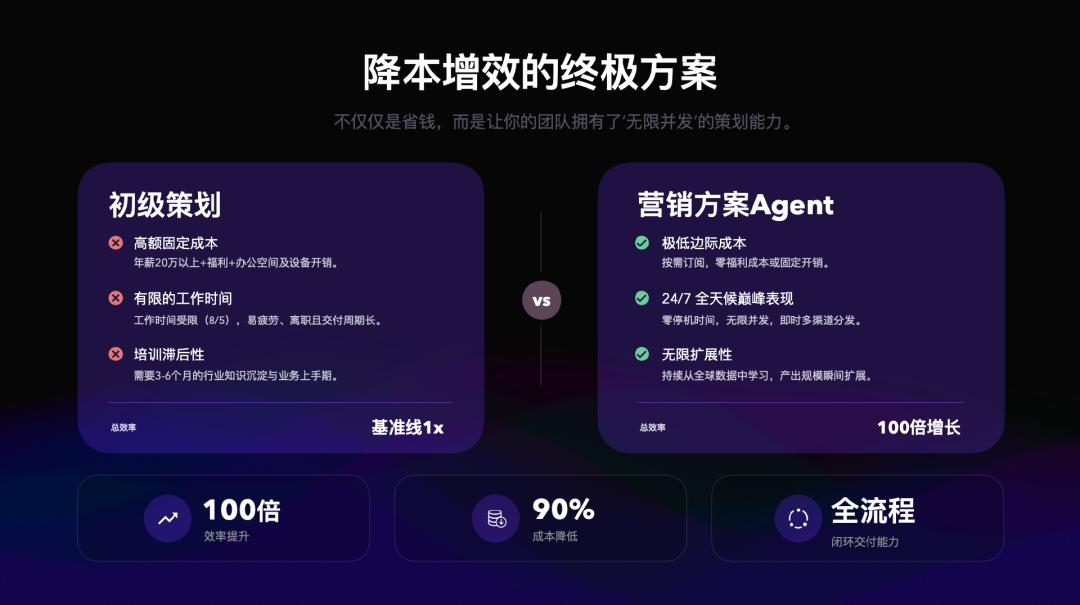
Zhao Chong did the math: AiPPT's domestic membership costs 99 yuan per year, while "Xiao Fang Tong Xue" charges 169 yuan per month, with annual plans starting from 1999 yuan. Users can purchase additional value-added packages at 1999 yuan, 3999 yuan, or 7999 yuan if they need more capacity. "Some big clients even directly recharge 100,000 yuan for their marketing departments," he says, and the customer unit value has jumped by an order of magnitude. "It can replace an employee with an annual salary of 300,000 yuan," Zhao Chong explains, "so this market is much larger than the original one."
He uses a real change of one client to illustrate this substitution. In the past, a marketing plan for a leading consumer brand required four or five people from Zhao Chong's team to work together: some brainstormed strategies, some wrote copy, some matched media recommendations. After rounds of discussions, it usually took about five days to finalize a complete plan. But now, after the business division manager returns from a requirements meeting, "he can finish two plans in the morning and two in the afternoon." "Xiao Fang Tong Xue" directly takes over the work of three to five of his subordinates.
Why did they launch this product only in early 2026? Zhao Chong's answer is: The technology has just reached the maturity required at this point in time.
"Last year, this level of performance was impossible to achieve," he says. The content generated by early versions could not reach the "deliverable" standard, and "a lot of manual modifications were still needed." After this year's Spring Festival, the capabilities of various models have "all reached this level." He borrowed a concept—from "AI Tool" to "AI Worker." Once this threshold is crossed, the "deliverable results" concept becomes truly feasible, and products like "Xiao Fang Tong Xue" can exist as practical solutions.
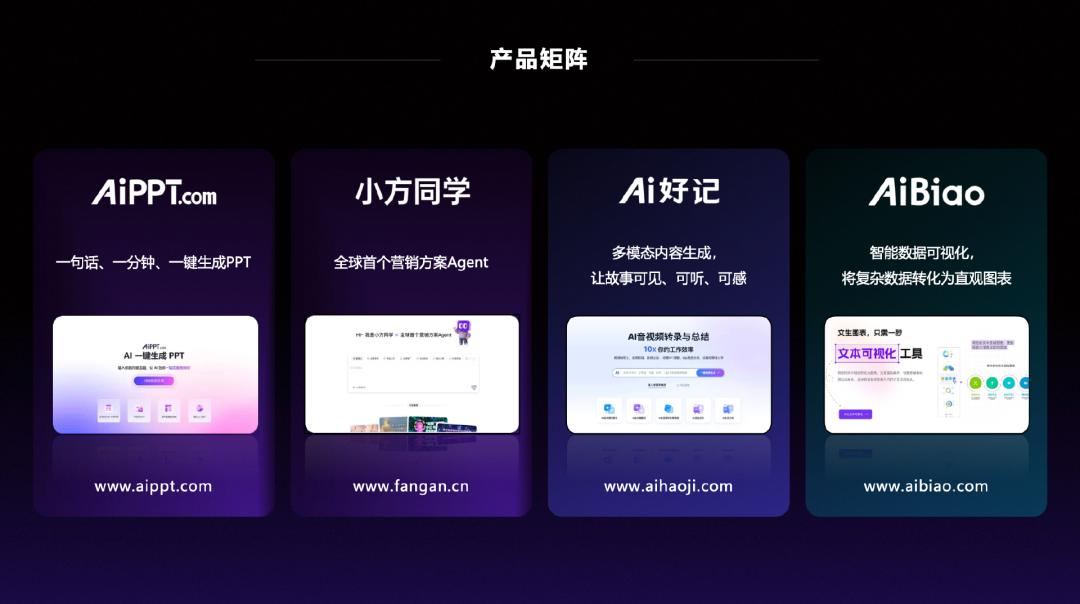
It is from this point that Pixel Bloom's product philosophy has become clear: instead of competing head-on with tech giants by making large and comprehensive general tools, the company dives deep into specific professional fields, turning PPT, the "entry point," into "digital employees" for different industries such as marketing, education, and healthcare. In their product lineup, alongside AiPPT and "Xiao Fang Tong Xue," there are also AiHaoJi for meeting transcription, AiBiao for data charts, and a batch of more vertical products.
Education is a significant sector among them. Zhao Chong says the education demographic accounts for a considerable proportion of AiPPT's revenue. College students and teachers represent two completely different sets of demands, so the company assigned a dedicated team to serve this group.
02. AI is a utility, insight is the moat
If technology is not the deciding factor for product success, what is? This is the most noteworthy part of Zhao Chong's strategy.
Let's first talk about why he dares to call large models "utilities."
In the entire production chain of "Xiao Fang Tong Xue," Zhao Chong says the basic large model only plays a role in the very first stage—understanding user requirements and conducting initial intent decomposition. Users can choose which model to use on the interface, whether it's Zhipu AI or others. "Any of them works, and the results won't differ much."
As for the latter half of the process that truly determines the quality of a plan—how to generate content, arrange layouts, and control aesthetics—"we basically solve all these parts on our own."
Therefore, in the cost structure, large model invocation fees are "very low, only accounting for about 2% of total costs." He even says that now, "no one in the company talks about models anymore." Pre-training is rarely mentioned, and at most they discuss post-training fine-tuning. This kind of "disenchantment" with technology forms a sharp contrast with many AI companies that take self-developed large models as their core narrative.
His moat consists of three other elements.
The first element is the proprietary fine-tuning methodology. He says the methodology of how to leverage the basic model and adjust it to fit marketing scenarios "belongs to us," which is the know-how accumulated through repeated trial and error in real marketing scenarios.
The second element is private data. What "Xiao Fang Tong Xue" accesses is not public internet data, but Pixel Bloom's own accumulated influencer advertising data, e-commerce data, and social media data, which "are not available on the market." Combined with the enterprise's own knowledge base, the generated plans can align with real marketing contexts.
The third element is engineering capabilities and aesthetic standards. Zhao Chong repeatedly emphasizes that making PPTs is "extremely complex, and only those who have done it can avoid the pitfalls." Back in the day, his team managed to grow in the domestic market by continuously training with user behavior feedback—what users modified, whether they clicked the "like" or "dislike" button, and whether they finally downloaded the file. Feeding these data back to the model made it increasingly user-friendly.
In addition, as a strategic shareholder, Visual China Group brings copyright resources, providing copyright compliance guarantees for both C-end and B-end users.
Zhao Chong observes that among the AI application companies that have achieved over 100 million yuan in revenue in the past two years, almost none of the founders have a purely technical background. Instead, they entered this track with experience in growth, product development, or a specific industry. "For application-layer startups, of course there are people with R&D backgrounds, but the person in charge is usually the one with strong demand insight." Companies focused on scientific research are large model companies; application companies compete on user insight and market insight, "and there are no more technical bottlenecks."
He even draws a bolder conclusion: the more advanced model capabilities become, the more obvious the advantages of people with his background will be—because stronger underlying capabilities mean the focus of competition will completely shift from "whether it can be done" to "knowing exactly what to do."
03. The strategies and boundaries of an industry veteran
After demystifying technology, Zhao Chong's entire business follows one core keyword: pragmatism.
He almost never hides his principle of "only doing profitable things." When tech giants like ByteDance make AI-generated PPT a free feature, he feels no anxiety at all—"If they offer it for free, I will not compete in this field. 'Free' has no viable business model; what's really valuable are professional groups and enterprise customers who have clear willingness to pay."
For the B-end, his attitude is: no heavy customization at all. If an enterprise wants to purchase, the price of the standard product is directly multiplied by three. They can change templates for free, but if they need additional customized development, they have to pay extra. Zhao Chong says this approach allows gross margins to stay at the same level as the C-end business, without needing to set up a dedicated team to "serve" big clients. This restraint has allowed him to win big clients such as CITIC Securities, Bank of China, Nongfu Spring, and Midea, while maintaining the high gross margins that are rare for a tool company.
After technology is no longer a threshold, Zhao Chong's top hiring criterion becomes "mindset." "Mindset is the most important thing. Being open and willing to try new things is the core quality." He says frankly that some senior product and R&D employees who have been with the company for over ten years fell behind in this AI wave, because they were slow to accept new things and used inertial thinking to work.
When it comes to organizational structure, Zhao Chong puts forward a rather sharp judgment: AI will eliminate a large number of middle management layers in enterprises. "The lower and middle-level positions will basically disappear in the future," he says. The only people left are those at the top level—who make judgments, break down requirements, and communicate with clients. "Even Huayuhua (a well-known marketing firm) won't need so many employees." In his view, this is not a problem for a single company, but a trend of the whole society, which will in turn force university education to be more practice-oriented.
At Pixel Bloom, this judgment has already been put into practice. All R&D employees use AI tools paid by the company—they spend hundreds of thousands of yuan per month on Claude, and are currently planning to switch to Codex. Zhao Chong checks everyone's work progress every week. Those who do not use advanced tools and cannot improve efficiency will be naturally eliminated. "For operational positions, if you don't use advanced tools, sorry, you need to find another job."
In his vision, the future organization will be "several experienced people leading a group of digital employees."
So what does Pixel Bloom aim to become? Zhao Chong wants to build an "AI Application Factory." Under the corporate entity, the company will continuously incubate new products for different vertical scenarios—from the early 365 Editor and AiSheJi (a design tool), to today's AiPPT, "Xiao Fang Tong Xue," AiHaoJi, and AiBiao, as well as some directions beyond productivity tools. All these products share the same underlying capabilities: a user growth middle platform, and the methodology of market research and product definition.
Zhao Chong has found several reference frameworks for this strategy: one is Canva, one of the largest online design platforms overseas, which proves that companies can develop multiple product lines for the same user group through self-development. Another is Italy's Bending Spoons, an office software company that acquired more than a dozen product lines including Evernote, and grew from about 100 million US dollars to over 1 billion US dollars in a few years. The third reference is Canada's Constellation Software—a listed company that holds thousands of software assets and grows through continuous acquisitions.
But Zhao Chong emphasizes that he is different from purely financial integrators like Constellation Software. "Constellation Software does not get involved in operations," he says. "We ourselves are fighting on the front line." He describes his energy allocation as "spending half the time looking for new projects and the other half leading the team to execute." When he identifies a direction worth pursuing, he will form a team, define the product, and get personally involved. "The difference between us and VCs is that we are the co-founders of the project, and even at certain stages, I am the CEO myself."
He has paid tuition fees for this. The company has "many" failed products, "a dozen or two dozen." For some opportunities, he only assigned a general manager to lead the team, but "the competitors sent a general to lead the battle, while we sent a pawn—of course we lost." But for AiPPT and "Xiao Fang Tong Xue," he personally oversaw the businesses. "If I had assigned a director to lead them, the projects would have almost certainly failed, because no one else could mobilize so many resources."
From his over ten years of marketing career, to AiPPT with 30 million users, and then to a growing "AI Application Factory," the path Zhao Chong has taken barely relies on the most cutting-edge model technology. He bets on a simple, somewhat counter-trend judgment: when AI turns technology into utilities accessible to everyone, the only thing that can set the price is the pair of sharp eyes that truly understand user demands.
"The more powerful the models become," he repeats, "the more I need to find the right scenarios."