A post-90s builds rockets: The angel round is fiercely contested by investors
A dark horse has emerged in the commercial aerospace track.
PE Daily learned that today (July 7), Beijing Weiguang Qihang Technology Co., Ltd. (referred to as "Weiguang Qihang") officially announced the completion of a 100-million-yuan Angel++ round of financing. This round was led by Changfeng Capital, with participation from multiple well-known investment institutions including Feitu Venture Capital, Xinding Capital, Caixin Capital, and Zhongtian Huifu.
Following the completion of the Angel+ round of financing in March this year, Weiguang Qihang has secured another milestone, accelerating its financing pace. It is reported that multiple rounds of financing for Weiguang Qihang within this year are being advanced simultaneously, and the next round will be closed soon.
Across the ocean, SpaceX is creating the largest IPO in human history, which is also fueling the domestic commercial aerospace financing boom. Not long ago, in Weiguang Qihang's office in Yizhuang, Beijing, Gao Huan, the founder of Weiguang Qihang, shared his vision with PE Daily: to achieve overtaking through a new track and blaze a distinct path for China's commercial aerospace industry.
A Post-90s Leader at the Helm, a Team Building Rockets
No Involution in the Old World
"No involution in the old world" — Weiguang Qihang has taken a distinct path from the very beginning.
Let's start with the founder — Gao Huan, a veteran who has been building rockets for more than a decade. Born in 1990, before starting his business, Gao Huan served as the head of the final assembly project and a technical/skilled expert in rocket final assembly technology at the China Academy of Launch Vehicle Technology (CALT, known as the First Academy of Aerospace), spending 12 years in the state-owned system.
Rocket final assembly refers to the core process of integrating a launch vehicle from individual components and sections into a complete full rocket, serving as the final checkpoint for all launch vehicles. The aerospace sector's principle of "never delaying critical deadlines" is embodied by the department where Gao Huan worked. During his tenure at CALT, he was deeply involved in the final assembly, ground tests, and flight missions of more than 30 key aerospace models totaling over 50 variants. With hands-on grassroots experience, technical expertise, and team leadership skills, he boasts rich practical experience.
It was this veteran from the state-owned system who, in 2022, sensing the arrival of the grand aerospace era, resolutely decided to "step out" — he believed that not starting a business would mean missing an unprecedented industrial revolution.
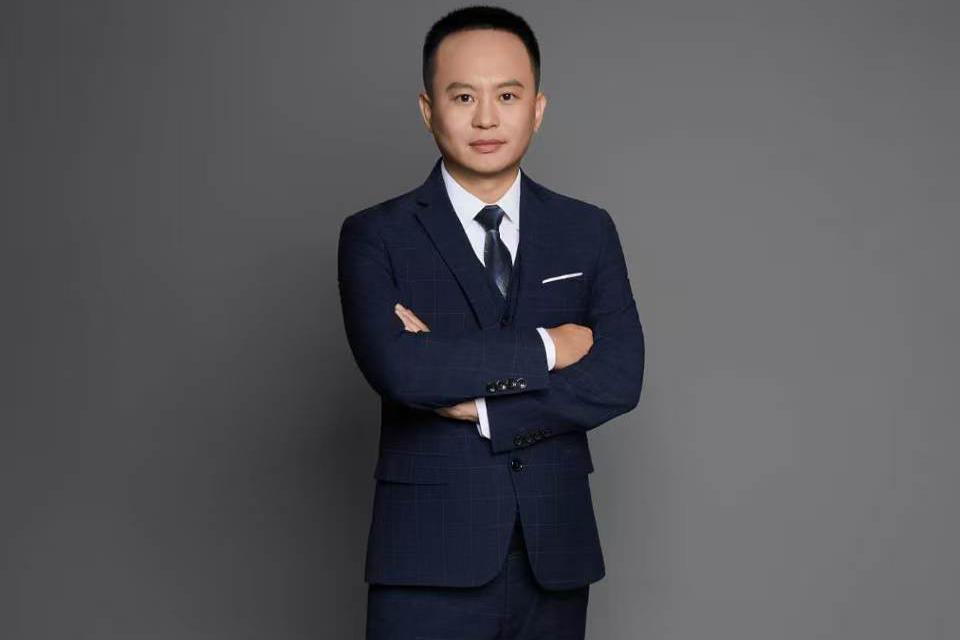
(Gao Huan, Founder, Chairman and General Manager of Weiguang Qihang)
Fully aware of the hardships of entrepreneurship, after leaving the state-owned system, he first joined an innovative commercial rocket company to iterate his cognition and learning abilities, while systematically accumulating experience in commercial operations.
The best opportunity finally arrived. In March 2024, commercial aerospace was written into the Chinese government work report for the first time as a new growth engine, marking an inflection point for China's commercial aerospace track — after leaving the pioneering phase, the industry entered a period of explosive, certain demand. In July of that year, Gao Huan officially began preparing for the "Weiguang Qihang" project.
He assembled the core team within three months. Several co-founders and partners all have years of experience in the launch vehicle and missile sectors. A shared belief in technology unites this team: all core technical members of Weiguang Qihang have experienced the full 0-to-1 R&D process of rocket development, a group that accounts for no more than 10% of personnel in the traditional state-owned aerospace system. What brought them together was the appealing vision Gao Huan described:
"We aim to build a rocket that China does not yet have — one capable of competing head-to-head with SpaceX's Falcon 9 in the international market."
In March 2025, Weiguang Qihang was officially established, adhering to a fundamental belief: never replicate existing products. In Gao Huan's view, early commercial rocket companies focused on solving the "existence" problem — proving that they could actually build rockets. Most of them replicated mature technologies from the state-owned system or followed SpaceX's path, falling into homogeneous involution and failing to close a viable business model. But for a startup, the most fundamental principle should be to start from underlying technologies and build a profitable rocket.
To achieve profitability, costs must be well controlled. Gao Huan introduced that 80% of a rocket's cost comes from design, and 20% from manufacturing. In the past, the industry mostly used aluminum alloy and stainless steel for rocket body materials, which were unfavorable for weight control, and the process chain was long and inefficient. Therefore, Weiguang Qihang took a more groundbreaking path — adopting carbon fiber materials for the rocket body, which completely subverts the traditional rocket production logic.
At present, the medium-sized liquid launch vehicle "Weiguang-1" independently developed by Weiguang Qihang has become the world's first launch vehicle that integrates three core technologies: carbon fiber composite materials, full-flow staged combustion cycle propulsion, and liquid oxygen methane.
Traditional metal propellant tanks have long manufacturing cycles and high costs. In contrast, the T800-grade all-carbon fiber linerless solution adopted by Weiguang Qihang achieves a 30% reduction in structural weight, a 90% shorter production cycle, and costs only about 70% of traditional materials — directly addressing the core pain point of cost reduction and efficiency improvement in commercial aerospace.
This is a technological innovation based on China's industrial manufacturing capabilities in 2025. Everyone knew that all-carbon fiber was a better material before, but it used to be too expensive. Fortunately, China's carbon fiber raw material output now accounts for more than 50% of the global total, and its cost has dropped from over 8,000 yuan per kilogram more than a decade ago to just a few hundred yuan. The founding of Weiguang Qihang came at the perfect time, with favorable conditions in place.
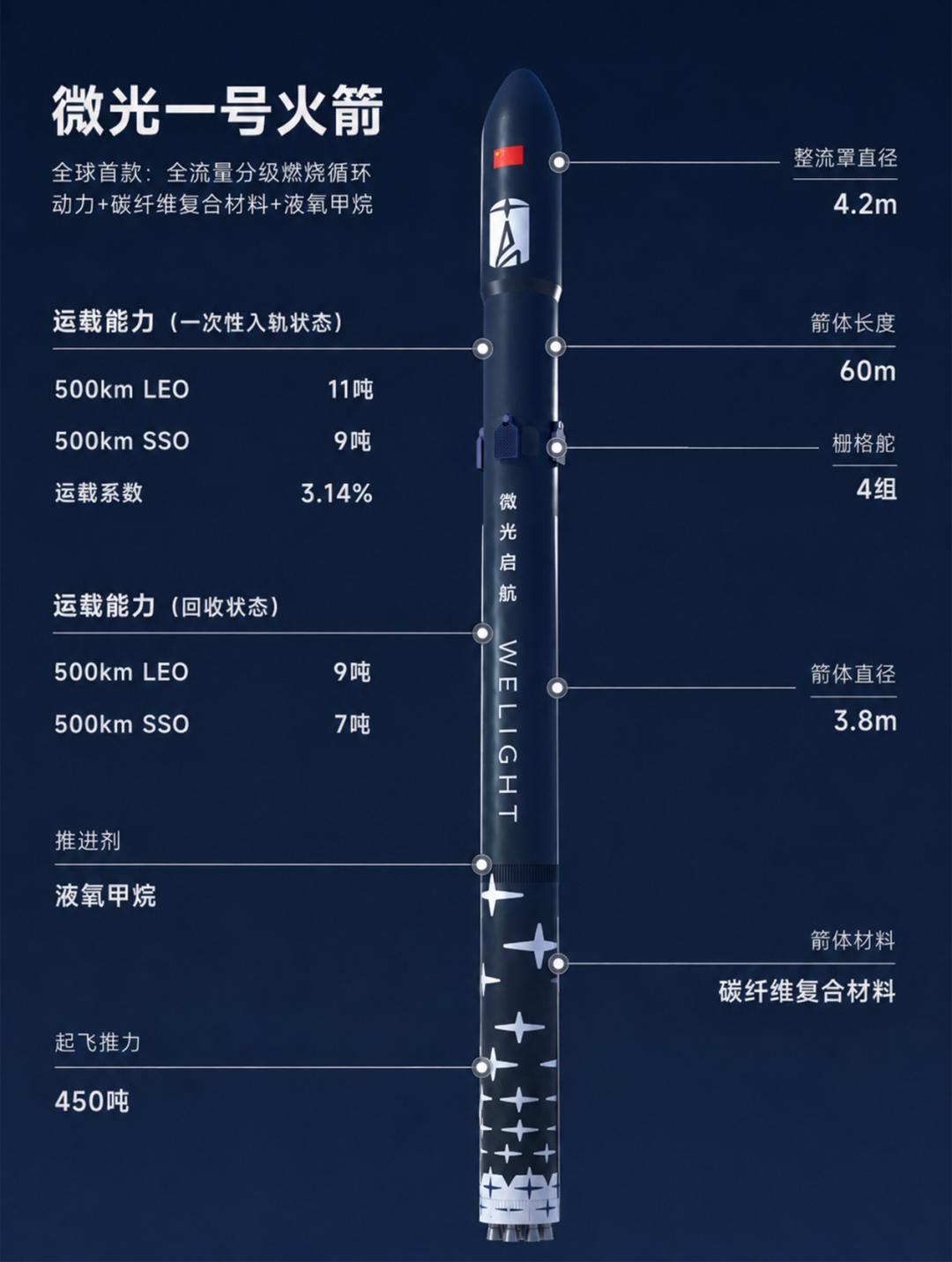
In terms of propulsion systems, the "Huaguang-1" full-flow liquid oxygen methane staged combustion cycle engine developed by Weiguang Qihang carries the most ambitious dream of China's commercial aerospace — it ensures every drop of propellant fulfills its purpose in the combustion chamber, with oxygen-rich pre-combustion and fuel-rich pre-combustion operating in tandem, leaving no gram of working medium wasted.
Under the same weight, it can send more payloads to higher orbits, serving as a key technology to support the rocket's future high-frequency, low-cost recovery and reuse. At present, the engine has completed core component R&D and key verification work such as liquid flow tests.
This combined technology stack gives Gao Huan the confidence to set a clear goal: to bring the cost of a single-use rocket below 10,000 yuan per kilogram, and the cost of a recovered and reused rocket below 5,000 yuan per kilogram.
Currently, Weiguang Qihang plans its maiden flight in 2028 and realizes normalized recovery by 2030. The company is accelerating the construction of its Beijing operations and R&D headquarters, with plans to set up its propulsion headquarters in Hunan Province and a rocket body manufacturing branch in Shandong Province.
Investors Come Knocking
Decoding Weiguang Qihang's Financing Story
Entrepreneurship is always a high-stakes journey with slim chances of success.
Initially, the startup capital of Weiguang Qihang came from Gao Huan's personal savings. But the track did not see large-scale boom as expected, and investors paid little attention to it. The nine core members, including Gao Huan, only received modest salaries every month. By June 2025, the company had almost run out of cash, and it was on the verge of being unable to pay social security contributions for the next month, while a rival company offered an annual salary of 3 million yuan to poach its talents.
None of the team members wavered. "Everyone was comforting me, saying that the technical route was feasible, and they all believed that I would definitely secure financing," Gao Huan recalled.
At this critical life-or-death moment, a key industrial investment landed. An entrepreneur with a manufacturing background fully understood Weiguang Qihang's technical route. From the first meeting, on-site team inspection, agreement finalization to completing the payment, the entire process took only 23 days, bringing in nearly 20 million yuan in funding.
"From Gao Huan, I saw the shadow of my own days of gritty perseverance when I started my business," the angel investor of Weiguang Qihang commented.
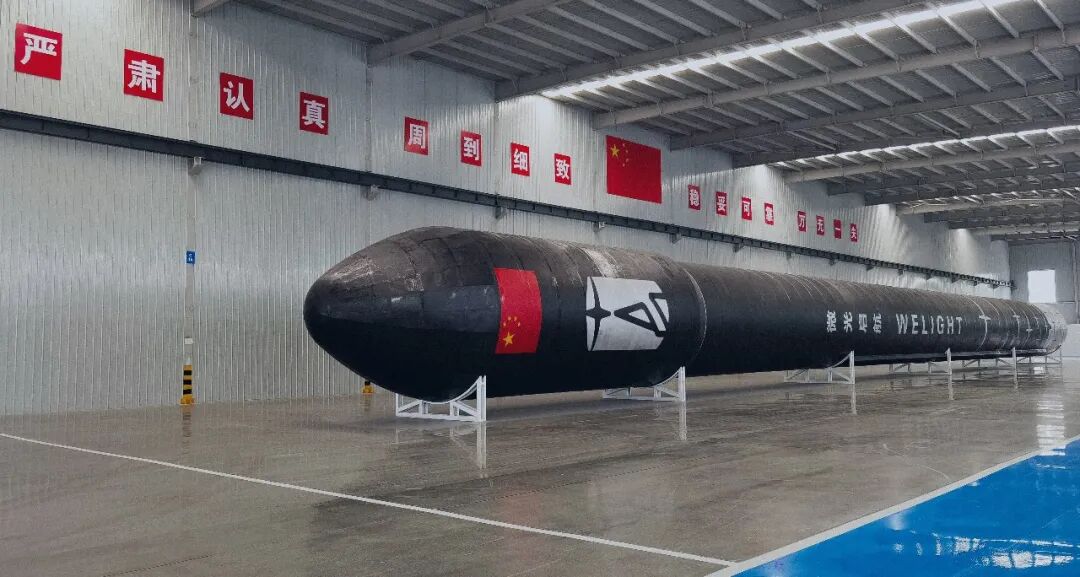
(The Modal Rocket of Weiguang-1)
After the company's cash flow improved, the two core business departments still voluntarily reduced their salaries, directing the vast majority of funds to material R&D and product trial production.
During the critical R&D phase of Weiguang Qihang's first large-scale propellant tank, to save costs, the team borrowed idle factory buildings from partners, temporarily hired production workers, and could only obtain raw materials at cost prices from strategic partners. Resources from the entire industry were mobilized to push forward the trial production. The team worked in three shifts, with each shift on duty for 8 hours non-stop on the production front line, and technical personnel stayed in the workshop throughout the trial process. Gao Huan still feels deeply moved when he thinks about that period. Finally, after the trial production was completed, the pressure test was successfully completed in one attempt.
"This incident further convinced me that China's aerospace industry is fully capable of surpassing overseas players in some niche core technology fields. Aerospace rockets and missiles are inherently strategic core industries of China, representing solid technical trump cards. Relying on China's complete industrial system, we have full confidence in achieving independent breakthroughs."
In December 2025, the Shanghai Stock Exchange announced that commercial rocket enterprises are eligible for the fifth set of listing standards on the Sci-Tech Innovation Board, sparking widespread excitement in the venture capital circle. Commercial aerospace financing began to heat up.
Riding this favorable trend, in March 2026, Weiguang Qihang completed the Angel+ round of financing of nearly 100 million yuan, jointly led by Qifu Capital and Yichen Capital, with participation from Lihe Venture Capital. And now, the Angel++ round has been officially closed.
The biggest change is that more and more investors are actively approaching Weiguang Qihang, hoping to get a share of the investment. Gao Huan has taken the right to choose back into his own hands. "The essence of financing is to introduce industrial resources, and shareholders are long-term partners. For Weiguang Qihang, the core criteria for selecting investors are shared aspirations: those who recognize our long-term technical development route, have in-depth industry insights into commercial aerospace, and can continuously empower the company's industrial chain are the suitable shareholders for us."
It is reported that Weiguang Qihang has launched a new round of financing in July. More than half of the share has been locked in, with investors queuing up to participate, and existing shareholders are also actively following up. As the market moves forward rapidly, Weiguang Qihang is advancing multiple rounds of financing simultaneously, and its valuation is increasing at an accelerating pace.
The past financing journey left a deep impression on Gao Huan — entrepreneurship is a group of people devoting 100% efforts to fight for 1% luck. But without that full effort, you can never seize the luck even when it comes.
In the view of investors in this round: "The combination of 'original technology + controllable cost + industrial implementation' that Weiguang Qihang demonstrates is particularly scarce among current private commercial aerospace enterprises." With the 100-million-yuan funding in place, Weiguang Qihang is accelerating its transition from the "technology verification phase" to the "product delivery phase".
Breaking Away from Involution
China's Commercial Aerospace Achieves Overtaking on a New Track
Looking ahead, China's commercial aerospace is embarking on a new path of breakthrough.
Last month, SpaceX officially landed on the NASDAQ, creating the largest IPO in human history. In China across the ocean, following the guidance of the fifth set of Sci-Tech Innovation Board listing standards, a similar boom is unfolding.
This is a critical part of great-power competition. The development of commercial aerospace is bound to bring about the reconstruction of communications, networks, computing power, space resources, energy, and ultimately the global order.
As a key participant, Gao Huan has a more profound understanding. In the past, BYD bypassed the century-old patent barriers of Western fuel engines through new energy power systems, achieving overtaking on a new track. Now, Weiguang Qihang intends to leverage China's comprehensive cost advantages in carbon fiber materials, labor, and electricity to stand on the same starting line as Europe and the United States in the new all-carbon fiber rocket track.
"If we compete in traditional manufacturing processes, it will be difficult to surpass established industrial powers such as Germany and the United States. But by switching to new materials and new tracks, we can achieve real overtaking through a distinct path," Gao Huan emphasized.
In his view, SpaceX is more like the ultimate embodiment of individual heroism, while China's commercial aerospace relies more on national strength and ecological collaboration. "SpaceX does almost everything on its own, while China is building a complete ecosystem that includes rocket manufacturing, satellite R&D, operation services, and data processing. In this system, every company has a clear division of labor, forming a synergy, which will definitely grow faster than a single giant."
On the long journey to the stars, it is this group of united Chinese forces that can compete against "the Musks of the world". Based on this understanding, Weiguang Qihang regards American enterprises as its real competitors, not domestic peers. Gao Huan said that the domestic space launch market is currently a stock market, and the broad incremental demand lies overseas. If it wants to compete head-to-head with the Falcon 9 and build global competitiveness in the future, it must deeply cultivate the overseas market.
For thousands of years, gazing at the stars and reaching for the moon has been an inherent romance in the Chinese nation's blood. Launch vehicles are only the first step in the commercial aerospace layout. Space computing power, space photovoltaics, deep space exploration... the space economy is experiencing a full-scale boom. As long as the demand for transporting materials into space continues, the rocket market will always exist.
Gao Huan also has his concerns: At present, no domestic commercial rocket company has achieved a real commercial closed loop. Most enterprises are still proving that "they can build a rocket", but few can answer core commercial questions such as "what is the gross profit margin, what is the net profit margin, and how many launches are needed to recoup the investment".
Weiguang Qihang has been working on solving these questions since the first day of its founding.
The passion for looking up at the sky has gradually gathered the strength to reach the nine heavens. Gao Huan said, "Technological innovation should never be trapped in involution. On a road that no one has traveled before, if you move forward at full speed, you will become the leader."