Stop complaining about the homogenization of vehicle manufacturing—hardly anyone buys truly innovative products.
In the past six months, while all automakers have been rushing into the so-called "9-series flagship", boxy off-road SUV segments, or new energy sedan markets, a common narrative has spread across the internet: Chinese automakers are taking shortcuts again. Streets are flooded with Land Rover and Porsche lookalikes, and every new car seems to be churned out from the same mold.
With an increasing number of homogenized models on the market, is this judgment actually wrong?
At first glance, this does reflect the current state of the industry. Back then, brands like Zotye and Landwind used to copy outstanding foreign designs to polish their own images. Now, they have just adopted a different approach — piecing together designs to closely mimic popular bestsellers, ultimately forcing consumers to pay for their opportunistic tactics.
But is the development of Chinese automobiles really always actively tied to "taking shortcuts"?
Since China's new energy industry broke free from unregulated growth and stepped onto the global main stage, no one doubts Chinese automakers' absolute capabilities in independent innovation and technological iteration. Things have come to this point not because Chinese automakers are regressing. When the end market constantly sends enterprises the signal that "following the trend guarantees sales", what choices can automakers teetering on the edge of survival possibly make?
Currently, even in the fast-expanding mid-to-large SUV market, it is increasingly difficult for us to tell the difference between new entrants and the once-viral hit models. Let alone expecting groundbreaking new cars to emerge in segments with inherently limited market capacity.
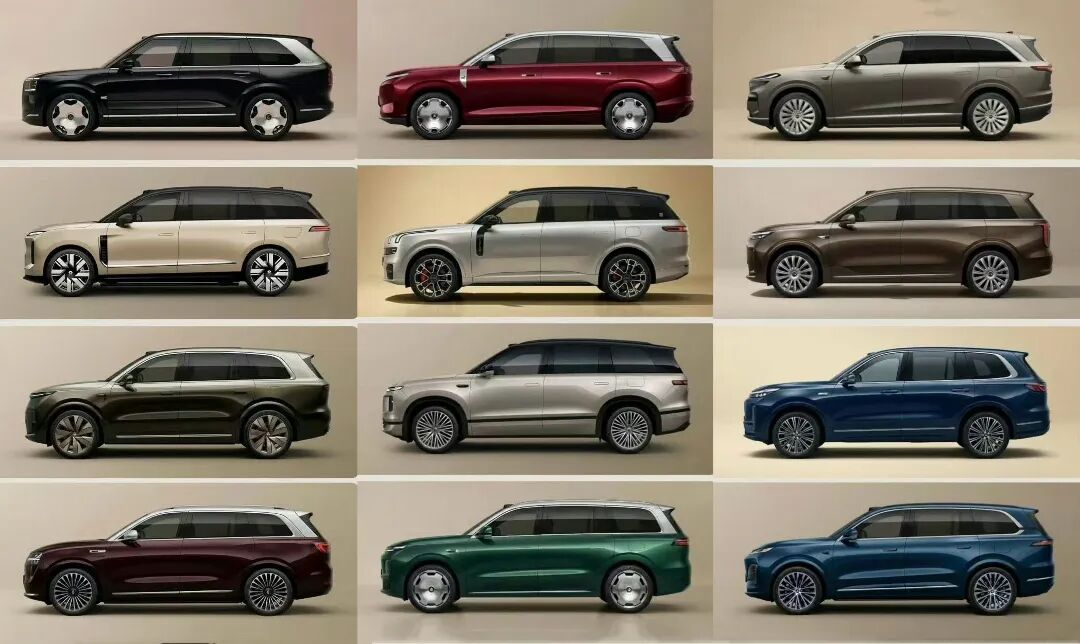
At the end of the day, when most Chinese consumers vote with their feet for unexciting "all-rounder" cars that simply meet daily needs, automakers under survival pressure are not fools. Instead of wasting effort on thankless innovations, it is far easier to "copy the cat to draw a tiger". Even if the outcome is unsatisfactory, at least they can minimize losses in R&D expenses.
We have long been saying that in fiercely competitive niche segments, apart from a few naturally high-traffic products, over 80% of latecomers are doomed to be cannon fodder. For example, under the encirclement of AITO M-series and Li Auto L-series, there are only a handful of models that can stand out in the homogeneous competition.
Looking back with this context, the endless stream of imitators for the Xiaomi YU7 today proves that it is not that automakers refuse to progress, but the unvarnished reality of the market forcing their decisions.
01
"Innovation" Barely Drives Sales
After decades of trials and tribulations, claiming that Chinese automakers cannot innovate is completely unreasonable. Especially in the booming new energy era, countless companies have made their presence felt through eye-catching operations, and there is no need to elaborate further. New power brands represented by HiPhi and Ji Yue have essentially turned the new energy vehicle market into a testing ground for new technologies and new models.
When it comes to details, bizarre innovations ranging from screen-based gear shifting, half-spoke steering wheels, T-shaped wing doors, physical-button turn signals, to magnetic center console panels are ubiquitous. In terms of model positioning, they have tried every possible crossover combination. Back then, emerging automakers had no shortage of wild ideas — you name it, they built it.
In the past five years, these "oddball" cars flooded the market, entering the public view with the most aggressive marketing campaigns. In their narrative, potential users were labeled as "geeks". These redefined Chinese consumers either obediently paid for the products under repeated praise that bordered on spoiling, or became promoters and popularizers of new cars and new technologies in their own ways.
But what was the final outcome? The industry was left in shambles, wasting massive social resources, with hundreds of thousands of owners of now-discontinued vehicles stranded. No way to repair their cars, no channels to file complaints — this grand industrial revolution was shrouded in shadow.
After several rounds of reshuffling, the new energy market finally embarked on a healthy development track. Some argued that what consumers really want is not money-grabbing fake innovations, but ideas that truly understand consumer demands while breaking away from conventions. Since new energy technologies have enabled Chinese automakers to achieve "curve overtaking", and with past lessons learned, traditional automakers should surely be able to come up with unconventional solutions.
After hearing countless people repeatedly type that new energy vehicles should abandon old design concepts and even traditional car-building logic, some enterprises were indeed swayed, feeling it was time to roll out something new.
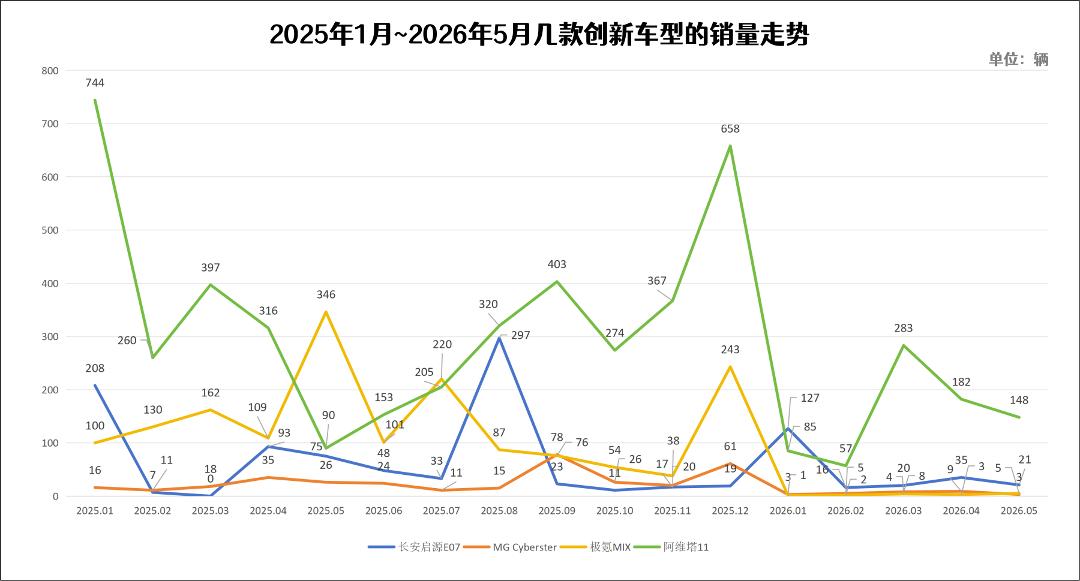
The MG Cyberster concept car made its debut at the 2021 Shanghai Auto Show. Later, its production version was unveiled at the Chengdu Auto Show in August 2023, before officially hitting the market in November that year;
Similarly, at the end of 2021, the Avatr 11 was launched at the Avatr Technology brand event. A year later, the Avatr 11 officially entered mass production and delivery phase. A single-motor variant was released in March 2023, followed by the HarmonyOS version in August, and the extended-range model went on sale on December 2, 2024;
By 2024, Changan Deepal E07 and Zeekr MIX both debuted at the Beijing Auto Show, and were officially launched sequentially by the end of the year.
Not to mention the massive wave of follow-up station wagon (shooting brake) models, these few cars alone targeted niche segments that almost no Chinese brands dared to venture into in the past. In terms of innovation, they are the most iconic representatives of the Chinese automotive industry.
From the automakers' perspective, the new era tide is advancing fiercely, and consumers are clamoring for innovation, uniqueness, and futuristic new cars. These vehicles built in response to the calls were expected to at least rank high on sales charts, if not maintain sustained popularity.
However, when you look at the real sales figures, Chinese consumers' honest choices have repeatedly slapped enterprises in the face. The monthly sales of these products are nothing short of a joke, deeply stinging the souls of product R&D teams.
Pay for innovation, cheer for trends?
The harsh reality is that under the simple demand of "great value for money is king", all ideas of building cars for the era and unconventional innovations are nothing but automakers' wishful thinking. The internet has always been an amplifier for certain voices, and those so-called user demands have mostly become information cocoons for enterprises. Once automakers fall for them, losses are inevitable sooner or later.
Back when Li Auto ONE first launched, there were countless online voices claiming extended-range EVs had no market, and large family SUVs looked boring. But what was the truth? The louder the taunts, the more frenzied the end market became.
02
Prioritizing "Cost-Effectiveness" Is the Only Way Out
By 2026, with the market flooded with clones of Li Auto L-series and AITO M-series, and followers of the Fangchengbao Ti7, Xiaomi SU7 and YU7 everywhere, we are well aware of how loud the external criticism of "homogenized car-building" is.
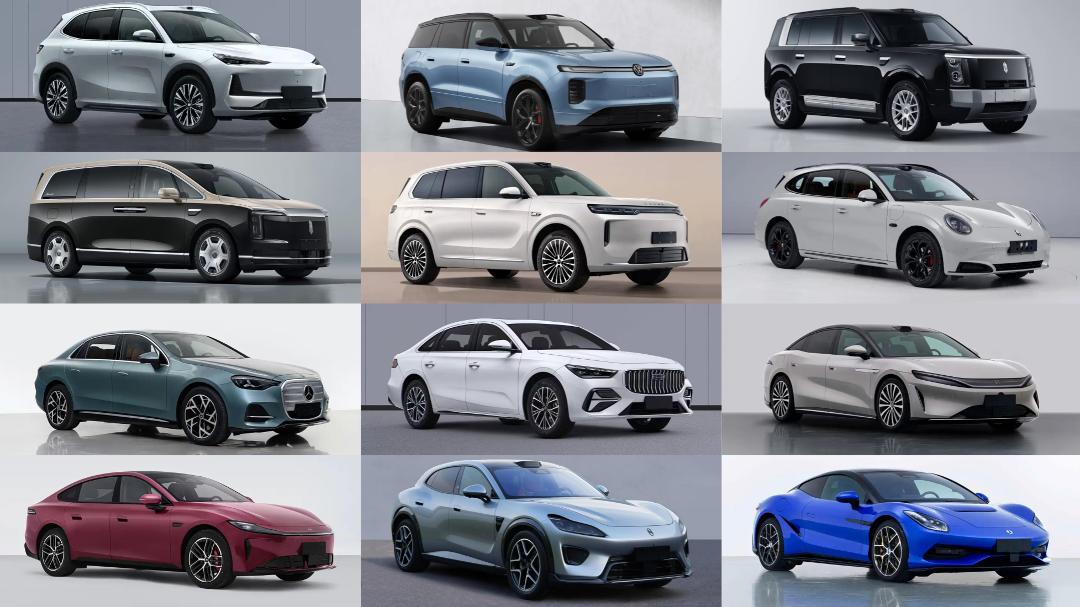
Even without that, from the jokes about "Hangzhou Bay Cullinan" (Zeekr 9X) last year to "Greater Bay Area Range Rover" (Xpeng GX) today, the narratives around design plagiarism implicitly point to automakers' impetuous car-building mentality.
But from the enterprises' perspective, after so many failed attempts where their enthusiasm was met with cold shoulders, external doubts cannot withstand the harsh reality. The strong sales of products like Zeekr 9X and Xpeng GX, even if short-lived, are far better than the bleak results they experienced before. What's more, these new cars' market lifespan is not as short as people imagine.
With so many precedents in mind, how many automakers would choose to ignore proven successful blueprints and start from scratch to find a new path?
This year, amid multiple challenges including complex international shifts and domestic transformation pressures, Secretary-General Cui Dongshu of the China Passenger Car Association has long released data showing how low the auto industry's profit margins are. The industry's sales profit margin further dropped to 3.4% from January to May 2026. Even May, which was supposed to deliver high returns, only posted a 3.6% profit margin, lower than the 3.7% recorded in March-April.
With multiple internal and external factors stacking up, if automakers are forced to pursue innovation and avoid homogenized car-building in this environment, who can take full responsibility for the resource losses caused by failed trials?
It is true that during the industrial transformation, models like the Tank 300, Jetour Traveler, and later Li Auto L-series and Denza D9 have gained dominant positions in certain niche segments. Some attribute their success to product innovation, arguing that Chinese automakers' current homogenized car-building strategy is dead-end.
But behind these cases, compared to the so-called innovation breakthroughs, their success is far more reliant on the cost-effectiveness offensive that Chinese automakers excel at.
Under traditional perceptions, what price range should hardcore off-road vehicles fall into? What image should MPVs have? Or what configurations should performance coupes/coupe SUVs, and mid-to-large SUVs offer?
Everyone has a basic framework: high prices, low configurations, and a lack of all-scenario adaptability are the most prominent features of foreign brands' products that once dominated these segments.
In other words, leveraging cost advantages and the generational experience gap brought by new energy technologies, all these best-selling models and successful cases are nothing more than breaking the old balance between price and configuration, delivering an in-depth interpretation of cost-effectiveness to achieve their results. They have little to do with so-called innovation.
This year, without focusing on cost-effectiveness, we have also seen a flood of new products bearing the "station wagon (shooting brake)" badge, seemingly injecting fresh blood into the increasingly homogenized market while striking a balance with homogeneous car-building. But for enterprises, the uncertainty is far too high compared to the predictable returns of building cars following Li Auto L-series' formula.
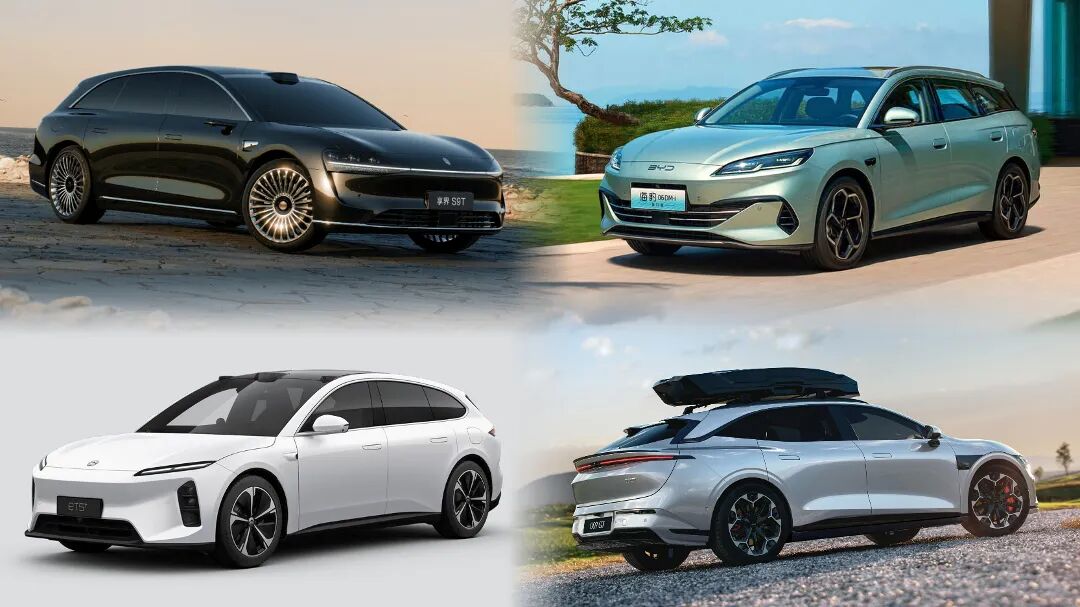
Everyone takes Nio ET5T's strong end-market performance as a reference, believing they can replicate its success. But what if we tell you that due to the ET5T's existence, the original ET5 has almost vanished from the market? How should we look at this issue?
In contrast, no matter how fierce competition in mainstream family SUV segments gets, following proven paths to build cars drastically reduces the margin for error. The only prerequisites that determine outcomes are trade-offs between price and configuration — far simpler than figuring out from scratch what a new product's strengths are and who its potential users are.
Therefore, in this cutthroat era, no one should find it absurd that all automakers are building identical cars. Automakers choosing to "copy the template" is not just a sign of laziness.
During periods of economic prosperity, Chinese automakers did offer consumers a huge variety of choices. The underwhelming sales results were not caused by poor products or a lack of creativity. Actual car buyers, through their real purchasing decisions, broke automakers' hearts and extinguished their willingness to keep delivering "exciting" products to the market.
This article is from the WeChat Official Account "Auto Community" (ID: iAUTO2010), Author: Cao Jiadong, Editor: He Zengrong, published with authorization from 36Kr.