The IPOs of Unitree and other players have dismantled the "valuation filter" of the robotics industry
Shortly after entering the second half of the year, Unitree took another major step forward on its IPO journey.
Recently, the China Securities Regulatory Commission approved Unitree's registration application for its initial public offering and listing on the Sci-Tech Innovation Board, and the company will now enter the issuance and listing process. Just a month prior, Unitree's IPO had successfully passed the hearing.
Unitree is far from the only robotics enterprise currently sprinting toward an IPO.
On the eve of Unitree's hearing, Deep Robotics, which is grouped alongside it as one of the "Six Young Dragons of Hangzhou," saw its IPO review status updated to "Inquired." On May 19, the ChiNext IPO of Leju Intelligence was accepted. According to prospectuses, these three companies have collectively raised over 9.3 billion yuan in financing.
While the secondary market has opened its arms to the sector, the primary market's enthusiasm for robotics has also grown increasingly intense.
According to data from IT Juzi, as of July 5, 1,025.46 billion yuan in capital had flowed into the robotics track this year, exceeding the total investment amount for the entire previous year (718.35 billion yuan).

Data source: IT Juzi
This has largely contributed to a surge in valuations for robotics enterprises. According to media statistics, at least 26 companies in China's embodied intelligence industry now boast valuations in the 10-billion-yuan tier, with 16 of those added in the first half of the year.
However, once front-runners like Unitree successfully land on the secondary market, the financing stories of latecomers will face far stricter scrutiny, and the primary market's mania will give way to rationality.
01
When the Tech Narrative
Meets Three Classic Valuation Benchmarks
When humanoid robots first emerged, the common valuation logic in the industry was to derive market capitalization by working backward from the long-term Total Addressable Market (TAM).
The core of this valuation logic lies in technical capabilities. Investors would calculate a company's long-term TAM based on the technical prowess demonstrated through its demo videos, patent counts, and even the background of its founding team, then extrapolate this to trillion-yuan markets like smartphones and new energy vehicles to arrive at a market capitalization figure.
This valuation method downplays verifiable operational metrics such as delivery performance, revenue, and profitability, while defaulting to the assumption that companies will secure stable market share in the long run — a setup that inevitably leads investors to overestimate company valuations.
Once Unitree, Deep Robotics, and Leju Intelligence list on the secondary market, the market will fully price their performance, and with the three companies showing stark differences in financial data and market positioning, primary market institutions will gain three clear, quantifiable valuation benchmarks.
As the industry's top performer, Unitree will naturally serve as the upper valuation benchmark for companies in the track. The company was the world's top-selling robotics brand last year (with over 5,500 units sold), has already achieved profitability, and is targeting a listed market capitalization of 42 billion yuan.
At the same time, Unitree follows a full-stack in-house R&D path integrating software and hardware, covering everything from core hardware like joint motors, servo drives, and dexterous hands to software including whole-body motion control algorithms and embodied large models. This end-to-end independent R&D capability has further lifted its valuation ceiling.
CCB International, factoring in elements like brand premium, forecasts that its post-listing market capitalization will reach 109 billion yuan, corresponding to a price-to-sales ratio of 32x.
For companies that cannot match Unitree's scale but have become leaders in specific niche segments, Deep Robotics can serve as a valuation reference point.
In 2025, Deep Robotics reported revenue of 337 million yuan, just one-fifth of Unitree's figure, while its attributable net profit for the same period stood at 28.68 million yuan, one-tenth of Unitree's. The company also acknowledged in its prospectus that it receives a relatively large amount of government subsidies, which "play a certain positive role in supporting the company's profitability."
However, based on its planned fundraising size of 2.503 billion yuan, its implied issuance valuation is around 13.9 billion yuan, with a price-to-sales ratio as high as 41x — a valuation multiple 60% higher than Unitree's current level.
Deep Robotics' ability to command a capital market premium stems from its leading position in its vertical niche.
In 2025, the company ranked first globally in revenue from industry application scenarios for quadruped robots, with over 80% of its annual revenue coming from these use cases. As defined in its prospectus, "industry applications" refer to deploying products in scenarios such as power grid inspection, emergency firefighting, industrial inspection, police security, public infrastructure patrols, routine patrols, and logistics transportation.
Compared to the two already profitable companies above, Leju Intelligence's situation is markedly different. In terms of brand awareness, delivery capacity, and revenue scale, Leju lags behind both Unitree and Deep Robotics.
Additionally, Leju has not yet turned a profit. In 2025, the company recorded a net loss of nearly 70 million yuan, and it forecasts that it will not achieve profitability until at least 2028.
That said, Leju is the most focused on humanoid robots among the three companies. In 2025, sales revenue from its Kuavo series of humanoid robots reached 178 million yuan, accounting for 69.5% of its annual operating revenue — a higher proportion than Unitree's 51.78% and Deep Robotics' 0.24% (Deep Robotics has taken a very conservative approach to the humanoid robot space, with revenue from such products totaling just 823,000 yuan last year).
Compared to quadruped robots, humanoid robots have far greater market prospects, making Leju a valuable "anchor" for companies in the track with high growth potential that are still operating at a loss.
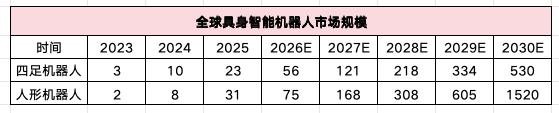
Unit: 100 million yuan; Data source: Sullivan
The three companies have vastly different track focuses, in-house R&D depths, and profitability statuses. While they cannot cover every scenario in the industry, they have formed a clear tiered framework for primary market investment institutions to reference, which will undoubtedly effectively reduce valuation bubbles in the sector.
Furthermore, for startups that only have technical prototypes, no mass delivery track record, and no stable customer base, the emergence of these valuation anchors means their financing windows have narrowed significantly. If they cannot quickly improve their situation, they will face the fate of being forced into acquisition, pivoting their business, or exiting the track entirely.
02
Younger Companies Still Have a Chance to Prove Themselves,
But the Time Window Will Not Stay Open Long
The primary market moving toward a more rational stance on robotics does not mean capital enthusiasm will fade away. On the contrary, if players in the track can deliver outstanding performance results, their financing paths will become smoother with clear valuation anchors in place.
For companies younger than Unitree, this represents an opportunity to prove their worth.
Take Songyan Dynamics, founded in 2023 (compared to Unitree's founding in 2016), as an example. The company's most well-known product is the 10,000-yuan class model "Xiaobumi." Its founder Jiang Zheyuan stated in March this year that Songyan Dynamics aims to get "10,000 Xiaobumi units into 10,000 different households" throughout the year.
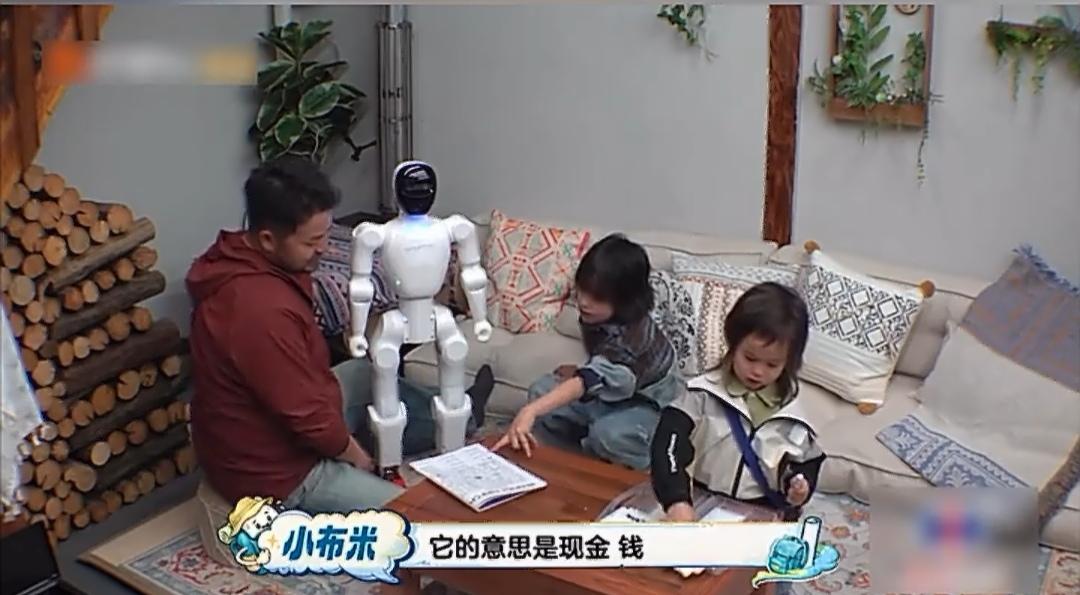
Xiaobumi appearing on the variety show "Daddy at Home"; Image source: Songyan Dynamics official Weibo
If Songyan Dynamics achieves this goal, it will not only generate considerable revenue but also prove that the company's supply chain management and large-scale delivery capabilities are mature.
More importantly, the industry is still in its early stages, and an annual delivery volume of 10,000 units for a single product is absolutely a top-tier performance in the sector (Unitree's delivery volume last year was over 5,500 units). If Songyan Dynamics can place 10,000 units in the family education and companion scenario — the segment with the greatest imagination space in the robotics track — it will greatly enhance the company's industry status and brand influence, even potentially gaining pricing power in the small humanoid robot market to a certain extent, thereby unlocking its valuation ceiling in the capital market.
However, the time left for "latecomers" to prove themselves will not be long.
The market often draws comparisons between new energy vehicles and robotics to gauge industry development, but robotics is clearly "maturing earlier" than new energy vehicles, facing capital scrutiny of its performance much sooner in its lifecycle.
At the same time, signs of the Matthew effect have already emerged in the industry. According to industry data, in the distribution of financing in the embodied intelligence track in the first half of the year, the top 5 companies captured about 37% of total funds, the top 20 companies collectively took over 70%, while the remaining 200+ companies had to split less than 30% of the capital.
In the early days of the new energy vehicle industry, zero-delivery enterprises like Youxia and Bo Tai, which only had concept cars, still secured large financing rounds, leading to the term "PPT car-making" becoming a buzzword. Its Matthew effect only began to appear during the product volume growth phase (after 2021).
Adding to this, the two leading players Unitree and Deep Robotics — which have distinctly different business focuses — have both already achieved profitability, so capital's patience will certainly not last much longer.
This fast pace is the reality of the robotics industry. After all, three years ago, apart from China's university research circles and robotics practitioners, how many people even knew about Unitree?
This article is from the WeChat public account "Alpha Workshop Research Institute", written by Si Che, and republished by 36Kr with authorization.