The Two Sides of Great Wall Motors: Overtaken by New EV Players in Domestic Sales, Yet Steadily Growing Overseas
Great Wall Motors' sales are being rapidly chased by new-energy vehicle startups.
As July arrives, automakers have successively released their first-half performance reports. A set of data has drawn widespread industry attention: Great Wall Motors recorded total sales of 108,100 units in June, with overseas sales reaching 60,200 units. Calculations show its domestic sales in June stood at only 47,900 units, a figure that even includes sales of Great Wall's pickup trucks.
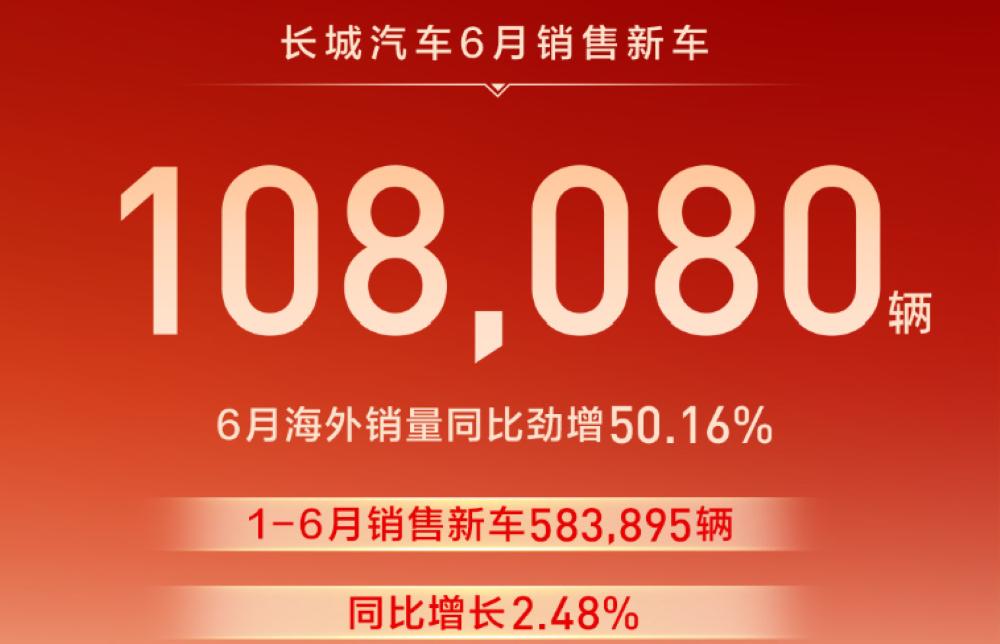
▲ Great Wall Motors' June Sales Figures
This number indicates that in its core domestic market, new power brands represented by Leapmotor, NIO, and Xpeng have fully caught up to Great Wall Motors in monthly sales volume.
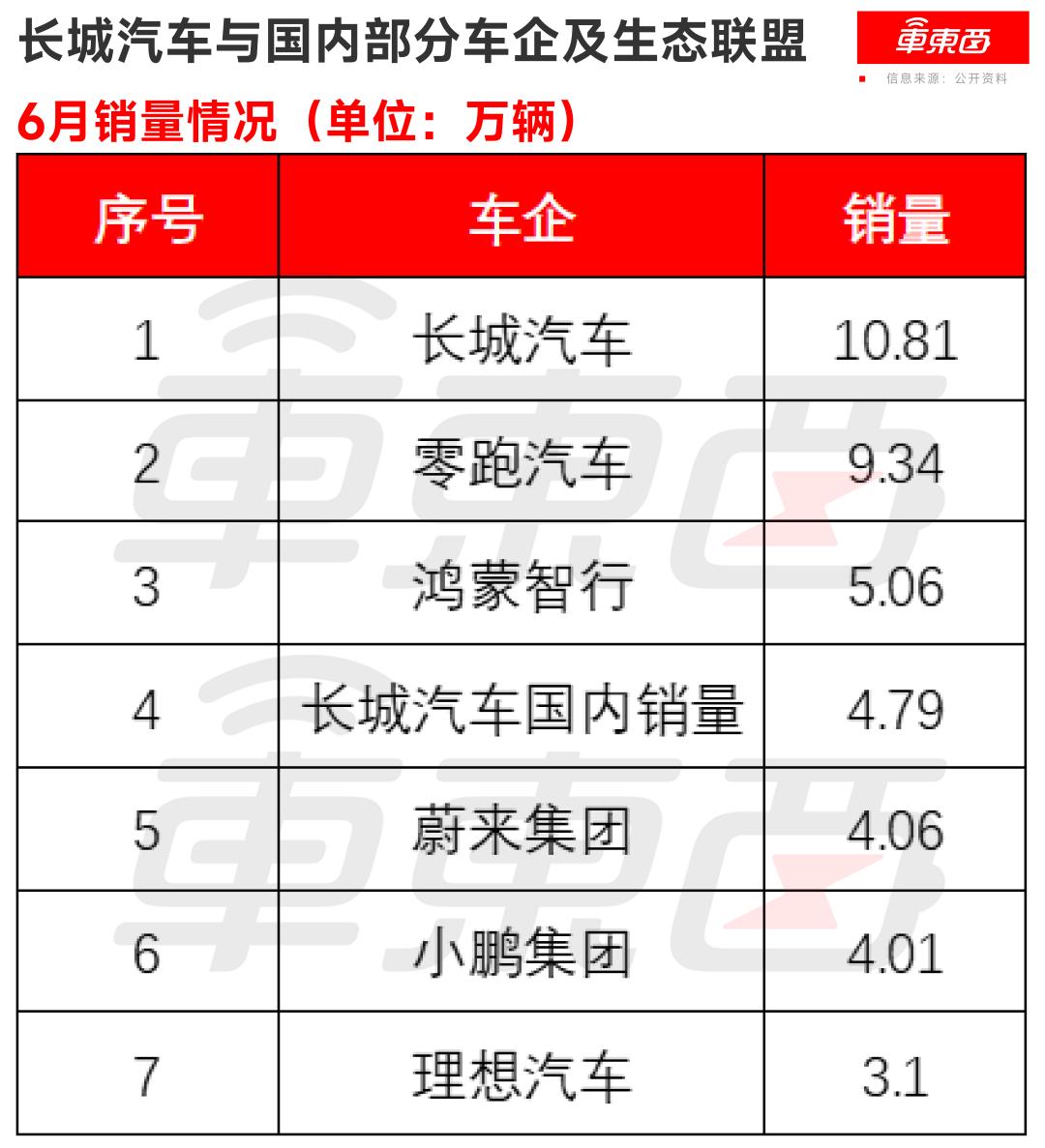
▲ June Sales of Great Wall Motors and Selected Domestic Automakers & Ecosystem Alliances
Three core factors lie behind this sales gap: relatively delayed new energy transformation, fragmented product structure, and gaps in intelligent driving experience. The combination of these three factors has led to the situation where Great Wall is being overtaken by new energy vehicle startups in the critical domestic passenger vehicle market.
01.
Domestic Sales Hit Only 47,900 Units in June
Being Chased by New-Energy Vehicle Startups
Looking at Great Wall Motors' overall sales performance in June 2026 first, according to its official production and sales express report, the company sold 108,100 units in June, of which 34,700 were new energy vehicles, accounting for roughly 32% of total sales.
By brand, Haval remained the absolute sales pillar with 60,300 units sold, followed by Tank with 15,700 units, Great Wall Pickup with 14,000 units, Wey brand with 7,191 units, and ORA brand with 10,800 units.
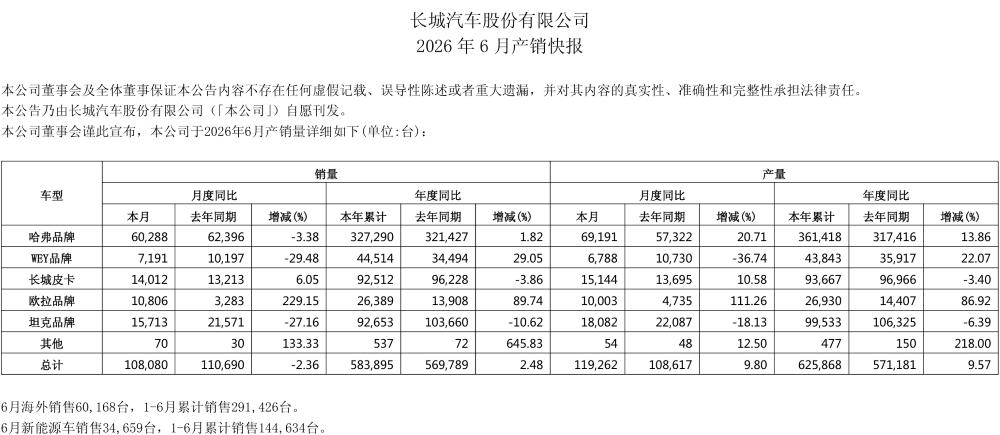
▲ Great Wall Motors' June Production & Sales Express
At first glance, Great Wall Motors' monthly sales of over 100,000 units is still a scale that many new vehicle startups would envy, but hidden concerns emerge once the sales structure is broken down.
According to data from the June production and sales express, Great Wall Motors' overseas sales reached 60,200 units, which translates to domestic sales of 47,900 units in June after calculation.
It is worth noting that this 47,900-unit figure still includes sales of Great Wall's pickup trucks. In other words, if we count only passenger vehicles, Great Wall Motors' domestic passenger car sales in June would be even lower than 47,900 units.
Looking at the performance of new power brands during the same period: Leapmotor delivered 93,400 units in June, a figure that is already close to Great Wall Motors' total June sales of 108,100 units.
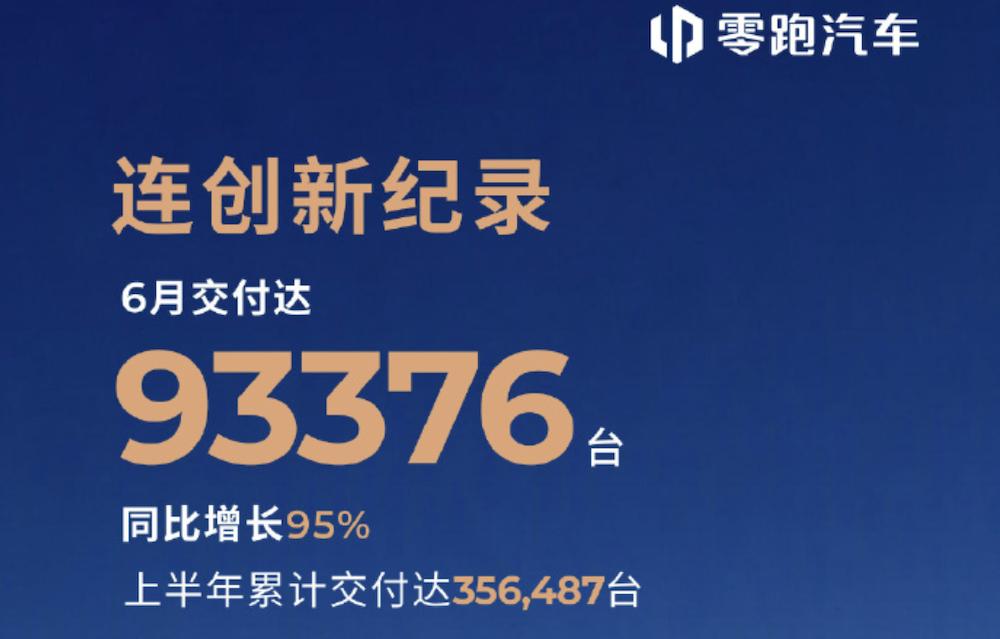
▲ Leapmotor's June 2026 Sales Performance
It is also worth noting that although Leapmotor has not yet announced the proportion of overseas sales in June, the company previously revealed that overseas sales accounted for nearly 20% of its total deliveries in April. Based on this rough estimate, Leapmotor's domestic deliveries in June stood at around 74,000 units, which very likely has already surpassed Great Wall Motors' domestic sales volume.
Harmony Intelligent Mobility Alliance hit a new monthly delivery high for 2026 in June, delivering 50,600 new vehicles, a number that also exceeded Great Wall Motors' domestic sales in June.
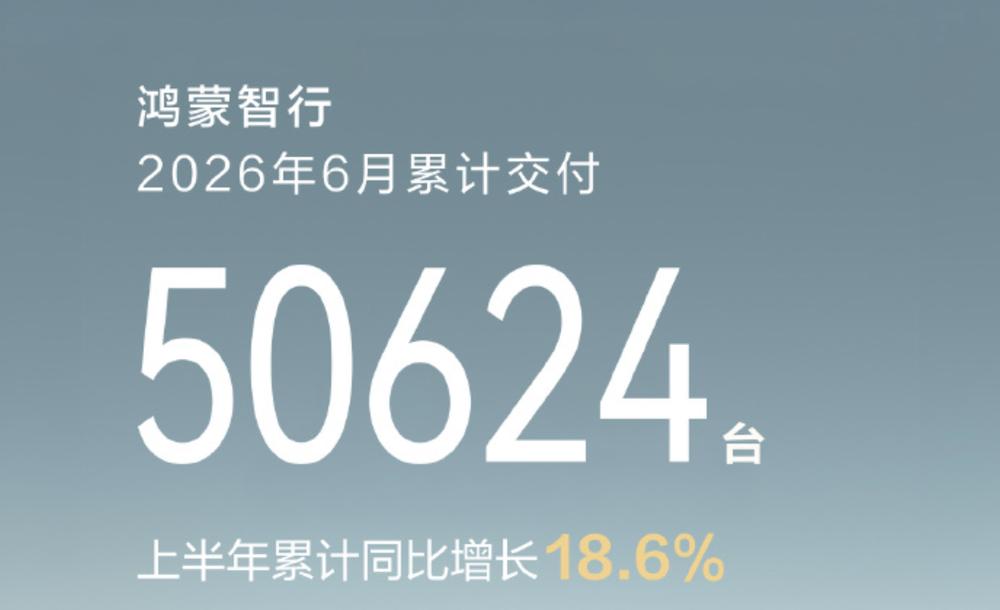
▲ Harmony Intelligent Mobility Alliance's June 2026 Sales Performance
Among other new vehicle startups, NIO Group delivered 40,600 new vehicles in June, and Xpeng Group delivered 40,100 new vehicles. Both companies currently have a very small proportion of overseas sales, which means their domestic sales volumes are rapidly approaching Great Wall Motors' domestic performance.
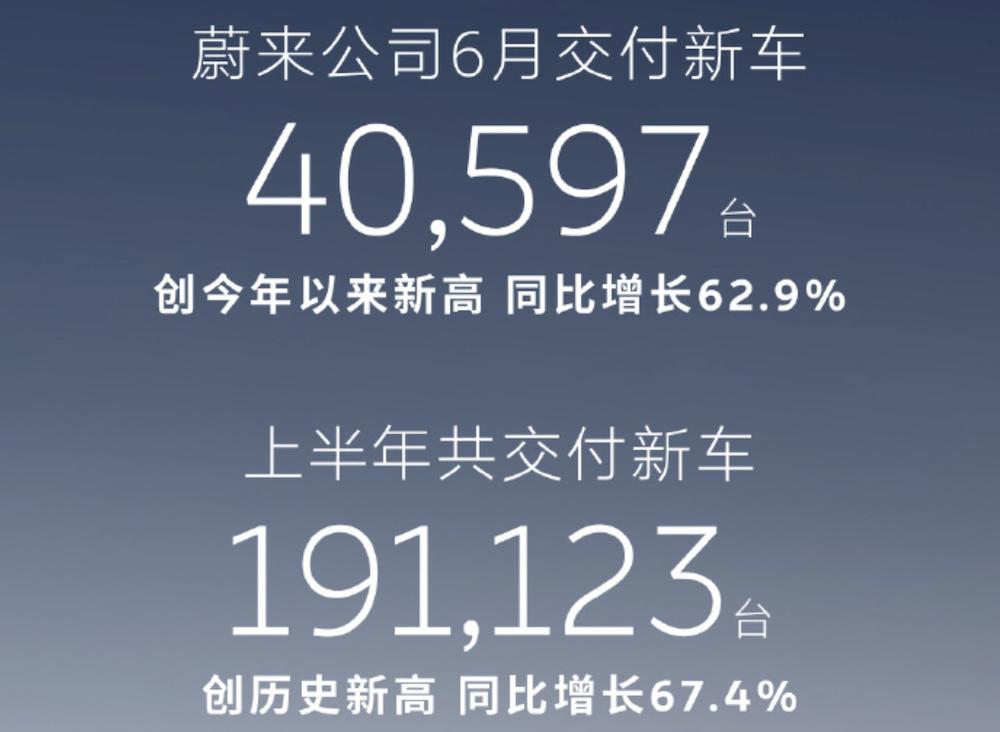
▲ NIO Group's June 2026 Sales Performance
This means that in the core domestic market, Great Wall Motors has been fully chased by the top tier of new power brands: Leapmotor and Harmony Intelligent Mobility Alliance have already surpassed Great Wall in monthly sales, while NIO and Xpeng are rapidly closing the gap.
From a trend perspective, Great Wall Motors' overall monthly sales this year have remained relatively stable, hovering around 100,000 units per month except for February, which was affected by the Spring Festival holiday. However, its domestic sales have been declining continuously since March.
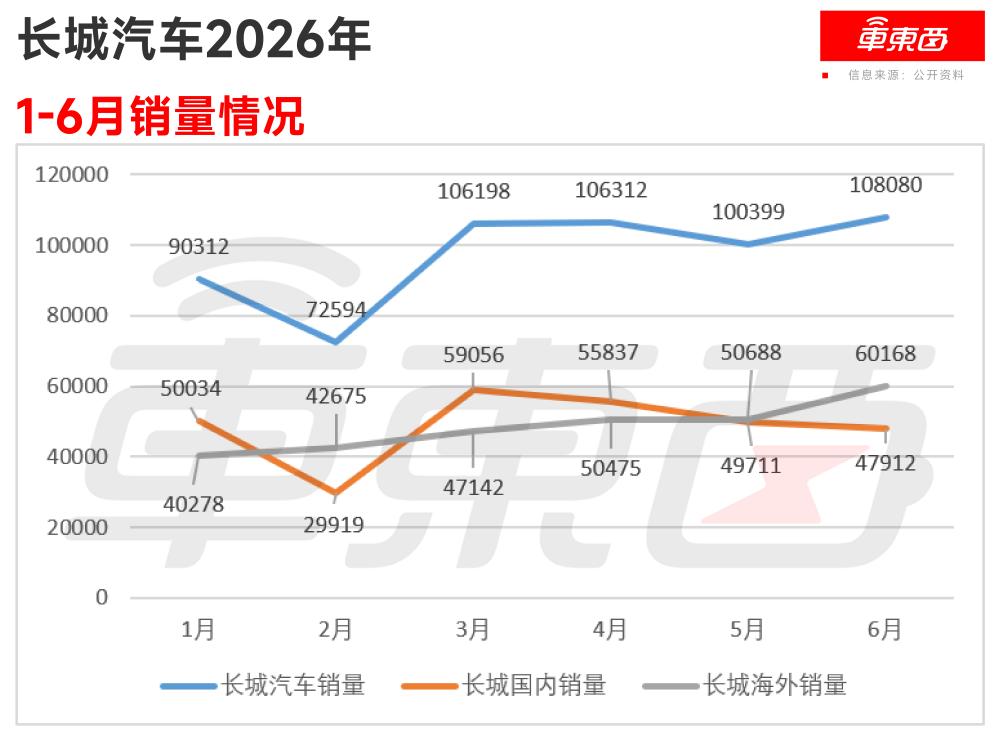
▲ Great Wall Motors' Sales Performance from January to June 2026
Among the four automakers and ecosystem alliances — Leapmotor, Harmony Intelligent Mobility Alliance, NIO, and Xpeng — all except NIO have generally shown a growing trend in monthly sales since March. In particular, Leapmotor has achieved a monthly sales increase of over 10,000 units for three consecutive months.
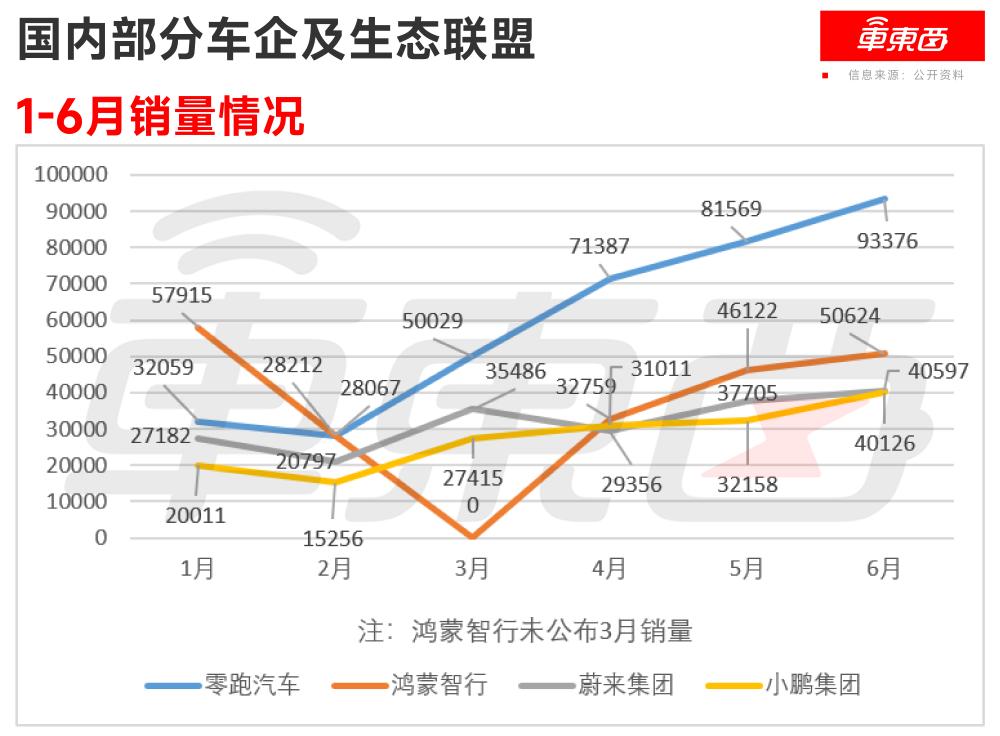
▲ Sales Performance of Selected Domestic Automakers & Ecosystem Alliances from January to June
02.
Relatively Delayed New Energy Transformation
Fragmented Product Matrix Structure
July 1st, which just passed, marked Great Wall Motors' 36th anniversary. It can be said that Great Wall Motors has been a witness and builder of China's automotive industry as it grew from its early fledgling stages to its current position on the global stage.

▲ Great Wall Motors' 36th Anniversary
What about its competitors? NIO was founded in 2014, Xpeng in 2014, Li Auto in 2015, and Leapmotor in 2015. Harmony Intelligent Mobility Alliance, backed by Huawei, only began large-scale deliveries in the past two to three years.
An industry veteran with over 30 years of vehicle manufacturing experience is being rapidly chased in its core domestic passenger vehicle market by a group of new power startups with an average history of just over 10 years. Why is this happening?
1. Relatively delayed new energy transformation: The fuel vehicle base has become a "burden".
According to data from the Department of Consumption Promotion of the Ministry of Commerce, the retail penetration rate of new energy vehicles in China reached 62.9% in May, hitting a new all-time high. The new energy penetration rate from June 1st to 7th reached 66.9%, indicating that new energy vehicles have steadily become the mainstream choice for more than half of consumers.
Against this general trend, Great Wall Motors sold only 34,700 new energy vehicles in June, with new energy vehicles accounting for merely 32% of its total sales. Taking Haval, Great Wall's core sales brand, as an example, third-party data shows that in May 2026, fuel-powered models such as the Haval H6 and Dagu (Big Dog) still accounted for the majority of its sales.
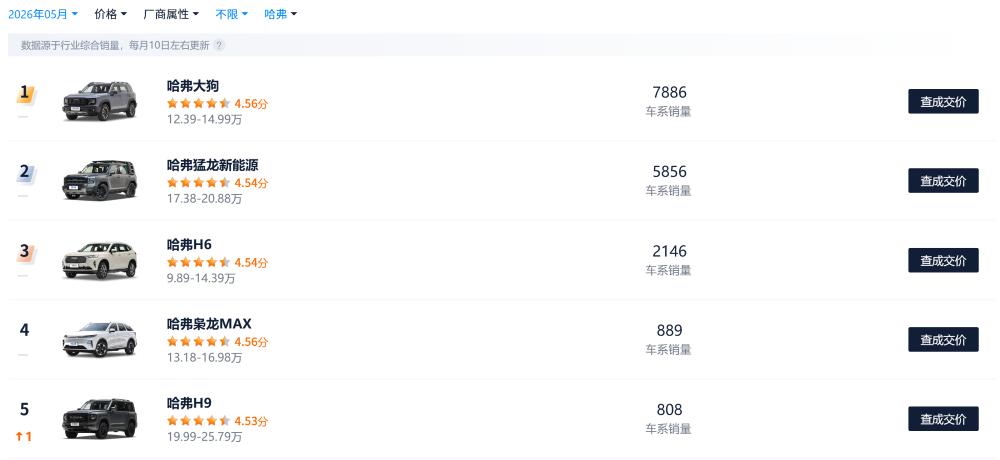
▲ Third-Party Data on Haval Brand's May Sales by Model
At the same time, except for the ORA brand, Great Wall Motors does not have any other pure electric passenger vehicle models in its lineup.
In comparison, new power startups have never carried the burden of fuel vehicles since their inception. They have gone all-in on pure electric or plug-in hybrid technologies, with product definitions, technical routes, and sales models all built around new energy. This allows them to capture market increments at the fastest speed when the market experiences explosive growth.
Sticking to a fuel vehicle base is not inherently a "mistake", but in the context of the industry's energy transition, it means the company may cede market share to competitors.
2. Fragmented product structure: No sedan offerings, over-reliance on "boxy" SUV designs.
Great Wall Motors' product matrix has a distinct feature — it completely lacks a sedan product line.
From Haval to Wey, from Tank to ORA, all of Great Wall's products are SUVs or crossover models, and in recent years, an increasing number of them have adopted a "boxy" design style (including the Haval Dagu, Menglong, the entire Tank series, and the Haval H9). While this product strategy has indeed established differentiated advantages in niche markets, it has also brought about two problems:
First, the sedan market still accounts for nearly half of China's total passenger vehicle market. According to data from the China Passenger Car Association, sedans accounted for 40.7% of total passenger vehicle sales from January to May 2026. Abandoning the sedan market means voluntarily giving up nearly half of the market space, leaving a huge gap in the company's product lineup.
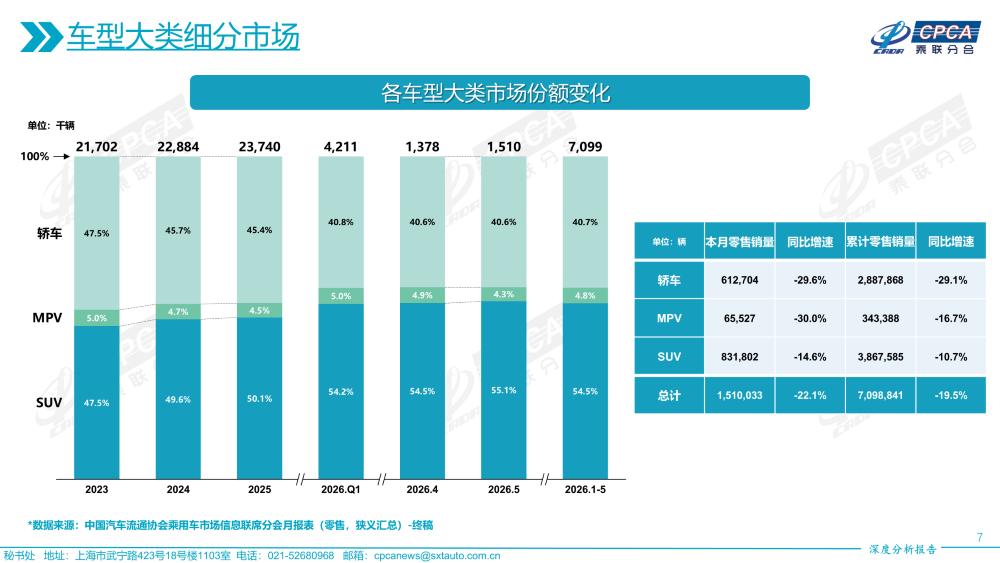
▲ China Passenger Car Association's Segment Market Data by Vehicle Type
Second, the "boxy" design style has reaped considerable market dividends over the past three to four years. However, as competing products have flooded into this segment, the differentiated advantages in this niche market are shrinking. According to data from the China Passenger Car Association, the number of "boxy" models has increased from more than 10 to over 40 between 2015 and 2025, and the figure is expected to exceed 50 in 2026, making it one of the fastest-growing segments in the SUV market.
An over-reliance on a single design style in product layout exposes the company to significant risks when market trends shift.
3. Gaps in intelligent experience: Some core selling models only support basic L2-level driver assistance.
The intelligent experience is another obvious gap between Great Wall Motors and new power startups, especially in the field of assisted driving.
Taking Great Wall's best-selling Menglong PLUS model as an example, according to data from Haval's official website, the suggested retail price of the Menglong PLUS ranges from 169,800 yuan to 205,800 yuan. However, the entry-level and second-lowest trims do not support highway NOA (Navigate on Autopilot) functions, and only the top-of-the-line trim supports urban NOA functions.
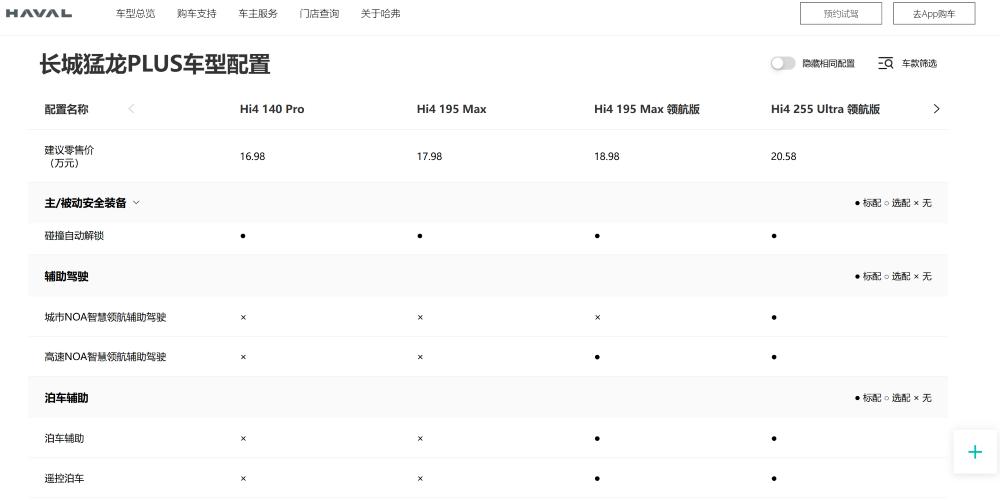
▲ Menglong PLUS Model Configuration Details
In contrast, Leapmotor's newly launched C-series, which was recently released, offers lidar and parking-to-parking assisted driving capabilities even in its SUV models priced at the 130,000-yuan level.